Freedom251 › App Monetization Platforms
AppLovin MAX
What AppLovin MAX is
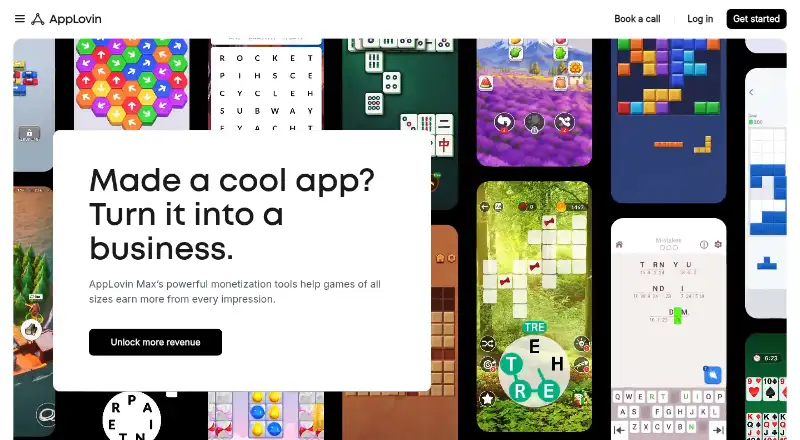
AppLovin MAX provides monetization tools to help mobile games earn revenue from ad impressions. It runs a real-time auction where ad networks compete, and the highest bid wins. Supported formats include rewarded video, app open, interstitial, MREC, banner, and native ads. Publishers can access user-level and impression-level data through built-in reports or an API, compare networks, price points, and regional setups with A/B testing, and use Ad Review to manage visible ads and flag problematic or competitor ads. MAX is free for publishers; bidding networks pay AppLovin a fee on generated ad revenue. AppLovin lists support for Android and iOS apps and development platforms including Unity, React Native, Flutter, Cordova, Adobe AIR, Unreal, Godot, and Defold. Using a mediated network requires its own account, app and ad unit registration, and approval to serve ads. Custom networks cannot use in-app bidding or Auto-CPM, and AppLovin says it cannot troubleshoot unsupported custom networks. Publishers must obtain user consent where applicable and pass consent flags.
Who it suits
MAX suits mobile game publishers seeking ad monetization, reporting, and tools to compare network and pricing setups. Publishers using mediated networks should be prepared to meet each network's registration and approval requirements.
What it does well
- Real-time auction awards the highest bid
- Supports six listed ad formats
- Provides user-level and impression-level reporting
- A/B testing compares networks, prices, and regions
- Free for publishers
What to know first
- Mediated networks require separate accounts and approval
- Custom networks cannot use in-app bidding or Auto-CPM
- AppLovin cannot troubleshoot unsupported custom networks
- Publishers must handle applicable consent flags
Limits
MAX mediation is free for publishers, while bidding networks pay AppLovin a fee on generated ad revenue. Custom networks are not eligible for in-app bidding or Auto-CPM.
Plans
| Plan | Billed and limits | Price |
|---|---|---|
| MAX mediation | Free for publishers; bidding networks pay AppLovin a fee on generated ad revenue | Free |
As applovin.com lists them, read 3 Oct 2026. The maker's own page has the final word.
Getting started
- Open AppLovin’s MAX monetization page and start publisher setup.
- Add an app for Android, Fire OS, or iOS.
- Integrate the MAX SDK and use SDK validation or Mediation Debugger for pre-launch testing.
- For each mediated network, create its separate account, register the app and ad units, and obtain approval to serve ads.
- Where applicable, obtain user consent and pass the consent flag values to AppLovin.
AppLovin MAX is an ad-mediation platform for mobile games, built to help publishers earn from ad impressions. It suits teams managing ads across Android and iOS; its strongest case is combining network bidding with reporting and testing in a free publisher plan.
Overview
MAX puts participating ad networks into a real-time auction, with the highest bid winning each impression. That gives game publishers one mediation layer for multiple networks and a range of ad placements. It is aimed at advertising monetization, rather than purchase or subscription management.
Key features
Auction and formats
Supported formats include rewarded video, app open, interstitial, MREC, banner, and native ads. That breadth helps publishers choose formats suited to different moments in a game. The auction’s reach depends on network onboarding: each mediated network needs its own account, app and ad-unit registration, and approval to serve ads.
Reporting and optimization
Publishers can access user-level and impression-level data through built-in reporting or an API. Named measurement integrations include AppsFlyer, Adjust, Singular, Kochava, Tenjin, and Branch, useful for teams already working with those mobile measurement partners. Built-in A/B testing compares networks, price points, and regional setups, giving publishers ways to evaluate monetization choices rather than relying on a single configuration.
Ad review and integration
Ad Review provides visibility and control over the ads users see, and automatically flags problematic or competitor ads. AppLovin describes the SDK as lightweight and provides SDK validation and pre-launch ad testing through Mediation Debugger. It says most publishers can integrate MAX in less than a day, but that estimate does not remove the separate work of registering and securing approval from each mediated network.
Custom networks are a meaningful exception: they cannot use in-app bidding or Auto-CPM, and AppLovin cannot troubleshoot unsupported custom networks. Publishers relying on those networks give up access to important automation and support. If the testing tools do not resolve an integration issue, the getting-started guide points publishers to their account team or an AppLovin Support ticket.
Pricing
MAX mediation costs free. The plan is free for publishers; bidding networks pay AppLovin a fee on generated ad revenue. It includes ad mediation, rewarded ads, revenue analytics, and A/B testing. That makes the entry cost straightforward for publishers evaluating ad monetization, although the network-side fee means “free” describes the publisher plan, not the entire revenue arrangement.
No paid MAX plan is described. The practical cost to plan for is the time and coordination involved in network accounts, app and ad-unit registration, and network approval. Publishers must also obtain user consent where applicable and pass consent flag values to AppLovin.
Platforms
MAX supports Android and iOS, with integrations also listed for Unity, React Native, Flutter, Cordova, Adobe AIR, Unreal, Godot, and Defold. The getting-started guide also says apps can be added for Fire OS. This range suits teams building with several common game engines and frameworks, though the core platform listing centers on Android and iOS.
Who it's for
MAX is best suited to mobile-game publishers who want multiple ad networks competing for impressions, visibility into impression and user-level performance, and built-in testing to compare monetization setups. It is less compelling for publishers dependent on custom networks that need bidding or Auto-CPM, or that expect AppLovin to troubleshoot those unsupported integrations.
Pros and cons
- Pros: A free publisher plan combines real-time network bidding with reporting, an API, and A/B testing, reducing the need to assemble those capabilities separately.
- Pros: Multiple ad formats and measurement integrations support varied game placements and existing mobile measurement workflows.
- Pros: Ad Review flags problematic or competitor ads, giving publishers a way to monitor and control the ad experience.
- Cons: Each mediated network requires separate setup and approval, so adding demand partners brings operational work beyond MAX integration.
- Cons: Custom networks cannot use in-app bidding or Auto-CPM, and unsupported configurations fall outside AppLovin troubleshooting.
- Cons: Consent requirements remain the publisher’s responsibility where applicable, including passing consent flags.
Alternatives
Game Monetization Software is the broader category to browse if MAX is not the right fit. Consider PlayFab when its free-to-start game services and development-mode title allowance better match the project. Apphud is an alternative with paid Pro and Expert plans, while Google Ad Manager App Mediation offers a free plan with up to 50 mediation networks in a serving chain.
RevenueCat and Adapty are alternatives with free tiers tied to monthly tracked revenue or earnings thresholds. CAS.AI Mediation is another free mediation option; its no-loss A/B test applies to apps with 5,000+ daily active users. DT FairBid is provided free, with publishers collecting payments directly from mediated networks. Google AdMob is also free and has a USD 100 payment threshold.
Verdict
Choose AppLovin MAX if you publish Android or iOS games and want ad networks competing alongside reporting, testing, and ad review without a publisher-plan charge. Its central advantage is the breadth of monetization tools in one mediation product; look elsewhere if custom-network bidding and Auto-CPM, or support for custom integrations, are essential.
Verdict
MAX combines ad mediation, reporting, testing, and ad review for mobile games. Check network-specific setup and custom-network limitations, and account for consent requirements where they apply.
Questions
What does MAX mediation cost publishers?
The MAX mediation plan is free for publishers. Bidding networks pay AppLovin a fee on generated ad revenue.
Which ad formats does MAX support?
Supported formats include rewarded video, app open, interstitial, MREC, banner, and native ads.
Which platforms and development tools are supported?
Apps can be added for Android, Fire OS, or iOS. Listed frameworks and engines include Unity, React Native, Flutter, Cordova, Adobe AIR, Unreal, Godot, and Defold.
What is needed to use a mediated network?
Each network requires a separate network account, app and ad unit registration, and that network’s approval to serve ads.
Can custom networks use in-app bidding?
No. Custom networks are not eligible for in-app bidding or Auto-CPM.
Which measurement partners are named?
The product page names AppsFlyer, Adjust, Singular, Kochava, Tenjin, and Branch as MMP integrations.
Facts from AppLovin MAX's own pages
- Ad formats
- Supported formats listed include rewarded video, app open, interstitial, MREC, banner, and native ads. · applovin.com, 3 Oct 2026
- Ad review
- Ad Review provides visibility and control over which ads users see, and problematic or competitor ads are automatically flagged. · applovin.com, 3 Oct 2026
- Auction
- MAX runs a real-time auction in which ad networks compete and the highest bid wins. · applovin.com, 3 Oct 2026
- Custom network limitation
- Custom networks are not eligible for in-app bidding or Auto-CPM, and AppLovin says it cannot troubleshoot unsupported custom networks. · support.applovin.com, 3 Oct 2026
- Founded
- 2012 · applovin.com, 28 Sept 2026
- Integration and QA
- AppLovin describes the SDK as lightweight and says its tools support SDK validation and pre-launch ad testing with the Mediation Debugger. · applovin.com, 3 Oct 2026
- Measurement integrations
- The product page names AppsFlyer, Adjust, Singular, Kochava, Tenjin, and Branch as MMP integrations. · applovin.com, 3 Oct 2026
- Network requirements
- Using a mediated network requires a separate network account, app and ad unit registration, and that network's approval to serve ads. · support.applovin.com, 3 Oct 2026
- Platform support
- The getting-started guide says apps can be added for Android, Fire OS, or iOS. · support.applovin.com, 3 Oct 2026
- Privacy and consent
- The Unity integration guide says publishers must obtain user consent where applicable and pass consent flag values to AppLovin. · support.applovin.com, 3 Oct 2026
- Purpose
- MAX provides monetization tools that help mobile games earn revenue from ad impressions. · applovin.com, 3 Oct 2026
- Reporting
- Publishers can access user-level and impression-level data through built-in reporting tools or an API. · applovin.com, 3 Oct 2026
- Setup time
- AppLovin says most publishers can integrate MAX in less than a day. · applovin.com, 3 Oct 2026
- Support
- The getting-started guide directs publishers to their account team or an AppLovin Support ticket when its testing tools do not resolve integration issues. · support.applovin.com, 3 Oct 2026
- Testing
- Built-in A/B testing can compare networks, price points, and regional setups. · applovin.com, 3 Oct 2026
Where AppLovin MAX stands on Freedom251
- App Monetization Platforms#2 of 10
- Game Monetization Software#6 of 19