Some links on this page are affiliate links: if you buy through them we may earn a commission, at no extra cost to you.
ZTNA is usually the better target architecture when employees and contractors need specific private or SaaS applications, while a VPN remains practical for broad network access, legacy systems and staged migration. A VPN encrypts a connection and commonly places the user on a network segment. ZTNA checks identity, device posture and context before authorizing access to an individual application or service, then keeps evaluating that session. Choose by the access scope your users actually need, not by the security label on a product.
The right design may combine both. Keep a tightly constrained VPN path for destinations that cannot yet be integrated, and move application-by-application to ZTNA as identity, segmentation, connectors, logging and support processes mature. Users must follow each platform’s terms and applicable law.
As an Amazon Associate I earn from qualifying purchases.
The Tool Desk
Outbyte PC Repair FREEClear out junk files and repair common Windows errorsFree Scan →Outbyte Driver Updater FREEFix the driver behind crashes, sound loss and screen glitchesFind Drivers →At a glance
The two approaches below are listed alphabetically by name, not ranked. “Checked” refers to the guidance reviewed in November 2026.
| Name | Best for | Key spec | Free plan / price | Platforms | Checked |
|---|---|---|---|---|---|
| Remote-access VPN | Broad access to a private network, legacy applications and transition periods | Encrypted tunnel to a VPN endpoint or private segment | Varies by appliance or service; no universal price | Depends on the client, gateway and protocols selected | November 2026 |
| ZTNA | Application-specific access for distributed workforces, partners and heterogeneous devices | Policy authorizes each application before a connection is established | Varies by architecture and provider; no universal price | Depends on identity, device signals, connectors and application support | November 2026 |
Details checked November 2026.
This is an architecture comparison rather than a vendor ranking. The UK National Cyber Security Centre (NCSC) defines ZTNA as an arrangement in which access is explicitly authorized by policy before any connection is established. Its guidance covers private-application and SaaS-application access, while joint CISA guidance describes zero trust as denying access until a user and the particular application or service are authenticated and authorized.
Popular on Amazon
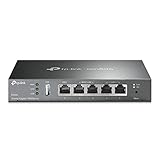
- 【Five Gigabit Ports】1 Gigabit WAN Port plus 2 Gigabit WAN/LAN Ports plus 2 Gigabit LAN Port. Up to 3 WAN ports optimize bandwidth usage through one device.
- 【One USB WAN Port】Mobile broadband via 4G/3G modem is supported for WAN backup by connecting to the USB port. For complete list of compatible 4G/3G modems, please visit TP-Link website.
- 【Abundant Security Features】Advanced firewall policies, DoS defense, IP/MAC/URL filtering, speed test and more security functions protect your network and data.
- 【Highly Secure VPN】Supports up to 20× LAN-to-LAN IPsec, 16× OpenVPN, 16× L2TP, and 16× PPTP VPN connections.
- Security - SPI Firewall, VPN Pass through, FTP/H.323/PPTP/SIP/IPsec ALG, DoS Defence, Ping of Death and Local Management. Standards and Protocols IEEE 802.3, 802.3u, 802.3ab, IEEE 802.3x, IEEE 802.1q
What is the difference between application access and network access?
Network access connects a user to a reachable network or segment; application access connects the user only to an approved service. That difference determines the likely blast radius after a credential or endpoint is compromised.
A remote-access VPN normally creates an encrypted tunnel from a client to a gateway. Routing rules then make one or more private subnets reachable. This is useful when a person genuinely needs several systems, when software uses broad network protocols, or when a destination has not been integrated with an application proxy. A VPN appliance or physical or virtual firewall can mediate access to private segments.
Free tools Windows power users keep installed
One-click scans. No signup required.
ZTNA inserts a policy decision before the session. The policy can combine the user’s identity, group, device health, location, time, risk signals and the requested resource. The resulting connection is to an authorized application, not automatically to every host on a subnet. Properly segmented, this keeps unapproved applications undiscoverable or unreachable and reduces opportunities for lateral movement.
Encryption is not the distinction. Both designs can encrypt traffic in transit. The distinction is what the tunnel or session makes reachable and how often authorization is reconsidered.
Which is more secure: ZTNA or VPN?
ZTNA generally provides stronger least-privilege and containment when it is correctly integrated; a VPN can be secure for its intended scope but should not be treated as proof that a user is trusted. Security depends on architecture, policy quality, identity protection, endpoint controls, segmentation, monitoring and response.
The NCSC warns that granting access merely because a user is connected to a corporate network or using a VPN can increase the impact of compromised credentials. A flat or overly broad VPN route may expose file shares, administration interfaces and discovery services that the user never needed. Once an attacker controls that endpoint or account, reachable systems can become stepping stones.
Also popular on Amazon

- 【Flexible Port Configuration】1 2.5Gigabit WAN Port + 1 2.5Gigabit WAN/LAN Ports + 4 Gigabit WAN/LAN Port + 1 Gigabit SFP WAN/LAN Port + 1 USB 2.0 Port (Supports USB storage and LTE backup with LTE dongle) provide high-bandwidth aggregation connectivity.
- 【High-Performace Network Capacity】Maximum number of concurrent sessions – 500,000. Maximum number of clients – 1000+.
- 【Cloud Access】Remote Cloud access and Omada app brings centralized cloud management of the whole network from different sites—all controlled from a single interface anywhere, anytime.
- 【Highly Secure VPN】Supports up to 100× LAN-to-LAN IPsec, 66× OpenVPN, 60× L2TP, and 60× PPTP VPN connections.
- 【5 Years Warranty】Backed by our 5-years warranty and free technical support from 6am to 6pm PST Monday to Fridays
ZTNA can reduce that exposure by hiding applications until authorization and by limiting each identity to explicitly approved resources. Its controls are not automatic: a weak identity provider, stale groups, missing device signals, permissive policies or an unsegmented connector can recreate broad access behind a new label. Zero trust is an operating model, not a feature purchased in isolation.
CISA’s zero-trust model assumes that no user or asset is implicitly trusted and that users, devices and applications are continually reauthenticated and reauthorized during a transaction. In practice, require phishing-resistant multifactor authentication where feasible, verify device posture, log authorization decisions, and revoke access quickly when a person, device or application changes state.
When should an organization choose ZTNA?
Choose ZTNA as the target when most work consists of defined private or SaaS applications and the organization can supply reliable identity, device and application telemetry. It is especially suitable for distributed workforces, contractors, partners and mixed or unmanaged endpoints, provided the chosen architecture supports the required signals and application protocols.
- Application-specific work: Users need a small set of named services rather than an entire subnet.
- Least privilege is a priority: You need to reduce reachable systems and limit lateral movement.
- Identity is authoritative: Groups, employment status, multifactor authentication and lifecycle events are maintained accurately.
- Device context is available: You can distinguish managed, patched and encrypted devices from unknown or risky endpoints.
- Applications can be integrated: Connectors, proxies or gateways can publish the required private and SaaS services without breaking their protocols.
- Auditability matters: Security and compliance teams need per-application authentication, authorization and administrator logs.
Start with lower-risk applications, establish support procedures and measure reliability before expanding. A staged rollout is safer than publishing every private service at once.
When should an organization keep a VPN?
Keep a VPN, or run it alongside ZTNA, when users genuinely require network-level reach, when legacy systems cannot yet be proxied, or while segmentation and application policies are being built. This is a compatibility and migration decision, not an admission that broad access is inherently safe.
- Legacy protocols: Some systems depend on broadcast, non-HTTP or other network behaviors that an application proxy cannot carry.
- Unintegrated destinations: A private service may not yet have a connector, gateway or identity integration.
- Administrative workflows: Carefully controlled infrastructure tasks may require several hosts, although administrator access should use separate privileged controls and narrow routes.
- Operational continuity: A VPN can provide a temporary path while application inventory, segmentation and policy testing proceed.
- Broad but justified access: Certain engineering, manufacturing or research environments may need multiple network services at once.
Reduce the risk by requiring strong authentication and device controls, splitting users into security groups, restricting routes to the smallest necessary segments, patching gateways, logging connections and revoking access rapidly. Do not allow a successful VPN login to substitute for authorization to each sensitive system.
Also popular on Amazon

- 【Flexible Port Configuration】1 Gigabit SFP WAN Port + 1 Gigabit WAN Port + 2 Gigabit WAN/LAN Ports plus1 Gigabit LAN Port. Up to four WAN ports optimize bandwidth usage through one device.
- 【Increased Network Capacity】Maximum number of associated client devices – 150,000. Maximum number of clients – Up to 700.
- 【Integrated into Omada SDN】Omada’s Software Defined Networking (SDN) platform integrates network devices including gateways, access points & switches with multiple control options offered – Omada Hardware controller, Omada Software Controller or Omada cloud-based controller(Contact TP-Link for Cloud-Based Controller Plan Details). Standalone mode also applies.
- 【Cloud Access】Remote Cloud access and Omada app brings centralized cloud management of the whole network from different sites—all controlled from a single interface anywhere, anytime.
- 【SDN Compatibility】For SDN usage, make sure your devices/controllers are either equipped with or can be upgraded to SDN version. SDN controllers work only with SDN Gateways, Access Points & Switches. Non-SDN controllers work only with non-SDN APs. For devices that are compatible with SDN firmware, please visit TP-Link website.
Does ZTNA replace a VPN?
Sometimes, but not immediately and not universally. ZTNA can replace many remote-access VPN use cases when applications are compatible and policies are mature. It does not automatically replace network connectivity for every legacy protocol, private destination or emergency recovery path.
A practical transition is dual-mode:
- Inventory applications, protocols, owners, users, devices and current VPN routes.
- Classify each flow as application access, justified network access or unnecessary access.
- Publish a small group of lower-risk applications through ZTNA and keep existing VPN routes unchanged for the remainder.
- Collect authentication, authorization, device-posture, traffic and support data.
- Remove or narrow VPN routes only after the replacement is reliable and users have a documented fallback.
- Repeat by application group, with special review for privileged administration and third-party access.
This approach avoids a “big bang” cutover and exposes policy mistakes while the affected population is still manageable.
How do identity, device and context controls differ?
VPNs often make their main trust decision when the tunnel is established; ZTNA is designed to make a resource-specific decision and reassess relevant signals during the session. The exact behavior depends on implementation, so validate it in architecture and operating documentation.
| Control | Questions to answer for a VPN | Questions to answer for ZTNA |
|---|---|---|
| Identity | Which directory, multifactor method and group rules permit tunnel creation? | Which identity is requesting this application, and when is authorization reevaluated? |
| Device | Can an unmanaged or outdated device reach the private segment? | Which posture signals are required for this application, and what happens when posture changes? |
| Context | Are location, time, risk and impossible-travel signals used before or after connection? | How do context and risk alter access to each resource? |
| Scope | Which routes, DNS zones and hosts become reachable after login? | Which named applications are exposed, and are unapproved services hidden? |
| Revocation | How quickly can a tunnel, certificate, token and route be revoked? | How quickly can a single application session be terminated without disrupting unrelated access? |
What does ZTNA implementation require?
ZTNA requires an integrated architecture, not just a license or agent. Plan the following building blocks before selecting technology.
- Application inventory: Record private applications, SaaS services, owners, data sensitivity, protocols, dependencies and administrative paths.
- Identity integration: Connect the authoritative identity provider, enforce multifactor authentication and automate joiner, mover and leaver changes.
- Device posture: Define minimum operating-system, patch, encryption, endpoint-protection and management requirements, including a policy for unknown devices.
- Policy engine: Express who may access which application under which contextual and risk conditions. Avoid broad groups that silently grant more than intended.
- Connectors or proxies: Place narrowly scoped connectors near private applications, limit their outbound and inbound reach, and design for redundancy.
- Segmentation: Separate applications and administration paths so a compromised connector or account cannot open an unrestricted route.
- Telemetry: Log authentication, authorization, posture changes, connector health, traffic metadata and administrator actions with synchronized time.
- Operations: Document incident response, emergency access, provider outage procedures, support escalation and periodic policy review.
- Shared responsibility: Clarify which controls belong to your organization, an identity provider, a cloud host and any managed access provider.
The NCSC specifically cautions that buying a ZTNA product alone will not deliver zero-trust outcomes. The design and integration work determine whether the resulting access is actually least-privilege.
Should all internet traffic go through the remote-access service?
No. Full tunnelling should be a threat-model and risk-appetite decision, not a default. The NCSC’s 2026 guidance recommends weighing the security outcome, product capabilities, performance, usability and organizational risk appetite.
Quick wins for a faster PC:
Scan for outdated or missing drivers - takes under a minuteDriver Scan →Repair Windows errors before they cause bigger problemsFix Now →Fix the driver behind crashes, sound loss and screen glitchesFind Drivers →Also popular on Amazon

- 【DUAL BAND WIFI 7 TRAVEL ROUTER】Products with US, UK, EU, AU Plug; Dual band network with wireless speed 688Mbps (2.4G)+2882Mbps (5G); Dual 2.5G Ethernet Ports (1x WAN and 1x LAN Port); USB 3.0 port.
- 【NETWORK CONTROL WITH TOUCHSCREEN SIMPLICITY】Slate 7’s touchscreen interface lets you scan QR codes for quick Wi-Fi, monitor speed in real time, toggle VPN on/off, and switch providers directly on the display. Color-coded indicators provide instant network status updates for Ethernet, Tethering, Repeater, and Cellular modes, offering a seamless, user-friendly experience.
- 【OpenWrt 23.05 FIRMWARE】The Slate 7 (GL-BE3600) is a high-performance Wi-Fi 7 travel router, built with OpenWrt 23.05 (Kernel 5.4.213) for maximum customization and advanced networking capabilities. With 512MB storage, total customization with open-source freedom and flexible installation of OpenWrt plugins.
- 【VPN CLIENT & SERVER】OpenVPN and WireGuard are pre-installed, compatible with 30+ VPN service providers (active subscription required). Simply log in to your existing VPN account with our portable wifi device, and Slate 7 automatically encrypts all network traffic within the connected network. Max. VPN speed of 100 Mbps (OpenVPN); 540 Mbps (WireGuard). *Speed tests are conducted on a local network. Real-world speeds may differ depending on your network configuration.*
- 【PERFECT PORTABLE WIFI ROUTER FOR TRAVEL】The Slate 7 is an ideal portable internet device perfect for international travel. With its mini size and travel-friendly features, the pocket Wi-Fi router is the perfect companion for travelers in need of a secure internet connectivity on the go in which includes hotels or cruise ships.
For modern web traffic already protected by TLS, adding an enterprise tunnel may introduce latency, capacity requirements and troubleshooting complexity without a proportional security gain. Direct-to-internet paths can be reasonable when endpoint controls, DNS protections, browser policy and monitoring address the risks. Conversely, sensitive traffic, untrusted networks, regulatory requirements or weak endpoint controls may justify centralized inspection.
Do not use tunnelling as a substitute for removing unencrypted legacy protocols. Replace or retire those protocols where possible, and document any exception with an owner, compensating controls and a deadline.
How should a VPN be constrained during a transition?
Constrain the VPN to named groups, routes and segments, then review every exception. Useful controls include:
- Separate employee, contractor, vendor and administrator profiles.
- Use multifactor authentication and device certificates or equivalent strong device identity.
- Advertise only the subnets required for the person’s task; avoid a default route unless the threat model explicitly supports it.
- Block peer-to-peer access between remote clients unless a documented workflow requires it.
- Segment sensitive services and place administrative interfaces behind separate controls.
- Alert on unusual geography, impossible travel, excessive connection duration, repeated failures and access to rarely used segments.
- Patch the gateway and its operating system, back up configuration securely and test failover.
- Set automatic expiry for temporary access and verify that leavers lose access promptly.
A VPN firewall or appliance can mediate private segments, but compare throughput under encryption, supported protocols, authentication integration, segmentation, update policy, logging, redundancy and total cost rather than choosing on tunnel speed alone.
Recommended Free Tools
What should you measure before expanding either design?
Measure security exposure and operational reliability together. A design that is theoretically restrictive but regularly fails will generate bypasses and permanent exceptions.
| Area | Useful measures |
|---|---|
| Access reliability | Successful sign-in rate, application launch failures, connector availability and help-desk volume |
| Least privilege | Number of reachable applications per role, unused VPN routes, policy exceptions and stale groups |
| Security response | Time to revoke a user or device, alert-to-investigation time and completeness of authorization logs |
| User impact | Latency, reauthentication frequency, client failures and workflow interruptions |
| Resilience | Behavior during identity-provider, connector, gateway, DNS and provider outages |
Set a baseline before migration, review results after each application wave and remove exceptions that no longer have an owner or business justification. No authoritative source provides a universal percentage improvement for ZTNA over VPN; outcomes depend on implementation and operating discipline.
Also popular on Amazon

- Tri-Band WiFi 6E Router - Up to 5400 Mbps WiFi for faster browsing, streaming, gaming and downloading, all at the same time(6 GHz: 2402 Mbps;5 GHz: 2402 Mbps;2.4 GHz: 574 Mbps)
- WiFi 6E Unleashed – The 6 GHz band brings more bandwidth, faster speeds, and near-zero latency; Enables more responsive gaming and video chatting
- Connect More Devices—True Tri-Band and OFDMA technology increase capacity by 4 times to enable simultaneous transmission to more devices
- Unique Design, More RAM, Better Processing - A unique housing design provides optimal heat dissipation, combined with a 1.0 GHz dual-core CPU and 512 MB High-Speed Memory, the AXE75 is designed for long-term reliability and performance.
- EasyMesh-compatible - Extend network range even more by adding EasyMesh-compatible routers, extenders, or wireless powerline adapters for a seamless, whole-home connection. Eliminate dead zones, drops, and lag as you move across your home.
Which approach fits common organization profiles?
Use the profile that matches your dominant access pattern, then account for exceptions.
- Cloud-first company with defined SaaS and private applications: Make ZTNA the target, with identity and device posture as prerequisites.
- Industrial or laboratory environment with specialized protocols: Keep a segmented VPN for systems that cannot be proxied, and apply ZTNA to user-facing applications where feasible.
- Small organization with limited security staff: Prefer the design your team can monitor, patch and revoke reliably; a narrow VPN may be safer than an overcomplicated ZTNA rollout, while application migration can proceed gradually.
- Large enterprise with many contractors and partners: Favor per-application policies, short-lived access and strong lifecycle automation; retain VPN only for documented compatibility cases.
- Organization replacing a legacy remote-access gateway: Run both under a written migration plan, map every route and application, and set a retirement date for each remaining broad-access dependency.
What is the final decision checklist?
Answer these questions in writing before committing to a target architecture:
- Does each user need a network, or only named applications?
- Which applications and protocols cannot work through an application-aware proxy?
- Are identity, multifactor authentication and device-posture data authoritative and timely?
- Can private applications be segmented and connected with narrowly scoped gateways?
- How will authorization, traffic, administrator actions and revocation be logged?
- What is the fallback when the identity provider, connector, gateway or access provider is unavailable?
- Which VPN routes can be removed now, and who owns every exception?
- How will performance, support demand and policy drift be reviewed after rollout?
In most distributed-workforce programs, the durable direction is application-specific ZTNA with tightly controlled VPN use for genuine network-level and legacy requirements. The safest choice is the one that matches actual workflows while making identity, device state, authorization and reachable resources explicit.
Frequently Asked Questions
Can ZTNA protect unmanaged personal devices?
It can, if the design supports a lower-trust access policy such as browser-only sessions, application isolation, strong multifactor authentication and reduced data handling. Do not assume that an unmanaged device meets the same conditions as a managed endpoint; define separate policies and monitor their use.
Does ZTNA work for on-premises applications?
Yes. Private applications can be published through connectors or proxies deployed near the systems, provided their protocols and dependencies are supported. Segmentation and connector scope still matter, because an incorrectly placed connector can recreate broad internal reachability.
What happens if the identity provider or ZTNA service is down?
Access behavior depends on the architecture’s caching and fail-open or fail-closed settings. Document emergency access, provider redundancy, break-glass accounts, connector survivability and the logging available during an outage before production rollout.
Do these 3 things before closing this tab:
1Repair Windows errors before they cause bigger problems2Fix the driver behind crashes, sound loss and screen glitches3Clear out junk files and repair common Windows errorsIs split tunnelling automatically less secure?
No. Split tunnelling changes where traffic is inspected and routed; its risk depends on endpoint controls, DNS and web protections, the sensitivity of traffic and the threat model. Evaluate the resulting exposure instead of applying a blanket rule.

