Windows Errors? Fix Them Before They Spread
Repair common Windows errors and clear accumulated junk for a smoother, more stable PC - no reinstall needed.Free scan · no reinstallOutdated Drivers Are Slowing You Down
One free scan finds every outdated or missing driver and matches the right update for your exact hardware.Free scan · exact hardware matchSome links on this page are affiliate links: if you buy through them we may earn a commission, at no extra cost to you.
TrailQuest is a locally run AI app that turns a 10-, 20-, or 30-minute time budget and a choice of Nature, Mindfulness, or Exploration into a practical outdoor mini-quest. You select the session, TrailQuest sends those choices to a FastAPI backend, and a quantized Qwen3 4B model running through Ollama generates the quest. The browser then presents the challenges, tracks your progress, and guides you through completion.
The important distinction is that TrailQuest treats AI as a starting point for leaving the screen, not as the destination. Its documented build runs model inference on your own computer rather than depending on a paid closed-model API. That is local inference, not proof that every part of the application works without an internet connection: the project submission does not report an independent offline test or guarantee that all setup and browser features remain available when disconnected.

As an Amazon Associate I earn from qualifying purchases.
What is TrailQuest?
TrailQuest is a local AI-powered outdoor adventure generator. Instead of browsing an endless feed for something to do outside, you give the app a short amount of available time and a broad activity preference. It returns a small set of practical challenges intended to be completed outdoors during that window.
The documented controls are deliberately narrow: 10, 20, or 30 minutes, combined with Nature, Mindfulness, or Exploration. Narrow controls make the result easier to act on than an open-ended chatbot conversation. A user can decide, for example, that there are 20 minutes available and that the goal is to notice details in a nearby park, then start the generated quest.
#1 Best Overall

- Easy To Play: The Hapinest scavenger hunt card game is suitable for ages 3 and up. Our scavenger hunt game includes 35 beautifully illustrated cards and two instruction cards, perfect for indoor and outdoor fun.
- Explore & Learn: Each card features an engaging illustration, sparking curiosity and encouraging kids to discover new things in their environment, enhancing observational skills.
- Versatile Entertainment: Ideal for travel, road trips, and family outings, this game fits neatly in its drawstring bag. Perfect travel car games for car rides for kids to keep them entertained and engaged.
- Fun For Everyone: Designed as kids games, preschool activities, and for older children, this game promotes active play and is ideal for outdoor activities for kids, allowing them to interact with the world around them.
- Engaging & Educational Experience: Crafted to spark curiosity and promote active play, this scavenger hunt game encourages kids to explore their surroundings and interact with the environment, making each game session a unique adventure.
TrailQuest is a developer project submission rather than an independently evaluated consumer service. No published user count, measured reduction in screen time, model-accuracy score, latency benchmark, health-outcome study, or controlled outdoor trial is attached to the project. Its value is in the workflow and architecture: a local model creates a time-bounded prompt for real-world activity, while the interface helps you follow through.
How does TrailQuest use local AI?
TrailQuest keeps the model-inference part of the documented build on the same computer as the application by using Ollama as the local runtime. The frontend sends your selected duration and theme to a FastAPI API. The backend asks the locally running, quantized Qwen3 4B model to create a quest, validates the returned structure, and sends the result back to the browser.
This arrangement avoids a required call to a paid, closed-model API for quest generation. It also gives the developer direct control over the model integration and the prompt-to-UI pipeline. “Local” describes where the documented inference runs; it does not establish that the project has no network requirement anywhere else. Initial software or model downloads, browser behavior, updates, and any unreported feature may still require connectivity.
The request and response path
- You choose inputs: the interface records a 10-, 20-, or 30-minute duration and one of the three themes.
- The browser calls FastAPI: the selected values are sent to the application backend.
- FastAPI calls Ollama: Ollama passes the generation request to the locally available quantized Qwen3 4B model.
- The backend validates the quest: the response is checked before it is exposed to the interface.
- The browser renders the activity: the validated challenges appear with progress and completion controls.
The project also adds loading feedback and error handling. Those details matter because local generation can take long enough that a blank page would look broken, and a failed model request needs a visible response rather than silently abandoning the user.
What can TrailQuest generate in 10, 20, or 30 minutes?
The duration is a product setting, not a measured promise that every generated activity will take exactly that long. It gives the model a time budget to shape the mini-quest and gives you a clear commitment before you step outside.
| Selection | How to use it | What the source establishes |
|---|---|---|
| 10 minutes | Choose this for a very short break, such as a quick walk or observation exercise. | TrailQuest accepts a 10-minute duration and generates a personalized mini-quest. |
| 20 minutes | Use this when you can leave the screen for a moderate outdoor session. | TrailQuest accepts a 20-minute duration and generates a personalized mini-quest. |
| 30 minutes | Use this when you have a longer window for several connected challenges. | TrailQuest accepts a 30-minute duration and generates a personalized mini-quest. |
The project does not publish a fixed catalog showing exactly how many challenges appear for each duration. Generated content can vary, so treat the selected time as guidance and use ordinary judgment about distance, weather, daylight, and your surroundings.
Do these 3 things before closing this tab:
1Repair Windows errors before they cause bigger problems2Fix the driver behind crashes, sound loss and screen glitches3Clear out junk files and repair common Windows errorsRank #2
What do the Nature, Mindfulness, and Exploration themes mean?
The three themes are broad directions for generation rather than separately documented activity libraries. They let you influence the character of the quest without writing a long prompt.
Nature
A Nature selection points the generation toward noticing or interacting with the natural environment around you. The source does not prescribe a particular species, habitat, park, or conservation task, so the resulting instructions should be treated as context-sensitive suggestions.
Mindfulness
Mindfulness steers the quest toward deliberate attention and sensory awareness while outdoors. It is an activity theme, not a clinical intervention, and the project makes no published claim about mental-health outcomes.
Exploration
Exploration emphasizes looking around and discovering details in the available surroundings. It does not imply that TrailQuest provides maps, navigation, route safety, or location verification; those capabilities are not established in the project description.
| Theme | Best fit | Boundary to remember |
|---|---|---|
| Nature | Users who want environmental observation. | No specific location-aware content is documented. |
| Mindfulness | Users who want an attention-focused outdoor break. | Do not treat generated prompts as medical advice. |
| Exploration | Users who want discovery-oriented challenges. | Navigation and hazard checking remain your responsibility. |
What happens while you complete a quest?
TrailQuest is designed to reduce the need to keep interacting with the screen once the activity starts. After generation, the interface presents practical challenges and lets you mark progress as you complete them. A completion flow provides feedback when the mini-quest is finished.
- Review the generated challenges before leaving the interface.
- Check that the instructions make sense for your location, time of day, weather, mobility, and personal safety.
- Complete one challenge at a time, using the progress controls only when needed.
- Return to the interface to update progress or finish the completion flow.
This interaction model is intentionally different from an ordinary conversational assistant. TrailQuest uses the model to create a starting plan, then uses a small amount of interface feedback to help you carry it out. The source does not claim that the app automatically verifies whether a challenge was completed.
Rank #3
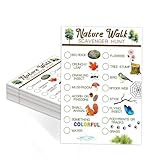
- Portable Design: Measuring 5x7 inches and printed on sturdy cardstock, the cards are durable, easy to carry, and perfectly sized for travel or outdoor activities.
- Comprehensive Package: Receive a complete set of 30 scavenger hunt cards; perfect for multiple rounds of outdoor fun whether in the park, backyard, or on a camping trip.
- Educational Fun: These cards turn playtime into learning, encouraging explore nature, discover birds, rocks, clouds, and flowers, while fostering teamwork in both small and large groups.
- Versatile Use: Ideal for family outings, birthday parties, hiking adventures, or road trips; the game adapts easily to any occasion for endless entertainment.
- Perfect Gift: A thoughtful and exciting option for families, classrooms, or party favors, inspiring explore the outdoors and enjoy interactive play.
What do I need to run TrailQuest locally?
The documented project requires Python and Ollama. Quest generation also depends on having the quantized Qwen3 4B model available to the local Ollama runtime. The submission does not state a minimum operating-system version, processor, memory, graphics requirement, or guaranteed generation speed, so check the project’s own setup documentation for machine-specific details.
- Python: required for the FastAPI backend and the project’s server-side code.
- Ollama: the local runtime that serves the model to the backend.
- Quantized Qwen3 4B model: the model designation used by the documented build.
- A browser: needed for the HTML, CSS, and JavaScript interface.
- A computer capable of running the model: exact hardware requirements are not published in the supplied project description.
Installing these components is not the same as proving full offline operation. You may need a connection to obtain Python packages, Ollama, the model files, or the project itself. Once everything is installed, the inference path is designed to use the local Ollama service.
Quick wins for a faster PC:
Clear out junk files and repair common Windows errorsFree Scan →Fix the driver behind crashes, sound loss and screen glitchesFind Drivers →How do I set up and start TrailQuest?
Use the project repository’s README for operating-system-specific commands; the available description identifies the components but does not provide a complete command transcript. The reliable setup sequence is:
- Install Python and confirm that it runs on your computer.
- Install Ollama and start its local service.
- Obtain the quantized Qwen3 4B model expected by the project, following the model and runtime instructions supplied with the project.
- Download the TrailQuest source and create the Python environment or dependency setup specified by its README.
- Start the FastAPI backend using the project’s documented launch command.
- Open the frontend in a browser at the local address printed by the server.
- Choose a duration and theme, submit the request, and wait for the loading state to finish.
If generation fails, first verify that Ollama is running and that the expected model is installed. Then check the backend’s error output, confirm that the browser is calling the same local address and port exposed by FastAPI, and retry with a fresh session. Exact port numbers, environment-variable names, and dependency commands are not stated in the project description, so do not assume a command from another FastAPI application applies here.
Why use Ollama instead of a paid AI API?
Ollama gives TrailQuest a local model-inference path. The developer describes choosing an open-weight model through Ollama to learn how model integration works and to build without requiring a paid API subscription. That can make experimentation more self-contained and avoids tying every quest request to a third-party closed-model endpoint.
| Consideration | TrailQuest’s documented local approach | What is not established |
|---|---|---|
| Inference location | Runs through Ollama on the local machine. | No independent verification of every network dependency. |
| API subscription | No paid closed-model API is required for the documented generation path. | Other costs, such as hardware or connectivity for downloads, are not quantified. |
| Model control | Uses a quantized Qwen3 4B model selected by the project. | No published comparison with larger or cloud-hosted models. |
| Reliability | FastAPI validates the generated quest and the UI reports loading or errors. | No accuracy, latency, or uptime benchmark. |
Local inference also shifts responsibility to the user. You must install and maintain the runtime, keep the model available, and have a machine that can execute it. A hosted API may hide those setup tasks, but TrailQuest’s documented design specifically favors local control and learning over a subscription-backed service.
The Tool Desk
Outbyte PC Repair FREEClear out junk files and repair common Windows errorsFree Scan →Outbyte Driver Updater FREEScan for outdated or missing drivers - takes under a minuteDriver Scan →Rank #4

- 🌲 𝗢𝗨𝗧𝗗𝗢𝗢𝗥 𝗔𝗗𝗩𝗘𝗡𝗧𝗨𝗥𝗘 𝗙𝗢𝗥 𝗔𝗟𝗟 𝗔𝗚𝗘𝗦: Get kids and families outside with exciting scavenger hunt challenges anytime on every scratch-off card, perfect for backyards, parks, camping trips, and nature exploration adventures that create lasting memories.
- 🚫 𝗦𝗖𝗥𝗘𝗘𝗡-𝗙𝗥𝗘𝗘 𝗙𝗔𝗠𝗜𝗟𝗬 𝗕𝗢𝗡𝗗𝗜𝗡𝗚: Ditch the devices and explore the real world together! These adventure scratch off cards encourage hands-on discovery, boost curiosity, and provide quality family time while developing observation skills naturally.
- ♻️ 𝗥𝗘𝗨𝗦𝗔𝗕𝗟𝗘 𝗔𝗡𝗗 𝗘𝗗𝗨𝗖𝗔𝗧𝗜𝗢𝗡𝗔𝗟: Each card features five unique nature items to find, and even after scratching once, you can play again and again! Perfect for kids scavenger hunt games that teach about wildlife and outdoor environments.
- 🌼 𝗣𝗥𝗘𝗠𝗜𝗨𝗠 𝗩𝗜𝗡𝗧𝗔𝗚𝗘-𝗜𝗡𝗦𝗣𝗜𝗥𝗘𝗗 𝗗𝗘𝗦𝗜𝗚𝗡: Thick, high-quality adventure bucket list cards with nostalgic artwork make every outdoor hunt feel like a special mini adventure, encouraging kids to appreciate nature's beauty and details.
- 🍁 𝗔𝗟𝗟-𝗦𝗘𝗔𝗦𝗢𝗡 𝗡𝗔𝗧𝗨𝗥𝗘 𝗔𝗖𝗧𝗜𝗩𝗜𝗧𝗬: Whether it's sunny summer days, crisp fall afternoons, or spring morning walks, these nature scavenger hunt cards provide year-round entertainment for camping, hiking, and backyard exploration.
How does TrailQuest handle errors and generated content?
The backend validates the model’s generated quest before returning it to the browser. The interface includes loading feedback and error handling so that a slow or failed local request is visible. Validation improves the chance that the UI receives the structure it expects, but it is not a guarantee that every instruction is appropriate, safe, or factually correct.
- Read the complete quest before starting.
- Ignore or adapt any instruction that conflicts with local rules, private property, weather, wildlife protection, accessibility needs, or personal safety.
- Do not rely on the app for navigation, emergency guidance, medical advice, or hazard detection; those functions are not documented.
- If the response is malformed or generation times out, check the local model service and backend logs rather than repeatedly clicking the submit control.
Because the project is a generated-content tool, the final decision remains with the person using it. The source describes validation and interface handling, not a separate human review of each quest.
Does TrailQuest work offline?
TrailQuest is designed for local model inference, which means the documented generation call can be handled by an Ollama service running on your computer. That is narrower than a verified “works entirely offline” claim. The project description does not independently test every feature without internet access or document whether setup, model acquisition, updates, or all browser interactions function while disconnected.
A practical interpretation is: install the software and model while you have whatever connectivity those downloads require, then test the complete app on your own machine with the network disabled. Treat that as your environment check, not as a guarantee for every computer or future version.
What’s actually slowing this PC down?
Pick the symptom - the matching free tool is one click away.
How much screen interaction does a quest require?
The main screen interaction happens before the activity: choose the duration and theme, wait for generation, and read the challenges. During the quest, progress tracking and completion feedback give you a reason to return to the interface, but the concept is explicitly to move from screen time to an outdoor task rather than remain in a chat.
The project does not publish a required check-in interval, automatic timer behavior, notification system, or verification mechanism. If you want minimal phone use, review the instructions first and keep the device available only for the progress updates you actually need.
Best Value

- Valauni Giant Tic Tac Toe Bean Bag Toss Outdoor Games: this outdoor games combines the outdoor Tic Tac Toe games and Bean Bag Toss games into a new outdoor playset that offers new outdoor games. Tic Tac Toe Bean Bag Toss Outdoor Games is designed for Kids Adults Family, which are full of fun, fun for all ages , providing a more intuitive playing experience
- Easy Set Up : This Tic Tac Toe outdoor game comes with 1 pcs sturdy nylon straps 4x4ft , 4 ground stakes, 10 bean bags (lettering X & O on both sides) in 2 colors, 10 pcs medals and 1 Pcs oxford drawstring bag ,Takes less than 10 seconds secured in the ground with plastic stakes to start playing and include a storage bag, making it easy to use and easy to store,enjoy interactive fun for Family Reunion Birthday Party Outdoor Game and event
- Giant Size 4FT X 4FT & Sturdy : Our Bean Bag Toss games Mat in size 4FT x 4FT -made of nylon-it is foldable and tear-resistant,Lightweight and Washable,can play for indoors and outdoors, this Tic Tac Toe Field Day Games improves hand-eye coordination, competition and interaction. The outdoor Yard game not only exercises the body, but also relieves stress, keeping both adults and children healthy and energetic
- Fun Outdoor Games for Any Occasion : Outdoor Bean Bag Toss Game Perfect for Party Family Reunion games, Halloween, Thanksgiving day games, Valentine's Day, Galentines Day, Easter day games, field day games, Camping Picnic Beach games, Carnival Games, 4th of July games, fall festival Games, Birthday Party Backyard Lawn Yard games, Outdoor Christmas party games. This Giant Family Reunion Birthday Party Outdoor Games for kids outdoor games makes a great fun gift for Easter, Birthday
- Large Lawn Games for Multiplayers: this jumbo bean bag toss game requires precision and strategy, it encourages interaction and friendly competition among friends and family; this giant tic-tac-toe game, shuttle running, and team challenges that encourage social interaction and challenge problem-solving and strategic thinking skills,Enhance connection, laughter, competition and make lasting memories through our exciting game
Who is TrailQuest best suited to?
TrailQuest fits people who have a short, defined break and want a prompt that converts indecision into an outdoor action. It is also useful for developers interested in combining a local language model with a conventional web stack: the project demonstrates Python and FastAPI on the backend, HTML/CSS/JavaScript in the browser, Ollama for inference, and validation between generation and presentation.
- Good fit: users comfortable installing local software and willing to review generated suggestions before acting on them.
- Good fit: developers studying local model integration and interactive progress states.
- Less suitable: anyone expecting a curated, fixed activity library, professional route planning, or guaranteed location-aware safety instructions.
- Less suitable: users who need a hosted service with no local setup.
What should you remember before trying TrailQuest?
TrailQuest’s distinctive idea is simple: use a local model to produce a short, themed outdoor challenge, then let the interface help you complete it. The documented build supports 10-, 20-, and 30-minute sessions; Nature, Mindfulness, and Exploration themes; local Qwen3 4B inference through Ollama; FastAPI validation; and progress/completion tracking.
Those are product capabilities, not outcome statistics. There is no published evidence that TrailQuest reduces screen time by a measured amount, improves health, generates faster or more accurate quests than another model, or works universally without an internet connection. Use it as an experimental prompt for getting outside, and apply ordinary judgment to every generated instruction.
Frequently Asked Questions
Can I change the quest after TrailQuest generates it?
The documented interface supports generation, challenge tracking, progress updates, and completion, but it does not specify an edit or regeneration control. If a challenge is unsuitable, treat it as a suggestion and adapt or discard it rather than following an unsafe instruction.
Does TrailQuest remember my previous outdoor quests?
No persistence, account system, history view, or cross-session memory is described. Unless the project’s own implementation adds such a feature, assume each generated quest is a new session.
Can TrailQuest be used in a city or only in nature areas?
The project description does not restrict the app to parks, trails, or rural locations. The generated prompt should still be checked against your actual surroundings, public-access rules, traffic, weather, and personal safety.
Is Qwen3 4B the only model TrailQuest can use?
Qwen3 4B is the quantized model identified for the documented build. The description does not confirm a model-selection setting or compatibility with alternative Ollama models, so changing models may require project-specific configuration.
Quick Recap
Product prices and availability are accurate as of the date/time indicated and are subject to change. Any price and availability information displayed on Amazon at the time of purchase will apply.

