Do these 3 things before closing this tab:
1Repair Windows errors before they cause bigger problems2Scan for outdated or missing drivers - takes under a minute3Clear out junk files and repair common Windows errorsSome links on this page are affiliate links: if you buy through them we may earn a commission, at no extra cost to you.
After an AirPods Pro 3 launch, Apple’s lineup usually looks less like a full replacement and more like a reshuffle of roles: Pro becomes the default “best experience,” standard AirPods stay the simplest option, and AirPods Max remains the premium over-ear choice.
This guide explains what the new AirPods lineup effectively means for your buying decision, how to verify the exact model you’re getting, and what settings to configure so you get the most from AirPods Pro 3 without guessing.
As an Amazon Associate I earn from qualifying purchases.
What the AirPods Pro 3 launch changes in the lineup
AirPods Pro (3rd generation) raises the ceiling on in-ear features—noise control, transparency behavior, and typically the “premium feel” of call quality. The rest of the lineup tends to keep their original job titles: standard AirPods cover everyday convenience, while AirPods Max targets people who want over-ear comfort for longer listening sessions.
For buyers, the practical shift is simple: Pro becomes the benchmark, and every other AirPods model is best judged relative to what you’re trying to solve (noise, mic quality, workouts, commuting, calls, or long-form listening).
Popular on Amazon

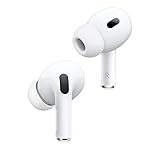
- WORLD’S BEST IN-EAR ACTIVE NOISE CANCELLATION — Removes up to 2x more unwanted noise than AirPods Pro 2* so you can stay fully immersed in the moment.*
- BREAKTHROUGH AUDIO PERFORMANCE — Experience breathtaking, three-dimensional audio with AirPods Pro 3. A new acoustic architecture delivers transformed bass, detailed clarity so you can hear every instrument, and stunningly vivid vocals.
- HEART RATE SENSING — Built-in heart rate sensing lets you track your heart rate and calories burned for up to 50 different workout types.* With iPhone, you will have access to the Move ring, step count, and the new Workout Buddy,* powered by Apple Intelligence.*
- LIVE TRANSLATION — Communicate across language barriers using Live Translation,* enabled by Apple Intelligence.*
- EXTENDED BATTERY LIFE — Get up to 8 hours of listening time with Active Noise Cancellation on a single charge. Or up to 10 hours in Transparency using the Hearing Aid feature.*
How Apple’s AirPods lineup is typically structured
Apple’s AirPods portfolio generally follows a consistent pattern:
- In-ear premium tier (Pro): active noise control, Transparency mode, and strong mic behavior for calls.
- In-ear value/simplicity tier (standard): easy pairing, light case/fit, and “just works” convenience.
- Over-ear premium tier (Max): bigger drivers, comfort for desk/TV, and a different form factor for sustained use.
- Accessories: charging cases, replacement cases, and cable/charging options that affect day-to-day usability.
So even if Apple tweaks model names or packages during the Pro generation cycle, the lineup’s “jobs” remain stable.
Current AirPods model roles: who each one is for
Instead of focusing on marketing, focus on fit, audio priorities, and how you’ll use the microphone. Here’s the practical way to map each model to real-life needs.
AirPods Pro (3rd generation)
Choose AirPods Pro when you care about sound isolation and noise control, especially on commutes, flights, and in noisy offices. Pro models also tend to be the most dependable for call clarity in variable environments.
If you often switch between music, podcasts, and meetings, the Pro tier usually provides the strongest balance of audio control and microphone performance.
AirPods (standard, non-Pro)
Choose standard AirPods when you want a lightweight, low-friction experience—easy pairing, straightforward controls, and a comfortable fit for many people who don’t need active noise cancellation.
Crashes, No Sound, or Screen Glitches?
Random freezes, missing sound and display glitches usually trace back to one bad driver. Find and replace yours safely.Free scan · under a minutePC Slower Than It Used to Be?
A free scan shows the junk files, broken settings and background clutter dragging Windows down - then fixes them in one click.Free scan · Windows 10 & 11Standard AirPods are often the better pick for kids, backup earbuds, or anyone who primarily uses earbuds at home or in quieter settings.
AirPods Max
Choose AirPods Max if you prefer over-ear comfort for long sessions, or if you’re mostly listening at a desk, watching movies, or taking calls where an over-ear seal and larger drivers make a difference.
They’re also a common choice for people who find in-ear wear uncomfortable during extended use.
AirPods accessories that matter after Pro 3
Accessories don’t just “complete” the setup—they can change how the lineup fits into your day. The two biggest variables are the charging case you get and the way you manage multi-device connections.
What’s actually slowing this PC down?
Pick the symptom - the matching free tool is one click away.
If you plan to carry a spare, replace a case, or share earbuds with a partner, it’s worth verifying that your case matches the intended model and charging expectations.
Choosing between Pro, standard AirPods, and AirPods Max
Think of the decision like this: Pro is the best “noise + calls + control” path, standard is the easiest day-to-day option, and Max is the comfort-first over-ear route.
Pick Pro if you want active noise cancellation and the best in-ear control
If your biggest pain point is background noise—subway rumble, office chatter, airplane engines—AirPods Pro is usually where the value is.
Also popular on Amazon

- REBUILT FOR COMFORT — AirPods 4 have been redesigned for exceptional all-day comfort and greater stability. With a refined contour, shorter stem, and quick-press controls for music or calls.
- ACTIVE NOISE CANCELLATION — AirPods 4 with Active Noise Cancellation help reduce outside noise before it reaches your ears, so you can immerse yourself in what you’re listening to.*
- HEAR THE WORLD AROUND YOU — The powerful H2 chip comes to AirPods 4. Adaptive Audio seamlessly blends ANC and Transparency mode — which lets you comfortably hear and interact with the world around you exactly as it sounds — to provide the best listening experience in any environment.* And when you’re speaking with someone nearby, Conversation Awareness automatically lowers the volume of what’s playing.*
- IMPROVED SOUND AND CALL QUALITY — Voice Isolation improves the quality of calls in loud conditions. Using advanced computational audio, it reduces background noise while isolating and clarifying the sound of your voice for whomever you’re speaking to.*
- MAGICAL EXPERIENCE — Just say “Siri” or “Hey Siri” to play a song, make a call, or check your schedule.* And with Siri Interactions, now you can respond to Siri by simply nodding your head yes or shaking your head no.* Pair AirPods 4 by simply placing them near your device and tapping Connect on your screen.* Easily share a song or show between two sets of AirPods.* An optical in-ear sensor knows to play audio only when you’re wearing AirPods and pauses when you take them off. And you can track down your AirPods and Charging Case with the Find My app.*
Pro is also typically the safer bet if you often take calls outside, because the mic system and in-ear design are designed to be more consistent across environments.
The Tool Desk
Outbyte PC Repair FREEClear out junk files and repair common Windows errorsFree Scan →Outbyte Driver Updater FREEScan for outdated or missing drivers - takes under a minuteDriver Scan →Pick standard AirPods if you want the simplest daily experience
If you rarely need active noise cancellation and you mainly want reliable audio for short-to-medium sessions, standard AirPods often make the most sense.
They’re also the easier choice when you want fewer configuration concerns and don’t want to manage noise-control modes.
Pick AirPods Max if you need over-ear comfort and deeper desk/TV focus
If you’re buying primarily for home listening, desk work, or movies/TV, Max can feel like a different product category—more “headphones” than “earbuds.”
They can also be the more comfortable option when in-ear tips aren’t a good fit for your ear shape.
Verify the exact model you’re buying (before you open the box)
Because AirPods bundles and packaging can vary by region and retailer, verification matters. A wrong generation or wrong case can create confusion even when the earbuds themselves work.
Check the model name in iOS/iPadOS
After pairing, you can confirm what iPhone/iPad thinks it is.
- Open Settings on your iPhone or iPad.
- Tap Bluetooth.
- Find your AirPods device in the list and tap the i icon.
- Verify the model name and the device details shown there.
If you don’t see the expected name, don’t assume it’ll “fix itself.” Unpair and re-pair, then confirm again.
Use the case/earbud markings to confirm generation
Apple devices usually include printed identifiers on the earbuds/case or in the documentation. Cross-check the packaging label, receipt, and the device documentation you receive.
If you’re buying from eBay or a marketplace, match the listing photo to the exact case type and model naming shown in your iPhone’s Bluetooth details.
Confirm charging case type and connectivity expectations
Different case configurations affect your day-to-day routine: how you charge, what you carry, and what spare you might keep in a bag.
- Compare the case photo in the listing to the case you expect (especially for replacement/carry case bundles).
- Plan your charging workflow (USB-C vs other charging paths, and whether you’ll have a spare cable).
- After pairing, confirm battery reporting works by opening the Bluetooth i screen.
Setup checklist on iPhone, iPad, and Mac
You’ll usually be able to pair AirPods in seconds, but the smoothest setup happens when the device software is current and your Apple ID is set up properly.
iPhone and iPad (iOS/iPadOS)
- Make sure your iPhone/iPad is updated (use Settings > General > Software Update).
- Open the case near your iPhone/iPad and keep the earbuds inside.
- Follow the on-screen pairing prompt and confirm.
- When pairing finishes, go to Settings > Bluetooth and tap the i icon for AirPods.
Then verify audio output by opening Control Center and selecting your AirPods as the sound output.
Free tools Windows power users keep installed
One-click scans. No signup required.
Also popular on Amazon
- This pre-owned product is not Apple certified, but has been professionally inspected, tested and cleaned by Amazon-qualified suppliers.
Mac (macOS)
- Update macOS if needed (use System Settings > General > Software Update).
- Open System Settings > Bluetooth.
- Put the AirPods in pairing mode (open the case near the Mac, then confirm pairing when it appears).
- Select the AirPods and confirm the connection.
If you use multiple Macs/iPhones, check that you’re signed into the same Apple ID so features like switching work as expected.
Key settings you’ll want right after pairing
Pro or standard, you’ll get more from AirPods by tuning a few settings immediately—especially noise control and microphones.
Noise control and Transparency
Open the AirPods settings and test both modes in your real environment (quiet room and a noisy location). The best mode is the one that matches where you wear your AirPods.
- Go to Settings > Bluetooth and tap the i next to your AirPods.
- Configure Noise Control options (ANC vs Transparency) and set a comfortable default behavior.
- Wear them for 30–60 seconds in the environment you care about and make sure the balance feels right.
Spatial Audio and head tracking
If your content supports it (music and compatible video), Spatial Audio can significantly change the perceived width and placement of sounds.
Confirm head tracking is enabled in the AirPods settings screen, then test with a song you know well.
Microphone selection
For calls, mic behavior matters more than people expect. If you’re on the move, you want the mic mode that reduces wind and picks up your voice clearly.
- Open Settings > Bluetooth > i for your AirPods.
- Look for microphone-related options and select the one that matches your usage (single vs shared mic behavior, depending on model).
- Test in a 2-minute call using your preferred app.
Automatic switching and device handoff
AirPods are most convenient when they switch between devices without friction. This requires the same Apple account and compatible audio behavior across iPhone, iPad, and Mac.
- Confirm you’re signed into the same Apple ID across devices.
- Check that each device has Bluetooth enabled.
- Use the Control Center / audio picker on each device to ensure the AirPods are selected as the output.
Troubleshooting: what to try when something breaks
When AirPods misbehave, it’s rarely “one setting” or “one app.” It’s more often a connection state issue, a software mismatch, or an in-environment fit problem.
Quick wins for a faster PC:
Clear out junk files and repair common Windows errorsFree Scan →Scan for outdated or missing drivers - takes under a minuteDriver Scan →Pods won’t connect or keep dropping
- Toggle Bluetooth off and back on.
- Restart your iPhone/iPad or Mac.
- Forget the device and re-pair: Settings > Bluetooth > i > Forget This Device.
- Try connecting from the other device first, then re-check the original device.
If you’re using a desktop app (for example, a meeting tool), ensure the correct audio output is selected inside the app—not just in the macOS sound picker.
ANC sounds weak or inconsistent
ANC performance can feel inconsistent if the tips aren’t sealed or if earbud fit shifts.
- Adjust the fit and re-seat the earbuds.
- If your Pro model uses interchangeable tips, check that tips are the correct size.
- Test again in a steady noise source (fan, hallway traffic) instead of a constantly changing sound.
Crackling, static, or choppy audio
- Move away from sources of interference (USB hubs, Wi‑Fi routers, crowded Bluetooth areas).
- Lower the distance between AirPods and your device.
- Pause audio and restart playback to reset the audio stream.
- Forget and re-pair if the issue persists across apps.
Mic sounds quiet or muffled
Mic issues often come from fit and environment. Wind, earwax buildup, and mis-seating can all reduce clarity.
- Confirm the microphone selection in AirPods Bluetooth settings.
- Check earbud openings and gently clean according to Apple’s cleaning guidance.
- Re-seat the earbuds and test in a short call.
Battery and charging weirdness
If battery percentages jump or charging seems unreliable, start with basics: case contacts, case charging, and temperature.
Recommended Free Tools
- Clean the charging contacts gently (dry, soft cloth first).
- Try a different charging cable and power adapter.
- Let the case warm up or cool down to room temperature if it was exposed to extreme heat/cold.
- Check battery reporting in Bluetooth settings.
Common buying mistakes after a Pro-generation launch
New generation launches don’t just change performance—they create confusion. Here are the mistakes that cost people time and returns.
Also popular on Amazon

- For iPhone, Apple Watch, iPad, and Mac
- Dolby Atmos Support for Immersive Audio
- IPX4 Sweat & Water Resistance
- Spatial Audio with Dynamic Head Tracking
- Adaptive EQ Adjust Music in Real-Time
Mistaking compatibility for backward compatibility
Features and behaviors don’t always match perfectly across every AirPods generation and every device software version. You might get audio, but not every noise control or switching feature the same way.
If you depend on specific behaviors (calls, noise control modes, automatic switching), verify after pairing on your actual iPhone/iPad/Mac.
Buying the wrong case (or assuming it’s universal)
Replacement cases and bundles are not always interchangeable across generations. Even when earbuds physically fit, charging and identification can be different.
Recommended Free Tools
Before purchasing from eBay or a resale listing, confirm the case description matches the exact generation you own or plan to buy.
Expecting identical features across the lineup
Standard AirPods can be excellent, but if you buy them expecting Pro-level noise control, you’ll likely be disappointed. Similarly, AirPods Max won’t feel like in-ear earbuds.
Match the product tier to your primary use case: noise, calls, simplicity, or over-ear comfort.
FAQs about the new AirPods lineup after AirPods Pro 3
Do AirPods Pro 3 work with iPhone and iPad right away?
Yes, pairing is designed to be fast. If you run into issues, confirm Bluetooth is enabled, your iPhone/iPad software is updated, then re-pair from Settings > Bluetooth using Forget This Device.
Will standard AirPods switch automatically between my devices like Pro does?
Automatic switching depends on your device setup and the features supported by your exact AirPods model. Check the Bluetooth i settings for switching/connection behavior and confirm output selection in Control Center.
Are AirPods Max a good choice if I already own Pro earbuds?
They can be. Many people keep Pro for commuting and calls, while choosing AirPods Max for home/desk listening due to over-ear comfort and a different sound/fit experience.
What’s the fastest way to confirm I bought the right generation?
Pair the AirPods, then open Settings > Bluetooth > i. Verify the model name shown there matches what the listing and your receipt claim.
My AirPods connect but audio doesn’t play. What should I check?
Check the audio output picker in Control Center (iPhone/iPad) or the sound output menu (macOS). Then confirm the app you’re using selected the correct output device.
Bottom Line
Following the AirPods Pro 3 launch, the “new lineup” story is really about roles: Pro is the noise-control and calls benchmark, standard AirPods are the simplest everyday pickup, and AirPods Max remain the premium over-ear option.
If you verify the exact model in Bluetooth settings, pair with updated iOS/macOS, and tune noise control plus microphone behavior right away, you’ll avoid the most common post-launch headaches and get consistent performance from your AirPods setup.

