Free tools Windows power users keep installed
One-click scans. No signup required.
Some links on this page are affiliate links: if you buy through them we may earn a commission, at no extra cost to you.
The Dimensity 7400 is the faster chipset in the published tests. In phones tested by Gizmochina in 2026, it led the Snapdragon 4 Gen 4 in Geekbench 6, AnTuTu v11 and 3DMark Wild Life Extreme, with the largest advantage in graphics. Its four Cortex-A78 performance cores, Mali-G615 MC2 GPU, faster connectivity options and higher camera and display ceilings make it the stronger choice for gaming and demanding workloads. Snapdragon 4 Gen 4 remains a sensible platform for affordable, efficient 5G phones, particularly when a handset has better cooling, software support, battery capacity or price. Because the comparison used a POCO M8 Power 5G and an iQOO Z10R rather than the same phone, treat the scores as directional evidence, not a guarantee for every model.
Which is faster, Snapdragon 4 Gen 4 or Dimensity 7400?
Dimensity 7400 wins the cited performance tests by a clear margin. It is ahead in single-core and multi-core CPU work, nearly half higher in the cited AnTuTu total, and more than four times higher in the 3DMark Wild Life Extreme graphics score. The architectural reason is straightforward: Dimensity 7400 has four high-performance Cortex-A78 cores running at up to 2.6GHz, while Snapdragon 4 Gen 4 has two performance cores reaching 2.3GHz.
As an Amazon Associate I earn from qualifying purchases.
That does not make every Dimensity 7400 phone automatically better. Memory configuration, cooling, firmware, display resolution, storage, battery size and game tuning all affect the experience. Qualcomm explicitly warns that results vary with OEM implementation and other factors, and the published comparison tested two different handsets.
What benchmark scores did each chipset achieve?
The following figures come from a 2026 Gizmochina comparison of the POCO M8 Power 5G with Snapdragon 4 Gen 4 and the iQOO Z10R with Dimensity 7400. They are handset results from Geekbench 6, AnTuTu v11 and 3DMark Wild Life Extreme, not chip-level guarantees.
#1 Best Overall
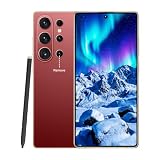
- 【6.9 HD+ for Android 15.0】This is the second generation dynamic AMOLED screen with the latest upgraded Vision booster technology for Android 15.0 phones. The clean line design with frosted matte back panel makes it more comfortable to hold. Adopts facial recognition and on-screen fingerprint unlocking to better protect your privacy.
- 【16GB+512GB & Snapdragon 8 Gen 4 Octa-Core 5G Processor】The cell phone is equipped with the powerful Snapdragon 8 Gen 4 Octa-core processor, which can dramatically improve the running speed, network, frame rate and picture smoothness, you will no more need to suffer from phone lag. 16GB RAM + 512GB ROM/512GB Expandable, which support multiple software to run smoothly at the same time, allowing you to enjoy many videos and games download to maximize your storage needs.
- 【Dual SIM/TF card holder sharing and Global Band 5G Phone】Dual SIM & 2 Card Slots, I26 Ultra Smartphone adopts 2 card slot design (SIM/TF card holder sharing), supports two 5G SIM cards, you can use the second number without carrying an extra mobile phone. Excellent transmission speed allows you to freely explore the online world.
- 【Large Battery Capacity High Photo Pixel】Professional Unlocked Phone, 7000mAh Battery Capacity, 72MP Pixel Front Camera and 108MP Pixel Rear Camera, WIFI+BT+FM+GPS, Equipped with a 200MP Sensor, Upgradable Adaptive Pixel Technology, which selects different pixels according to the different light conditions and combines and optimizes them to achieve outstanding performance. Optimized for better imaging characteristics.
- 【Global Band, Dual SIM Dual Standby 5G Mobile Phone】The machine adopts 5G smartphone with fast transmission speed, short latency, high positioning accuracy, and wide link, allowing users to feel a more advanced experience.
| Test | Snapdragon 4 Gen 4 | Dimensity 7400 | Relative result |
|---|---|---|---|
| Geekbench 6 single-core | 952 | 1,042 | Dimensity 7400 higher by about 9% |
| Geekbench 6 multi-core | 2,328 | 3,014 | Dimensity 7400 higher by about 29% |
| AnTuTu v11 total | 623,464 | 925,061 | Dimensity 7400 higher by about 48% |
| AnTuTu CPU | 251,733 | 340,697 | Dimensity 7400 higher |
| AnTuTu GPU | 36,348 | 145,500 | Dimensity 7400 substantially higher |
| 3DMark Wild Life Extreme high | 191 | 850 | Dimensity 7400 more than four times higher |
| 3DMark Wild Life Extreme low | 189 | 846 | Dimensity 7400 more than four times higher |
| 3DMark stability | 99% | 99.5% | Very similar stability in this run |
Geekbench emphasizes CPU performance, AnTuTu combines CPU, graphics, memory and user-experience components, and 3DMark Wild Life Extreme stresses the GPU. The pattern is consistent across all three: Dimensity 7400 has more available performance, especially for graphics-heavy work.
Why does Dimensity 7400 lead in multi-core performance?
CPU core layout explains much of the gap. Snapdragon 4 Gen 4 uses two performance cores up to 2.3GHz and six efficiency cores up to 2GHz. Dimensity 7400 uses four Cortex-A78 performance cores up to 2.6GHz and four Cortex-A55 efficiency cores.
Do these 3 things before closing this tab:
1Repair Windows errors before they cause bigger problems2Fix the driver behind crashes, sound loss and screen glitches3Clear out junk files and repair common Windows errorsSnapdragon 4 Gen 4’s 2+6 arrangement
Two faster cores can handle foreground bursts such as opening an app, loading a web page or processing a short task, while six efficiency cores handle lighter background activity. This is an economical design for lower-cost 5G phones, but workloads that can use many fast cores have less headroom.
Dimensity 7400’s 4+4 arrangement
Four Cortex-A78 cores give the Dimensity platform twice as many high-performance cores. They also have a higher stated peak frequency. Video processing, large downloads that are being decompressed, photo exports and other parallel tasks can therefore finish sooner, provided the phone’s cooling system can sustain the load.
Clock speed alone is not a complete performance measure. Core design, memory latency, software scheduling and thermal limits all matter, which is why the handset scores should be read alongside the specifications rather than treated as a universal ranking.
Which chipset has the better GPU for gaming?
Dimensity 7400 has the stronger evidence for gaming. Its Mali-G615 MC2 GPU produced 850 in the cited 3DMark Wild Life Extreme high run and 846 in the low run, compared with 191 and 189 for Snapdragon 4 Gen 4. The stability results were close, so the Dimensity phone delivered a much higher level of graphics performance without a major stability penalty in that test.
MediaTek also specifies HyperEngine gaming features for Dimensity 7400. Qualcomm’s brief identifies an Adreno GPU and its supported APIs but does not name a model in the cited material. The absence of a model number does not by itself prove poor gaming, but it limits direct specification-based comparison.
Rank #2

- Designed to Be Repaired, Not Replaced: The Fairphone Gen. 6+ is built around a 12-part modular design, so you can swap the battery, screen, speaker, or cameras yourself with just a screwdriver instead of replacing the whole phone. It's backed by a hardware warranty of up to five years and software support through 2033.
- Smooth Performance, Serious Durability: Powered by Snapdragon 7s Gen 4 and 12GB RAM, keeping apps fast and multitasking smooth. The 120Hz OLED display makes scrolling feel buttery, not choppy, and Gorilla Glass 7i plus IP55 splash-resistant means it can handle what your last phone couldn't. There's 256GB built in (expandable up to 2TB), so you're never trading photos for space.
- Less Noise, More You: Fairphone Moments lets you switch between full Android and a distraction-free mode with up to five essential apps of your choice. Working, traveling, or spending time with the people who matter - you decide what shows up on your screen, and what stays out of reach.
- US Carrier Compatibility: This Android smartphone supports AT&T and T-Mobile, and supported MVNOs on those networks. It is not supported on Verizon or Verizon-network MVNOs. 5G speeds require a 5G-enabled SIM/eSIM and supporting data plan, and availability varies by carrier and location.
- Google's Gemini AI Assistant, Built In: Use Gemini Live to identify what's in front of your camera, summarize the group chats you're behind on, or plan your day. Not interested in AI? You can easily toggle it off. Your phone, your call.
What this means in actual games
- Dimensity 7400 has more headroom for higher image quality, higher frame-rate targets and heavier effects.
- Snapdragon 4 Gen 4 is better suited to modest settings and games that scale well to entry-level hardware.
- The phone still matters: a high-resolution display, aggressive thermal limits or poorly tuned drivers can reduce the advantage.
- Check independent game tests for the exact model when a particular title or frame-rate target matters.
The 3DMark result is a synthetic test, not a promise that every game will run at a particular frame rate. It is nevertheless the clearest comparative evidence in this data set and points decisively toward Dimensity 7400 for sustained graphics work.
How do the Snapdragon 4 Gen 4 and Dimensity 7400 specifications compare?
Both platforms use a 4nm process, but their feature ceilings are different. The table combines Qualcomm’s Snapdragon 4 Gen 4 brief, MediaTek’s Dimensity 7400 specifications and the published comparison source. Where a figure depends on the phone maker, that dependency is shown.
| Specification | Snapdragon 4 Gen 4 | MediaTek Dimensity 7400 |
|---|---|---|
| Manufacturing process | 4nm | 4nm |
| CPU layout | 2 performance cores up to 2.3GHz + 6 efficiency cores up to 2GHz | 4 Cortex-A78 cores up to 2.6GHz + 4 Cortex-A55 cores |
| GPU | Qualcomm Adreno GPU; model number is not listed in the cited brief | Arm Mali-G615 MC2 |
| Memory support | LPDDR5 up to 3,200MHz | LPDDR5 or LPDDR4x |
| Storage support | UFS 3.1, two-lane | UFS 2.2 or UFS 3.1, according to the comparison source |
| 5G | Sub-6GHz; up to 2.5Gbps downlink and 0.9Gbps uplink | 5G Release 16; up to 3.27Gbps downlink |
| Wi-Fi | Wi-Fi 5 | Wi-Fi 6E |
| Bluetooth | Bluetooth 5.1 | Bluetooth 5.4 |
| Maximum camera resolution | Up to 108MP photos | Up to 200MP photos |
| Video capture ceiling | 1080p | 4K at 30 frames per second |
| Display support | FHD+ at 120Hz | WFHD+ at 120Hz or FHD+ at 144Hz |
| Charging support | Quick Charge 4+ | OEM-dependent; no charging figure is given on the cited official page |
A higher ceiling is not the same as a guaranteed feature. A manufacturer can pair either chipset with a lower-resolution camera, slower memory, a different storage standard or a lower-refresh display.
What’s actually slowing this PC down?
Pick the symptom - the matching free tool is one click away.
Which chip has better 5G, Wi-Fi and Bluetooth?
Dimensity 7400 has the higher stated connectivity ceilings. MediaTek lists a 3.27Gbps peak 5G downlink, Wi-Fi 6E and Bluetooth 5.4. Snapdragon 4 Gen 4 lists a 2.5Gbps downlink, 0.9Gbps uplink, Wi-Fi 5 and Bluetooth 5.1.
Those are modem and radio limits under specified network conditions, not speeds you should expect from a typical mobile plan. Carrier spectrum, signal strength, antenna design, congestion and regional bands determine real throughput. Wi-Fi 6E also requires a compatible router and a relatively uncongested 6GHz environment to show its benefits.
For ordinary browsing and streaming, both platforms are fast enough when the network is good. Dimensity 7400’s newer standards provide more room for newer routers, accessories and high-throughput 5G networks.
Which chipset supports better cameras and video?
Dimensity 7400 has the higher listed imaging ceiling: up to 200MP still photos and 4K recording at 30fps. Snapdragon 4 Gen 4 supports up to 108MP photos and 1080p capture in Qualcomm’s brief. Qualcomm also lists hardware multi-frame noise reduction.
Rank #3
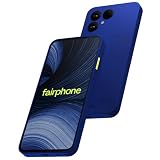
- Designed to Be Repaired, Not Replaced: The Fairphone Gen 6+ is built around a 12-part modular design, so you can swap the battery, screen, speaker, or cameras yourself with just a screwdriver instead of replacing the whole phone. It's backed by a hardware warranty of up to five years and software support through 2033.
- Smooth Performance, Serious Durability: Powered by Snapdragon 7s Gen 4 and 12GB RAM, keeping apps fast and multitasking smooth. The 120Hz OLED display makes scrolling feel buttery, not choppy, and Gorilla Glass 7i plus IP55 splash-resistant means it can handle what your last phone couldn't. There's 256GB built in (expandable up to 2TB), so you're never trading photos for space.
- Less Noise, More You: Fairphone Moments lets you switch between full Android and a distraction-free mode with up to five essential apps of your choice. Working, traveling, or spending time with the people who matter - you decide what shows up on your screen, and what stays out of reach.
- A Phone That Matches Your Values: The Fairphone contains 51% fair and recycled materials by total weight, is assembled using renewable energy, and supports living wages for factory workers. Robust everyday performance, without pretending the supply chain doesn't matter.
- US Carrier Compatibility: This Android smartphone supports AT&T and T-Mobile, and supported MVNOs on those networks. It is not supported on Verizon or Verizon-network MVNOs. 5G speeds require a 5G-enabled SIM/eSIM and supporting data plan, and availability varies by carrier and location.
Maximum sensor resolution does not determine image quality on its own. Lens quality, sensor size, stabilization, image-signal processing, autofocus, exposure tuning and the phone maker’s camera software usually matter more than the headline megapixel number. A well-tuned 108MP phone can outperform a poorly tuned 200MP implementation, and many phones will not expose the maximum mode in every camera app.
Choose Dimensity 7400 when 4K capture or a higher-resolution sensor is a genuine requirement. Choose based on the complete camera system when your priority is night photography, stabilization or consistent skin tones.
How do display and memory capabilities differ?
Snapdragon 4 Gen 4 supports FHD+ displays at up to 120Hz. Dimensity 7400 supports WFHD+ at 120Hz or FHD+ at 144Hz. The latter can enable smoother scrolling or gaming, but a phone maker may select a lower refresh rate to reduce power use.
Snapdragon’s specified memory option is LPDDR5 up to 3,200MHz, paired with two-lane UFS 3.1 storage. Dimensity 7400 can use LPDDR5 or LPDDR4x and UFS 2.2 or UFS 3.1. A Dimensity phone with LPDDR4x and UFS 2.2 may feel less responsive in app loading than a Dimensity model using LPDDR5 and UFS 3.1, so check the retail specification rather than stopping at the processor name.
Recommended Free Tools
RAM capacity, background-app policy and storage free space also affect multitasking. Two phones with the same SoC can therefore deliver noticeably different day-to-day results.
What about battery life and charging?
There is no standardized battery-life percentage or controlled endurance figure in the cited comparison. It would be misleading to declare either chipset the battery-life winner from these benchmark results alone.
Both are built on a 4nm process, which is generally associated with efficient modern designs, but endurance depends on battery capacity, modem reception, display brightness, refresh-rate policy, software scheduling, thermal limits and the workload. Dimensity 7400’s higher performance can shorten a task and then return to idle, while a faster display or sustained gaming load can increase consumption.
Rank #4

- Designed to Be Repaired, Not Replaced: The Fairphone Gen. 6+ is built around a 12-part modular design, so you can swap the battery, screen, speaker, or cameras yourself with just a screwdriver instead of replacing the whole phone. It's backed by a hardware warranty of up to five years and software support through 2033.
- Smooth Performance, Serious Durability: Powered by Snapdragon 7s Gen 4 and 12GB RAM, keeping apps fast and multitasking smooth. The 120Hz OLED display makes scrolling feel buttery, not choppy, and Gorilla Glass 7i plus IP55 splash-resistant means it can handle what your last phone couldn't. There's 256GB built in (expandable up to 2TB), so you're never trading photos for space.
- Less Noise, More You: Fairphone Moments lets you switch between full Android and a distraction-free mode with up to five essential apps of your choice. Working, traveling, or spending time with the people who matter - you decide what shows up on your screen, and what stays out of reach.
- A Phone That Matches Your Values: The Fairphone contains 51% fair and recycled materials by total weight, is assembled using renewable energy, and supports living wages for factory workers. Robust everyday performance, without pretending the supply chain doesn't matter.
- US Carrier Compatibility: This Android smartphone supports AT&T and T-Mobile, and supported MVNOs on those networks. It is not supported on Verizon or Verizon-network MVNOs. 5G speeds require a 5G-enabled SIM/eSIM and supporting data plan, and availability varies by carrier and location.
Snapdragon 4 Gen 4 supports Quick Charge 4+. The cited Dimensity 7400 specifications do not state a charging wattage, so charging speed must be checked on the individual phone’s product page. Compare measured screen-on time and charging tests for the exact models you are considering.
The Tool Desk
Outbyte PC Repair FREERepair Windows errors before they cause bigger problemsFix Now →Outbyte Driver Updater FREEScan for outdated or missing drivers - takes under a minuteDriver Scan →How should you interpret the handset-specific benchmark caveat?
The Snapdragon result came from a POCO M8 Power 5G and the Dimensity result from an iQOO Z10R. Different batteries, cooling assemblies, RAM and storage, software builds, display resolutions and thermal policies can all move a score.
- Use the published numbers to identify the likely performance tier of each platform.
- Check the exact phone’s RAM type and capacity, storage standard, display resolution and refresh rate.
- Look for sustained-load tests, not only a short peak benchmark, if you play games or edit video.
- Confirm the phone’s regional 5G bands, Wi-Fi support and camera modes.
- Compare battery and charging tests performed on that model, because the chipset specification cannot supply those missing results.
Qualcomm’s own product brief states: “Results will vary, depending on OEM implementation and other factors.” That qualification applies to any benchmark comparison between two differently designed phones.
Independent reader supportYour contribution helps us test, update, and keep practical guides available for everyone.Which chipset should gamers choose?
Choose Dimensity 7400 when gaming performance is the priority. The cited 3DMark results show a large graphics advantage, and the platform combines four performance cores with a Mali-G615 MC2 GPU and MediaTek HyperEngine features.
Snapdragon 4 Gen 4 can still make sense for casual gaming, esports titles at moderate settings or buyers prioritizing an affordable 5G phone. Before buying, check whether the specific model maintains its target frame rate after 15 to 30 minutes, because heat and software limits can matter more than a one-minute peak score.
Quick wins for a faster PC:
Scan for outdated or missing drivers - takes under a minuteDriver Scan →Clear out junk files and repair common Windows errorsFree Scan →Which chipset is better for everyday use and multitasking?
Dimensity 7400 is the stronger choice for heavy multitasking, frequent photo exports, demanding web apps and other parallel workloads. Its Geekbench multi-core lead reflects the extra high-performance cores.
For calls, messaging, navigation, video streaming and light social apps, Snapdragon 4 Gen 4 should be adequate when paired with sufficient RAM and responsive storage. In this class of phone, software support and memory capacity can have a larger effect on perceived smoothness than a modest single-core benchmark difference.
Best Value

- 1. NEXT-GEN PROCESSING POWER: Step into the future of mobile computing with the I26 Ultra, powered by the revolutionary Snapdragon 8 Gen 4 Mobile Platform. Unlike previous generations or competing chipsets that throttle under pressure, this 4nm architecture delivers a massive leap in CPU and GPU speeds. Experience seamless 4K video rendering, console-level gaming with ray tracing, and AI-driven task management that learns your habits. While other flagships struggle with overheating during intensive sessions, the I26 Ultra’s advanced vapor chamber cooling system dissipates heat efficiently, ensuring sustained peak performance without lag.
- 2. UNMATCHED BATTERY MARATHON: Say goodbye to battery anxiety with the massive 7000mAh Titanium Grade battery inside the I26 Ultra. We’ve set a new industry standard, leaving competitors (who typically cap at 5000mAh) in the dust. This isn't just about capacity; it's about endurance. Enjoy up to 15 hours of intensive gaming, 22 hours of video streaming, or days of regular use on a single charge. Compared to the competition, the I26 Ultra doesn’t just last through your workday—it outlasts the weekend, giving you the freedom to stream, play, and create without constantly searching for an outlet.
- 3. CINEMATIC DISPLAY & VISION ENHANCEMENT: Immerse yourself in a visual playground with the expansive 6.99-inch FHD+ AMOLED display. While other phones offer standard 90Hz or 120Hz screens, our panel combines the buttery-smooth 120Hz refresh rate with a touch sampling rate that rivals dedicated gaming phones. The colors are punchier, the blacks are deeper, and the peak brightness is significantly higher than competitors, ensuring perfect outdoor visibility. Whether you're editing high-res photos or watching HDR content, the I26 Ultra’s screen-to-body ratio eliminates distractions, putting the content front and center.
- 4. ULTRA-CLEAR QUAD CAMERA SYSTEM: Capture life’s moments with the precision of a professional photographer using the I26 Ultra’s advanced 108MP Main + 68MP Ultra-Wide lens configuration. Where other phones compromise on low-light quality, our advanced image processing, fueled by the Snapdragon 8 Gen 4 ISP, captures stunningly bright and noise-free shots in the dark. The 68MP ultra-wide sensor corrects for edge distortion better than leading competitors, allowing you to fit entire landscapes or large group shots into a single, sharp frame. Every photo is a gallery-quality masterpiece, thanks to the enhanced HDR and AI scene detection that automatically optimizes settings for the.
- 5. FUTURE-READY CONNECTIVITY & OS: Be among the first to experience the pure, intuitive power of Android 15, seamlessly integrated into the I26 Ultra. This isn't a "skinned" version full of bloatware; it's a clean, optimized interface that works in harmony with the hardware. Coupled with full 5G band support and Dual SIM capability, you can maintain high-speed connections for work and play on two separate lines simultaneously. The enhanced operating system offers superior privacy controls and customization options not yet available on other devices.
Which chipset has the better overall specification sheet?
Dimensity 7400 has the broader platform ceiling: faster stated 5G downlink, Wi-Fi 6E, Bluetooth 5.4, 4K30 video, up to 200MP imaging and a 144Hz FHD+ display option. Snapdragon 4 Gen 4 counters with LPDDR5 support up to 3,200MHz, UFS 3.1 two-lane storage, Quick Charge 4+ and a design aimed at efficient, lower-cost 5G devices.
If two phones are similarly priced and equally well built, Dimensity 7400 offers more performance and feature headroom. If the Snapdragon phone has substantially better cooling, battery capacity, camera hardware, software support or cost, the complete handset can still be the better purchase.
PC Slower Than It Used to Be?
A free scan shows the junk files, broken settings and background clutter dragging Windows down - then fixes them in one click.Free scan · Windows 10 & 11Crashes, No Sound, or Screen Glitches?
Random freezes, missing sound and display glitches usually trace back to one bad driver. Find and replace yours safely.Free scan · under a minuteWhat is the final verdict?
Dimensity 7400 is the clear performance winner in the cited comparison and the better platform for gaming, multi-core workloads, advanced connectivity and higher-end camera or display features. Snapdragon 4 Gen 4 is not a direct performance match, but it remains a credible choice for efficient, affordable 5G phones where the handset’s price, battery and software implementation are more important than maximum benchmark scores.
Frequently Asked Questions
Do benchmark scores predict how long a phone battery will last?
No. A benchmark measures a defined workload, while battery life depends on the phone’s battery capacity, modem signal, display settings, software and thermal policy. Look for screen-on endurance and charging measurements from the exact model.
Can a phone with Snapdragon 4 Gen 4 use 5G everywhere?
5G availability depends on the phone’s regional band support and carrier certification, not only on the chipset. Check the model number sold in your country and compare its supported bands with your carrier before buying.
Does a Dimensity 7400 phone always include 4K video recording?
The chipset platform supports 4K at 30fps, but manufacturers can disable or limit that mode in software. Verify the camera app’s listed recording modes for the specific phone.
What should I check besides the processor name when buying?
Check RAM type and capacity, UFS storage version, cooling design, display resolution, battery and charging specification, update policy, camera sensors and regional network bands. These handset-level details can materially change the experience.
Quick Recap
Product prices and availability are accurate as of the date/time indicated and are subject to change. Any price and availability information displayed on Amazon at the time of purchase will apply.

