The Tool Desk
Outbyte PC Repair FREEClear out junk files and repair common Windows errorsFree Scan →Outbyte Driver Updater FREEScan for outdated or missing drivers - takes under a minuteDriver Scan →Some links on this page are affiliate links: if you buy through them we may earn a commission, at no extra cost to you.
A smart thermostat and a smart radiator thermostat solve different problems: the first controls when the boiler or heating system is asked to produce heat; the second controls how much hot water enters one radiator. Choose a smart thermostat for central or whole-zone control, smart radiator thermostats for room-by-room radiator control, and both when you want the central system and individual rooms to follow coordinated schedules. Before buying, check that your heating controls and wiring support the central thermostat and that each target radiator has a compatible thermostatic valve.
What is the difference between a smart thermostat and a smart radiator thermostat?
A smart thermostat controls heat production for a central system or heating zone. A smart radiator thermostat—often called a smart TRV—controls hot-water flow through one radiator. They operate at different layers, so neither device is automatically a replacement for the other.
As an Amazon Associate I earn from qualifying purchases.
What’s actually slowing this PC down?
Pick the symptom - the matching free tool is one click away.
| Question | Smart thermostat | Smart radiator thermostat |
|---|---|---|
| What does it control? | A call for heat to a boiler or heating system, subject to system compatibility. | Hot-water flow at an individual radiator with a compatible thermostatic valve. |
| Where does it act? | At the central heating control or zone. | At the radiator valve. |
| What is its main use? | Scheduling or adjusting the heating system as a whole or by its controlled zone. | Giving a particular room or radiator a different target or schedule. |
| What must be compatible? | The heat source, existing controls, control type, voltage and wiring. | The radiator valve body, its thread and any required adapter. |
ENERGY STAR describes a smart thermostat as a Wi-Fi-enabled device that automatically adjusts heating and cooling temperature settings. In a radiator-based central-heating setup, the central control asks the heat source to run; the radiator valve then regulates flow at the radiator. Energy Saving Trust describes TRVs as controlling how much hot water flows through each radiator. ENERGY STAR’s smart thermostat overview and Energy Saving Trust’s heating-controls guide describe these distinct roles.
Do I need a smart thermostat if I have smart radiator valves?
Not always. If an existing central control already operates the heat source, smart radiator thermostats may add the room-level control you want without replacing that central control. If there is no wall thermostat controlling the radiators—as in some district or block-heating arrangements—radiator thermostats can be used on their own in the specific system configuration documented by the manufacturer.
#1 Best Overall
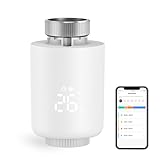
- NOTE: The Zigbee hub is required (sold separately)
- POWERFUL FUNCTION: Smart Radiator Thermostat adopts a new mini design, with a LCD digital display. The thermostatic radiator valve comes with a of powerful features, including windowing, -scale, temporary mode, -freezing, low vole warning, and a child lock function. Artificially set indoor temperature, mainly used in floor heating systems to control the closing and opening of pipes.
- APP CONTROL & VOICE CONTROL: You can control the temperature of the room in real time via Tuya/Smart life App. You can also voice control via Alxea and Google, Just say "Alexa, set the temperature in the bedroom to 22℃".
- MULTIPLE MODES :The smart thermostat valve provides multiple modes, vacation mode, comfort mode, window opening function, automatic mode, manual mode, and energy saving mode.
- WEEKLY PROGRAMMABLE FUNCTION: Temperture Controller supports manual set up 5+2, 6+1 and 7 days weekly schedule with 6 periods for option, providing you with the maximum convenience for different situation and setting customized schedule for your house temperature.
When radiator thermostats alone may be enough
Consider radiator-only control when the heat supply is controlled elsewhere and your main need is to set different radiator temperatures or schedules in individual rooms. The important distinction is whether the heating system already supplies heat when needed: a radiator thermostat adjusts flow at its radiator, but does not, by itself, establish that a boiler will start. That depends on how the building’s heat source and controls are arranged.
One documented exception is district or block heating where radiators are not controlled by a wall thermostat. In its compatibility guidance, tado° says its Smart Radiator Thermostat can be used in that arrangement and that a tado° Smart Thermostat is not needed. This guidance applies to that described setup; it should not be taken as a universal rule for every shared heating system. Check with the building manager or heating-system provider if you are unsure who controls heat delivery. tado°’s thermostat compatibility guide explains the example.
PC Slower Than It Used to Be?
A free scan shows the junk files, broken settings and background clutter dragging Windows down - then fixes them in one click.Free scan · Windows 10 & 11Crashes, No Sound, or Screen Glitches?
Random freezes, missing sound and display glitches usually trace back to one bad driver. Find and replace yours safely.Free scan · under a minuteWhen radiator thermostats alone may not solve the problem
If your boiler needs a central control to receive a heat demand, fitting smart heads to radiators does not automatically provide that demand. You may be able to adjust the flow through a radiator when hot water is available, but a closed or idle boiler cannot be assumed to respond to a radiator’s target setting. The result depends on the control system and how its devices are configured. Confirm that the system can respond to room-level requests before choosing radiator-only devices.
Can smart radiator thermostats replace a central thermostat?
Only in a system designed to work without a wall thermostat or equivalent central control. A smart radiator thermostat controls its own radiator valve; it does not inherently take over a central thermostat’s job of calling for heat. In many central-heating setups, removing or bypassing the central control without a compatible replacement could leave the heat source without the control it needs.
Rank #2

- Shelly Blu TRV - Smart Thermostatic Radiator Valve. Enjoy comfort and efficiency with precise climate control, sleek design, and quick response times. Bluetooth-operated and Wi-Fi-enabled (*gateway required), it offers long battery life and seamless smart home integration.
- The new standard for comfort living - Shelly BLU TRV has precise temperature control, maintaining your desired comfort level with an accuracy of ±0.1°C, ensuring a consistent and comfortable environment. For those moments when you need a quick warm-up, the Boost Mode can swiftly bring your room to the perfect temperature in no time.
- Customized heating made easy - Smart scheduling allows you to align your heating with your daily routines, optimizing both comfort and energy efficiency. For enhanced temperature accuracy, the Shelly BLU TRV can support external sensors like Shelly BLU H&T and Shelly BLU Door/Window, which makes it a versatile addition to any home heating system.
- A perfect blend of comfort and efficiency - Ensure your home is cozy when you arrive, while reducing unnecessary energy usage when you're away. With our app, you can easily create smart heating schedules that adapt to your lifestyle - keeping your home comfortable when needed and helping you save on energy costs when it's not.
- Shelly is one of the fastest-growing Smart Home brands, offering automation solutions for homes, buildings, and businesses. Device include a 3-year warranty and professional support. With the Shelly Smart Control App, you can configure and manage devices remotely, get real-time notifications, and create personalized scenes by combining Shelly devices to trigger automated actions across your smart home.
Think of the distinction as a request-and-flow chain. The central control is responsible for heat production or the relevant zone’s call for heat. The radiator thermostat regulates the flow at its own radiator. Whether a room-level request can trigger heat production depends on the system and the compatible controls installed. A product’s ability to connect to an app or follow a schedule does not by itself prove it can operate your boiler.
Before treating radiator devices as a central-thermostat replacement, establish who controls the heat source, whether it can respond to those devices, and whether the manufacturer’s guidance explicitly covers your arrangement. The documented district/block-heating example above is a specific case, not a general permission to remove a working central thermostat.
Free tools Windows power users keep installed
One-click scans. No signup required.
When does it make sense to use both?
Use both when you want central scheduling or boiler control as well as different room-level targets. The smart thermostat manages the central heat call or zone, while smart radiator thermostats can limit or regulate heat at selected radiators. This combination is complementary when the controls are compatible and configured to work together.
A conventional central system with a wall thermostat
If one central thermostat currently controls your heating and you want remote or automatic control of that heat call, start by checking a compatible smart thermostat. Add smart radiator thermostats where room-by-room control addresses a separate need, such as wanting different settings in different rooms. These additions do not remove the need to verify that the central thermostat and boiler can work together.
Rank #3

- NOTE: The Zigbee hub is required (sold separately)
- POWERFUL FUNCTION: Smart Radiator Thermostat adopts a new mini design, with a LCD digital display. The thermostatic radiator valve comes with a of powerful features, including windowing, -scale, temporary mode, -freezing, low vole warning, and a child lock function. Artificially set indoor temperature, mainly used in floor heating systems to control the closing and opening of pipes.
- APP CONTROL & VOICE CONTROL: You can control the temperature of the room in real time via Tuya/Smart life App. You can also voice control via Alxea and Google, Just say "Alexa, set the temperature in the bedroom to 22℃".
- MULTIPLE MODES :The smart thermostat valve provides multiple modes, vacation mode, comfort mode, window opening function, automatic mode, manual mode, and energy saving mode.
- WEEKLY PROGRAMMABLE FUNCTION: Temperture Controller supports manual set up 5+2, 6+1 and 7 days weekly schedule with 6 periods for option, providing you with the maximum convenience for different situation and setting customized schedule for your house temperature.
Rooms with different schedules or temperature needs
Room-level controls are most useful when you have a concrete reason not to treat every radiator alike. For example, you may want the rooms you use at different times to follow different schedules, rather than asking one central target to represent the entire home. This is a control choice, not a promise of a particular bill reduction. The actual result depends on the heating system and how you use it.
Avoid competing controls in the same room
When a central thermostat and smart radiator thermostat share a room, their relationship matters. If one calls for heat while the other restricts that radiator, their settings may work against each other unless the system is configured to coordinate them. Drayton by Schneider Electric documents how a Wiser room thermostat and radiator thermostat coordinate in one room; use the instructions for your specific products and system rather than assuming all combinations behave alike. Drayton’s Wiser control guidance is an example of manufacturer-specific coordination advice.
Quick wins for a faster PC:
Fix the driver behind crashes, sound loss and screen glitchesFind Drivers →Repair Windows errors before they cause bigger problemsFix Now →Scan for outdated or missing drivers - takes under a minuteDriver Scan →Do I need smart TRVs in every room?
No. Fit them only to the radiators where you want separate room-level control and where the existing valves are compatible. The central thermostat and any existing controls still determine how the heating system operates overall, so the number and placement of smart radiator thermostats should follow your control goals rather than an assumption that every radiator needs a smart device.
- Prioritize rooms that need different settings: use a smart radiator thermostat where independent room control is valuable.
- Check the valve before counting the radiator: a smart head cannot be assumed to fit or control a manual valve.
- Consider the central thermostat’s location: a room used for central temperature sensing can interact with a radiator control in that same room.
- Decide whether partial coverage is enough: you can target only selected radiators, but the remaining rooms continue to be governed by their existing controls and the way the system distributes heat.
Energy Saving Trust describes a programmer, room thermostat and TRVs as the normal set of controls for central heating. That describes control roles, not a requirement to install a smart device on every radiator. The appropriate arrangement depends on the home and the control system.
Rank #4

- Save up to 23% every year on heating and cooling costs, adjusts to your set schedule to save energy when you’re gone and optimize comfort when you’re home. Compared to a hold of 72
- Compatible with 85% of systems, check your system’s compatibility with our online ecobee Compatibility Checker on the ecobee support page
- Change your temperature by easily tapping the color touchscreen or using the ecobee app. Plus, free software upgrades ensure you get the best out of your Smart Thermostat Essential, for years to come
- Automatically adjusts to your set schedule to save energy when you’re gone and optimize comfort when you’re home. Keep track of your energy consumption when you're on the go on the ecobee app
- Easy DIY install. No C Wire, no problem. Get the ecobee Power Extender Kit (PEK) for homes without a C-Wire and keep your walls looking nice with our trim kit – both sold separately
What compatibility should you check before buying?
Check central heating compatibility and radiator-valve compatibility separately. A smart thermostat must be suitable for the heat source and its control wiring; a smart radiator thermostat must fit a thermostatic valve. Passing one check does not establish the other.
For a smart thermostat
- Identify the heat source and system: note whether you have a combi, system or regular boiler, district or block heating, a heat pump, or an electric system. The type alone does not confirm compatibility, but it gives the manufacturer or installer the information needed to check.
- Check control type and wiring: confirm the manufacturer’s requirements for control wiring, voltage and the connection to your existing heating controls.
- Check for a C-wire or adapter requirement: ENERGY STAR notes that most smart thermostats use low-voltage wiring and that a C-wire or adapter may be needed. Do not assume your existing wiring meets the product’s requirements.
- Ask for specialist help on complex systems: ENERGY STAR flags zoned, variable-speed and line-voltage systems as cases that may require professional assistance. Unfamiliar wiring is also a reason not to guess.
ENERGY STAR’s buying guidance is useful for screening wiring and system issues, but the thermostat maker’s compatibility checker and instructions are the more specific place to confirm an individual model. ENERGY STAR’s smart thermostat information includes its buying guidance.
For a smart radiator thermostat
- Confirm that the valve is thermostatic, not manual: a manual radiator valve is not directly compatible with the tado° Smart Radiator Thermostat. Its guide says the product works only with thermostatic radiator valves and replaces the existing thermostatic valve head.
- Check the valve’s physical connection: thread and adapter requirements depend on the valve and device. Do not assume that a common size or an included adapter will fit your radiator.
- Check each radiator separately: homes can have different valve types, so inspect every radiator you plan to control rather than assuming one successful fit proves all others match.
If a target radiator has a manual valve, the tado° guide says it must first be replaced with a compatible thermostatic valve before using its smart radiator thermostat. Confirm the replacement valve and fitting requirements with the product maker or a qualified heating professional. tado°’s radiator thermostat compatibility guide covers its valve requirement.
Independent reader supportYour contribution helps us test, update, and keep practical guides available for everyone.How do you choose and install the right setup?
Work out what currently controls heat, then verify each proposed device against the system it will control. This avoids buying a radiator head when the unanswered problem is boiler control—or a central thermostat when your real need is to regulate particular rooms.
Best Value
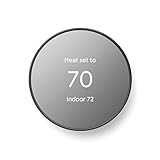
- ENERGY STAR certified smart thermostat for home that helps you save energy and stay comfortable.Connectivity : Wi-Fi - 802.11b/g/n 2.4 GHz, 802.11a/n 5 GHz Wi-Fi., Wireless interconnect : Bluetooth Low Energy Please refer to the product description section below for all applicable legal disclaimers.Product note: You can also check your system’s compatibility before purchasing a Nest thermostat with our online Nest Compatibility Checker on the Google Nest support page
- The Nest Thermostat is designed to work without a C wire in most homes, but for some systems, including heating only, cooling only, zone controlled, and heat pump systems, you’ll need a C wire or other compatible power accessory
- Nest Thermostat turns itself down when you leave, so you don’t waste energy heating or cooling an empty home. Lock feature: No
- Programmable thermostat that lets you create an energy efficient schedule in the Google Home app on your Android or iPhone
- Remote control lets family members change the thermostat temperature from anywhere on a phone, laptop, or tablet[1]
- Map the system: identify the heat source and find the existing controls, including any wall thermostat, programmer or zone controls. If you live in a building with shared heating, establish who controls heat delivery to your radiators.
- Choose the control problem you are solving: for remote or automatic control of the central heat call, investigate a compatible smart thermostat. For differing room-level radiator settings, investigate smart radiator thermostats. For both goals, check whether the proposed products can be coordinated.
- Verify the central thermostat requirements: use the maker’s compatibility information to check the system, control type, wiring and voltage, and whether a C-wire or adapter is required. Treat unfamiliar or complex wiring as an installer job.
- Inspect each target radiator valve: confirm it is thermostatic rather than manual, then check the valve thread and adapter requirements against the exact smart radiator thermostat model.
- Get professional assistance where appropriate: zoned, variable-speed and line-voltage systems may need specialist help, and electrical or heating-control wiring should not be guessed.
- Commission the controls as a system: after installation, verify that a room’s heat demand can start the boiler or zone when intended, and check that central and radiator settings are not fighting each other. Follow the manufacturers’ setup guidance for your specific combination.
A successful fit at the radiator is not the same as a successful control system. Confirm both that the device physically fits and that a heat demand can reach the relevant heat source or zone where your setup requires it.
Will smart controls save money?
Potentially, but the available figure here applies to certified smart thermostats, not smart radiator thermostats generally. ENERGY STAR reported average savings of approximately 8% of heating and cooling bills, or about $50 per year, in its 2017 FAQ. Those are averages reported by ENERGY STAR, not a guaranteed outcome for an individual home; ENERGY STAR says results vary with climate, equipment and behavior. ENERGY STAR’s smart thermostat page is the supplied source for the program information.
No universal savings figure for smart radiator thermostats is established by the cited official sources. Do not apply the smart-thermostat average to radiator valves or assume that adding more smart controls produces a proportional reduction. Savings depend on the existing system, control settings and actual heating use.
Which setup fits your situation?
| Your situation | What to consider | Key check |
|---|---|---|
| You want to control when a boiler or central zone heats. | A compatible smart thermostat. | Heat-source compatibility, control type, voltage and wiring. |
| The central heat source is controlled elsewhere, but some rooms need different radiator settings. | Smart radiator thermostats on selected compatible radiators. | Each target radiator must have a compatible thermostatic valve. |
| You want central scheduling plus room-level control. | Both types of control, configured to work together. | Confirm system compatibility and avoid conflicting control behavior in the same room. |
| You have district or block heating without a wall thermostat controlling the radiators. | Radiator-only control may be suitable in the specific documented arrangement. | Confirm how your building’s heat is supplied and follow the device maker’s guidance. |
| You have manual radiator valves. | Do not assume a smart radiator head can replace them directly. | Check whether a compatible thermostatic valve replacement is needed. |
Frequently Asked Questions
Can a smart radiator thermostat turn the boiler on by itself?
Not inherently. A radiator thermostat regulates flow at its own radiator; whether it can request heat from a boiler depends on the compatible central controls and how the system is configured.
Can I keep my existing programmer when I install a smart thermostat?
Whether an existing programmer stays in the control chain depends on the thermostat model and the way your heating system is wired. Check the product maker’s compatibility guidance or ask an installer to identify how the existing controls interact.
Do smart radiator thermostats work on electric radiators?
The cited radiator-valve guidance concerns thermostatic radiator valves controlling hot-water flow. It does not establish compatibility with electric radiators, so check the exact device’s specifications rather than assuming a hot-water radiator control will apply.
Do these 3 things before closing this tab:
1Scan for outdated or missing drivers - takes under a minute2Repair Windows errors before they cause bigger problems3Fix the driver behind crashes, sound loss and screen glitchesIs the 8% smart-thermostat saving guaranteed for my home?
No. ENERGY STAR’s figure is an average reported in its 2017 FAQ, and its stated results vary with climate, equipment and behavior. It is not a forecast for a particular household or a savings estimate for smart radiator thermostats.
Quick Recap
Product prices and availability are accurate as of the date/time indicated and are subject to change. Any price and availability information displayed on Amazon at the time of purchase will apply.

