Some links on this page are affiliate links: if you buy through them we may earn a commission, at no extra cost to you.
ServiceNow is bringing “Vibe Coding” into enterprise workflows with a promise that could reshape how internal applications are built: describe what a team needs in natural language, and let AI help turn that intent into a working workflow application far faster than traditional development cycles allow.
The move reflects a broader shift in enterprise software, where AI-assisted development is moving beyond code suggestions and into full workflow creation, automation design, and application scaffolding. For organizations that rely on ServiceNow to manage IT, HR, customer service, security, and operations processes, the ability to compress app development from weeks to minutes could change who builds software and how quickly business needs are addressed.
As an Amazon Associate I earn from qualifying purchases.
The Tool Desk
Outbyte PC Repair FREEClear out junk files and repair common Windows errorsFree Scan →Outbyte Driver Updater FREEScan for outdated or missing drivers - takes under a minuteDriver Scan →That speed also raises new questions about governance, security, compliance, and oversight. As developers, admins, and business teams gain more powerful creation tools, enterprises will need clear controls to ensure AI-generated workflows are reliable, auditable, and aligned with organizational standards.
What ServiceNow Means by Vibe Coding
In ServiceNow’s enterprise context, “Vibe Coding” refers to building workflow applications by describing the desired outcome in natural language rather than manually assembling every data model, form, rule, integration, and user experience from scratch. The term borrows from the broader developer trend of using AI copilots to translate intent into working software, but ServiceNow is applying it to the structured world of enterprise service management, operations, HR, finance, customer support, and industry workflows.
Popular on Amazon

- rv toilet brush: Engineered specifically for RVs, this brush features a silicone head that gently cleans without damaging the toilet bowl or seals, a must for traditional toilet brushes.
- Compact Wall-Mounted Toilet Brush: With its space-saving design, this brush is easy to stow away discreetly, perfect for the limited space in RVs.
- silicone toilet brush: This brush is designed for thorough cleaning of the toilet bowl without causing any harm to the porcelain or seals. The drip-free toilet brush holder is crafted to collect water from the brush, preventing any mess on your RV's floor.
- Wall-Mounted Toilet Brush for RV Travel: The brush head is conveniently attachable to the bathroom wall, ensuring that there's no rolling around during your trips. With this setup, you can travel with peace of mind, knowing your toilet brush is securely in place.
Instead of beginning with a blank canvas, a business user, admin, or developer can express a need such as, “Create an onboarding workflow for contract workers that routes approvals to legal, provisions equipment through IT, and notifies facilities if badge access is required.” The platform’s AI can then infer the application components needed to support that request: intake forms, tables, approval paths, task assignments, notifications, role permissions, and dashboards. The goal is not simply to generate code snippets, but to generate a usable workflow application aligned with the ServiceNow platform model.
This distinction matters because enterprise workflow development is rarely just about writing code. A production-ready app has to respect identities, entitlements, audit trails, data relationships, integration points, and lifecycle controls. ServiceNow’s version of Vibe Coding is therefore closer to AI-assisted application composition than free-form software generation. It uses natural language as the entry point, but the output is meant to fit into governed platform constructs such as Flow Designer, App Engine, catalog items, records, business rules, and workspace experiences.
What’s actually slowing this PC down?
Pick the symptom - the matching free tool is one click away.
How it differs from traditional low-code
ServiceNow has offered low-code and no-code tools for years, allowing teams to configure workflows through visual builders and reusable components. Vibe Coding adds a more conversational layer on top of that foundation. Rather than requiring the user to know which platform object to create first, the AI can interpret intent, propose an application structure, and automate much of the initial build. The user then reviews, refines, tests, and governs the result within familiar ServiceNow controls.
- Natural language input: Users describe the workflow, business rules, roles, and outcomes in plain language.
- AI-generated structure: The platform can create forms, data objects, process flows, and task logic based on the prompt.
- Platform-native output: Generated assets are intended to run inside ServiceNow rather than as disconnected prototypes.
- Human review: Admins and developers remain involved in validation, security, integration, and release decisions.
For ServiceNow, the value proposition is speed with structure. Many departments already have long backlogs of workflow requests: a custom approval app for procurement exceptions, a case management process for employee relations, a field service checklist, or a compliance attestation tracker. Vibe Coding aims to turn those ideas into first drafts in minutes, giving teams something concrete to inspect and improve instead of waiting for a formal development cycle to begin.
The phrase also signals a shift in who can participate in application creation. Developers still matter, especially for complex integrations, performance, architecture, and security. But admins and process owners can move closer to the build process because they can express requirements directly and see them translated into working platform assets. In that sense, ServiceNow’s Vibe Coding is less about replacing enterprise developers and more about compressing the distance between business intent and governed workflow execution.
How AI Turns Workflow Ideas Into Enterprise Apps
ServiceNow’s Vibe Coding approach turns a plain-language request into a structured workflow application by using AI to interpret intent, map requirements to platform components, and generate the first working version inside the Now Platform. A user might describe a process such as, “Create an employee equipment request app with manager approval, asset assignment, notifications, and SLA tracking.” Instead of starting with a blank canvas, the system can translate that prompt into data models, forms, approval flows, task assignments, and user-facing experiences that reflect ServiceNow workflow patterns.
The process relies on more than text generation. AI-assisted development in an enterprise workflow platform must understand objects such as records, tables, roles, catalog items, business rules, integrations, and approval states. In practice, the model acts as a bridge between business language and ServiceNow’s application architecture. It can propose fields for a request form, define status transitions, create fulfillment tasks for IT or HR teams, and connect the app to existing platform capabilities such as notifications, reporting, knowledge articles, and employee portals.
Also popular on Amazon
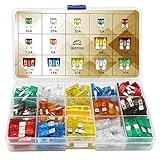
- Easy Identification: Made of a high quality zinc alloy, with a transparent cover and color coded
- 14 Most Common Fuses: Standard and Mini. (5A/ 7.5A/ 10A/ 15A/ 20A/ 25A/ 30A)
- Wide Applications: Fits most vehicles like car, truck, marine, SUV, travel trailer and other vehicles
- Note: Please use the right amp fuse to protect the vehicle and electronic equipment from short-circuit/overload
- ll Sizes You Need: The package contains 140pcs fuse and 2pcs fuse puller - 70pcs standard fuse and 70pcs mini fuse. (10pcs of each AMP)
From prompt to working workflow
A typical Vibe Coding interaction can begin with a business outcome rather than a technical specification. The user describes who needs the app, what data should be collected, which teams should act on the request, and what should happen when approvals are granted or rejected. The AI then generates a draft application that can be reviewed, tested, and refined through additional prompts. For example, a business analyst could ask it to “add a finance approval for requests over $5,000” or “send a reminder if the facilities team has not responded within two business days.”
- Data structure: The AI can suggest tables, fields, relationships, and validation rules based on the workflow being requested.
- Process automation: It can create approval chains, routing rules, task generation, escalations, and SLA triggers.
- User experience: It can generate forms, portal pages, request views, and role-specific interfaces for employees, managers, and fulfillment teams.
- Operational visibility: It can add dashboards, reports, and status tracking so teams can monitor workload and service performance.
This matters because many enterprise apps are not standalone products; they are workflow layers that coordinate people, systems, policies, and data. A procurement intake app may need to involve finance, legal, security, and vendor management. An onboarding workflow may need to create IT tickets, assign training, notify a hiring manager, and update HR records. By grounding AI generation in ServiceNow’s workflow engine, Vibe Coding can produce applications that are closer to operational use than a generic code assistant creating isolated snippets.
The strongest value comes from iteration. Business teams often struggle to express every requirement before development begins, and developers often spend time translating incomplete process descriptions into technical designs. With AI-assisted workflow generation, the first version becomes a conversation object. Users can inspect the app, identify missing steps, and refine it in natural language while developers and admins validate the structure, integrations, and controls. That changes app creation from a long handoff cycle into a faster loop of prompting, reviewing, adjusting, and publishing within governed platform boundaries.
Crashes, No Sound, or Screen Glitches?
Random freezes, missing sound and display glitches usually trace back to one bad driver. Find and replace yours safely.Free scan · under a minutePC Slower Than It Used to Be?
A free scan shows the junk files, broken settings and background clutter dragging Windows down - then fixes them in one click.Free scan · Windows 10 & 11Why App Development Timelines Could Shrink From Weeks to Minutes
The biggest time savings from ServiceNow’s Vibe Coding approach come from compressing the earliest and most repetitive stages of application delivery. In a traditional enterprise workflow project, teams often spend days or weeks translating a business request into requirements, data models, forms, approval paths, notifications, roles, and basic integrations. With AI-assisted natural language development, a user can describe the desired outcome in plain language, and the platform can generate a working starting point almost immediately.
For example, a facilities team might ask for an app to manage office move requests, including employee details, manager approval, equipment needs, task assignment, and status updates. Instead of waiting for a developer or admin to manually create each table, form, flow, and notification, Vibe Coding can assemble those components from the prompt and align them with ServiceNow’s workflow patterns. The result is not necessarily a finished production system in one command, but it can be a functional prototype that business users can test, refine, and approve in minutes rather than after several sprint cycles.
Where the time compression happens
- Requirements capture: Natural language prompts reduce the back-and-forth needed to convert a business idea into technical specifications.
- Application scaffolding: The AI can generate data structures, forms, workflows, and user experiences that would otherwise be configured manually.
- Iteration: Teams can adjust prompts to add fields, change approval steps, modify notifications, or refine task routing without restarting development.
- Testing with stakeholders: Business teams can interact with a live prototype earlier, making feedback more specific and less dependent on abstract documents.
This shift is especially meaningful for departmental applications and internal service workflows, where much of the work follows familiar enterprise patterns. Employee onboarding, access requests, policy exceptions, asset tracking, procurement intake, and case routing often share similar building blocks. ServiceNow’s AI can use those repeatable patterns to generate usable workflows quickly, while the platform’s existing automation, identity, data, and integration layers provide the enterprise foundation behind them.
The “weeks to minutes” claim is strongest when applied to the first usable version of an app. Production readiness still requires review, testing, security validation, data governance, integration checks, and change management. However, even when those steps remain in place, the total timeline can shrink because teams are no longer starting from a blank canvas. Developers and admins can spend less time on boilerplate configuration and more time on exception handling, complex integrations, performance, compliance, and user experience.
Also popular on Amazon

- ✅ Organize Your Freezer with a Complete Ice System: This ice cube tray with lid and bin set solves freezer clutter by combining 4 silicone ice cube trays, a central storage container, and a scoop. Keep your kitchen tidy while always having ice ready for daily drinks, cooking, or entertaining.
- ✅ Easy-Pop Ice Release with Secure Non-Spill Lids: Each silicone ice tray features a flexible bottom for effortless ice cube removal—simply push from below. The ice tray with lid has lift tabs for easy handling and minimizes spills when moving (note: lids allow airflow and are not airtight).
- ✅ Maximize Freezer Space with Stackable Design: These ice trays for freezer stack neatly to save vertical space. Perfect for compact apartment freezers, RV refrigerators, or organizing multiple ice cube trays for freezer for parties and home use.
- ✅ BPA-Free and Odor-Resistant for Pure Ice Taste: Made from food-grade silicone and durable plastic, these ice trays resist absorbing freezer odors. Ensure clean, tasteless ice for your cocktails, coffee, or family meals with these BPA-free ice trays.
- ✅ Versatile and Dishwasher Safe for Easy Cleanup: Create clear cubes or infuse with fruits for flavored ice. The entire ice bucket kits set is top-rack dishwasher safe, making cleanup simple and convenient after parties or daily use.
That changes the rhythm of enterprise delivery. Instead of business teams submitting tickets and waiting for capacity, they can participate directly in shaping the workflow. Instead of developers interpreting long requirement documents, they can review AI-generated artifacts and strengthen them. The practical impact is a faster path from idea to validation, with fewer delays between business intent and a working application inside the ServiceNow environment.
Governance, Security, and Compliance in AI-Generated Workflows
For enterprises, the value of ServiceNow’s Vibe Coding depends on more than speed. A workflow created in minutes still has to respect role-based access, data residency, audit requirements, approval chains, integration controls, and internal development standards. In a platform like ServiceNow, AI-generated apps cannot be treated as disposable scripts; they often touch employee records, customer cases, financial approvals, procurement requests, security incidents, or regulated operational processes. That makes governance a core part of the product experience rather than an afterthought.
The main shift is that governance has to move closer to the moment of creation. When a business user describes an app in natural language, the platform needs to interpret not only the functional request but also the enterprise context around it. For example, an app for onboarding contractors may require identity verification, manager approval, automatic access expiration, and restrictions on who can view personal data. An AI assistant that generates the workflow should be able to propose these controls, flag missing safeguards, and align the output with existing ServiceNow policies before the app is promoted into production.
Controls enterprises will expect
- Role-based permissions: Generated workflows should inherit established access models so users only see records and actions appropriate to their role.
- Audit trails: Every AI-generated change, approval, deployment, and data update should be traceable for internal review and external audits.
- Policy checks: The platform should detect workflows that conflict with data handling rules, segregation-of-duties requirements, or compliance mandates.
- Human approval gates: High-impact workflows should pass through admin, security, or process-owner review before going live.
- Version control and rollback: Teams need the ability to compare changes, restore prior versions, and understand what the AI modified.
Security teams will also focus on how prompts, generated assets, and connected data are handled. Natural language development introduces a new surface area: users may describe sensitive processes in prompts, request integrations with restricted systems, or create automations that move data between departments. Enterprises will want clear boundaries around what the AI model can access, how prompts are stored, whether customer-specific data is used for model improvement, and how generated workflows are tested for unsafe behavior. In regulated sectors such as banking, healthcare, government, and telecom, those questions will shape adoption timelines as much as the underlying productivity gains.
Free tools Windows power users keep installed
One-click scans. No signup required.
Compliance also depends on keeping AI-generated work inside existing operating models. Many ServiceNow customers already use change management, application governance, configuration management databases, and release pipelines to control digital operations. Vibe Coding becomes more enterprise-ready when it plugs into those mechanisms: a generated workflow can be submitted as a change request, mapped to affected services, reviewed by the right owners, tested in a sub-production instance, and deployed through approved channels. That approach allows business teams to move faster without bypassing the controls that protect production environments.
For CIOs and platform owners, the practical goal is not to prevent non-developers from creating software. It is to make safe creation the default path. If ServiceNow can combine natural language app generation with embedded guardrails, policy-aware recommendations, and transparent review processes, Vibe Coding could expand who participates in automation while preserving the trust enterprises require. The winners will be organizations that define clear standards early: which teams can generate workflows, which use cases need review, what data can be accessed, and how AI-created applications are monitored after deployment.
Impact on Developers, Admins, and Business Users
ServiceNow’s Vibe Coding changes who can participate in application creation, but it does not remove the need for experienced platform skills. Instead, it shifts much of the early work from manual configuration and scripting toward guided intent capture, validation, refinement, and operational oversight. A business stakeholder can describe a workflow for onboarding contractors, resolving facilities requests, or managing software access, while the platform generates the first version of the app, including forms, flows, roles, and data relationships. That draft still needs people who understand the enterprise environment to make sure it fits existing processes, policies, integrations, and reporting standards.
Also popular on Amazon

- 【Food Grade Material】Made from eco-friendly PP+TPR material that is BPA Free and Food-Grade. The flexible material allows the dish strainers for kitchen counter to collapse flat for easy space-saving and storage, making the most of your kitchen countertop.
- 【Built-in Utensil Drying Rack】Separate storage area for utensils and gadgets, the non-slip dish drying rack is scratch-proof and offers a safe place for plates and cups, and has a separate compartment for cutlery. Perfect for storage and draining dinnerware and glassware.
- 【Compact and Portable】The collapsible dish drainer is simply pop-up to open when using and collapses to flat for space-saving storage, you can easily store it under the sink or slip it into any cabinet. Suitable for both indoors & outdoors uses, such as camping, BBQ, RV and boats, campsite cleanup, and vacation homes, etc.
- 【Drying Water Quickly】The collapsible dish storage rack versatile tool for all your household tasks, at the same time, will not hurt your hands or scratch the sink. The Bottom with an adjustable swivel drain strip allows water to run directly into the sink, keeping your counters clean and dry.
- 【Easy to Maintain】Heavy-duty plastic is simple to wipe clean, and there’s no rusting like the old clunky metal dish drying rack. The kitchen organizers for dishes is scratch-proof and offers a safe place for plates and cups, and prevent the rack from shifting and scratching any counter top.
For developers, the biggest change is likely to be a move away from building every component from scratch. They may spend less time creating routine tables, forms, notifications, and approval flows, and more time reviewing generated artifacts, extending complex , building integrations, improving user experience, and handling edge cases. AI-assisted development can also reduce the backlog of low-complexity requests that often crowd enterprise development queues. Rather than being asked to produce yet another departmental tracker or approval app, developers can focus on architecture, reusable components, security patterns, performance, and maintainability across the ServiceNow estate.
Recommended Free Tools
Admins may see their role expand as the central control point for AI-generated workflow activity. They will need to manage guardrails, templates, naming conventions, data access, environment promotion, and lifecycle controls so that rapid creation does not turn into uncontrolled sprawl. In practical terms, admins become reviewers and orchestrators of a broader creation pipeline. They can help business teams turn prompts into usable applications while ensuring that generated workflows follow platform standards, avoid duplicate functionality, and do not bypass established change management practices.
How roles may change
- Developers: focus more on advanced customization, integrations, reusable services, code review, and platform architecture.
- Admins: manage governance, configuration standards, access controls, release processes, and quality checks for generated apps.
- Business users: contribute directly to app design by describing outcomes, process steps, exceptions, and approval requirements in natural language.
- Process owners: validate whether generated workflows reflect operational reality and align with compliance, service-level, and reporting needs.
For business users, Vibe Coding lowers the barrier between identifying a workflow problem and testing a working solution. A team that previously waited weeks for discovery sessions, development capacity, and iterative configuration may be able to generate a usable prototype during a planning meeting. This can improve alignment because stakeholders can react to a working flow instead of abstract requirements documents. They can see which fields are captured, how approvals move, what notifications are sent, and where exceptions occur, then ask for changes in plain language.
The cultural impact may be as significant as the technical one. Enterprise app delivery has often been constrained by translation gaps between business teams and technical teams. Natural language development narrows that gap, but it also requires clearer ownership. If more people can create software-like assets, organizations need stronger habits around review, documentation, testing, and retirement of unused apps. The most successful teams are likely to treat Vibe Coding as a shared operating model: business users define intent, AI accelerates generation, admins enforce platform discipline, and developers ensure that the result is scalable, secure, and ready for enterprise use.
Independent reader supportYour contribution helps us test, update, and keep practical guides available for everyone.What This Signals for the Future of Enterprise Software
ServiceNow’s move into Vibe Coding points to a broader shift in enterprise software: applications are becoming less like fixed products that teams request, fund, queue, and eventually receive, and more like adaptable workflows that can be generated, tested, and refined in the same environment where work already happens. Instead of treating software delivery as a long handoff between business stakeholders, analysts, developers, security reviewers, and operations teams, AI-assisted workflow creation compresses those steps into a more interactive process. A service manager, HR lead, procurement analyst, or IT admin can describe a desired outcome in natural language, then use the platform to turn that intent into a working process with forms, approvals, data connections, notifications, and reporting.
Quick wins for a faster PC:
Scan for outdated or missing drivers - takes under a minuteDriver Scan →Clear out junk files and repair common Windows errorsFree Scan →This does not mean enterprise software becomes casual or uncontrolled. The signal is that the interface for building software is changing. Historically, enterprise platforms competed on configurability, integration depth, and process coverage. Those capabilities still matter, but the next layer of competition is how effectively a platform can translate human intent into governed execution. Natural language becomes an entry point, while the underlying platform enforces identity, roles, audit trails, data policies, integration standards, and lifecycle controls. In that model, the enterprise application is not simply written by a person or generated by a model; it is assembled through a controlled collaboration between users, AI agents, platform services, and administrative guardrails.
From packaged applications to continuously generated workflows
The longer-term implication is a move away from one-size-fits-all enterprise applications toward software that can be shaped around narrower operational needs. A facilities team might generate a workflow for emergency equipment inspections. A finance team might create an exception-handling process for vendor payment disputes. An IT team might spin up a temporary workflow for a cloud migration cutover. These use cases may have been too small, too urgent, or too department-specific to justify a traditional development cycle. With AI-assisted creation, more of them become viable because the cost of experimentation drops.
Also popular on Amazon

- Advanced 6-Step Filtration Technology: Discover the impressive power of the Tastepure RV water filter’s Hex-Flow Technology and its 6-step filtration process. Each layer seamlessly works together to deliver water that’s exceptionally clean.
- Certified Lead-Free: This camping water filter is independently tested & listed to standards NSF/ANSI 42 & NSF/ANSI 53. It’s CSA lead-free content certified to NSF/ANSI 372 & compliant with all federal & state-level lead-free laws.
- Access to Pure, Great-Tasting Water: Enjoy clean water anywhere! This RV inline filter reduces bad tastes, odor, chlorine, sediment, etc. GAC filtration, combined with KDF controls bacteria & mold growth when the outdoor water filter isn’t in use.
- Patented Technology & Made in the USA: This in-line water filter is proudly made in the USA with top-notch materials and expert craftsmanship. The patented design has undergone rigorous testing and quality control to meet the highest standards.
- Versatile Applications: Easily attach this multi-purpose hose water filter to any standard garden or drinking water hose to receive cleaner drinking water. It’s great for campers, boats, pets, gardening, car washes, car detailing, & more.
- More workflow coverage: Processes that previously lived in spreadsheets, email chains, and chat threads can be converted into trackable applications.
- Faster iteration: Teams can refine fields, routing, approval steps, and dashboards as requirements become clearer.
- Closer business alignment: The people who understand the work can participate directly in shaping the application.
- Platform-centered control: Generated workflows can inherit the same governance and operational standards as other enterprise apps.
For large organizations, this could reshape portfolio planning. Instead of prioritizing only the biggest transformation projects, CIOs may increasingly manage a living inventory of AI-generated workflows, each mapped to business outcomes, risk levels, data sensitivity, and ownership. The enterprise software estate becomes more dynamic, but also more dependent on strong platform architecture. Naming conventions, reusable components, approved integration patterns, data classification, and environment promotion practices become even more valuable as app creation accelerates.
The most significant change may be cultural. Business teams will expect enterprise systems to adapt at the speed of operational change, while developers and admins will spend more time designing reusable foundations, reviewing AI-generated artifacts, and solving complex integration or architecture problems. Vendors, meanwhile, will need to prove that AI-generated applications can be trusted in regulated, global, and mission-critical settings. ServiceNow’s Vibe Coding reflects a future in which enterprise software is not only bought and configured, but continuously described, generated, governed, and improved inside the flow of work.
Frequently Asked Questions
What does ServiceNow mean by Vibe Coding?
ServiceNow uses Vibe Coding to describe AI-assisted app creation where users describe a workflow or business need in natural language, and the platform helps generate the application, data model, forms, , and automation. Instead of starting with manual configuration or code, teams can begin with a plain-language prompt and refine the result inside ServiceNow’s governed environment.
Can Vibe Coding really turn weeks of app development into minutes?
For simpler workflow apps, intake forms, approval flows, and departmental automations, AI can produce a working first version in minutes rather than requiring days of manual setup. The full production timeline may still include review, testing, security checks, integrations, and stakeholder approval. The biggest time savings come from accelerating the first draft and reducing repetitive configuration work.
How does ServiceNow keep AI-generated workflows secure and compliant?
AI-generated apps still need to operate within ServiceNow’s existing governance model, including role-based access controls, audit trails, approval processes, data policies, and platform guardrails. Enterprises will need to define who can generate apps, what data the AI can use, and which workflows require human review before deployment. This is especially critical for HR, finance, healthcare, legal, and regulated operational processes.
Does Vibe Coding replace ServiceNow developers and admins?
It is more likely to change their work than eliminate it. Developers and admins may spend less time building basic forms and flows from scratch and more time reviewing AI output, enforcing architecture standards, managing integrations, optimizing performance, and maintaining governance. Business users may be able to prototype ideas faster, but technical teams will still be needed for complex, scalable, and compliant enterprise deployments.
Do these 3 things before closing this tab:
1Clear out junk files and repair common Windows errors2Fix the driver behind crashes, sound loss and screen glitches3Repair Windows errors before they cause bigger problemsWhat kinds of enterprise workflows are best suited for Vibe Coding?
Good early candidates include employee request apps, approval workflows, service intake processes, case routing, asset requests, onboarding tasks, and lightweight departmental tools. More complex workflows involving sensitive data, custom integrations, regulatory controls, or mission-critical operations will require deeper review and likely additional development. The practical value comes from letting teams quickly prototype and iterate before committing to a full implementation cycle.
Bottom Line
ServiceNow’s Vibe Coding signals a major shift in enterprise app delivery: business teams can describe what they need in natural language, while AI helps turn those ideas into governed workflow applications far faster than traditional development cycles. If implemented well, it can reduce backlog pressure, speed up automation, and bring developers, admins, and process owners closer together.
The next step for enterprises is to pilot Vibe Coding on low-risk, high-friction workflows, then measure speed, quality, compliance, and maintainability before scaling. Teams that pair AI-assisted creation with strong governance, review, and platform standards will be best positioned to turn faster development into lasting operational value.

