Quick wins for a faster PC:
Scan for outdated or missing drivers - takes under a minuteDriver Scan →Clear out junk files and repair common Windows errorsFree Scan →Fix the driver behind crashes, sound loss and screen glitchesFind Drivers →Some links on this page are affiliate links: if you buy through them we may earn a commission, at no extra cost to you.
There is no universal winner in Samsung, SK hynix, and Micron HBM for AI accelerators. Their published specifications describe different generations, stack configurations, production milestones, and power-efficiency baselines. Samsung lists HBM4 at up to 3,300 GB/s per stack, Micron reports more than 2.8 TB/s for its HBM4 in high-volume production, and SK hynix reports HBM4 development completion with mass-production readiness and more than 40% generational power-efficiency improvement. Those are supplier claims, not results from a common independent benchmark. The practical choice is whichever memory a specific accelerator and package design has qualified for the required capacity, bandwidth, thermals, and supply schedule.
What is HBM, and why does it matter for AI accelerators?
High-bandwidth memory (HBM) is vertically stacked DRAM placed close to a processor and connected through through-silicon vias (TSVs). Micron describes the architecture as stacked memory for AI and high-performance computing systems. Unlike a desktop DIMM or a laptop memory module, an HBM stack is part of an accelerator package and is not a consumer-installable upgrade.
As an Amazon Associate I earn from qualifying purchases.
PC Slower Than It Used to Be?
A free scan shows the junk files, broken settings and background clutter dragging Windows down - then fixes them in one click.Free scan · Windows 10 & 11Crashes, No Sound, or Screen Glitches?
Random freezes, missing sound and display glitches usually trace back to one bad driver. Find and replace yours safely.Free scan · under a minuteAI accelerators repeatedly move model weights, activations, and intermediate results between compute engines and memory. HBM addresses that traffic with a very wide interface and short physical connections. The result is high aggregate bandwidth without requiring the processor to wait on a narrow, conventional memory bus. The package, interposer, controller, cooling system, and accelerator firmware all have to support the memory; buying a different HBM stack is not a drop-in repair or capacity upgrade.
How should you compare HBM capacity, bandwidth, speed, and I/O?
Capacity and bandwidth solve different bottlenecks. Capacity is how much data can remain resident in a stack. Bandwidth is how quickly data can be transferred. A 36 GB stack may keep a larger working set close to the accelerator, while a faster stack can feed compute units more quickly; neither number alone predicts application performance.
#1 Best Overall

- Boosts System Performance: 32GB DDR5 RAM laptop memory kit (2x16GB) that operates at 5600MHz, 5200MHz, or 4800MHz to improve multitasking and system responsiveness for smoother performance
- Accelerated gaming performance: Every millisecond gained in fast-paced gameplay counts—power through heavy workloads and benefit from versatile downclocking and higher frame rates
- Optimized DDR5 compatibility: Best for 12th Gen Intel Core and AMD Ryzen 7000 Series processors — Intel XMP 3.0 and AMD EXPO also supported on the same RAM module
- Trusted Micron Quality: Backed by 42 years of memory expertise, this DDR5 RAM is rigorously tested at both component and module levels, ensuring top performance and reliability
- ECC Type = Non-ECC, Form Factor = SODIMM, Pin Count = 262-Pin, PC Speed = PC5-44800, Voltage = 1.1V, Rank And Configuration = 1Rx8
- Capacity: measured in gigabytes per stack. Stack height, such as 8-high, 12-high, or 16-high, affects the amount of DRAM in the package.
- Pin speed: the transfer rate per memory connection, expressed in Gbps or Gb/s. It is not the same as total stack bandwidth.
- I/O width: the number of data connections. A wider interface can deliver more aggregate bandwidth at a given pin speed.
- Bandwidth per stack: the vendor’s aggregate transfer figure. “Up to” and “more than” qualify the claim and should not be treated as a guaranteed application result.
- Power efficiency: a generational or competitive comparison whose baseline matters. Samsung, SK hynix, and Micron do not all use the same reference product or wording.
For a real accelerator design, multiply the qualified stacks by the platform’s memory topology and account for controller limits, thermal headroom, software support, and workload access patterns. A supplier’s maximum per-stack number is therefore a component specification, not a promise of end-to-end model-training throughput.
What do the suppliers publish for HBM4 and HBM3E?
The following figures come from current manufacturer product pages or dated announcements. They are not a like-for-like independent test. Generation and stack configuration are shown together so that a newer HBM4 figure is not casually compared with an HBM3E figure.
What’s actually slowing this PC down?
Pick the symptom - the matching free tool is one click away.
| Supplier and product | Capacity and stack | Published speed or bandwidth | Published I/O | Power or maturity statement |
|---|---|---|---|---|
| Samsung HBM4 | 36 GB, 12-high | Up to 13.0 Gbps; up to 3,300 GB/s per stack | 2,048 I/O | Samsung announced mass production and commercial shipments on February 12, 2026; it reports 40% improved power efficiency versus HBM3E. |
| Samsung HBM3E | 24 GB or 36 GB | Up to 9.2 Gbps; up to 1,180 GB/s per stack | Not stated on the cited product listing | Earlier-generation option in Samsung’s portfolio. |
| Samsung HBM4E | Up to 64 GB, 16-high | Up to 16.0 Gbps; up to 4 TB/s per stack | Not stated on the cited product listing | Portfolio figure; the cited material does not establish general accelerator qualification or shipment timing. |
| SK hynix HBM4 | Stack height and capacity not stated in the cited September 2025 announcement | Above 10 Gbps | 2,048 I/O terminals | Development completed and mass-production readiness announced September 12, 2025; more than 40% power-efficiency improvement versus the previous generation. |
| SK hynix HBM3E | 36 GB, 12-layer in customer GPU modules | Same-basis bandwidth figure not stated in the cited March 2026 coverage | Not stated | March 2026 coverage says 12-layer HBM3E was used in global customers’ AI data-center GPU modules. |
| Micron HBM4 | 36 GB, 12-high | Over 11 Gb/s pin speed; more than 2.8 TB/s per stack | 2,048-pin bus | Micron lists high-volume production, 2.3 times HBM3E bandwidth, and over 20% power-efficiency improvement versus HBM3E. |
| Micron HBM3E | 24 GB, 8-high; 36 GB, 12-high | Not stated as one comparable stack figure in the cited portfolio summary | Not stated | Micron says 24 GB 8-high is shipping with NVIDIA H200 GPUs and production-capable 36 GB 12-high is available. |
Bandwidth units also need care: 3,300 GB/s equals 3.3 TB/s in decimal notation, while “more than 2.8 TB/s” is a lower-bounded vendor claim rather than an exact maximum. Pin speed in Gbps or Gb/s describes individual links; it cannot be substituted for the aggregate bandwidth number.
What does Samsung’s HBM portfolio mean for accelerator buyers?
Samsung publishes the most complete range of the three in the supplied material, spanning HBM3E, HBM4, and a future-facing HBM4E listing. Its HBM4 entry specifies a 12-high, 36 GB stack, up to 13.0 Gbps, 2,048 I/O, and up to 3,300 GB/s per stack. Samsung’s February 12, 2026 announcement says it began mass production and shipped commercial HBM4 products to customers.
Samsung HBM3E
The HBM3E listing gives up to 9.2 Gbps per pin and up to 1,180 GB/s per stack, with 24 GB and 36 GB options. Those capacities can matter when an accelerator platform is designed around HBM3E rather than HBM4, but the newer generation’s headline bandwidth should not be used to infer a simple upgrade path. Qualification is tied to the package and memory controller.
Samsung HBM4
Samsung reports 40% improved power efficiency relative to HBM3E in its 2026 announcement. That percentage is Samsung’s comparison and baseline; it is not a standardized result against every HBM3E implementation. Its 3.3 TB/s figure is a per-stack maximum, so a system’s total bandwidth depends on the number of stacks and the accelerator’s design.
Rank #2
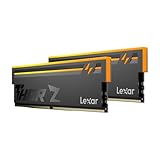
- Unleash Next-Gen Dominance: Experience Lexar DDR5 RAM performance with the Lexar THOR Z Series RGB DDR5 RAM 32GB Kit (2x16GB). Clocking at a blistering 6000MHz with low CL38 latency, this DDR5 desktop memory delivers up to 6000 MT/s for a full-throttle advantage. Whether you're building a high-end gaming rig or a professional workstation, this Lexar 32GB RAM kit ensures your system keeps pace with next-gen titles
- Sleek & Robust Thermal Design: Engineered for both aesthetics and endurance, this Lexar DDR5 RAM 6000MHz features an all-new streamlined design. The solid, sandblasted aluminum heatsink fuses a minimalist, razor-sharp aesthetic with uncompromising thermal control. This Lexar THOR Z Series armor ensures your DDR5 memory stays cool under pressure, delivering sustained peak performance during intense gaming sessions
- Game in Style with Brighter RGB Lighting: Elevate your build's aesthetics with the enhanced customizable RGB lighting on this Lexar RGB DDR5 RAM. Brighter and more vibrant than previous generations, the Lexar THOR Z Series RGB DDR5 RAM allows you to synchronize lighting effects with your components, creating a truly immersive gaming atmosphere that stands out from the crowd
- On-die ECC & PMIC for Rock-Solid Stability: Go beyond speed with reliability. This Lexar DDR5 RAM kit integrates On-die Error Correction Code (ECC) to automatically correct data errors, vastly improving stability and reliability for your critical tasks. The onboard Power Management Integrated Circuit (PMIC) ensures efficient power delivery, boosting the overall power efficiency of your DDR5 desktop memory for a longer-lasting, more stable system
- Seamless Compatibility with Intel & AMD: Worry-free upgrade guaranteed. The Lexar THOR Z Series DDR5 RAM is built for broad compatibility with the latest platforms. It fully supports Intel XMP 3.0 and AMD EXPO one-click overclocking, making it effortless to achieve the rated speeds. Trust Lexar DDR5 RAM to deliver seamless performance with mainstream DDR5 motherboards
Samsung HBM4E
The portfolio page lists HBM4E at up to 64 GB and 4 TB/s in a 16-high stack, with speeds up to 16.0 Gbps. The cited material does not establish that this HBM4E configuration is broadly shipping or qualified across current accelerator families. Treat it as a published portfolio specification until a platform announcement identifies a supported product and availability window.
What is SK hynix’s HBM position?
SK hynix’s September 12, 2025 announcement says HBM4 development was complete and the product was ready for mass production. It specifies 2,048 I/O terminals, operating speed above 10 Gbps, and more than 40% better power efficiency than the previous generation. The announcement also states: “The company has far exceeded the JEDEC* standard operating speed(8Gbps) by implementing over 10Gbps(Gigabit per second) operating speed in HBM4.” That sentence is SK hynix’s own vendor claim.
The cited SK hynix material does not provide a same-basis HBM4 stack-bandwidth figure suitable for ranking against Samsung’s 3,300 GB/s or Micron’s more-than-2.8-TB/s statement. A 2,048-I/O count and a pin-speed claim indicate interface capability, but they do not by themselves establish an aggregate bandwidth number under identical test conditions.
Documented platform context
SK hynix newsroom coverage from March 2026 says HBM4 was adopted in next-generation AI data-center server platforms. The same coverage says 12-layer HBM3E was used in global customers’ AI data-center GPU modules. These statements are evidence of reported platform use, not a guarantee that every accelerator or server can source the same configuration.
What does Micron report for HBM4 and HBM3E?
Micron’s portfolio page lists HBM4 in a 36 GB, 12-high configuration in high-volume production. It reports more than 2.8 TB/s bandwidth per stack, over 11 Gb/s pin speed, a 2,048-pin bus, 2.3 times the bandwidth of HBM3E, and over 20% power-efficiency improvement versus HBM3E.
Each comparison has a defined scope. “More than 2.8 TB/s” is Micron’s per-stack claim, while “2.3 times” is its comparison with HBM3E. The 20%-plus efficiency figure also uses HBM3E as the baseline. These values cannot be directly merged with Samsung’s 40% HBM3E comparison or SK hynix’s previous-generation comparison because the implementations and test methods may differ.
Rank #3

- Requires overclocking/BIOS adjustments. Maximum speed and performance depends on system components, including motherboard and CPU.
- G.SKILL Flare X5 Series DDR5 U-DIMM Memory Kit, Model: F5-6000J3636F16GX2-FX5
- Non-ECC, DDR5 U-DIMM, 288-pin, for Desktop PC & Gaming
- Includes JEDEC default profile, and AMD EXPO & Intel XMP 3.0 memory overclock profile
- Do not mix memory kits. Memory kits are sold in matched kits that are designed to run together as a set. Mixing memory kits will result in stability issues or system failure.
Micron HBM3E deployments
Micron lists 24 GB 8-high and 36 GB 12-high HBM3E solutions. It says the 24 GB 8-high version is shipping with NVIDIA H200 GPUs and that production-capable 36 GB 12-high memory is available. Those are Micron’s reported product and deployment claims; they do not mean that the parts can be installed in an existing accelerator by an end user.
Which supplier has the highest published HBM bandwidth?
Among the explicitly stated HBM4 per-stack figures in the supplied material, Samsung lists the highest published maximum at up to 3,300 GB/s, while Micron reports more than 2.8 TB/s. SK hynix does not provide a directly comparable HBM4 stack-bandwidth number in the cited announcements, so it cannot be ranked on that axis from these sources.
The Tool Desk
Outbyte Driver Updater FREEScan for outdated or missing drivers - takes under a minuteDriver Scan →Outbyte PC Repair FREEClear out junk files and repair common Windows errorsFree Scan →This is not an overall-performance verdict. Samsung’s figure is an “up to” maximum, Micron’s is a “more than” value, and the sources do not describe a common workload, accelerator, thermal condition, or independent measurement. A platform with fewer stacks, a different controller, or a memory-bound workload can produce a different result.
How do HBM4 maturity and availability differ?
Production language is time-sensitive and must be read with its date. Samsung’s February 12, 2026 announcement says mass production began and commercial HBM4 products were shipped to customers. Micron’s current portfolio page describes 36 GB 12-high HBM4 as in high-volume production. SK hynix announced development completion and mass-production readiness in September 2025, while its March 2026 coverage describes HBM4 in next-generation AI data-center server platforms.
“Ready for mass production,” “high-volume production,” “shipped to customers,” and “adopted in a platform” are related but not identical milestones. A system designer should request the exact qualified part number, sampling or volume schedule, package constraints, and allocation commitments for the target accelerator rather than infer availability from a headline announcement.
Independent reader supportYour contribution helps us test, update, and keep practical guides available for everyone.How should an AI accelerator team choose among Samsung, SK hynix, and Micron?
Start with the accelerator’s qualified memory list, then evaluate the memory against the system’s actual bottleneck. The following process avoids selecting a part solely because it has the largest headline number.
Rank #4
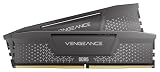
- Disclaimer: Maximum Speed requires overclocking/PC BIOS adjustments. Maximum speed and performance depend on system components, including motherboard and CPU
- AMD EXPO & Intel XMP 3.0 Compatible Only: Dual memory profiles allow you to easily select optimized settings for your platform, whether you’re running an AMD or Intel processor
- Onboard Voltage Regulation: Enables easier, more finely-tuned, and more stable overclocking through CORSAIR iCUE software than previous generation motherboard control
- Maximum Bandwidth and Tight Response Times: Optimized for peak performance on the latest AMD and Intel DDR5 motherboards
- Hand-Sorted, Tightly-Screened Memory Chips: Ensure consistent high-frequency performance with aggressive timing options
- Identify the accelerator and package. Confirm the exact accelerator revision, HBM generation, permitted stack height, maximum stack count, interposer or package requirements, and supported memory-controller configuration.
- Set the capacity target. Determine whether the workload needs 24 GB, 36 GB, or a larger aggregate capacity. Include model weights, optimizer states, activations, batching, checkpoint buffers, and any partitioning overhead.
- Set the bandwidth target. Measure or model sustained memory traffic, not just peak arithmetic throughput. Compare per-stack bandwidth and total platform bandwidth only when the stack count and interface are equivalent.
- Check thermal and power limits. Ask for the supplier’s test conditions and baseline for every efficiency percentage. Confirm whether the package, board, and cooling solution can sustain the intended operating point.
- Verify qualification. Obtain written confirmation that the exact HBM part and stack configuration are qualified with the accelerator, firmware, driver, and manufacturing flow. Do not assume that a portfolio listing applies to every GPU or custom ASIC.
- Validate supply and lifecycle. Compare sampling dates, high-volume production status, allocation, minimum order requirements, revision controls, and continuity commitments. A theoretically faster stack is not useful if it cannot be delivered for the system’s build schedule.
- Benchmark the complete platform. Use the target model, precision, batch size, communication topology, and cooling conditions. Record throughput, latency, memory errors, power, and sustained—not only burst—performance.
What are the most common HBM comparison mistakes?
- Comparing different generations as if they were equivalent. HBM3E and HBM4 have different interfaces and platform requirements.
- Confusing pin speed with stack bandwidth. A pin-rate figure must be considered with I/O width and the vendor’s stated aggregate result.
- Dropping qualifiers. “Up to,” “over,” stack height, and date are part of the specification.
- Treating efficiency percentages as interchangeable. Samsung compares HBM4 with HBM3E, Micron compares HBM4 with HBM3E, and SK hynix cites the previous generation; those baselines are not proven identical.
- Assuming a component is user-replaceable. HBM is integrated into the accelerator package and is not ordinary system RAM.
- Inferring universal supply from one deployment. A reported customer GPU module or server-platform adoption does not establish availability for all accelerators.
- Ranking vendors without an independent test. The cited material contains no common third-party benchmark, market-share study, or market-size figure.
What can the published numbers tell you—and what can they not?
They can show the direction of each supplier’s product development: Samsung publishes a 3.3-TB/s HBM4 maximum and a 4-TB/s HBM4E listing; Micron reports HBM4 above 2.8 TB/s in high-volume production; SK hynix documents a 2,048-I/O HBM4 design above 10 Gbps and reports platform adoption. They also show that 36 GB, 12-high configurations are appearing across Samsung and Micron HBM4 offerings, while SK hynix reports 36 GB, 12-layer HBM3E in customer GPU modules.
They cannot establish a single best supplier for every AI accelerator. The sources do not provide a controlled head-to-head benchmark, identical power measurements, universal qualification matrix, or guaranteed allocation for each accelerator family. The decisive evidence is the complete, qualified platform under the workload and delivery conditions that matter to your deployment.
Frequently Asked Questions
Can I upgrade an accelerator from HBM3E to HBM4 later?
Usually not as a field upgrade. HBM is packaged beside the processor with a specific interconnect, memory controller, firmware configuration, and thermal design, so changing generations generally requires a different accelerator or package-level manufacturing program.
Does a 36 GB HBM stack mean the accelerator has 36 GB of usable memory?
It means the stack’s nominal capacity is 36 GB. Usable capacity can be lower after reserved space, error-correction features, firmware, partitioning, and the way the accelerator exposes multiple stacks to software.
Why do vendors quote both Gbps and TB/s?
Gbps or Gb/s is the transfer rate of each pin or link, whereas TB/s is the aggregate bandwidth across the full interface. I/O width, signaling conventions, and the vendor’s calculation determine how the two figures relate.
Is HBM4 automatically faster for every AI workload?
No. A workload may be limited by compute, interconnect communication, software scheduling, or capacity rather than memory bandwidth. Measure the target model on the complete qualified platform instead of extrapolating from a per-stack maximum.
Where can a company buy one of these HBM stacks for a workstation?
These products are sold and integrated through accelerator and system supply chains rather than as ordinary workstation memory modules. A buyer normally specifies a qualified accelerator or server platform and works with its manufacturer or authorized supply channel.
Quick Recap
Product prices and availability are accurate as of the date/time indicated and are subject to change. Any price and availability information displayed on Amazon at the time of purchase will apply.
Free tools Windows power users keep installed
One-click scans. No signup required.

