Do these 3 things before closing this tab:
1Repair Windows errors before they cause bigger problems2Fix the driver behind crashes, sound loss and screen glitches3Clear out junk files and repair common Windows errorsSome links on this page are affiliate links: if you buy through them we may earn a commission, at no extra cost to you.
A recent report says Google’s Android XR glasses will be released through Samsung. That’s a big deal because it points to a hardware partnership model: Google drives the platform, while Samsung handles device engineering, manufacturing, and go-to-market muscle.
Since this kind of information often starts as “sources close to the matter,” the practical value is figuring out what’s plausible, what’s still speculative, and how to verify it quickly. Here’s a grounded way to evaluate the claim and what to watch for as it turns into something you can actually buy.
As an Amazon Associate I earn from qualifying purchases.
Quick wins for a faster PC:
Clear out junk files and repair common Windows errorsFree Scan →Scan for outdated or missing drivers - takes under a minuteDriver Scan →What the report claims
The headline claim is straightforward: Samsung is slated to release Google’s Android XR glasses. In other words, the retail-branded device you’d buy would be associated with Samsung, while the operating experience would be driven by Google’s Android XR direction.
Crucially, reports like this typically don’t guarantee final product specs, release date, price, or even the exact name of the platform. Treat it as a directionally useful signal, not a purchase promise.
Popular on Amazon
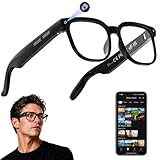
- 【AI Real-Time Translation & Voice Assistant】AI glasses support real-time translation in 139+ languages to make communication easier across different languages. The built-in AI voice assistant helps you access information and interact more efficiently—ideal for work, study, travel, and daily use.
- 【4K Ultra HD】 Smart glasses feature 4K resolution for clear, detailed visuals, making them suitable for travel, outdoor activities, everyday moments, and daily use.
- 【Bluetooth Music & Hands-Free Calls 】Smart glasses provide Bluetooth music and crystal-clear hands-free calls with an open-ear design. Stay aware of your surroundings while listening—comfortable for long wear and safer for commuting, cycling, and outdoor use.
- 【IP65 Waterproof & Long Battery Life】 AI glasses are designed for daily wear with IP65 waterproof protection against sweat, rain, and dust. The built-in 290mAh battery provides reliable performance for workdays and travel—no anxiety when you’re on the go.
- 【Smart App Control & Object Recognition】Smart glasses connect to the companion app for easy setup, file management, and feature control. They support AI object recognition to help identify items and improve your daily efficiency—perfect for travel exploration and a smart lifestyle.
Why Samsung would be involved
Samsung has the kind of XR-adjacent capabilities that make it a natural manufacturing and device partner. Even if Google writes the software layer, glasses live or die on optics, ergonomics, thermal behavior, and supply chain execution.
Hardware scale and manufacturing capacity
Producing wearable devices at volume means tighter quality control and mature assembly lines. Samsung’s experience with phones, sensors, displays, and consumer electronics reduces the “unknown unknowns” that can derail timelines.
PC Slower Than It Used to Be?
A free scan shows the junk files, broken settings and background clutter dragging Windows down - then fixes them in one click.Free scan · Windows 10 & 11Outdated Drivers Are Slowing You Down
One free scan finds every outdated or missing driver and matches the right update for your exact hardware.Free scan · exact hardware matchDisplay, optics, and device engineering
Glasses require careful integration of micro-displays, waveguides or lenses, eye-box alignment, and brightness/contrast tuning. Samsung’s long history across display technologies gives it an advantage in making those tradeoffs workable for everyday wear.
Retail, distribution, and support operations
If a product is meant for consumers (not just developers), support logistics matter: returns, warranty handling, service centers, and spare parts. Samsung’s global footprint is an operational head start compared to smaller hardware teams.
What Android XR glasses could mean for Google’s XR strategy
Android XR glasses are best understood as a platform play. Google’s goal would be to make the wearable feel like an Android device in spirit—usable apps, account-based sync, and consistent development patterns—while meeting XR’s strict real-time performance needs.
Software stack: Android XR vs. app ecosystems
The core question is whether Android XR glasses will run a familiar app model or require a separate XR runtime. If Google can keep the developer story close to Android’s existing patterns, app availability can accelerate faster than with entirely new ecosystems.
The Tool Desk
Outbyte Driver Updater FREEFix the driver behind crashes, sound loss and screen glitchesFind Drivers →Outbyte PC Repair FREEClear out junk files and repair common Windows errorsFree Scan →Services integration: Google account, Maps, Assistant-style workflows
When XR glasses work well, they reduce friction: hands-free capture, location-aware context, and quick “look here / do that” flows. Expect tight integration with Google account-based personalization, navigation patterns, and voice-first experiences.
Developer readiness and expectations
Developers will ask about input (gaze, gesture, voice, touch), performance constraints, and what UI patterns are encouraged. If the platform documentation and SDKs mature early, you’ll see more usable experiences rather than just demos.
What to look for if this becomes real
When a rumored device is close to launch, details start to “leak” through product behavior: certifications, model numbers, accessory roadmaps, and developer materials. Here are the categories that matter most.
Product design signals
Look for hints on form factor: whether it’s a lightweight smart-glasses style or more immersive XR with larger displays, a more substantial bridge, or distinct headband elements.
Also popular on Amazon

- #1 SELLING AI GLASSES* – Tap into iconic style and advanced technology with Ray-Ban Meta, the #1 selling AI glasses*. Capture photos and videos, listen to music, make hands-free calls or ask Meta AI questions on the go. *Based on IDC historical sales data up to Q3’25, released December 2025.
- META AI – Get more done and stay connected without reaching for your phone with AI glasses powered by Meta AI. Capture video recordings, translate languages while traveling and manage nutrition, wellness and everyday tasks hands-free.
- OPEN-EAR AUDIO – Listen to music and more with discreet open-ear speakers that deliver rich, quality audio and Bluetooth connectivity without blocking out conversations or the ambient noises around you.
- BATTERY LIFE – On a full charge, AI glasses can last up to 8 hours with moderate use for everyday activities like listening to audio, video recording and using Meta AI. Plus, the charging case provides an additional 48 hours of charging on the go.
- LENS OPTIONS – Choose from a wide range of lenses for men and women designed to match your style with options ranging from fully tinted sunglasses, fully clear, blue light or Transitions lenses. Experience ultimate adaptability with Transitions lenses on Ray-Ban Meta. Enjoy continuous visual performance in changing light environments, with lenses that darken with sunlight and fade to clear indoors, you'll be ready for whatever your day brings.
Tracking and controller approach
Ask how interaction works. Common options include hand tracking, eye tracking, voice commands, and controller-based input. Glasses that skip reliable tracking often feel “cool but clumsy” after the first week.
Compute and heat management
XR workloads are timing-sensitive. If the glasses require a heavy external compute unit or throttle frequently, you’ll see user complaints quickly. Hardware partners like Samsung usually work hard to prevent that.
Display and comfort benchmarks
Comfort isn’t cosmetic—it affects usability and time-on-wear. Pay attention to weight distribution, lens optics quality (distortion), and whether glasses support prescription inserts or at least adjustable fit.
Privacy and safety features
Expect sensors (cameras, microphones) and therefore privacy controls. Look for hardware indicators (LEDs for capture), on-device processing options, and permissions that are understandable for non-technical users.
How to verify the claim before betting on it
If you’re deciding whether to wait for this hardware, verify early and verify often. Rumors can be wrong, and sometimes the wrong part of the rumor is the part that affects your buying decision (timing, branding, or OS support).
Check the original source and corroboration
Identify who published the report and whether other outlets independently confirmed it. A single “anonymous source” usually isn’t enough to make a confident timeline call.
Watch for regulatory filings and certifications
In many regions, devices must pass certification steps before sale. When you see filings that mention head-worn displays, wireless modules, or specific model identifiers, the rumor gains weight.
Confirm via company channels
Look for alignment between Google and Samsung announcements: press releases, developer pages, product support documents, and teardown-adjacent content. Even without a full reveal, partial disclosures usually show up.
Free tools Windows power users keep installed
One-click scans. No signup required.
Look for model numbers and build references
As release nears, leaks and listings often include model numbers or internal codename strings. Those references help you track whether the software rumors are tied to the exact same hardware.
Possible launch scenarios and realistic timelines
Because the report doesn’t automatically imply a specific date, it’s smart to consider multiple launch paths. Here are three common patterns for XR devices.
Also popular on Amazon
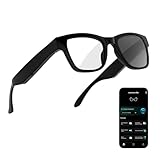
- 3-in-1 AI Glasses: Enjoy ① AI Voice Assistant (Powered by ChatGPT, Gemini & Deepseek), ② Stylish Photochromic Lenses Glasses, and ③ Bluetooth Open-Back Headphones, all in one.
- Free Talk Translation: Automatically detects and translates over 160 languages in real-time, allowing seamless work and translation without touching your phone or glasses.
- Voice, Video & Photo Translation: Supports over 98% of global languages, offering fast and accurate translations—ideal for international travel, business meetings, or cross-cultural communication.
- AI Meeting Assistant: Converts recordings from smart glasses into text and generates mind maps, making it easier to capture and organize meeting insights.
- Long Battery Life, Bluetooth 5.4 & Eye Protection: Up to 10 hours of music and 8 hours of talk time, with easy Type-C charging. Bluetooth 5.4 ensures stronger, stable connections, while photochromic lenses block UV rays and blue light, protecting your eyes in any environment.
Late pre-production to early dev kits
Google and Samsung could begin with limited units for developers or partners. You’d see software announcements and SDK previews before consumer availability.
Consumer launch in waves
Samsung could roll out first in markets with strong service infrastructure, then expand. This often results in “available in Region A but not B” frustration.
Enterprise-first rollout
Another possibility is starting with business use cases where procurement and support are easier to manage. Enterprise-first doesn’t mean “cheap,” but it can mean faster early adoption.
How this could affect existing XR hardware buyers
If you already own XR hardware, the Samsung/Android XR connection could change your expectations—especially around app availability and long-term OS support.
Buying sooner vs. waiting for Android XR
If you need capabilities now, waiting can be expensive in time and productivity. If your current device meets your needs and you’re not chasing new experiences, it can be rational to hold until the platform proves itself.
Compatibility: apps, media, and wearables
Even if Android XR glasses arrive, not all existing XR apps will transfer cleanly. Check whether the ecosystem supports common workflows: video consumption, navigation overlays, notifications, and pairing with phones or wearables.
Support longevity and OS upgrade expectations
Wearables need consistent security updates. Samsung’s track record with updates in other product lines might influence how comfortable you should feel about upgrade commitments.
Independent reader supportYour contribution helps us test, update, and keep practical guides available for everyone.Common misunderstandings about Android XR glasses
Rumors often get simplified into misleading assumptions. These are the mistakes that cause buyers to feel surprised later.
Confusing smart glasses with full XR headsets
Not all glass wearables are equivalent. A lightweight smart-glasses experience can be very different from an XR headset-like workflow with higher immersion and wider overlays.
Assuming universal app support on day one
Even with a strong developer story, “availability” doesn’t equal “quality.” Early releases often have fewer polished apps than competitors once claimed—but quality can improve fast if the SDK is healthy.
Also popular on Amazon

- 【AI Smart Translation Glasses】 - These smart glasses(No Camera) with built-in ChatGPT voice assistant, support real-time translation over 160 languages, simultaneous interpretation, meeting audio recording transcription. Helps you to suit any scenario and effortlessly break language barriers. Note: This model has no camera, all functions run via audio.
- 【Bluetooth Audio & Hands-Free Calling 】 - With Bluetooth 5.4 stable connection and open-ear design, our AI smart glasses features 3D surround sound music, delivering immersive audio directly to your ears. Built-in HD microphone ensures crystal-clear hands-free calls.
- 【Ultra-Lightweight Design with Gradient Lenses】 - Our smart glasses using medical-grade skin-friendly material, featured ergonomic design, 3D facial fitting, C-shaped wrap-around temples, and apple-arc nose pads that reduce pressure by 50% for all-day comfort up to 8 hours. The lenses will turn gray when exposed to sunlight, instantly transforming into stylish sunglasses, shielding eyes from harsh light and keeping us comfortable at all times.
- 【Extra-long Battery Life】 - AI bluetooth audio glasses equipped with 220mAh high-quality battery that takes only 1 hour to fully charge and can play continuously for up to 11 hours, solving battery anxiety. IP65 waterproof protection against sweat, rain, and dust, ideal for daily use and travel.
- 【Practical Flashlight & All-in-one Button】 - The integrated flashlight in AI glasses provides hands-free illumination, supports long-time walking and reading in dark. While the all-in-one button enables seamless control of power/flashlight/answering/hanging up/playing/pausing and wake-up the voice assistant —all with intuitive presses.
Overlooking comfort and prescription support
Comfort is the day-to-day dealbreaker. A device can be impressive in a demo and still fail for long sessions if fit options are limited.
Troubleshooting and edge cases if you’re evaluating a rumored product
You may not be able to troubleshoot a device that doesn’t exist yet, but you can troubleshoot your decision process.
“Rumor math” that fails
Don’t assume that because Samsung handles release, specs will be finalized. Hardware partnerships can still change display, sensor, or connectivity decisions during late engineering.
Region-specific availability
Even if the platform launches, sales can be region-locked due to regulatory, language support, or telecom requirements. Plan for staggered release windows.
Recommended Free Tools
Carrier-locked vs. unlocked connectivity
If the glasses support cellular or eSIM-like features, carrier terms can affect roaming and activation steps. Prefer unlocked options if you travel often.
FAQs
Is the Samsung release claim confirmed?
Reports can be accurate without being fully confirmed. Treat the Samsung release involvement as unverified until you see corroboration through official Samsung or Google communications, certifications, or model-specific product listings.
Will Android XR glasses run standard Android apps?
Possibly, but it depends on the platform runtime and compatibility layer. Glasses need XR-appropriate UI/interaction, so some apps may require updates even if they can technically run.
What sensors are typically required for good XR glasses?
Most credible XR glass concepts rely on at least a combination of cameras (for environment or hand tracking), microphones (for voice input), motion sensors (IMU), and often eye tracking or advanced hand tracking.
What’s actually slowing this PC down?
Pick the symptom - the matching free tool is one click away.
When should I expect a real launch date?
Best signal: official announcements combined with listings/certifications that include a model number. Until those appear, any date you see elsewhere should be treated as provisional.
Bottom Line
The report that Samsung will release Google’s Android XR glasses fits a common, practical partnership pattern: Google focuses on the Android XR platform and services, while Samsung brings the manufacturing and hardware engineering to make glasses usable in the real world.
If you’re considering waiting, verify the claim through corroborated sources, regulatory filings, and official company channels. That’s the fastest way to separate an interesting rumor from a product you can plan around.

