Do these 3 things before closing this tab:
1Clear out junk files and repair common Windows errors2Fix the driver behind crashes, sound loss and screen glitches3Repair Windows errors before they cause bigger problemsSome links on this page are affiliate links: if you buy through them we may earn a commission, at no extra cost to you.
Reports indicate Apple has halted work on Vision Pro and is aiming to release a cheaper Vision headset next year. If true, it would mark a major pivot in how Apple approaches the category: from a premium, early-adopter product to a more mass-market entry point.
Because hardware roadmaps are hard to confirm from leaks alone, the most useful takeaway isn’t the rumor itself—it’s what the shift suggests about pricing, device design trade-offs, and how developers and buyers should plan.
As an Amazon Associate I earn from qualifying purchases.
What the report says, in plain terms
The claim (as reported by technology media) centers on two points: first, Apple supposedly paused further development of Vision Pro; second, Apple is targeting a less expensive Vision headset for release next year. In practical terms, that implies Apple could be reallocating engineering resources away from refining a flagship device and toward building a broader-appeal model.
Apple’s headset strategy would then resemble how many consumer tech cycles work: prove core concepts with a flagship, then iterate on cost, comfort, and ease of adoption for the next product wave.
Popular on Amazon

- GOLF+ — Play your next round at TPC Sawgrass. Get GOLF+, 1,800 in-game credits and more with Meta Quest 3.
- HOW TO REDEEM — Activate and set up your Meta Quest, pair your Meta Quest with the Meta Horizon app and claim GOLF+ during the pairing process.
- NEARLY 30% LEAP IN RESOLUTION — Experience every thrill in breathtaking detail with sharp graphics and stunning 4K+ Infinite Display.
- NO WIRES, MORE FUN — Break free from cords. Game, play and explore in immersive worlds — untethered and without limits.
- 2X GRAPHICAL PROCESSING POWER — Enjoy lightning-fast load times and next-gen graphics for smooth gaming powered by the Snapdragon XR2 Gen 2 processor.
Why Apple might pause Vision Pro work
Even without internal details, there are several realistic reasons a company would pause or slow a flagship hardware program.
Cost, complexity, and manufacturing yield realities
Vision Pro is an engineering-heavy product: optics, displays, sensors, compute, and thermal design all have to work together. When a device is priced at the high end, every dollar of component cost and every manufacturing bottleneck matters more than it would for a cheaper model.
Recommended Free Tools
Pausing development can also mean Apple is rethinking architecture—either to improve yields, reduce part count, or change the bill of materials for a next-generation “good enough” experience.
Demand signals and customer friction
Premium headsets often sell through early adopters, but broad adoption tends to require fewer setup steps, better comfort for longer sessions, and clearer everyday use cases. If early demand didn’t match Apple’s internal goals, the company may decide that doubling down on the same flagship approach is the wrong bet.
A cheaper model could reduce the friction that stops people from trying spatial computing in the first place.
Thermals, ergonomics, and day-to-day usability
Even strong hardware specs can fall short if a device feels heavy, gets warm, or limits session time. Apple is known for iterative refinement, and pausing work can be consistent with re-centering the product around comfort, weight distribution, and sustained use.
What’s actually slowing this PC down?
Pick the symptom - the matching free tool is one click away.
In many headset categories, comfort isn’t a “later” problem—it’s a gating factor for adoption.
Competitive pressure and category timing
Spatial and VR/XR markets move fast. If competitors introduce better price-to-performance devices, Apple may decide the winning strategy is to hit a more attractive price band sooner rather than perfecting a flagship that remains out of reach for most buyers.
That doesn’t automatically mean Vision Pro was a failure—it can mean Apple wants to compete at the scale level, not just the technology level.
What a cheaper Vision headset could change
A move toward a lower-cost headset usually signals changes across hardware, software, and the overall ecosystem experience.
Price points that broaden the market
While the report doesn’t always specify a target price, “cheaper next year” generally means a materially lower cost than a premium flagship. That matters because many consumers won’t buy at high launch prices even if they want the experience.
A lower price can also change retailer behavior and carrier/financing options, which can accelerate adoption.
Design trade-offs: performance vs. affordability
To hit a lower price, Apple (if it proceeds) would likely adjust one or more of the following: optics stack cost, sensor suite, display type or resolution, controller/wireless accessory strategy, and on-device compute targets.
In practice, the goal is not “worse,” it’s “better value”: enough fidelity for everyday tasks and reliable tracking, without the luxury tier costs.
The Tool Desk
Outbyte PC Repair FREEClear out junk files and repair common Windows errorsFree Scan →Outbyte Driver Updater FREEScan for outdated or missing drivers - takes under a minuteDriver Scan →Also popular on Amazon

- Your purchase of this item includes a new Meta Quest Pro 256 GB VR headset and a 12-month subscription to Optima Academy Online (OAO) field trips.
- Optima Academy Online (OAO) harnesses the power of virtual reality to make previously impossible learning opportunities just a few clicks away. Our VR Field Trips provide powerful ways of engaging users on a whole new level while providing learning experiences. With our VR Field Trips, we deliver users directly into an immersive educational experience that engages them like never before. We offer a one-month subscription to our VR Field Trips. During your subscription, you can spend as much time in our uniquely created Metaverse environments as you like. Each environment has its own theme, learning experiences, and adventures.
- High resolution mixed reality passthrough uses full-color sensors to let you see and engage with the physical world around you, even as you connect, work and play in virtual spaces.
- Share your true emotions and reactions with real time natural avatar expressions. Meta Avatars translate your natural facial expressions into VR so you can bring your true personality to meetings and gatherings with friends.
- Meta Quest Touch Pro Controllers translate instinctive hand gestures and detailed finger actions directly into VR with self-tracking cameras and precision controls. Multi-point, advanced haptics make virtual interactions feel entirely real
Expected impact on apps and developers
When the installed base grows, developers tend to build more consistently. A cheaper headset could bring more users into the ecosystem, which usually leads to more incentives to create apps for visionOS.
Apple also benefits when the headset category becomes a routine platform rather than a niche product.
How Apple’s headset roadmap could look next year
Rumors about work pauses are common, but what matters is how Apple’s product line might be structured.
Positioning: mainstream entry to the ecosystem
If Apple launches a cheaper Vision headset next year, it will likely function as an entry point—less premium than Vision Pro, but easier to justify and more broadly usable. That positioning can reduce risk for first-time buyers while preserving a premium tier for enthusiasts.
Compatibility: iPhone/iPad/Mac integration expectations
Apple typically ties new devices to existing ecosystems. In a cheaper headset scenario, integration expectations don’t go away: easy pairing, fast setup, and support for Apple accounts, subscriptions, and media libraries remain crucial.
Users will expect the headset to feel like an extension of iPhone, iPad, and macOS—not a separate gadget with a different identity.
Software requirements: visionOS updates and device support
visionOS versions are usually designed to run across multiple supported hardware generations. If Apple introduces a new cheaper model, expect a focus on performance scaling: the same experiences where possible, with quality adjustments by device tier.
Developers should plan for responsive design principles: adapt rendering cost, keep motion smooth, and avoid assuming every device has the same headroom.
What this means for Vision Pro owners and prospective buyers
People already invested in Vision Pro will want clarity on support and long-term value.
Should you buy Vision Pro now?
If you’re considering Vision Pro primarily for early access to the newest spatial experiences—developer demos, specific pro workflows, and cutting-edge UI—then the device’s value can still be real even if a cheaper model arrives soon.
However, if your decision hinges on future upgrades and maximum resale value, you should factor in the likelihood that a lower-priced model will attract new buyers and influence pricing in the used market.
Warranty, support, and software longevity
Flagship discontinuation fears often come up after roadmap rumors. Apple’s historical behavior generally supports devices through software updates for meaningful periods, and hardware sold to customers typically receives security and platform support aligned with the platform’s policy.
PC Slower Than It Used to Be?
A free scan shows the junk files, broken settings and background clutter dragging Windows down - then fixes them in one click.Free scan · Windows 10 & 11Outdated Drivers Are Slowing You Down
One free scan finds every outdated or missing driver and matches the right update for your exact hardware.Free scan · exact hardware matchStill, you should treat rumors cautiously and rely on official announcements for specifics.
Used market and accessory planning
When a cheaper headset is rumored, accessory markets can react. If you’re shopping for peripherals—straps, travel cases, or docking setups—check compatibility carefully. Even if the new model shares some design language, sensor placement and fit can vary.
Also popular on Amazon
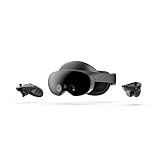
- Meta Quest Pro unlocks new perspectives in work, creativity, and collaboration.
- Multitask with ease with multiple resizable screens so you can organize tasks, work on new ideas or message with your friends.
- World class counter balanced ergonomics and our sleekest design let you wear the headset for longer in premium comfort.
- High resolution mixed reality passthrough uses full-color sensors to let you see and engage with the physical world around you, even as you connect, work and play in virtual spaces.
- Share your true emotions and reactions with real time natural avatar expressions. Meta Avatars translate your natural facial expressions into VR so you can bring your true personality to meetings and gatherings with friends.
If you buy third-party accessories, prefer sellers that explicitly list compatibility with your exact Vision Pro model year and revision.
What developers should do regardless of the hardware timeline
Rumors about hardware pauses shouldn’t stall engineering. Developers can act on what’s stable today: the visionOS platform and tooling.
Ship to the platform you have, not the one you hope for
visionOS frameworks and APIs are the real baseline. If your app works on currently supported Vision Pro hardware, it’s a solid foundation for scaling to additional devices later.
Don’t wait for a hypothetical cheaper headset to begin performance and comfort testing.
Test across performance tiers and comfort constraints
Even if the new cheaper headset has different internals, the user experience hinges on similar fundamentals: frame stability, low latency for head tracking, and comfortable motion design.
Build test plans around worst-case conditions: heavy scenes, long sessions, and multitasking scenarios that can strain thermal budgets.
Free tools Windows power users keep installed
One-click scans. No signup required.
Instrument and measure: motion comfort, latency, battery draw
Developers often focus on average FPS and miss the tail problems—stutter, spikes, and interaction latency. Add telemetry that captures timing variance and event response times. In head-mounted contexts, those tail issues can be more noticeable than a small average FPS gap.
For battery impact, test with your app’s typical workload: media playback, 3D rendering, and background processes.
Ways to verify the claim and avoid misinformation
Headset rumors tend to spread quickly, so validation matters.
Look for primary signals: filings, earnings commentary, supply chain updates
For Apple hardware shifts, the strongest corroboration usually comes from: earnings call statements, product planning language, supplier/manufacturing updates, or official event materials. Technology outlets can provide useful leads, but they’re rarely definitive on their own.
Quick wins for a faster PC:
Repair Windows errors before they cause bigger problemsFix Now →Fix the driver behind crashes, sound loss and screen glitchesFind Drivers →Clear out junk files and repair common Windows errorsFree Scan →If the claim is real, expect multiple independent traces over time—especially around manufacturing schedules.
Corroborate with at least one independent outlet
If only one report makes the “halted work” claim, treat it as uncertain. If additional outlets report similar details from separate sources, confidence increases—still not to “confirmed,” but to “plausible enough to plan around.”
Separate rumor from confirmed roadmap
“Paused work” could mean anything from a full cancellation to a slow pivot or a component redesign. Until Apple confirms a release plan for a cheaper headset or updates its roadmap publicly, you should interpret “halt” as a directional signal, not a hard date guarantee.
Independent reader supportYour contribution helps us test, update, and keep practical guides available for everyone.Common questions and gotchas
These are the questions people ask as soon as a rumor like this hits.
Free tools Windows power users keep installed
One-click scans. No signup required.
Also popular on Amazon

- Ultimate Comfort: Experience superior comfort with the new ANNAPRO A2 comfort head strap. Enjoy pressure-free wear for extended periods, with stable, no-wobble support, and experience unparalleled comfort and an immersive experience like never before
- Pressure-Free Facial Comfort: The ANNAPRO A2 head strap, designed specifically for Apple Vision Pro, features a new design that fits the head more comfortably, effectively reducing 60%-90% of the pressure on the cheekbones and around the eyes
- Customizable Fit: Offers 4 different thicknesses of comfortable cushion (5/12/18/25mm) to perfectly fit various head shapes. The upgraded breathable ice silk cushion are soft and skin-friendly, greatly enhancing wearing comfort. Tip: If you encounter issues with eye tracking being too far or too close, select the most suitable cushion and then recalibrate the eye tracking to ensure accuracy
- Damage-Free Quick Installation: Easily install A2 head strap without harming Vision Pro’s original accessories. Simply align and push the strap into place after removing the official head strap
- Enhanced Versatility: Combining Vision Pro with our head strap allows for the removal of the light seal or light seal cushion, bringing the lenses closer to your eyes for a wider field of view and improved comfort and breathability
Does pausing Vision Pro mean it’s discontinued?
Not necessarily. Companies can slow or stop a specific development track while still selling the existing product and supporting it through software updates. Discontinuation typically comes with explicit product availability changes, not just rumor-level claims.
Will Vision Pro get fewer updates?
Hardware iteration and software maintenance are separate budgets. Even if Apple shifts focus to a new headset tier, visionOS updates can continue for existing devices to protect user trust and app compatibility.
Still, the biggest new feature work could be prioritized for the next device generation.
Will a cheaper headset require new app builds?
Often, no: many experiences can run across devices if developers write adaptive code. But for performance-sensitive features—high fidelity rendering, advanced hand tracking, or specific spatial effects—some quality tiers may require device-specific tuning.
Plan for testing, not assumptions.
Alternatives and near-term ways to experience Apple spatial computing
If you’re interested in Apple’s spatial direction, you don’t have to wait for the rumored cheaper headset.
For media consumption: iPhone and iPad spatial/AR features
Apple’s ecosystem supports various forms of spatial media and AR experiences across iPhone and iPad. Those features aren’t a direct substitute for a headset, but they can give you a feel for Apple’s approach to spatial content and interaction.
Use these as a baseline for comfort and interaction style, then reassess whether a headset’s immersion is what you want.
For developers: building for visionOS and using Apple tooling
Developers can start building today in the visionOS environment, test in the supported toolchain, and iterate on user experience. Even if hardware changes soon, the best apps tend to be robust across device tiers.
What’s actually slowing this PC down?
Pick the symptom - the matching free tool is one click away.
Write with performance scaling in mind and treat motion comfort as a first-class requirement.
Bottom Line
If Apple truly paused work on Vision Pro and is pushing for a cheaper headset next year, it suggests the company is optimizing for adoption—cost, comfort, and everyday use—rather than doubling down on a premium-only strategy. That’s a rational move for a category that needs more mainstream buyers.
For current owners and developers, the best response is practical: trust confirmed Apple announcements for timelines, build adaptive experiences, and evaluate hardware purchase decisions based on your use case—not the rumor mill.
FAQs
Is the Vision Pro halt report confirmed?
No public, official confirmation is typically available from Apple at the rumor stage. Treat it as a report of internal or supply-chain information until Apple states otherwise.
When would a cheaper Vision headset be released?
The report frames timing as next year. Without an official date from Apple, you should expect schedule uncertainty and potential delays.
Will visionOS stop supporting Vision Pro?
Software support is usually tied to Apple’s platform strategy, not a single hardware development pause. The existence of a new headset tier doesn’t automatically mean support ends for the current one.
Should businesses wait to adopt Apple headsets?
It depends on your workflow. If you need spatial experiences now—training, 3D visualization, spatial collaboration—Vision Pro may still be worth piloting. If budget and scaling matter most, waiting for a cheaper tier can reduce risk.

