Do these 3 things before closing this tab:
1Scan for outdated or missing drivers - takes under a minute2Repair Windows errors before they cause bigger problems3Fix the driver behind crashes, sound loss and screen glitchesMSI is preparing a new wave of laptops built around Intel’s upcoming Wildcat Lake platform, a chip family expected to push thin-and-light Windows machines toward better efficiency, stronger integrated graphics, and more capable on-device AI. If current roadmap leaks hold, these systems could arrive as part of Intel’s next major move against Apple Silicon in compact books.
The timing matters because Apple is also rumored to be developing a lower-cost MacBook Neo, potentially aimed at buyers who want MacBook battery life and design at a more accessible price. MSI’s Wildcat Lake laptops may target that same crowd from the Windows side, combining modern AI PC features, flexible hardware options, and potentially more aggressive pricing.
As an Amazon Associate I earn from qualifying purchases.
For MSI, the opportunity is not just raw speed but balance: performance that feels premium, battery life that can compete beyond the gaming-laptop stereotype, and designs light enough for students, creators, and hybrid workers. The real test will be whether Wildcat Lake can give MSI a convincing answer to Apple’s tightly integrated hardware and software experience.
Free tools Windows power users keep installed
One-click scans. No signup required.
What Intel Wildcat Lake Could Bring to MSI Laptops
Intel’s Wildcat Lake platform is expected to sit in a different lane from the company’s higher-power enthusiast chips, giving MSI a chance to build thinner, cooler, more affordable laptops without abandoning modern features. Based on current roadmap chatter, Wildcat Lake appears aimed at mainstream and entry-premium books where efficiency, integrated graphics, and AI acceleration matter as much as raw CPU throughput. For MSI, that could translate into new Prestige, Modern, and Creator-adjacent models that feel more polished than budget Windows laptops while staying below the price of high-end gaming machines.
#1 Best Overall
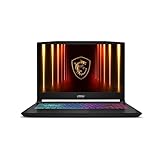
- Intel Core i9 HX Power for Elite Gaming: Dominate demanding titles with the Intel Core i9-14900HX and its 24-core hybrid architecture, delivering fast load times, high FPS, and smooth multitasking.
- GeForce RTX 5070 With Ray Tracing & DLSS 4: Powered by NVIDIA Blackwell, the RTX 5070 delivers stronger ray tracing, higher FPS, faster AI upscaling, and more responsive gameplay—ideal for competitive and cinematic gaming.
- QHD 165Hz, 100% DCI-P3 for Ultra-Clear Combat: The QHD 165Hz display reveals more detail, reduces motion blur, and boosts visibility in fast-paced games while delivering richer, more accurate colors.
- Cooler Boost 5 for Sustained Performance: Dual fans and a 5-heat-pipe share-pipe design keep the CPU and GPU cool, maintaining stable frame rates during long gaming marathons.
- 4-Zone RGB Keyboard + Full Game-Ready Ports: Customize your setup with a 4-zone RGB keyboard and highlighted WASD keys. Includes USB-C Gen 2, HDMI up to 8K, multiple USB-A ports, RJ45, Wi-Fi 6E & Hi-Res Audio.
The biggest change may be how MSI balances performance per watt. Wildcat Lake is expected to continue Intel’s hybrid CPU direction, pairing performance-focused cores with efficiency-focused cores for everyday responsiveness and lower idle power. In practical terms, users should expect fast web browsing, office work, streaming, coding basics, video calls, light photo editing, and multitasking without the fan noise or battery drain associated with larger gaming-class processors. MSI could also use lower thermal demands to slim down chassis designs, reduce heat around the keyboard deck, and ship quieter laptops for students, office workers, and frequent travelers.
Likely platform upgrades for MSI systems
- Improved integrated graphics: Wildcat Lake laptops may bring better iGPU performance for casual gaming, media editing, external displays, and hardware-accelerated video playback.
- On-device AI acceleration: A built-in NPU is expected to support Windows AI features, background blur, noise cleanup, image tools, summarization, and local assistant functions with less reliance on the CPU or GPU.
- Better battery behavior: More efficient silicon should help MSI target longer real-world runtimes in thin-and-light models, especially during mixed productivity workloads.
- Modern connectivity: New MSI designs could pair the platform with Wi-Fi 7, Bluetooth 5.x, fast USB-C, Thunderbolt-class ports on select models, and improved multi-monitor support.
- Lower-cost premium designs: If Intel positions Wildcat Lake aggressively, MSI may be able to offer metal builds, higher-resolution displays, and AI-ready branding at midrange prices.
AI will likely be central to MSI’s marketing around Wildcat Lake. Instead of presenting these books as gaming powerhouses, MSI can position them as everyday Copilot-era PCs built for local AI workloads and battery-friendly assistance. That matters because Apple’s rumored MacBook Neo is expected to lean heavily on Apple Silicon efficiency and integrated AI features. MSI’s answer will need to show that Windows laptops can offer similar convenience while keeping the flexibility of x86 software, broader peripheral support, and a wider range of configurations.
There are still limits to expect. Wildcat Lake is unlikely to replace MSI’s Raider, Stealth, or Vector machines with discrete NVIDIA graphics, and it probably will not satisfy buyers who need workstation-level rendering or high-refresh AAA gaming. Its strength should be in balanced mainstream computing: lightweight laptops that wake quickly, stay cool in a backpack-friendly form factor, handle AI-enhanced apps smoothly, and cost less than flagship ultraportables. If MSI executes well, Wildcat Lake could become the foundation for a new wave of practical Windows books aimed directly at buyers considering Apple’s next low-cost MacBook.
Quick wins for a faster PC:
Scan for outdated or missing drivers - takes under a minuteDriver Scan →Clear out junk files and repair common Windows errorsFree Scan →Fix the driver behind crashes, sound loss and screen glitchesFind Drivers →How MSI’s New Models May Challenge Apple’s MacBook Neo
MSI’s first laptops based on Intel’s Wildcat Lake platform are expected to arrive in a market where Apple may be preparing a lower-cost MacBook Neo, reportedly aimed at bringing Apple Silicon efficiency and the macOS experience to a broader audience. That sets up a direct contest between two very different strategies: Apple’s tightly controlled hardware-software stack versus MSI’s wider Windows laptop portfolio, where buyers can choose between more screen sizes, more ports, more performance tiers, and potentially more aggressive pricing.
If the MacBook Neo follows Apple’s usual approach, it will likely emphasize thin design, long battery life, quiet operation, and a simplified product lineup. MSI can counter by giving buyers more flexibility. A Wildcat Lake-powered Prestige, Modern, Summit, or Creator-style machine could offer OLED or high-refresh displays, larger memory and storage options, Wi-Fi upgrades, and a broader range of I/O than Apple typically includes on entry-level MacBooks. For students, hybrid workers, and creators who do not want to rely on dongles, those practical hardware differences could matter as much as raw benchmark scores.
Where MSI Could Apply Pressure
- Configuration variety: MSI can offer multiple chassis, screen sizes, RAM capacities, SSD options, and possibly discrete GPU variants above the most efficient Wildcat Lake models.
- Windows ecosystem support: Native compatibility with enterprise tools, PC games, engineering software, and legacy applications remains a major advantage for many buyers.
- Display competition: MSI already ships laptops with OLED panels, fast refresh rates, and high-resolution options, giving it room to out-spec a lower-priced MacBook Neo display.
- Ports and serviceability: USB-A, HDMI, microSD, dual Thunderbolt or USB-C, and easier SSD upgrades would help MSI stand apart from a minimalist Apple design.
The bigger question is whether Wildcat Lake can narrow Apple’s efficiency lead. Apple Silicon has built its reputation on strong performance per watt, especially in lightweight books that stay cool without loud fans. Intel’s newer roadmap points toward more efficient core designs, improved integrated graphics, and a stronger NPU for local AI workloads. If MSI can package Wildcat Lake in thin laptops without sacrificing battery life or thermals, it could make the Windows alternative feel less like a compromise and more like a true MacBook Neo rival.
AI features may also shape the comparison. Apple is expected to keep pushing on-device intelligence across macOS, while Intel and Microsoft are making the NPU central to the next generation of Windows PCs. MSI’s Wildcat Lake models could be marketed around Copilot+ style features, background blur, live captions, image tools, local assistants, and creator acceleration. The challenge for MSI will be making those features feel useful on day one rather than simply listing TOPS figures in a spec sheet.
Recommended Free Tools
Pricing may be MSI’s sharpest weapon. If Apple positions the MacBook Neo as a more affordable MacBook but still keeps it above many mainstream Windows ultraportables, MSI can attack the gap with better specifications at the same price or similar performance for less. A competitive Wildcat Lake laptop with 16GB of memory, a bright OLED display, and a 1TB SSD could appeal strongly to users who like the MacBook concept but want more value, more ports, or more control over their hardware.
Rank #2
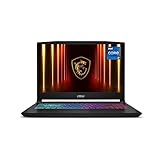
- Intel Core i7-14650HX and NVIDIA GeForce RTX 5060 (RTX 50 Series, Blackwell) deliver fast, responsive performance with ray tracing and DLSS 4 for today’s top titles.
- 15.6" QHD 165Hz, 100% P3 visuals: Game on a 15.6" QHD (1440p) 165Hz display with wide-gamut 100% DCI-P3 color, giving you sharper detail and smoother motion than typical 1080p 144Hz panels.
- Cooler Boost 5 shared-pipe thermals: Dual fans, multi-heat-pipe Cooler Boost 5 and a shared-pipe design help keep CPU and GPU temps in check so frame rates stay stable during long sessions.
- 4-Zone RGB keyboard built for play: Customize your look with a 4-Zone RGB keyboard featuring highlighted WASD and specially designed keycaps plus a numpad for chat, shortcuts, and everyday use.
- AI-ready, Copilot-enhanced connectivity hub: MSI AI Engine and Copilot optimize performance and multitasking, while HDMI (up to 8K), USB-C with DisplayPort/Power Delivery, Wi-Fi 6E, RJ45, and USB-A ports keep you plugged into monitors and peripherals.
Performance, Battery Life, and On-Device AI Expectations
MSI’s first Wildcat Lake laptops are expected to land in the part of the market where responsiveness, battery life, and local AI features matter more than raw gaming power. Based on Intel’s public roadmap direction and current leak patterns, Wildcat Lake appears positioned as a next-generation low-power platform for thin-and-light books, likely replacing or extending the role currently served by efficient Core Ultra U-series chips. For MSI, that means the most likely systems are not bulky performance machines, but portable Prestige, Modern, Summit, or business-class designs aimed at users who want a Windows alternative to Apple’s rumored MacBook Neo.
Performance expectations should be framed around everyday speed rather than workstation-class output. Wildcat Lake is expected to use an updated hybrid CPU layout, pairing performance cores with efficiency-focused cores to keep common tasks smooth while reducing power draw during lighter workloads. In practical terms, that should help with fast app launches, heavy browser sessions, Office work, video calls, light photo editing, and multitasking across mulle displays. MSI may still offer higher-power configurations with stronger cooling, but the platform’s main appeal will likely be sustained efficiency in compact chassis rather than short benchmark bursts.
Expected performance profile
- Productivity: Strong performance for documents, spreadsheets, web apps, email, conferencing, and cloud-based workflows.
- Creative work: Suitable for light-to-moderate photo editing, short-form video edits, and AI-assisted media tools, depending on memory and cooling.
- Graphics: Integrated graphics should be competent for media, casual games, and GPU-accelerated UI tasks, but not a replacement for MSI’s discrete-GPU Creator or gaming laptops.
- Sustained loads: Fan design, power limits, and chassis thickness will decide whether MSI can maintain higher clocks longer than ultra-thin rivals.
Battery life could be the most battleground against MacBook Neo. Apple’s in-house silicon has set high expectations for unplugged performance, silent operation, and standby efficiency. Wildcat Lake will need to close that gap by combining improved CPU efficiency, a more capable integrated GPU, updated media engines, and aggressive platform-level power management. If MSI pairs the chip with large enough batteries, efficient OLED or low-power IPS panels, and sensible default power profiles, all-day use should be realistic for office and student workloads. Heavy AI processing, gaming, or sustained exports will still drain the battery far faster than web browsing or writing.
On-device AI will be another major selling point. Intel is expected to continue pushing stronger neural processing units in its upcoming client platforms, and MSI can use that for features that run locally instead of constantly relying on the cloud. Likely examples include background blur and eye-contact correction in video calls, audio cleanup, image generation assists, document summarization, local search, and Microsoft Copilot+ style experiences where supported. The real value will depend on NPU performance, software support, and whether apps are optimized to use the accelerator instead of falling back to the CPU or GPU.
| Area | What MSI Wildcat Lake laptops may emphasize | Competitive pressure from MacBook Neo |
|---|---|---|
| CPU performance | Fast everyday multitasking with hybrid cores and better sustained efficiency | Strong single-threaded performance and consistent unplugged speed |
| Battery life | All-day productivity if paired with efficient displays and tuned power modes | Long standby time and strong battery life as a core Apple advantage |
| AI acceleration | Local NPU features for calls, media, search, and Copilot-class workflows | Tight hardware-software integration across Apple apps and macOS |
| Thermals | Active cooling may allow higher sustained performance in slim MSI designs | Potentially quieter operation if Apple uses a highly efficient fanless or low-fan design |
The clearest advantage for MSI may be flexibility. A Wildcat Lake laptop can offer Windows software compatibility, broader peripheral support, more configuration choices, and potentially more aggressive pricing than Apple’s entry-level MacBook strategy. The challenge is consistency: to rival MacBook Neo, MSI will need more than a new processor. It will need polished firmware, quiet thermals, excellent sleep behavior, high-quality webcams and microphones, and battery results that hold up in real-world mixed use.
Design, Display, and Portability Trade-Offs
MSI’s Wildcat Lake laptops are likely to split into two broad design directions: ultra-portable models built to compete with thin MacBook-style machines, and slightly larger productivity or creator books that use Intel’s platform flexibility to offer more ports, stronger cooling, and higher sustained performance. That matters because Apple’s rumored MacBook Neo is expected to lean heavily into simplicity, low weight, long battery life, and a tightly controlled hardware design. MSI’s challenge will be to match that premium feel without giving up the practical features Windows buyers often expect.
On the thinnest models, MSI may prioritize compact chassis designs, narrow bezels, and lightweight materials such as aluminum or magnesium alloy. Wildcat Lake’s expected efficiency improvements should help reduce cooling demands, making fanless or near-silent designs more realistic in entry-level and mainstream configurations. Still, MSI will have to balance thinness against thermals. A laptop that is a few millimeters thicker than a MacBook Neo could deliver better sustained CPU and GPU clocks, especially if MSI includes active cooling and more aggressive power profiles.
Outdated Drivers Are Slowing You Down
One free scan finds every outdated or missing driver and matches the right update for your exact hardware.Free scan · exact hardware matchPC Slower Than It Used to Be?
A free scan shows the junk files, broken settings and background clutter dragging Windows down - then fixes them in one click.Free scan · Windows 10 & 11Display choices could define the product tiers
Display strategy may become one of the clearest differences between MSI’s Wildcat Lake lineup and Apple’s expected approach. Apple typically uses a small number of high-quality panels across its MacBook range, while MSI can segment more aggressively by price. Entry models may use efficient IPS displays with 16:10 aspect ratios, while premium configurations could move to OLED, higher refresh rates, touch support, or sharper color coverage for creative workloads.
Rank #3

- Elite Processor & Memory: Intel Core Ultra 9 Processor 275HX with 24 cores and turbo boosts from 2.1 to 5.4 GHz, combined with 32GB (16GB x 2) DDR5 5600MHz RAM for superior multitasking, gaming, and content creation performance.
- High-Speed Storage: 1TB NVMe Solid State Drive for ultra-fast boot times, quick file access, and massive storage capacity, with no optical drive for a sleek, modern design.
- Immersive 18" Display: QHD+ (2560x1600) resolution IPS panel with 240Hz refresh rate and 100% DCI-P3 color gamut, delivering smooth, vibrant visuals ideal for gaming, video editing, and professional work.
- Powerful Graphics: NVIDIA GeForce RTX 5070 with 8GB GDDR7 memory, enabling advanced ray tracing, AI acceleration, and high-frame-rate rendering for stunning graphics in the latest games and applications.
- Enhanced Communications & Audio: Intel Wi-Fi 6E AX211 and Bluetooth 5.3 for reliable wireless connectivity, a 720p HD webcam with privacy shutter for secure video calls, and premium 2x Dynaudio 2W speakers plus 2x 2W woofers for rich, immersive sound.
| Design Area | Likely MSI Wildcat Lake Approach | MacBook Neo Comparison |
|---|---|---|
| Chassis | Mix of thin ultraportables and thicker performance-focused models | Likely slimmer, more uniform design language |
| Display | IPS, OLED, touch, and high-refresh options depending on tier | Likely fewer configurations, but strong calibration and consistency |
| Ports | Greater chance of USB-A, HDMI, microSD, and multiple USB-C ports | Likely more minimal, with fewer physical connectors |
| Cooling | Passive or active cooling depending on size and performance target | Expected to favor quiet operation and efficiency-first tuning |
Portability will not be only about weight. MSI can compete by offering conveniences that Apple may avoid, such as wider port selection, easier external monitor support, gaming-friendly refresh rates, and possibly user-replaceable storage on select models. Those choices can make an MSI laptop feel more versatile for students, office users, developers, and creators who move between desks, classrooms, and travel setups. The trade-off is that more connectors, stronger cooling, and higher-power displays can increase thickness, weight, and battery drain.
The most competitive MSI designs will likely be the ones that avoid chasing Apple too directly. A Wildcat Lake laptop with a bright OLED display, strong webcam, quiet cooling, Wi-Fi 7, mulle ports, and all-day battery life could stand out even if it is not the thinnest machine in its class. Meanwhile, a lower-cost model with a good 16:10 panel and efficient performance could undercut the MacBook Neo while still offering a modern Windows experience. In this segment, MSI’s advantage may come from variety: giving buyers the choice between maximum portability, better connectivity, richer displays, or stronger sustained performance.
Pricing and Target Buyers for MSI’s Wildcat Lake Lineup
MSI’s Wildcat Lake laptops are likely to land across several price bands rather than arrive as a single flagship product. If Intel positions Wildcat Lake as a mainstream-to-premium successor for thin-and-light PCs, MSI could use it in prestige ultraportables, creator-focused machines, and more affordable productivity models. That matters because Apple’s rumored MacBook Neo is expected to lean heavily on tight hardware-software integration, long battery life, and a simplified lineup, while MSI can respond with more configurations, more ports, and a wider range of display and memory options.
The most competitive MSI systems will likely sit in the $899 to $1,499 range, depending on screen quality, RAM, storage, chassis materials, and whether the laptop includes discrete graphics. Entry Wildcat Lake models could target students and office users who want modern AI PC features without paying MacBook-level prices. Higher-end Prestige, Summit, or Creator-branded versions could move closer to $1,699 or above, especially if MSI pairs the new Intel platform with OLED panels, larger batteries, premium aluminum builds, and 32GB memory options.
| Likely MSI Segment | Expected Price Range | Target Buyer |
|---|---|---|
| Mainstream thin-and-light | $799-$1,099 | Students, remote workers, and everyday productivity users |
| Premium ultraportable | $1,099-$1,499 | Professionals who want a Windows alternative to a MacBook |
| Creator-focused model | $1,399-$1,899+ | Designers, editors, developers, and AI workflow users |
| Business-class configuration | $1,199-$1,699 | Enterprise buyers needing security, manageability, and Windows compatibility |
For buyers comparing these machines with a MacBook Neo, the value equation will depend on what Apple prioritizes. If the MacBook Neo is priced aggressively as a lighter, more affordable MacBook, MSI will need to compete on flexibility: upgrade choices, touchscreens, higher-refresh displays, broader peripheral support, and stronger compatibility with Windows business software. If Apple prices Neo as a premium lifestyle device, MSI gets more room to pitch Wildcat Lake laptops as practical AI PCs with comparable mobility and better configuration variety.
The clearest audience for MSI’s Wildcat Lake lineup will be users who want MacBook-like portability but are not ready to leave Windows. That includes office professionals tied to Microsoft 365, students using engineering or business applications, creators who rely on Adobe, Blender, or Windows-only tools, and companies standardizing around Intel-based fleets. Gamers will still look toward MSI’s dedicated gaming laptops with discrete GPUs, but lighter Wildcat Lake models could appeal to casual players and cloud gaming users who care more about battery life and portability than maximum frame rates.
MSI also has an opportunity to use pricing as a differentiator in the emerging AI PC category. A well-equipped Wildcat Lake laptop with a capable NPU, 16GB or 32GB of memory, fast storage, and a quality display could become a compelling middle ground between budget Windows books and premium Apple hardware. The models to watch will be the ones that avoid cutting too much on battery size, webcam quality, thermals, and display brightness, because those everyday details will decide whether MSI can turn Intel’s next platform into a credible MacBook Neo rival.
Release Timeline and What to Watch Next
MSI’s first Wildcat Lake laptops are most likely to appear after Intel formally details the platform, with the strongest launch window pointing to late 2025 into early 2026 if current roadmap chatter holds. MSI usually aligns major thin-and-light refreshes with Intel’s mobile CPU cycles, so early reveals could happen around large industry events such as Computex, IFA, or CES, followed by retail availability several weeks or months later. The first machines are expected to land in productivity-focused Prestige, Summit, or Modern-style lines before MSI expands the silicon into more specialized creator and business systems.
Rank #4
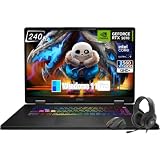
- Game-Dominating Processor: The MSI Crosshair 18 gaming laptop harnesses the Intel Core Ultra 9 275HX, with 24 cores and speeds up to 5.4 GHz, to crush modern AAA titles, streaming, and heavy multitasking without a stutter.
- Next-Level RTX Graphics: Powered by the NVIDIA GeForce RTX 5070 8GB GDDR7, this 18 inch gaming laptop delivers ultra-realistic ray tracing and AI-accelerated frame rates, giving you a decisive competitive edge in every match.
- Blazing Memory and Storage: With 16GB DDR5 5600MHz dual-channel RAM and a rapid 1TB NVMe SSD, the msi gaming laptop ensures near-instant game launches, fluid level transitions, and plenty of room for your entire library.
- 240Hz Winning Display: The MSI Crosshair 18 showcases an 18” QHD+ (2560x1600) IPS panel with a 240Hz refresh rate and 100% DCI-P3, making fast-paced action buttery smooth and every detail razor-sharp.
- Pro-Grade Gaming Gear: Battle with precision on the SteelSeries 24-zone RGB anti-ghosting keyboard, get immersed in quad Dynaudio speakers, and dominate online with Intel Wi-Fi 6E, Bluetooth 5.3, Thunderbolt 4, and RJ45 LAN — all engineered into this powerful MSI Crosshair 18 gaming laptop.
The biggest item to watch is how Intel positions Wildcat Lake relative to Lunar Lake and Panther Lake. If Wildcat Lake is aimed at lower-power, mainstream books, MSI may use it to build more affordable Copilot+ PC-class models rather than premium flagships. If the platform brings a stronger NPU, updated efficiency cores, and improved integrated graphics, MSI could market these laptops as practical alternatives to Apple’s rumored MacBook Neo: thinner than gaming notebooks, more flexible than entry-level Windows machines, and cheaper than high-end creator laptops.
Launch signals that matter
- Intel platform disclosure: core layout, process node, NPU performance, memory support, and integrated GPU details will reveal whether Wildcat Lake is built for budget ultraportables or premium compact laptops.
- MSI model names: listings under Prestige, Summit, Modern, or Commercial lines would suggest a direct push into the MacBook-style productivity category.
- Battery capacity and charger size: these specs will show whether MSI is prioritizing all-day mobility or simply refreshing current chassis designs.
- Display options: OLED, high-refresh IPS, 16:10 panels, and low-power display modes will help define how closely MSI targets Apple’s screen quality and portability mix.
- Copilot+ PC certification: if the laptops meet Microsoft’s AI PC requirements, MSI can promote local AI features more aggressively against Apple Silicon machines.
Pricing leaks will be just as revealing as performance claims. A Wildcat Lake MSI laptop around the mainstream premium range could pressure Apple if MacBook Neo launches as a polished but tightly configured entry model. MSI’s advantage would likely come from broader RAM and storage choices, more ports, Windows software compatibility, and potentially lower starting prices. Apple’s counterweight would be build consistency, battery predictability, ecosystem lock-in, and the efficiency reputation of its own chips.
Buyers should also pay attention to real-world reviews rather than early benchmark slides. Sustained performance, fan noise, standby drain, webcam quality, keyboard feel, and AI feature usefulness will determine whether Wildcat Lake laptops feel genuinely next-generation or merely like another annual refresh. If MSI pairs Intel’s platform with refined chassis, competitive OLED displays, and sensible pricing, its upcoming lineup could become one of the clearest Windows-based responses to the MacBook Neo category. If the designs arrive late, cost too much, or compromise battery life, Apple may keep the advantage in the ultraportable conversation even before direct comparisons begin.
The Tool Desk
Outbyte Driver Updater FREEFix the driver behind crashes, sound loss and screen glitchesFind Drivers →Outbyte PC Repair FREEClear out junk files and repair common Windows errorsFree Scan →Frequently Asked Questions
When are MSI laptops with Intel Wildcat Lake expected to launch?
Intel Wildcat Lake is expected to arrive after the current Lunar Lake and Arrow Lake laptop waves, with many roadmap watchers pointing to a 2026 timeframe. MSI would likely announce its first models close to Intel’s official platform reveal, possibly around a major trade show such as CES or Computex. Until Intel confirms the launch window, exact MSI model names and shipping dates should be treated as unconfirmed.
Will MSI’s Wildcat Lake laptops be faster than Apple’s rumored MacBook Neo?
That will depend on the final chips, cooling design, and whether MSI targets thin-and-light laptops or higher-performance models. Wildcat Lake is expected to focus on efficiency, integrated graphics, and AI acceleration rather than simply chasing maximum CPU power. Apple’s MacBook Neo, if it launches as rumored, may still have an advantage in tight hardware-software integration, while MSI could compete with broader Windows compatibility, more ports, and more varied configurations.
Should I wait for Wildcat Lake MSI laptops or buy a current MSI laptop now?
If you need a laptop soon for school, work, or gaming, current MSI models using Intel Core Ultra, AMD Ryzen, or NVIDIA graphics are the safer choice. Waiting makes more sense if you want a thinner laptop with better battery life, stronger on-device AI features, and a newer Intel platform. The trade-off is that first-generation pricing may be high, and availability could be limited at launch.
What kind of battery life can buyers expect from MSI Wildcat Lake laptops?
Wildcat Lake is expected to emphasize power efficiency, so MSI’s thin-and-light models could offer noticeably better battery life than older Intel-based designs. Real-world results will still depend on screen size, display resolution, battery capacity, cooling, and whether MSI pairs the chip with discrete graphics. For buyers comparing against Apple, battery life will be one of the most areas to watch in independent reviews.
Will MSI’s Wildcat Lake laptops support advanced AI features?
Yes, Wildcat Lake is expected to include an upgraded NPU for on-device AI tasks such as background blur, noise reduction, image generation assistance, transcription, and Windows AI features. The actual experience will depend on Microsoft’s Copilot+ requirements and how many apps support local AI acceleration by the time the laptops ship. Buyers should look for confirmed TOPS ratings and Copilot+ PC certification before assuming full AI feature support.
Bottom Line
MSI laptops built around Intel’s Wildcat Lake platform could become some of the most Windows ultraportables to watch, especially if the leaks around improved efficiency, stronger integrated graphics, and more capable on-device AI prove accurate. Against Apple’s rumored MacBook Neo, MSI’s advantage may come down to variety: more configurations, gaming-friendly DNA, broader price points, and faster adoption across creator, student, and productivity-focused designs.
The real test will be execution, including battery life, thermals, display quality, and whether pricing stays aggressive enough to challenge Apple’s value proposition. If you are considering a next-gen thin-and-light laptop, it is worth waiting for official Wildcat Lake benchmarks and MacBook Neo details before buying, because this could be one of the more competitive laptop refresh cycles in years.
Quick Recap
Product prices and availability are accurate as of the date/time indicated and are subject to change. Any price and availability information displayed on Amazon at the time of purchase will apply.
What’s actually slowing this PC down?
Pick the symptom - the matching free tool is one click away.

