The Tool Desk
Outbyte Driver Updater FREEScan for outdated or missing drivers - takes under a minuteDriver Scan →Outbyte PC Repair FREEClear out junk files and repair common Windows errorsFree Scan →Some links on this page are affiliate links: if you buy through them we may earn a commission, at no extra cost to you.
Minecraft Dungeons II is a standalone action-RPG sequel released on September 29, 2026, and you do not need to play the first game before starting. Begin with the opening main quest, use the world map to navigate its connected Overworld and Sift dimension, and treat side quests as useful sources of experience, gear, and story context rather than optional filler.
The beginner-friendly approach is to replace weak equipment early, test weapon reach and speed, build around your current armor and abilities, and use the Enchantsmith once you understand which effects fit your play style. Up to four people can play through couch co-op, online cross-play, mixed local-and-online sessions, matchmaking, and party codes.
As an Amazon Associate I earn from qualifying purchases.
What is Minecraft Dungeons II, and do I need to play the first game?
Minecraft Dungeons II is an action-RPG sequel set in a larger, connected world. Minecraft’s official announcement gives September 29, 2026 as the release date, while the official FAQ says the original Minecraft Dungeons is not required. You can start with the sequel and learn its movement, combat, characters, and systems from the opening quest.
The central story follows a crisis involving the Illager High Council. You will travel between settlements, investigate events, fight enemies, and move between the Overworld and the new Sift dimension. The game is designed so a new player can understand the immediate objective without having completed the previous campaign.
#1 Best Overall
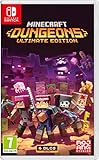
- Minecraft Dungeons Ultimate Edition
For release and standalone-status details, see Minecraft’s release announcement and the official Minecraft Dungeons II FAQ.
How do quests and exploration work?
Quests are divided into main quests and side quests. Main quests move the central conflict forward; side quests broaden the setting and can award experience or equipment while revealing details about the Overworld, the Sift, villagers, and enemies.
Main quests advance the central story
Start with the opening main quest. It teaches movement and combat while introducing the game’s new traversal option: jumping. Follow its objectives before wandering far from the route, because the early encounters provide a safe way to learn attacks, positioning, and ability timing.
Side quests are worthwhile progression
Do not treat every side activity as disposable content. The official gameplay overview gives a beekeeper’s search for missing bees and a pursuit of the mysterious Twisted Warden as examples. These detours can supply experience, gear, and context that make later areas easier to understand.
Use the map when the world becomes confusing
The Overworld and Sift are interconnected rather than being only a sequence of isolated mission screens. Settlements, narrative events, structures, fast-travel hubs, and points of interest connect the regions. Open the world map whenever you lose your bearings, need to identify a travel route, or want to return to a hub before continuing.
Caves and ruins are part of the exploration layer, so check nearby points of interest instead of assuming the main road contains everything. The official systems article explains how these spaces fit into the broader world structure: Minecraft Dungeons II gameplay systems.
Free tools Windows power users keep installed
One-click scans. No signup required.
What should I do during my first session?
A short routine prevents the most common beginner mistakes: rushing past useful rewards, losing track of the map, and keeping equipment that has already fallen behind.
Rank #2

- 2020 Mojang Synergies AB. TM Microsoft Corporation.
- Finish the opening main quest. Use it to practice movement, jumping, basic attacks, dodging, and ability timing before you make build decisions.
- Check the world map frequently. Identify your current settlement, the next quest marker, fast-travel hubs, and nearby points of interest so exploration does not turn into aimless backtracking.
- Complete nearby side quests. They can provide experience and equipment while explaining what is happening beyond the main crisis.
- Replace low-power gear early. A new weapon or armor piece that is clearly stronger is generally more useful than saving an old item out of habit.
- Test weapon feel, not just the displayed power. Compare attack speed, reach, and how safely you can fight at your preferred distance.
- Watch your combat slots as they unlock. The sequel expands the predecessor’s six combat slots to 12, creating more room for a varied loadout.
- Build around what you actually use. Start with your current weapons and armor, then add talismans and artifacts that solve a real problem instead of collecting abilities you never activate.
- Save promising enchantment books. Keep them in your library until you understand which equipment slots and effects support your developing build.
How does gear work in Minecraft Dungeons II?
Gear is more granular than in the first game. Weapons and other items can roll random effects, armor is divided into four separate pieces, talismans provide passive bonuses, and artifacts provide active abilities. Two items that look similar can therefore play very differently.
Armor uses four independent pieces
Your armor is split into a helmet, chestplate, leggings, and boots. You can mix pieces instead of treating armor as one indivisible item. This lets you trade defensive strength, movement-oriented benefits, or other bonuses slot by slot as better equipment appears.
Talismans and artifacts serve different jobs
Talismans add passive bonuses that work while equipped. Artifacts are active abilities that you trigger during play. A simple beginner setup is to use passive talisman bonuses to reinforce your main weakness, then choose artifacts that help you survive an encounter or create an opening for your weapon.
Do these 3 things before closing this tab:
1Scan for outdated or missing drivers - takes under a minute2Clear out junk files and repair common Windows errors3Fix the driver behind crashes, sound loss and screen glitchesRandom effects make testing important
Random item effects mean that replacing a piece is not always a simple comparison of one power number. Read the effects, try the item in a real fight, and keep a lower-power piece if its combination of bonuses better supports your role. The official Deluxe Edition description specifically calls out swift dual-wield blades, hard-hitting greatbows, additional armor slots, artifacts, and talismans as examples of the game’s broader equipment choices; it does not establish a universally best weapon.
Use the library and Enchantsmith deliberately
Enchantment books enter your personal library. The Enchantsmith can apply those effects to any gear slot, and you can upgrade enchantments as your build becomes clearer. Rather than spending every book immediately, keep a small reserve until you know whether you prefer close-range damage, heavy attacks, ranged control, or a defensive setup.
How should a beginner choose a build?
Use four practical questions: how much punishment can you take, how do you deal damage, what utility do you need, and how easily can the build adapt when random effects change your drops.
Survivability
Look at your armor pieces and defensive bonuses first. A build that deals high damage but repeatedly leaves you exposed is difficult to learn. If you are still learning enemy patterns, favor armor and passive effects that give you more room to recover from positioning mistakes.
Rank #3

- Drop the pickaxe, grab a sword, and charge into a thrilling new adventure in the Minecraft Dungeons II Deluxe Edition
Damage pattern
Fast dual blades reward close positioning and frequent attacks. Heavy weapons emphasize larger individual hits and deliberate timing. Bows let you create distance and select targets before they reach you. Try each pattern long enough to judge its reach, recovery time, and safety rather than choosing from a name alone.
Utility
Use talismans to add persistent benefits and artifacts to handle moments that your weapon cannot solve by itself. For example, an active ability can give a close-range character an answer to a dangerous group, while a ranged character may value an option that buys space when enemies close in.
Flexibility
Random effects and transferable enchantments are the main sources of flexibility. Keep a few viable alternatives instead of dismantling every item that is not an immediate upgrade. Once a weapon type clearly fits you, use the library and Enchantsmith to make its effects more consistent.
What is different about ranged combat?
Ranged ammunition recharges automatically, so you do not need to conserve a finite stock of arrows. The important decisions are where you stand, which target you shoot first, and when to move before enemies collapse on your position.
Recommended Free Tools
Use distance to separate dangerous enemies from weaker ones, and do not remain stationary simply because ammunition is available. A bow is most useful when it lets you control an encounter: eliminate a priority target, soften a group, or force enemies to approach through a safer angle.
Can I play Minecraft Dungeons II in couch co-op and online co-op?
Yes. A party supports up to four players, with couch co-op, online cross-play, mixed local-plus-online sessions, matchmaking, and party codes. Two or more people can share one console or PC while additional friends join remotely, so a group does not need to use the same type of connection.
Couch co-op
For local play, connect the additional controllers or input devices and add players from the game’s local-party flow. Couch co-op is the simplest option when everyone is in the same room and avoids dependence on an online connection for the local participants.
Rank #4
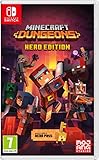
- Fight your way through an all action-adventure game, inspired by dungeon crawlers and set in the Minecraft universe
- Unite - up to four friends can play together or you can brave the dungeons alone
- Fight - use melee swings, hang back with ranged attacks or tank your way through shielded by heavy armour. Personalise your character and unlock distinct items and weapon enchantments for devastating special attacks
- Survive - explore the action-packed, treasure-stuffed levels - all in an epic quest to save the villagers and take down the evil Arch-Illager
- Includes the hero pass giving you access to a hero cape, two player skins and a chicken pet. It also includes two DLC packs, when they become available
Online cross-play
Online play is designed for friends on different supported platforms. Create a party, share the party code with the people you know, or use matchmaking when you want the game to fill an open place.
Mixed local-and-online sessions
Mixed co-op combines both formats: local players share one console or PC while remote players join online. This is useful when one household has two players but the rest of the group is elsewhere.
Matchmaking and party codes
Matchmaking considers core quest progress, region, and power level when looking for a suitable session. If you are inviting specific friends, use a party code instead of opening the session to unknown players. Minecraft’s co-op documentation defines a party code as an eight-character combination of letters and numbers unique to the current party.
Read the official explanations of cross-play, matchmaking, mixed co-op, and codes in the Minecraft Dungeons II co-op guide.
How do I set up a good first co-op session?
- Choose a host and a shared region. Pick the quest area everyone intends to play so the group does not split between unrelated objectives.
- Invite known friends with a party code. This keeps the lobby private and works across supported platforms.
- Use matchmaking only for an open slot. It can fill the remaining place when your group is smaller than four.
- Keep progress and power levels reasonably close. Matchmaking uses those factors, and a group with a similar baseline is easier to place in a suitable session.
- Assign roles informally. One player can pressure enemies at close range, another can use a bow to control distance, and others can select talismans or artifacts that cover gaps. The game does not require rigid classes, so adjust as equipment changes.
- Communicate before changing objectives. A quick agreement about whether to follow the main quest or investigate a side activity prevents one player from pulling the party in a different direction.
Which Minecraft Dungeons II edition and platform should I choose?
The Standard Edition is the base game. The Deluxe Edition adds four hero skins, the Soul cape, the Blub pet, and access to DLC 1 and DLC 2 when those expansions are released. Choose Deluxe for the cosmetic bundle and planned DLC access; choose Standard if you only need the core game.
What’s actually slowing this PC down?
Pick the symptom - the matching free tool is one click away.
| Edition | Included content | Best fit |
|---|---|---|
| Standard Edition | Base Minecraft Dungeons II game | Players who want the core campaign and systems |
| Deluxe Edition | Base game, four additional hero skins, Soul cape, Blub pet, and DLC 1 and 2 when released | Players who want the cosmetic items and planned expansion access |
For the current Standard contents, check the official Standard Edition page. Deluxe contents and the “when released” DLC condition are listed on the official Deluxe Edition page.
Supported platforms and access
Minecraft’s About page lists Steam, PlayStation 5, Nintendo Switch, and Nintendo Switch 2. Xbox lists Xbox Series X|S and Windows 10/11, and says the game is included with Game Pass. Store availability, edition names, and subscription access can vary by region, so check the storefront for your platform before buying.
Best Value

- Pre-order Minecraft Dungeons II today and get 2 hero skins, the Twisted cape, and the Twisted chicken pet! Minecraft Dungeons II Deluxe Edition includes the base game and the Soul Pack, featuring 4 hero skins, the Soul cape cosmetic item, the Blub pet companion, and DLC 1 & 2.*Requires initial content download. Online console multiplayer/co-op requires a platform specific online subscription (sold separately).
- Fight against a new, challenging threat that puts your combat skills to the test like never before.
- Craft the perfect hero with legendary gear, including a wide range of weapons, armor, and artifacts.
Use the official platform overview and the Xbox listing to confirm the version available in your country.
What beginner mistakes should I avoid?
- Skipping the map: Connected regions and multiple hubs make it easy to lose the intended route. Open the map before assuming an objective is inaccessible.
- Ignoring side quests: Detours can provide experience, equipment, and story information, so they are part of normal progression rather than wasted time.
- Keeping familiar gear too long: Replace clearly weaker items, then compare the new item’s effects and handling instead of relying on attachment to an old weapon.
- Filling every slot without a plan: More combat slots create options, but talismans and artifacts should answer a need in your build.
- Spending every enchantment immediately: Store books in the library until your preferred weapon range and defensive needs are clearer.
- Assuming one weapon type is best: Dual blades, heavy weapons, bows, and other choices change how you position and time attacks. The right choice is the one you can use consistently.
- Standing still with a bow: Automatic ammunition recharge removes arrow conservation, not the need for movement and target priority.
- Opening a private game to matchmaking by accident: Use a party code for friends, and reserve matchmaking for filling an intentionally open place.
Frequently asked questions
Does Minecraft Dungeons II save co-op progression online?
The official co-op article specifically highlights progression saved online as part of the multiplayer package. Sign in through the account and platform services required by your version, and check your platform’s account rules if several people share one device.
PC Slower Than It Used to Be?
A free scan shows the junk files, broken settings and background clutter dragging Windows down - then fixes them in one click.Free scan · Windows 10 & 11Crashes, No Sound, or Screen Glitches?
Random freezes, missing sound and display glitches usually trace back to one bad driver. Find and replace yours safely.Free scan · under a minuteHow does Minecraft Dungeons II choose a dedicated server?
Its online documentation says dedicated servers are selected using player ping. That means network distance and connection quality influence the server choice rather than the party selecting a server manually from a global list.
Can caves and ruins change between visits?
Yes. The official gameplay description says caves and ruins may vary between visits. If you return to an area, use the map and treat the location as an opportunity to explore again rather than expecting every room to be identical.
What does a Minecraft Dungeons II party code look like?
A party code is an eight-character code made from letters and numbers. It is unique to the current party, so share the active code with the friends you want to invite instead of reusing an old one.
Frequently Asked Questions
Does Minecraft Dungeons II save co-op progression online?
The official co-op article specifically highlights progression saved online as part of the multiplayer package. Sign in through the account and platform services required by your version, and check your platform’s account rules if several people share one device.
How does Minecraft Dungeons II choose a dedicated server?
Its online documentation says dedicated servers are selected using player ping. That means network distance and connection quality influence the server choice rather than the party selecting a server manually from a global list.
Can caves and ruins change between visits?
Yes. The official gameplay description says caves and ruins may vary between visits. If you return to an area, use the map and treat the location as an opportunity to explore again rather than expecting every room to be identical.
What does a Minecraft Dungeons II party code look like?
A party code is an eight-character code made from letters and numbers. It is unique to the current party, so share the active code with the friends you want to invite instead of reusing an old one.
Quick Recap
Product prices and availability are accurate as of the date/time indicated and are subject to change. Any price and availability information displayed on Amazon at the time of purchase will apply.
Quick wins for a faster PC:
Clear out junk files and repair common Windows errorsFree Scan →Scan for outdated or missing drivers - takes under a minuteDriver Scan →
