Recommended Free Tools
Some links on this page are affiliate links: if you buy through them we may earn a commission, at no extra cost to you.
Microwave-made battery materials are a real laboratory research method, but they are not a recipe for building a battery in a kitchen appliance. Researchers use controlled microwave reactors to synthesize organic anode compounds for sodium-ion cells, then test those compounds in laboratory electrodes.
The strongest reported example is sodium naphthalene-2,6-dicarboxylate. A 2021 study measured approximately 250 mAh g−1 reversible initial capacity at 25 mA g−1 and about 78% initial Coulombic efficiency. Those are material-level results under specified half-cell conditions, not specifications for a commercial battery. Follow-up work in 2024 and 2025 expanded the chemistry and examined gram-scale preparation and cradle-to-gate environmental impacts.
As an Amazon Associate I earn from qualifying purchases.
Windows Errors? Fix Them Before They Spread
Repair common Windows errors and clear accumulated junk for a smoother, more stable PC - no reinstall needed.Free scan · no reinstallCrashes, No Sound, or Screen Glitches?
Random freezes, missing sound and display glitches usually trace back to one bad driver. Find and replace yours safely.Free scan · under a minuteWhat does “cooking” battery material in a microwave actually mean?
It means using microwave irradiation as a controlled heating method for a chemical reaction. The microwave is part of a laboratory synthesis setup; it is not charging a cell, replacing a battery factory, or turning household food equipment into a chemical reactor.
The work covered by Chemistry World’s 2021 report and the underlying papers targets organic anodes for rechargeable sodium-ion batteries. A laboratory reactor can deliver monitored power, temperature control, pressure-rated vessels and procedures for handling reaction mixtures. The cited papers do not validate an ordinary kitchen microwave, publish a household procedure or identify a consumer product.
Popular on Amazon

- Never Let a Dead Battery Ruin Your Drive. The LISEN 4 in 1 Retractable Car Charger delivers reliable power for your entire journey. Compatible with standard 12V cigarette lighter sockets, it keeps phones, tablets, and devices charged during daily commutes, road trips, and long drives — the perfect practical gift for dads, truck drivers, and anyone who lives on the road.
- Daily Driver Essential: Always Ready When You Need It. Featuring two retractable cables ( USB C & Old iPhone Charging Cable ) that extend up to 31.5 inches and dual USB ports, this charger solves cable clutter while charging up to 4 devices simultaneously. Ideal for busy fathers, commuters, and families who want a tidy car and never worry about low battery again.
- Deliver full-speed PD fast charging for iPhone 18 Pro Max & iPhone 18 Pro Max & iPhone 18 Pro right inside your car. The built-in 45W PD USB-C port hits the peak charging speed for these latest iPhone models, juicing up your phone to 50% power in just 15 minutes while you drive.(Note: Maximum 45W PD output is available under 24V vehicle power supply. When used with standard 12V car sockets, the peak output is limited to 36W.)
- Standard 12V Power Solution: Designed as a dedicated USB power supply for charging devices. Note: Does NOT support CarPlay, Bluetooth, or data transfer. Compatible with most phones, tablets, and small electronics. This retractable charger is a core car organization tool, keeping your vehicle tidy. Not compatible with Micro-USB devices.
- Clutter-Free Tech Organization: Featuring dual USB ports and retractable cables, the LISEN 4 in 1 charger provides a clean car storage solution. Perfect for truck enthusiasts or as a thoughtful gift for drivers, it supports fast USB-C charging for devices like the iPhone 18Pro & iPhone 18 ProMax. Keep your vehicle organized while ensuring efficient power delivery for all your tech on the road.
“Sustainable” is also a qualified description. The research explores organic electrode materials and synthesis routes intended to reduce reliance on conventional solvent-based reactions, and later work evaluates environmental impacts. It does not prove that every sodium-ion battery made this way has a lower total lifecycle impact than every lithium-ion battery.
Why do sodium-ion batteries need different anode materials?
Sodium-ion cells move sodium ions between a cathode and an anode during charge and discharge. Sodium ions are larger than lithium ions, so graphite—the familiar lithium-ion anode—does not transfer directly as a straightforward solution for sodium-ion chemistry.
Free tools Windows power users keep installed
One-click scans. No signup required.
Researchers therefore investigate alternatives that can reversibly host sodium. The 2021 report identifies organic redox-active groups such as carboxylates, imines and azo groups as candidates. Organic molecules can be designed with functional groups that interact with sodium and can sometimes be synthesized from molecular building blocks rather than made as conventional inorganic powders.
An anode still has to meet several requirements at once: it must accept and release sodium repeatedly, conduct or contact an electronically conductive additive, remain structurally usable over cycling, and be manufacturable at a sensible cost and environmental burden. A promising molecule in a half-cell is only one part of that engineering problem.
How does microwave-assisted synthesis work in the laboratory?
The papers describe a research workflow, not a kitchen experiment. In broad terms, the microwave is used to accelerate or control the reaction that makes the organic sodium salt; the resulting solid is then processed into an electrode and evaluated electrochemically.
- Choose the molecular target. Researchers select an organic compound whose redox-active groups could store sodium. The 2021 model target was sodium naphthalene-2,6-dicarboxylate.
- Prepare the reaction mixture. Starting materials and any required liquid or solid reaction medium are combined according to a laboratory protocol. “Microwave-assisted” does not automatically mean solvent-free; the sustainability rationale is that the route can avoid or reduce conventional solvent-based processing in the relevant reaction.
- Apply controlled microwave irradiation. A laboratory reactor supplies microwave energy under monitored conditions. The vessel, temperature, pressure limits and work-up procedure are part of the experimental method and cannot be inferred from a news headline.
- Isolate and characterize the product. The material is recovered, purified or dried as required, and checked with laboratory characterization methods before electrode fabrication.
- Make and test an electrode. The active powder is combined with conductive and binding components, coated or otherwise assembled into an electrode, and tested in a cell configuration. The reported electrochemical values depend on this complete test setup, not just on the molecular formula.
Because the equipment and reaction conditions are specialized, reproducing a paper requires the full experimental section, compatible pressure-rated hardware and chemical-safety controls. Neither cited paper presents a consumer-appliance protocol.
Also popular on Amazon

- ✅【Designed for Magsafe】 - The most fashionable iphone car mount in 2026 Magsafe is designed for iPhone 18 Pro Max/17/16/15/14/13/12 Pro Max Mini and official Magsafe cases and other magnetic phone cases and can be fixed directly to these phones without the need to affix metal plates. All Android Phones Will Work: Metal rings are provided; they fit cases and other phones without magsafe. Based on Unique Grandmaster Design (Protected by US Design Patent No. US D1,112,194 S)
- ✅【STRONG MAGNETIC MagSafe Car Mount】 - This powerful magnetic phone holder can create a powerful attraction that firmly supports your device while allowing you to drive without distraction. it easily and securely holds your phone through bumps, sharp turns or even sudden stops, no worrying of dropping your phone.
- ✅【SUPER STICK FORCE】 - VHB Dash Mounted Holders adhesive provides strong stick force between the dashboard and the car phone holder, which can firmly stick to any plane in the car, fix your device, adapt to a variety of road conditions such as sudden braking, speed bump, and rugged mountain road.
- ✅【SAFE DRIVING VIEW】 - Mini-size, not taking up space, it is placed in the dashboard without blocking the view at all, and does not need to look down at the device to ensure your safe driving. Cell Phone Car Mount is suitable for most cars, pickups, SUV, taxi; It is the best assistant for Uber and Lyft drivers
- ✅【360° FREE ROTATION】 - With an adjustable swivel ball joint, you can rotate your smartphone or device at your own will, providing the best viewing angle. Quickly pick and place with one hand, free your hands and make calls and GPS navigation more convenient
What did the 2021 sodium naphthalene-2,6-dicarboxylate study show?
The peer-reviewed study by Aamod V. Desai and colleagues, published in Small Methods, reported rapid microwave-assisted synthesis and electrode optimization for an organic sodium-ion anode. Its model compound was sodium naphthalene-2,6-dicarboxylate.
Under the study’s stated conditions, the material delivered approximately 250 mAh g−1 reversible initial capacity at a current density of 25 mA g−1, with approximately 78% initial Coulombic efficiency. The published abstract and record are the appropriate source for those paired figures.
“Initial reversible capacity” means the amount of charge the tested active material could reversibly store at that point in the experiment, normalized by active-material mass. “Initial Coulombic efficiency” compares the charge recovered on the first discharge with the charge supplied on the preceding charge; a value below 100% indicates irreversible losses during early cycling.
These numbers should not be read as a retail-cell rating. They came from an experimental anode under a specified current density and cell configuration. A complete battery’s energy, power, durability and safety also depend on its cathode, electrolyte, separator, electrode loading, voltage window, packaging and operating controls.
Do these 3 things before closing this tab:
1Scan for outdated or missing drivers - takes under a minute2Repair Windows errors before they cause bigger problems3Fix the driver behind crashes, sound loss and screen glitchesWhat did the later studies add?
The later work did not stop with one molecule. Two later papers broadened the scope while keeping the work at laboratory scale.
| Study | What was prepared or examined | What it establishes |
|---|---|---|
| 2021, Small Methods | Sodium naphthalene-2,6-dicarboxylate; microwave synthesis and electrode optimization | A model organic anode with approximately 250 mAh g−1 initial reversible capacity at 25 mA g−1 and approximately 78% initial Coulombic efficiency |
| 2024, Journal of Materials Chemistry A | Binary mixtures of sodium carboxylates prepared by a one-pot microwave-assisted route | Evidence that the approach can be extended from a single sodium carboxylate to mixed organic anode compositions |
| 2025, Green Chemistry | Gram-scale disodium naphthalene-2,6-dicarboxylate and mono/disodium benzene-1,4-dicarboxylate; electrochemical work and life-cycle assessment | A larger laboratory preparation and a cradle-to-gate assessment of synthesis impacts, without proving commercial-scale production or universal environmental superiority |
The 2024 paper is significant because practical electrodes may use mixtures or families of related compounds rather than one idealized molecule. The 2025 paper reports gram-scale synthesis and examines environmental burdens within a defined cradle-to-gate boundary.
Also popular on Amazon

- High Quality Material: The coaster is made of environmentally friendly silicone, safe, non-toxic and odorless. Soft with toughness, easily embedded in the cup holder. Very durable, wear-resistant, long service life. High temperature resistance, can withstand 100 ℃ high temperature water cups.
- Wide Compatibility: The coaster has a diameter of 3.15 inches and a height of 1.18 inches, which is widely used in most vehicles, such as SUV, sedan, MPV, etc., as long as the size fits your car cup holder.
- Protection Function: Our car cup holder coaster has a carry handle design and a stand-up ring edge on its edge to effectively prevent food crumbs, drinks and water from leaking out and preventing the car cup holder from getting dirty.Meanwhile,Thickened design effectively prevents the cup holder from being scratched by the cup when driving on bumpy roads and eliminates the annoying thumping sound, making your journey more enjoyable.
- Easy to Use and Clean: With embedded installation, you just need to put it flat on the car cupholder. It is also very quick to remove, there is a small bump on the coaster, pinch it and you can easily remove the coaster. It is very easy to clean, rinse with water or wipe with a wet towel (be careful not to clean with sharp tools).
- 100% Satisfaction: Our products have quality assurance, if you have questions or are not satisfied after receiving the product, don't worry, please contact us as soon as possible, we provide after-sales service.
Gram scale is a meaningful step for evaluating handling, yield and repeatability, but it is not factory scale. The available evidence does not establish independent reproduction, industrial adoption or a commercial sodium-ion product based on these methods.
Is microwave synthesis genuinely more sustainable?
It can be a promising pathway, but the answer depends on what is included in the comparison. Avoiding conventional solvent-based reactions may reduce solvent use, waste handling and some process steps. Organic anodes also give researchers a route to investigate materials that are chemically different from standard graphite.
The 2025 study adds a more disciplined environmental perspective by applying a cradle-to-gate life-cycle assessment. That boundary covers impacts up to the point where the material leaves the production system; it is not a complete assessment of a battery’s use, maintenance, recycling or disposal. The paper therefore supports discussing synthesis impacts, not declaring all microwave-made sodium-ion batteries greener in every scenario.
Electricity demand, precursor manufacture, purification, solvent recovery, reactor utilization, yield and scale can all change the result. A short reaction is not automatically low impact if it uses energy-intensive feedstocks or produces a low yield. Conversely, a process that looks less attractive at tiny scale could improve when equipment is used efficiently. The cited sources do not provide a single, directly verifiable percentage reduction in emissions or solvent use that can be applied generally.
How should the reported battery numbers be interpreted?
Three distinctions prevent the most common misunderstandings.
- Capacity is not energy density. Capacity in mAh g−1 measures charge per mass of active material. Energy also depends on cell voltage, and a finished pack includes inactive materials, casings, electronics and safety systems.
- Current density is part of the result. The approximately 250 mAh g−1 value was measured at 25 mA g−1. Changing the current changes the time available for sodium transport and can change the measured capacity.
- Half-cell data are not full-cell data. A laboratory half-cell is useful for studying an anode against a reference or counter electrode. A practical product needs balanced positive and negative electrodes, realistic loading, an electrolyte and long-term cycling in a complete cell.
Initial Coulombic efficiency is especially important for practical design because irreversible first-cycle losses consume charge that cannot be recovered. The reported approximately 78% value is informative about the studied material and formulation, but it is not a guarantee for another electrode recipe or a finished battery.
Also popular on Amazon
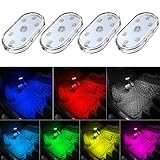
- 7 Colors Car Light: The led interior car lights are built-in 6 RGB LED lamp beads, which can be changed 7 different colors by touching, such as white, red, green, blue, yellow, pink purple, ice blue. The colors are bright and vivid, but not dazzling.Attention: Please charge before use.
- Touch Switch Design: Our led lights for car interior features touch control, one-key perspective lighting. Long touch to turn on/off, touch once to change the colors.
- Easy to Use: Stick the the iron plate in one place with double-sided tape, then put the light on it to complete the installation and fixation. Due to magnetic design, quickly install and remove, you also can attach the interior car lights to other metals.
- Portable & USB Rechargeable: Compact size, easy to carry, does not take up space. The wireless car led lights interior is charged by the USB cable, only need takes 40 minutes to fully charge the lights at a time, and keep lighting for about 2 hours.
- Wide Application: LED touch lights can be installed in dark places, such as storage boxes, armrest boxes, seat corners, etc. It's also suitable for bedside lights, wardrobe lights, reading lights, backpack lights, place it anywhere in the room, any dark place can be illuminated by it.
Can you make these materials in a kitchen microwave?
No. The cited papers do not authorize or describe household synthesis. A kitchen appliance is not specified as a chemical reactor, and it does not provide the documented control of reaction conditions, vessel compatibility, pressure, containment, monitoring and chemical handling required by the laboratory work.
Microwave irradiation can heat chemical mixtures unevenly or interact with materials in ways that are unacceptable without purpose-built equipment and procedures. Attempting to reproduce a paper with household hardware could expose people to toxic chemicals, corrosive reagents, pressure release, fire or contaminated waste. The safe conclusion is simple: treat “microwave” here as a laboratory process category, not a do-it-yourself instruction.
Independent reader supportYour contribution helps us test, update, and keep practical guides available for everyone.What still has to be solved before a commercial cell is possible?
The cited work answers a materials-synthesis question, not the entire manufacturing question. Important open issues include:
- Independent reproducibility: whether other laboratories obtain the same synthesis and electrochemical behavior.
- Durable cycling: how capacity and efficiency change over many charge-discharge cycles under realistic electrode loadings.
- Full-cell validation: how the anode performs when paired with a practical sodium-ion cathode, rather than only in a half-cell.
- Manufacturing transfer: whether microwave heating, mixing, isolation and drying can be engineered economically at much larger throughput.
- Material and process consistency: whether each batch meets the same purity, particle, moisture and electrode-processing specifications.
- Lifecycle boundaries: how precursor production, electricity, solvent handling, cell assembly, use and end-of-life alter the environmental picture.
- Safety and reliability: how the organic salts, electrolyte and complete cell behave under abuse, storage and temperature variation.
None of these gaps makes the research unimportant. They define the work still needed to move from an interesting anode chemistry to a bankable battery technology.
The Tool Desk
Outbyte PC Repair FREEClear out junk files and repair common Windows errorsFree Scan →Outbyte Driver Updater FREEFix the driver behind crashes, sound loss and screen glitchesFind Drivers →Why this research matters even without a product announcement
The value of the microwave approach is methodological as much as numerical. Faster, more compact synthesis can let researchers prepare and compare candidate organic sodium salts more efficiently than a conventional route that depends on lengthy solvent-based reactions. The 2024 binary-mixture work shows an interest in tuning composition, while the 2025 gram-scale study connects synthesis with environmental accounting rather than treating performance as the only goal.
That combination—molecular design, controlled microwave processing, electrode optimization and explicit impact assessment—is a useful model for responsible battery research. It keeps the attractive capacity result in context and makes clear which claims are demonstrated, which are promising and which remain unanswered.
Also popular on Amazon

- Creative DIY Mode: Choose from 16 million available colors or customize car led light effects to your liking in DIY mode via Govee Home app. Make your car stand out in unique style with creative freedom and outdoor decorations.
- Dynamic Music Mode: Built-in mic helps interior car lights sync with any music type. Liven up your road trips, weekend getaways or evening commute with colors that dance vibrantly to your favorite songs.
- Smart App Control: Manage the colors and brightness of car lights or choose music mode by one simple tap with Govee Home app. Enjoy a comfortable and vibrant driving experience with convenient control.
- 2 Lines Design: 2 lines design connect the 4 car led strip lights, attaching the inside car lights easily to any car model without worrying about exposed wiring or an untidy look.
- Simple Installation: Before you install, make sure the installation surface is clean and dry. Then attach the led lights for car to your vehicle with adhesive and support clips. Rubber tubing outside protects lights from water spills.
What is the practical takeaway?
Microwave-assisted synthesis is a laboratory technique for making candidate organic sodium-ion anodes. The best-documented result is the 2021 sodium naphthalene-2,6-dicarboxylate experiment, with approximately 250 mAh g−1 initial reversible capacity at 25 mA g−1 and approximately 78% initial Coulombic efficiency. Follow-up studies expanded the chemistry to binary mixtures and gram-scale preparations and added a cradle-to-gate environmental assessment.
Those results justify further research, not a claim that a household microwave can make a battery or that sodium-ion cells made by this route are already commercially available. The sustainable promise is conditional on the complete process, the system boundary and eventual full-cell manufacturing evidence.
Frequently Asked Questions
What does a cradle-to-gate battery-material assessment leave out?
It generally stops when the synthesized material leaves the production system. Impacts from assembling a complete cell, operating it, transporting it, recycling it and disposing of it require additional stages and data.
Is 250 mAh g−1 enough to predict a battery’s driving range or runtime?
No. That figure is normalized to the active anode material and measured under one laboratory current density. Pack-level runtime or vehicle range also depends on voltage, cathode capacity, electrode loading, inactive components and system efficiency.
Why did researchers study binary sodium-carboxylate mixtures?
A mixture can offer a way to tune composition and electrochemical behavior instead of relying on one molecular compound. The 2024 study demonstrates that microwave-assisted preparation can be applied to such mixed anode formulations.
What would prove that this approach is ready for industry?
Evidence would need to include reproducible larger-scale batches, realistic full-cell testing, long-term cycling, consistent quality and a lifecycle assessment covering the intended manufacturing route. The cited studies do not yet establish all of those points.
What’s actually slowing this PC down?
Pick the symptom - the matching free tool is one click away.

