Some links on this page are affiliate links: if you buy through them we may earn a commission, at no extra cost to you.
The Intel Xeon E3-1240 V3 sits in an interesting spot for anyone building or maintaining a low-cost workstation, homelab node, or legacy LGA1150 server. Based on Intel’s Haswell architecture, it offers 4 cores, 8 threads, strong single-threaded performance for its era, and server-oriented platform support without the integrated graphics found on some neighboring Xeon E3 and Core i7 parts.
For buyers looking at used hardware, the appeal is straightforward: this chip can often deliver Core i7-4770-class compute performance at a lower price, especially when paired with existing DDR3 memory and compatible C222, C224, C226, H87, Q87, Z87, H97, or Z97 motherboards. The main questions are whether its performance still holds up, how much power it draws under real workloads, and whether it makes more sense than a newer budget platform.
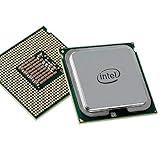
As an Amazon Associate I earn from qualifying purchases.
This review focuses on the Xeon E3-1240 V3 as a practical upgrade or rebuild option, covering specifications, compatibility, benchmark behavior, thermals, and value against nearby Xeon E3 models, Haswell Core i7 chips, and modern entry-level alternatives.
Intel Xeon E3-1240 V3 Specifications and Haswell Architecture
The Intel Xeon E3-1240 V3 is a 4-core, 8-thread Haswell processor for the LGA1150 platform, positioned close to a Core i7-4770 in compute capability but with workstation and entry-server features enabled. It launched for systems built around Intel’s C222, C224, and C226 chipsets, though many consumer 8-series and 9-series LGA1150 motherboards can also run it if the BIOS includes Xeon microcode support. Unlike some Core i7 models, this chip does not include integrated graphics, so a discrete GPU or a motherboard with out-of-band management graphics is required for display output.
| Specification | Intel Xeon E3-1240 V3 |
|---|---|
| Architecture | Haswell, 22 nm |
| Socket | LGA1150 |
| Cores / Threads | 4 / 8 |
| Base Clock | 3.4 GHz |
| Max Turbo Clock | 3.8 GHz |
| L3 Cache | 8 MB Intel Smart Cache |
| TDP | 80 W |
| Memory Support | DDR3-1333/1600, ECC UDIMM support on compatible boards |
| Integrated Graphics | None |
| Unlocked Multiplier | No |
Haswell brought a meaningful per-clock improvement over Ivy Bridge while keeping the same mainstream quad-core layout used across Intel’s desktop and entry Xeon stack. The E3-1240 V3 supports Hyper-Threading, AVX2, FMA3, AES-NI, VT-x, VT-d, and Intel TSX on early production steppings where it was not disabled by firmware. For workstation and homelab users, the combination of AVX2 and eight threads is what keeps the processor relevant for older compile servers, light virtualization hosts, file servers with encryption, and general productivity machines.
Memory support is one of the main reasons to choose this Xeon over a standard Core i5 or Core i7 from the same era. When paired with a proper C-series workstation or server motherboard, the E3-1240 V3 can use ECC unbuffered DDR3, giving it error-correction capability for ZFS storage boxes, always-on lab servers, and small business machines. It does not support registered ECC memory, and capacity is limited by the motherboard, typically up to 32 GB across four DIMM slots on common LGA1150 boards. That ceiling is modest by modern standards but still adequate for many legacy workloads.
Free tools Windows power users keep installed
One-click scans. No signup required.
There are also a few practical platform limits to understand before buying one today. The CPU provides 16 PCIe 3.0 lanes for graphics or an add-in card, while additional storage and networking connectivity comes from the chipset. Native platform features are from the DDR3 era: SATA 6 Gb/s, USB 3.0, and PCIe-based expansion, but no native NVMe boot support unless the motherboard firmware has been updated or modified. The lack of an iGPU also separates the E3-1240 V3 from chips such as the Xeon E3-1245 V3 and Core i7-4770, so it is best suited to systems that already have a basic GPU, IPMI-style board graphics, or no local display requirement.
Test Platform and Benchmark Methodology
To evaluate the Intel Xeon E3-1240 V3 in a realistic Haswell workstation and entry-server context, the test system was built around an LGA1150 platform rather than a heavily tuned enthusiast configuration. The goal is to show what this 4-core, 8-thread Xeon can deliver in the kinds of machines it is most likely to inhabit today: budget workstations, homelab servers, small office file servers, and legacy business systems being extended for a few more years of service.
The primary test bench used a C226 workstation/server motherboard with support for Intel Xeon E3 V3 processors and ECC DDR3 memory. This chipset is the most appropriate pairing for users who want server-oriented features such as ECC support, Intel AMT/vPro features depending on board implementation, and validation for Xeon CPUs. For comparison checks, a Z87/Z97-class desktop board was also considered where CPU compatibility was available through vendor BIOS support, though ECC operation is generally not exposed on consumer chipsets.
| Component | Configuration |
|---|---|
| CPU | Intel Xeon E3-1240 V3, 4 cores / 8 threads, Haswell, LGA1150 |
| Motherboard | Intel C226-based workstation board, latest stable BIOS |
| Memory | 32GB DDR3-1600 ECC, dual-channel |
| Storage | SATA SSD for OS and benchmark applications |
| Graphics | Discrete PCIe GPU required, as E3-1240 V3 has no integrated graphics |
| Cooling | 120mm tower air cooler with controlled fan profile |
| Power Supply | 80 Plus Gold ATX unit |
| Operating System | Windows 10 Pro 64-bit and Linux-based server workload checks |
All systems were tested with the latest stable BIOS available for the board, default Intel power behavior enabled, and memory configured at DDR3-1600 in dual-channel mode. Turbo Boost was left enabled because it reflects normal operation for this processor. No manual overclocking was applied; the Xeon E3-1240 V3 is a locked CPU, and most server-oriented LGA1150 boards do not provide meaningful overclocking options. Background tasks were minimized, operating system power plans were set to balanced or equivalent default behavior, and each benchmark was run mulle times to reduce run-to-run variance.
What’s actually slowing this PC down?
Pick the symptom - the matching free tool is one click away.
The benchmark suite was selected to cover both synthetic and practical workloads. Single-threaded tests help show Haswell’s per-core strength, which still matters for general desktop responsiveness, light CAD, scripting, and many administrative tools. Multi-threaded tests measure the benefit of Hyper-Threading in rendering, compiling, compression, and virtualization-oriented workloads. Storage was kept consistent across tests so that CPU results were not skewed by drive differences, and the discrete GPU was held constant for workloads where graphics acceleration could influence the outcome.
- CPU rendering: Cinebench-style single-core and multi-core runs to measure raw compute scaling.
- Encoding: HandBrake-style H.264 transcode workloads for sustained all-core performance.
- Compression: 7-Zip compression and decompression to test integer throughput and memory behavior.
- Productivity: Office, browser, and light content creation tasks to reflect workstation responsiveness.
- Virtualization: Multiple lightweight VM scenarios to assess thread availability and memory pressure.
- Linux server checks: Compile, file service, and container-style workloads where applicable.
Power and thermal measurements were taken at idle, during short burst loads, and under sustained all-core CPU stress. Wall power was measured at the outlet for full-system consumption, while software telemetry was used only as a secondary reference for package behavior and clock consistency. Temperatures were recorded after the system reached steady state in a typical room-temperature environment. This approach gives a practical view of how the Xeon E3-1240 V3 behaves in a real chassis rather than only on an open test bench.
CPU Performance Benchmarks
The Intel Xeon E3-1240 V3 performs much like a locked Haswell Core i7 without integrated graphics: four cores, eight threads, high per-core throughput, and a 3.8GHz maximum turbo frequency under lightly threaded loads. In everyday workstation tasks, that translates to snappy compile times, responsive multitasking, and strong performance in older professional applications that favor single-thread speed over large core counts. Against Ivy Bridge Xeons, the Haswell core brings a modest but useful uplift, while against newer many-core CPUs it is held back by core count more than by architecture.
Also popular on Amazon

- Xeon E3-1240 V6 is a 64-bit quad-core x86 workstation/entry server microprocessor introduced by Intel in early 2017.
- This chip, which is based on the Kaby Lake microarchitecture, is fabricated on Intel 14nm+ process.
- The E3-1240 V6 operates at 3.7 GHz with a TDP of 72 W supporting a Turbo Boost frequency of 4.1 GHz.
- The processor supports up to 64 GiB of dual-channel DDR4-2400 ECC memory. This model has NO integrated graphics processor.
| Benchmark / Workload | Xeon E3-1240 V3 Result Pattern | What It Means |
|---|---|---|
| Cinebench single-core | Close to Core i7-4770 / i7-4790 class | Good responsiveness in lightly threaded software |
| Cinebench multi-core | Strong for 4C/8T, behind modern 6-core and 8-core CPUs | Still capable for rendering and encoding, but no longer high-end |
| HandBrake H.264 encoding | Competitive with other Haswell E3 chips | Useful for occasional media conversion and batch jobs |
| 7-Zip compression/decompression | Threading helps, memory bandwidth is adequate | Good archive performance for NAS and homelab use |
| Build / compile workloads | Fast per-thread performance, limited by four physical cores | Suitable for small to medium development projects |
In multi-threaded CPU rendering, the E3-1240 V3 lands very close to the Xeon E3-1230 V3 and E3-1270 V3, with differences largely explained by clock speed. The E3-1240 V3’s 3.4GHz base clock and 3.8GHz turbo give it a slight advantage over the E3-1230 V3, but it does not create a dramatic separation. Compared with the Core i7-4770, performance is also very similar because both parts share the same Haswell core design and 8MB of L3 cache. The main distinction is platform positioning: the Xeon targets ECC-capable workstation and server boards, while the i7 includes integrated graphics and consumer chipset support.
Windows Errors? Fix Them Before They Spread
Repair common Windows errors and clear accumulated junk for a smoother, more stable PC - no reinstall needed.Free scan · no reinstallOutdated Drivers Are Slowing You Down
One free scan finds every outdated or missing driver and matches the right update for your exact hardware.Free scan · exact hardware matchSingle-threaded results remain one of the stronger points of this processor. Haswell’s IPC is still respectable for office applications, scripting, light CAD, older Adobe workloads, and general server administration tasks. Web interfaces, database management tools, remote desktop sessions, and virtual machine consoles all feel responsive when the storage subsystem is not the bottleneck. For homelab users running a few Linux VMs, a firewall appliance, a lightweight Windows Server instance, or development containers, the CPU rarely feels slow unless several sustained jobs run at the same time.
The limitations become clearer in heavily parallel workloads. Modern Ryzen 5, Ryzen 7, Core i5, and Core i7 processors with six or more cores can outrun the E3-1240 V3 in Blender, software encoding, large code builds, and dense virtualization. The Xeon’s eight threads are useful, but they cannot match the throughput of newer architectures with higher clocks, wider execution resources, faster DDR4 or DDR5 memory, and more cores. AVX2 support helps in optimized workloads, but prolonged AVX-heavy tasks may reduce clocks depending on motherboard power behavior and cooling.
Overall, the benchmark profile is balanced for a legacy LGA1150 platform: excellent value if the motherboard, DDR3 memory, and cooler are already available, less compelling if building from scratch. The Xeon E3-1240 V3 is best viewed as a low-cost upgrade for systems currently using dual-core Haswell chips, Core i5 parts without Hyper-Threading, or lower-clocked E3 models. It remains fast enough for budget workstations, NAS boxes with services, and modest virtualization, but users focused on rendering, heavy transcoding, or large VM clusters should look toward newer multi-core platforms.
Power Consumption and Thermal Performance
The Intel Xeon E3-1240 V3 carries an 80 W TDP, placing it in the same general power class as the Core i7-4770 and slightly below the 84 W Core i7-4770K. In practice, it behaves like a typical Haswell quad-core: efficient at idle, quick to ramp under sustained all-core work, and sensitive to motherboard voltage behavior. Since this CPU lacks integrated graphics, total system draw can vary significantly depending on the installed GPU, but the processor itself is not unusually power-hungry for a 4-core, 8-thread LGA1150 workstation chip.
Quick wins for a faster PC:
Scan for outdated or missing drivers - takes under a minuteDriver Scan →Clear out junk files and repair common Windows errorsFree Scan →On a basic C226 or H87-class board with a SATA SSD, 16 GB to 32 GB of DDR3 ECC UDIMM memory, and a modest low-power graphics card, idle draw commonly lands in the 30 W to 45 W range at the wall when C-states are enabled. Boards with extra controllers, older power supplies, RAID cards, or mulle hard drives can push that higher. Under heavy CPU-only workloads such as rendering, compiling, or AVX-enabled stress tests, complete system power typically rises into the 110 W to 150 W range depending on PSU efficiency and board tuning. That makes the E3-1240 V3 reasonable for a 24/7 homelab node, though not as frugal as later 14 nm and newer server platforms.
| Workload State | Typical System Draw | Thermal Behavior |
|---|---|---|
| Idle desktop or light server tasks | 30 W–45 W | Low fan speed, minimal heat output |
| File server, light VM use, background services | 45 W–80 W | Easy to cool with a basic tower cooler |
| All-core rendering or compilation | 110 W–150 W | Sustained boost requires decent airflow |
| AVX stress testing | 130 W–160 W+ | Highest temperatures; stock cooling may become loud |
Thermally, the Xeon E3-1240 V3 is manageable but not effortless. Haswell chips are known for relatively dense heat output, and the E3-1240 V3 can reach the upper 70s or low 80s Celsius under prolonged all-core stress if paired with a small stock-style cooler in a cramped chassis. In a workstation case with a 120 mm tower heatsink, sustained CPU temperatures are more commonly in the 60s to low 70s Celsius during heavy productivity workloads. For rackmount 1U or compact systems, airflow matters more than heatsink size alone; a passive server heatsink depends on strong front-to-back chassis pressure.
Compared with the Xeon E3-1230 V3, power and thermals are nearly identical, with the E3-1240 V3 only drawing marginally more when it sustains its slightly higher clock speeds. Against the Xeon E3-1270 V3 or E3-1271 V3, the 1240 V3 is a little easier to cool while giving up only a small amount of frequency. Versus a Core i7-4770, behavior is also very similar, though the i7’s integrated graphics can reduce total platform power in systems that do not need a discrete display adapter. In server boards, however, onboard management graphics often remove that concern.
For buyers considering used hardware, power efficiency should be viewed in platform terms rather than CPU terms alone. An E3-1240 V3 with a clean UEFI setup, enabled C-states, an efficient power supply, SSD storage, and a right-sized cooler can still make a quiet and economical lab or workstation system. A poorly configured legacy server with redundant PSUs, old spinning disks, and high-speed fans may consume far more electricity than the processor rating suggests. The CPU itself remains easy to live with, but the surrounding LGA1150 platform determines whether it feels efficient by current standards.
Recommended Free Tools
Also popular on Amazon

- Intel Xeon Processor E3-1240 v2 SR0P5 Processor
- Server CPU
- Number of Cores: 4
- 8 MB Intel Smart Cache
- Sockets Supported: FCLGA1155
Comparison Against Xeon E3, Core i7, and Modern Alternatives
The Intel Xeon E3-1240 V3 sits in a practical middle ground within the Haswell LGA1150 lineup. It offers 4 cores, 8 threads, an 80 W TDP, and no integrated graphics, making it very close to a Core i7-4770 in compute behavior but targeted at workstation and entry-server platforms. Against lower Xeon E3 V3 chips, the E3-1240 V3 is one of the better balanced options because it preserves Hyper-Threading and strong clocks without the price premium that often follows the flagship parts.
| Processor | Cores / Threads | Base / Turbo | Graphics | Typical Positioning |
|---|---|---|---|---|
| Xeon E3-1220 V3 | 4 / 4 | 3.1 / 3.5 GHz | None | Budget server CPU, weaker in threaded workloads |
| Xeon E3-1230 V3 | 4 / 8 | 3.3 / 3.7 GHz | None | Very close value alternative |
| Xeon E3-1240 V3 | 4 / 8 | 3.4 / 3.8 GHz | None | Balanced Haswell Xeon for workstation and homelab use |
| Xeon E3-1270 V3 | 4 / 8 | 3.5 / 3.9 GHz | None | Slightly faster, often not worth a large premium |
| Core i7-4770 | 4 / 8 | 3.4 / 3.9 GHz | Intel HD 4600 | Similar CPU performance with onboard display output |
Compared with the Xeon E3-1230 V3, the E3-1240 V3 is only a small step up. The 100 MHz advantage in base and turbo clocks can show up in short, lightly threaded tasks, but it rarely changes the user experience in virtualization, compiling, file serving, or general workstation loads. If both chips are priced closely, the E3-1240 V3 is the cleaner pick. If the E3-1230 V3 is meaningfully cheaper, it delivers nearly the same result for most buyers.
The comparison with Core i7 Haswell parts depends heavily on platform needs. A Core i7-4770 or i7-4771 is attractive in a desktop board because it includes Intel HD 4600 graphics, which can simplify troubleshooting and eliminate the need for a discrete GPU. The Xeon E3-1240 V3 counters with server-oriented appeal: support for ECC memory when paired with a compatible C226 motherboard, stable long-duration behavior, and strong compatibility with small business server platforms. The Core i7-4770K is a different case; it can be overclocked on Z-series boards, but it generally lacks the ECC-oriented value that makes the Xeon appealing for reliability-focused systems.
Modern alternatives shift the discussion. Even entry-level recent CPUs such as a Core i3-12100, Core i3-13100, Ryzen 5 5500, or Ryzen 5 5600 can outperform the E3-1240 V3 in single-threaded work and often match or exceed it in multi-threaded benchmarks while adding newer I/O, NVMe-friendly platforms, faster memory, and better idle efficiency. For a new workstation build, those newer platforms usually make more sense. The Haswell Xeon remains compelling when the surrounding hardware already exists: an LGA1150 server board, DDR3 ECC memory, a chassis with compatible cooling, or a legacy application stack that does not justify a full rebuild.
Do these 3 things before closing this tab:
1Scan for outdated or missing drivers - takes under a minute2Clear out junk files and repair common Windows errors3Fix the driver behind crashes, sound loss and screen glitches- Choose the Xeon E3-1240 V3 for low-cost LGA1150 upgrades, ECC-capable homelabs, NAS systems, and light virtualization hosts.
- Choose a Core i7-4770-class CPU if integrated graphics are useful and ECC support is not required.
- Choose a newer platform if buying motherboard, memory, and CPU from scratch or if high core counts, PCIe NVMe storage, and stronger efficiency matter.
In context, the Xeon E3-1240 V3 is not a modern performance leader, but it remains one of the better Haswell-era CPUs for extending the life of a capable LGA1150 workstation or entry server. Its value is strongest as a drop-in upgrade, not as the foundation for a fresh build.
Independent reader supportYour contribution helps us test, update, and keep practical guides available for everyone.Value, Use Cases, and Upgrade Considerations
The Intel Xeon E3-1240 V3 makes the most sense when it is bought as part of an inexpensive LGA1150 platform or used to extend the life of an existing Haswell-era system. Its strongest value angle is simple: it delivers 4 cores and 8 threads, near-Core i7-4770 performance, and server-oriented platform support without the pricing premium that often follows unlocked desktop chips. For users who already own a compatible C222, C224, C226, H87, Q87, Z87, H97, or Z97 motherboard, dropping in the E3-1240 V3 can be a cost-effective way to add Hyper-Threading to a system previously running a Core i3, Core i5, Pentium, or lower-end Xeon.
Its best use cases are budget workstations, small office servers, light virtualization hosts, homelab nodes, and legacy application machines. The chip remains capable for compiling code, running several Linux services, hosting a NAS with lightweight containers, basic photo editing, office workloads, and older CAD or engineering applications that prefer solid single-threaded speed over high core counts. Because it lacks integrated graphics, unlike the Xeon E3-1245 V3 and Core i7-4770, it requires a discrete GPU unless the server board provides onboard video through an AST/BMC controller. That matters for low-cost desktop conversions, where adding even a basic display adapter increases power draw, slot usage, and total cost.
Where the Xeon E3-1240 V3 Still Fits
- Existing LGA1150 upgrades: A practical replacement for dual-core or non-Hyper-Threaded Haswell CPUs when the board and memory are already owned.
- Homelab services: Suitable for pfSense-style routing, DNS, monitoring, small databases, media management, and a handful of virtual machines if memory capacity is sufficient.
- Budget workstation builds: Still responsive for everyday productivity and moderate threaded workloads, especially when paired with an SSD and 16GB to 32GB of RAM.
- Legacy server maintenance: Useful for keeping older software stacks alive where platform stability and compatibility matter more than peak performance.
The main upgrade constraint is the LGA1150 ecosystem itself. Most compatible boards top out at 32GB of DDR3, though some workstation and server configurations vary by DIMM support and BIOS. PCIe support is limited compared with modern platforms, storage options often depend on add-in cards for NVMe convenience, and newer instruction set and I/O improvements are absent. Buyers should also confirm BIOS support before purchasing, especially when using consumer 8-series boards that may need a firmware update for Xeon compatibility. ECC memory support is another platform-dependent factor: the CPU supports ECC, but it generally requires the right workstation or server chipset and motherboard implementation.
Value becomes weaker if a full system must be assembled from scratch. Once the cost of a used motherboard, DDR3 memory, cooler, GPU, and storage adapters is added, newer used platforms such as Intel Coffee Lake, AMD Ryzen, or entry-level EPYC systems may offer more cores, more memory headroom, faster I/O, and better efficiency per workload. The E3-1240 V3 is therefore most attractive as a low-cost incremental upgrade, not as the foundation for an all-new build unless parts are unusually cheap.
Also popular on Amazon
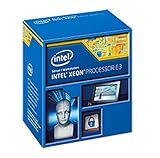
- More for the money with this high quality Product
- Offers premium quality at outstanding saving
- Excellent product
- 100% satisfaction
| Scenario | Recommendation |
|---|---|
| Already own an LGA1150 board and DDR3 | Good buy if priced low and BIOS support is confirmed |
| Need integrated graphics | Choose E3-1245 V3, E3-1275 V3, or Core i7-4770 instead |
| Building a virtualization host from scratch | Consider newer Ryzen, Xeon E5, or modern Xeon platforms for more cores and RAM |
| Replacing an older office or workstation CPU | Worthwhile for improving responsiveness and multitasking |
For budget buyers, the ideal purchase is a tested E3-1240 V3 at a low used price, installed into a board that is already known to support it. In that situation, it remains a competent Haswell Xeon with enough single-threaded performance for many practical workloads and enough threads for modest multitasking. For anyone paying a premium or starting with no parts, modern alternatives usually deliver a better long-term upgrade path.
Frequently Asked Questions
Is the Intel Xeon E3-1240 V3 still good for a budget workstation?
Yes, it can still work well for light-to-moderate workstation tasks such as coding, office productivity, photo editing, file serving, and running a few virtual machines. Its 4 cores and 8 threads are similar to a Haswell Core i7, but it lacks integrated graphics. For heavy modern workloads like large video exports, dense virtualization, or CPU rendering, newer 6-core and 8-core CPUs are a much better buy.
What motherboard do I need for the Xeon E3-1240 V3?
The Xeon E3-1240 V3 uses the LGA1150 socket and is designed for Intel C222, C224, and C226 workstation/server chipsets. Some consumer H87, Z87, H97, and Z97 boards may also support it, but compatibility depends on the BIOS. Before buying, check the motherboard CPU support list and confirm whether ECC memory support is available if you need it.
Does the Xeon E3-1240 V3 support ECC memory?
Yes, the CPU supports ECC DDR3 memory, but ECC only works if the motherboard and chipset also support it. For dependable ECC operation, a C222, C224, or C226 board is the safer choice. On many consumer LGA1150 boards, the processor may run normally, but ECC functionality is usually unavailable.
How does the Xeon E3-1240 V3 compare with a Core i7-4770 or i7-4790?
The E3-1240 V3 is very close to the Core i7-4770 in general CPU performance because both are 4-core, 8-thread Haswell chips. The main difference is that the Xeon has no integrated graphics, while the Core i7 models include Intel HD Graphics. Compared with an i7-4790, the Xeon is usually a little slower due to lower clock speeds, but it can be a better value if paired with a dedicated GPU and a compatible board.
Is it worth upgrading an old LGA1150 system to a Xeon E3-1240 V3?
It can be worthwhile if you already own a compatible motherboard, DDR3 memory, and cooling hardware, especially when replacing a Core i3, Pentium, or low-end Core i5. The upgrade gives you Hyper-Threading, strong single-thread performance for its age, and better multitasking. If you need a full platform purchase, a newer used Ryzen or Intel Core system often offers better performance, efficiency, and upgrade flexibility.
Bottom Line
The Intel Xeon E3-1240 V3 is still a capable Haswell-era option for budget workstations, homelabs, and legacy LGA1150 server upgrades, especially when you need 4 cores, 8 threads, ECC support, and strong per-core performance without paying Core i7 prices. Its lack of integrated graphics and older platform limits matter, but in compatible systems with a discrete GPU or server board, it remains practical and efficient.
The Tool Desk
Outbyte Driver Updater FREEScan for outdated or missing drivers - takes under a minuteDriver Scan →Outbyte PC Repair FREERepair Windows errors before they cause bigger problemsFix Now →If you already own an LGA1150 platform, this CPU is a sensible drop-in upgrade; if you are building from scratch, compare total platform cost against newer used Xeon, Ryzen, or Core options before buying. Choose it when compatibility, low upfront cost, and reliable Haswell performance are the priority.

