Recommended Free Tools
Some links on this page are affiliate links: if you buy through them we may earn a commission, at no extra cost to you.
Run a small AI pilot as a controlled evaluation of one business problem—not as a quiet company-wide launch. Before anyone gets access, define the hypothesis, baseline, intended users and tasks, success and stop criteria, data boundaries, risk owner, and evaluation plan. Then test with a representative group, compare results with business as usual where feasible, review both value and harm, and make a documented decision to stop, iterate, or expand.
What is an AI pilot, and how is it different from a proof of concept?
An AI pilot is a limited, real-world evaluation between a proof of concept and production. A proof of concept explores whether an idea is technically plausible; a pilot tests whether the proposed system works acceptably for specific people, tasks, data, and operating conditions. It is not evidence that the system is ready for every team or workflow.
As an Amazon Associate I earn from qualifying purchases.
The Australian Government Digital Transformation Agency describes the usual path as “proof of concept, pilot then deployment into production.” Its guidance treats each stage as a point for systematic evaluation, covering business alignment, solution design, data, technology, people, governance, and operations. The distinction matters: a convincing demo may not reveal how a tool handles exceptions, how its outputs affect work, or what happens when it fails during normal operations.
For a pilot, set a bounded scope and an explicit decision at the end. The goal is not simply to get users to try AI. It is to gather enough relevant evidence to decide whether to stop, revise the design, or authorize a carefully controlled next stage.
#1 Best Overall

- Dual-Brain Hybrid Power: Combines the Qualcomm Dragonwing QRB2210 MPU (Quad-core Arm Cortex-A53 @ 2.0 GHz CPU, Adreno GPU, AI acceleration) and the real-time, low-power STM32U585 MCU for advanced applications like object recognition, voice commands, and motion detection.
- AI & Linux Capabilities: Unlocks AI-powered vision and sound solutions; runs Linux Debian OS for coding in Python and supports the Arduino ecosystem with libraries and Sketches; quick start with Arduino App Lab.
- Advanced Features: Equipped with 4 GB LPDDR4 RAM, 32 GB eMMC built-in storage, ideal for single-board computer (SBC) mode, running multiple simultaneous high-level processes, more complex AI or ML models, extensive logs. Dual-band Wi-Fi 5 (2.4/5 GHz), Bluetooth 5.1, and high-speed headers for vision, audio, and display peripherals.
- Seamless Expansion & Connectivity: Features the classic UNO form factor for shields compatibility, an 8x13 LED matrix, and a Qwiic connector for easy expansion with Modulino nodes; power and connect via the USB-C connector.
- Intended Use & Development: The perfect platform for prototyping robotics or IoT projects, empowering innovators with a unified development experience to mix Arduino Sketches, Python scripts, and containerized AI models in a single interface.
How do we choose a use case and write a useful hypothesis?
Choose one recurring business problem with a clear owner, observable outcome, and manageable consequences if the AI performs poorly. Write a hypothesis that states what should improve, for whom, in which workflow, and what evidence would count as improvement.
Start with the work, not the model
Describe the task as it happens today: who performs it, what information they use, where delays or errors occur, and what a good result looks like. Identify whether the AI will draft, summarize, classify, recommend, or take an action. The more consequential the action, the more carefully the pilot should constrain authority and provide human review.
Prefer a first use case where the output can be checked and mistakes can be corrected before they affect customers, employees, finances, or safety. A narrow task also makes it easier to identify whether a change in results is plausibly related to the AI rather than to a broader process change.
Make the hypothesis testable
A practical hypothesis has four parts: the target users, the task, the expected benefit, and the conditions under which the benefit must be achieved. For example: “For the support team handling routine internal requests, AI-assisted drafts will reduce time spent preparing responses while maintaining the team’s existing review standard and not exposing restricted information.” This is an example of structure, not a promised outcome or threshold.
UK implementation guidance recommends a hypothesis-led, iterative approach: establish a baseline, test throughout development, assess performance, and document whether to progress beyond the alpha phase. That discipline discourages a common mistake—deciding a tool is successful because users like a demonstration or because it produces plausible-looking answers.
How many users should be in a small AI pilot?
There is no universally correct number. The group should be large and varied enough to test the important roles, tasks, data types, and edge cases, but limited enough that the organization can supervise use, investigate failures, and support participants.
Quick wins for a faster PC:
Clear out junk files and repair common Windows errorsFree Scan →Fix the driver behind crashes, sound loss and screen glitchesFind Drivers →Repair Windows errors before they cause bigger problemsFix Now →Choose users based on the intended rollout, not convenience alone. If the eventual use affects several roles, include representatives of those roles or clearly record which are out of scope. Consider different levels of experience, workload patterns, and relevant task variations. A group drawn only from enthusiastic early adopters may produce feedback that does not reflect ordinary use.
Document who participated, what they were allowed to do, what cases were excluded, and any assumptions about the environment. Results should not be generalized to roles, languages, data, or workflows the pilot did not test. If the participant group is too small to support a reliable comparison, treat findings as exploratory and use them to refine the next test rather than claiming proven impact.
What baseline and comparison should we use?
Record how the task performs before introducing AI, then choose a comparison that helps separate the AI’s effect from normal variation. Without a baseline and a credible comparison, a faster week or a favorable user impression may reflect workload changes, staff experience, seasonality, or other factors rather than the tool.
Rank #2
- Dual-Brain Hybrid Power: Combines the Qualcomm Dragonwing QRB2210 MPU (Quad-core Arm Cortex-A53 @ 2.0 GHz CPU, Adreno GPU, AI acceleration) and the real-time, low-power STM32U585 MCU for advanced applications like object recognition, voice commands, and motion detection.
- AI & Linux Capabilities: Unlocks AI-powered vision and sound solutions; runs Linux Debian OS for coding in Python and supports the Arduino ecosystem with libraries and Sketches; quick start with Arduino App Lab.
- Advanced Features: Equipped with 2 GB LPDDR4 RAM, 16 GB eMMC built-in storage, ideal to develop in PC-connected mode, running the OS, Python scripts, and basic network services (SSH) without a demanding GUI or heavy multitasking; great for lightweight AI and memory-optimized TinyML applications, needing local storage for basic OS and core libraries. Dual-band Wi-Fi 5 (2.4/5 GHz), Bluetooth 5.1, and high-speed headers for vision, audio, and display peripherals.
- Seamless Expansion & Connectivity: Features the classic UNO form factor for shields compatibility, an 8x13 LED matrix, and a Qwiic connector for easy expansion with Modulino nodes; power and connect via the USB-C connector.
- Intended Use & Development: The perfect platform for prototyping robotics or IoT projects, empowering innovators with a unified development experience to mix Arduino Sketches, Python scripts, and containerized AI models in a single interface.
UK Government impact-evaluation guidance, updated May 15, 2026, recommends defining evaluation objectives early and clearly describing the comparison group. It identifies several practical designs:
| Design | How it works | Useful when | Watch for |
|---|---|---|---|
| Randomize access timing | Eligible users or teams receive access at different randomly assigned times; later groups can serve as a temporary comparison. | A staged introduction is operationally possible and the organization wants a comparison before everyone has access. | Do not let delayed access deprive people of a necessary service or create unfair treatment; account for changes over time. |
| Treatment and control groups | Assign comparable users, teams, or cases to AI-assisted and business-as-usual conditions. | Tasks can be allocated fairly and outcomes can be measured consistently across groups. | Groups may differ in experience or case difficulty; prevent unintended sharing of AI outputs from contaminating the comparison. |
| Randomize encouragement or training | Randomly vary who receives a prompt or training to use the tool, while measuring outcomes for the relevant groups. | Use is voluntary or uneven and the organization wants to assess the effect of encouraging adoption. | Encouragement may change behavior beyond tool use, so record what participants receive and interpret results cautiously. |
Random assignment is not always feasible or appropriate. If there is no credible control group, use the best available comparison, such as a well-documented pre-pilot baseline, and state the limits plainly. Avoid presenting a before-and-after difference as proof of causation when other changes could explain it.
What should an AI pilot measure?
Measure whether the tool creates useful outcomes and whether it introduces unacceptable errors or harms. Set the measures before launch, using the hypothesis and intended use to choose a small set of meaningful indicators rather than collecting activity counts that do not answer the decision question.
Value and task performance
- Task quality: define what a correct, complete, useful result means for the task and how it will be checked.
- Time or cost: measure the relevant work, including review and correction time, rather than counting only the time saved while generating an output.
- Adoption and workflow fit: record whether intended users use the tool for eligible tasks and where they abandon, bypass, or modify the workflow.
- User feedback: ask what helped, what required correction, and what situations caused uncertainty. Treat satisfaction as one signal, not a substitute for quality assessment.
Risk and operational impact
- Error severity: record the type and consequence of mistakes, not just an aggregate accuracy score.
- Privacy and security: track suspected or confirmed incidents, inappropriate disclosures, and use outside the approved data boundaries.
- Escalations and overrides: count when people need to intervene, correct, or route a task elsewhere, and examine why.
- Unintended effects: look for changes in workload, user behavior, service quality, or outcomes for groups affected by the workflow.
For each metric, specify its definition, collection method, owner, review frequency, and what result would trigger investigation or a stop. NIST’s AI Resource Center provides resources for testing, evaluation, verification, and validation; its AI Risk Management Framework is intended to help organizations manage AI risks and promote trustworthy, responsible use.
How should we set success and stop criteria?
Write acceptance criteria before granting access, and make them reflect the intended task, context, and risk. Define what evidence supports expansion, what result calls for iteration, and what event requires an immediate pause or stop.
What’s actually slowing this PC down?
Pick the symptom - the matching free tool is one click away.
Acceptance criteria should not be a single headline score. A tool could be quick but unreliable, or useful on routine cases while failing badly on an important edge case. Set criteria across the dimensions that matter to the use case, such as:
- Minimum acceptable task quality and review requirements.
- Maximum tolerable frequency or severity of errors.
- Required handling of uncertain, sensitive, or out-of-scope requests.
- Value evidence compared with the baseline or comparison group.
- Required user training, human review, and operational readiness.
- Conditions that trigger a pause, escalation, incident response, or rollback.
Do not borrow a generic accuracy target, return-on-investment percentage, or pilot duration and treat it as universal. Thresholds depend on the task, consequences of error, data, and operating context. Australia’s implementation guidance calls for clear acceptance criteria, test methods that reflect intended use and risk, documented outcomes, and deployment authorization.
How can we test AI safely with company data?
Set data boundaries and supplier controls before users test the system. Decide which data may be used, who can access it, what the supplier may retain or reuse, and how the organization will respond to a privacy, confidentiality, intellectual-property, or security concern.
Define the permitted data and workflow
- List approved data sources and categories, and explicitly identify prohibited or restricted information.
- Confirm whether the test data is appropriate for the purpose and whether access can be limited to the pilot group.
- Decide how outputs may be stored, shared, reviewed, and incorporated into business records.
- Specify what users must do if they encounter sensitive data, an unexpected disclosure, or an output that appears to contain information they should not see.
Review the supplier and contract
Assess privacy, confidentiality, intellectual-property rights, cybersecurity, retention, vendor transparency, contracts, and service levels. NIST’s Generative AI Profile, released July 26, 2024, highlights third-party intellectual-property, privacy, and information-security risks and points to due diligence, service-level agreements, and transparency measures. Confirm the actual terms and configuration that apply to the proposed service; do not assume that a product’s general marketing description answers these questions.
Free tools Windows power users keep installed
One-click scans. No signup required.
Rank #3
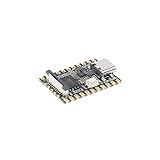
- Single core ARM Cortex-A7 32-bit core, integrated with NEON and FPU
- Built in Micro's self-developed 4th generation NPU, with high computational accuracy and support for mixed quantization of int4, int8, and int16. Among them, int8 has a computing power of 0.5 TOPS and int4 has a computing power of up to 1.0 TOPS
- Built in self-developed 3rd generation ISP3.2, supports 4 million pixels, and supports various image enhancement and correction algorithms such as HDR, WDR, and multi-level denoisin
- It has powerful encoding performance, supports intelligent encoding, adapts to save bit rates according to the scene, and saves more than 50% of the bit rate compared to conventional CBR mode, making the captured images high-definition, smaller in size, and doubling the storage space
- The design with built-in RISC-V MCU supports low-power fast startup, 250ms fast capture, and simultaneous loading of AI model library, enabling facial recognition to be completed within 1 second
NIST published AI RMF 1.0 on January 26, 2023. More than 240 contributing organizations participated in its development. The framework’s purpose, as described by NIST author Elham Tabassi, is to offer organizations designing, developing, deploying, or using AI systems a resource to help manage risks and promote trustworthy and responsible use. These frameworks support risk management; they do not replace a review of the specific data, supplier, and use case.
Who needs to be involved, and how do we keep people in control?
Name an accountable business owner before the pilot starts, and identify who handles technical operation, data and privacy review, security, user support, evaluation, and incident decisions. The accountable owner should have authority to pause the pilot and should remain responsible for deciding what happens to it after evaluation.
Train participants and overseers on intended use, known limitations, failure modes, data rules, and escalation routes. Make clear which outputs require verification and who has the authority to accept, edit, reject, or override them. Australian Government implementation guidance calls for operational accountability and human oversight throughout the AI lifecycle.
Human review must be practical, not merely named in a policy. Participants need enough time and information to check an output, a clear way to correct it, and a fallback when the system is unavailable or untrustworthy. For critical functions, decide in advance how work can continue without AI.
Do these 3 things before closing this tab:
1Clear out junk files and repair common Windows errors2Fix the driver behind crashes, sound loss and screen glitches3Repair Windows errors before they cause bigger problemsWhat should happen during the pilot?
Run the pilot as a monitored test with a defined start, review cadence, and incident route. Do not expand access informally just because early users are enthusiastic or because no obvious issue has appeared.
- Confirm authorization: verify that the use case, participants, data, supplier configuration, acceptance criteria, and evaluation plan have been reviewed and approved.
- Orient participants: provide task-specific instructions, examples of failure modes, data-handling rules, review expectations, and the person to contact for help.
- Begin with the agreed scope: keep access limited to the intended users and eligible tasks. Record exclusions and changes rather than silently widening use.
- Monitor results and incidents: review quality, value, adoption, escalations, and risk indicators on the planned schedule. Escalate events according to the stop and incident criteria.
- Preserve evidence: keep test outcomes, material configuration or process changes, user feedback, incidents, and decisions in a form that can be reviewed at the decision gate.
NIST’s AI Resource Center offers materials related to testing, evaluation, verification, and validation. Use an evaluation approach appropriate to the system and task; a pilot log alone is not a substitute for checking whether outputs meet the stated requirements.
Independent reader supportYour contribution helps us test, update, and keep practical guides available for everyone.When is an AI pilot ready to scale?
A pilot is ready for a decision—not automatically for rollout—when the planned evaluation is complete and the evidence can be assessed against the pre-agreed criteria. Progress only if the required value, quality, risk, and operational conditions are met for the scope actually tested.
At the decision gate, document one of three outcomes:
Outdated Drivers Are Slowing You Down
One free scan finds every outdated or missing driver and matches the right update for your exact hardware.Free scan · exact hardware matchWindows Errors? Fix Them Before They Spread
Repair common Windows errors and clear accumulated junk for a smoother, more stable PC - no reinstall needed.Free scan · no reinstall- Stop: the expected benefit is not supported, risks are unacceptable, or required controls cannot be put in place.
- Iterate: the idea may be worthwhile, but results expose a fixable limitation, missing control, or unanswered evaluation question. State what will change and what must be tested again.
- Expand: the evidence meets the acceptance criteria for the tested context, required controls are operating, and a staged next rollout has an owner and monitoring plan.
Record the decision rationale, unresolved limitations, conditions of authorization, and any user groups or situations not covered. A successful result in one workflow does not establish safety or effectiveness in a different workflow, with different data, or for a different group of users.
Rank #4

- 【POWERFUL ESP32‑S3 CONTROLLER】Built‑in Xtensa 32‑bit LX7 dual‑core processor, 512KB SRAM, 8MB PSRAM, 16MB Flash for stable AI voice computing and multitask processing.
- 【Preloaded Dual AI Platforms】Comespre-installed with complete Deepseek and OpenAI voice dialogue projects.Experience intelligent voice interaction instantly. (Note: OpenAI functionality requires your own API key.)
- 【STABLE WIRELESS & CLEAR AUDIO】Integrated 2.4GHz Wi‑Fi + Bluetooth 5 (LE); dedicated audio decoding module for natural, responsive voice interaction.
- 【USER‑FRIENDLY VISUAL & PLUG‑AND‑PLAY】2” TFT‑SPI color screen shows real‑time chat; modular design, no extra wiring, ready to use after setup.
- 【FULL LEARNING SUPPORT】45 programmable GPIOs, rich interfaces, online web tutorials, free technical support for beginners & developers.
How do we roll out gradually and keep the system safe?
Expand by team, workflow, or geography rather than turning a pilot into a universal release. Each stage should have a defined scope, trained users, monitoring, human intervention, a fallback, and a point at which the organization reviews whether to continue.
Repeat evaluation after material changes to the model, data, supplier, configuration, or business process. A change can alter the system’s behavior or the consequences of an error, so results from an earlier setup should not be treated as permanent evidence for a changed one.
Maintain an incident-response path, a way to intervene or override, and fallback procedures for critical tasks. Set review cycles and criteria for decommissioning as well as expansion: an AI system that no longer meets its requirements should be capable of being withdrawn safely. Australia’s implementation guidance emphasizes monitoring, review, incident response, human intervention, and safe decommissioning.
What should the final pilot record contain?
Keep a concise record that allows decision-makers to understand what was tested, what was found, and what remains uncertain. It should be usable for operational follow-up, not just a presentation of favorable results.
- The use case, hypothesis, intended users, eligible tasks, exclusions, and assumptions.
- The baseline, comparison design, evaluation objectives, metric definitions, and test methods.
- Acceptance and stop criteria, including who approved them and when.
- Data boundaries, supplier and contract review, system configuration, and relevant changes during the test.
- Results for value, quality, risk, adoption, escalations, user feedback, and incidents.
- The decision—stop, iterate, or expand—with rationale, unresolved limits, required controls, and named owners.
- For any expansion, the rollout stages, training, monitoring, fallback, incident response, and decommissioning arrangements.
Keeping this record makes the decision auditable and helps prevent a narrow pilot result from being mistaken for evidence about conditions the team never tested.
Frequently Asked Questions
Can we use a pilot to compare two AI tools at the same time?
Yes, if the evaluation can keep the task, data, participant conditions, and scoring method comparable. Define the comparison before users begin and check that participants do not receive materially different training or support that would make the results hard to interpret.
What if we cannot create a control group for our AI pilot?
You can still evaluate a pilot using a documented baseline and consistent outcome measures, but the conclusion should reflect that other changes may have affected the result. Treat the evidence as less conclusive about causation and consider a stronger comparison in a later stage.
The Tool Desk
Outbyte PC Repair FREEClear out junk files and repair common Windows errorsFree Scan →Outbyte Driver Updater FREEFix the driver behind crashes, sound loss and screen glitchesFind Drivers →Should pilot users be allowed to use AI for unsupervised decisions?
Only if the use case has been specifically assessed and authorized for that level of autonomy. For a pilot, make the permitted level of AI involvement explicit and ensure users know when to verify, override, or escalate an output.
What should we do if the AI supplier changes its model during a pilot?
Record the change and determine whether it could affect the behavior or risks being evaluated. If it is material, reassess the test conditions and repeat the relevant checks before relying on results from the earlier version.
Quick Recap
Product prices and availability are accurate as of the date/time indicated and are subject to change. Any price and availability information displayed on Amazon at the time of purchase will apply.

