Some links on this page are affiliate links: if you buy through them we may earn a commission, at no extra cost to you.
For an Indian GST audit, organize records so an auditor can move from a filed return to the tax ledger, the underlying invoice, the payment evidence and the relevant stock or delivery record without gaps. Under the Central Goods and Services Tax (CGST) framework, that means maintaining true and correct accounts for production or manufacture, inward and outward supplies, stock, input tax credit, and output tax payable and paid. Build a separate, searchable file for each GSTIN, financial year and tax period; preserve source documents and reconciliation workpapers together; and keep records for the statutory period of 72 months from the due date of the relevant annual return, subject to extensions for proceedings. The system below is a practical way to meet those duties while adapting it to your registration type, business activity, state GST requirements and any audit notice.
What does a GST audit actually verify?
An audit examines whether the turnover declared, taxes paid, refunds claimed, input tax credit (ITC) availed and overall compliance agree with the records maintained under the CGST Act and Rules. The statutory definition describes audit as an examination of records, returns and other documents to verify those matters and assess compliance.
As an Amazon Associate I earn from qualifying purchases.
The Tool Desk
Outbyte PC Repair FREEClear out junk files and repair common Windows errorsFree Scan →Outbyte Driver Updater FREEFix the driver behind crashes, sound loss and screen glitchesFind Drivers →“Audit” means the examination of records, returns and other documents maintained or furnished by the registered person under this Act or the rules made thereunder or under any other law for the time being in force to verify the correctness of turnover declared, taxes paid, refund claimed and input tax credit availed, and to assess his compliance with the provisions of this Act or the rules made thereunder.
That scope explains why a return printout alone is not an audit file. Your records need to show how each reported figure was calculated, which documents support it, when tax was paid, and how exceptions were resolved.
#1 Best Overall

- Two-Part Carbonless Invoice Book: Each invoice book has 50 sets of invoices, each with a white/light yellow section, with the yellow section retained in the invoice book to maintain detailed records.
- Consecutively Numbered: Enlarged red 6-digit numbers in the upper right corner of each invoice receipt book help you quickly navigate through your orders.
- Wraparound Divider Flap: A thick folded cardboard divider is integrated into the back of each invoice book for use between each two-part sales order to prevent the written content from rubbing off on subsequent copies of the invoice, resulting in wasted invoices.
- 2 Packs/50 Sets (100 Sets Total): Each invoice book provides 50 sequentially numbered carbonless sets of 2 invoice books for long-term use.
- Customizable Space: Each invoice book for small business has space at the top to add a company seal or sticker.
Use the statutory account categories as your audit map
- Production or manufacture, where applicable.
- Inward supplies, including purchases and supplies liable to reverse charge.
- Outward supplies, exports and other taxable or exempt transactions.
- Stock, including relevant losses, write-offs, gifts and free samples.
- Input tax credit availed and the documents supporting eligibility.
- Output tax payable, collected and paid.
- Prescribed registers and other particulars required by the rules.
Section 35 of the CGST Act is the legal foundation for these accounts. The filing hierarchy described below is an operational method for making those categories retrievable; it is not a government-prescribed folder template.
How long must GST records be kept?
Section 36 sets the ordinary retention period at 72 months from the due date for furnishing the annual return for the financial year to which the records relate. The starting point is therefore the annual-return due date, not the invoice date and not automatically six calendar years after a transaction.
If an appeal, revision, proceeding or investigation concerning the records is pending or has been started, retain the relevant records until one year after final disposal or the ordinary 72-month period, whichever is later. Apply the extension to the subject matter covered by the proceeding and document why the hold remains in place.
Build a retention register
Keep a small schedule showing the financial year, annual-return due date, ordinary retention end date, and any proceeding-related hold. Before deleting anything, check open notices, appeals, investigations, refund disputes and litigation. The CGST Act and Rules can be amended, so confirm the rule in force for the tax period and consider applicable state GST requirements.
What folder structure makes records easy to retrieve?
Use a hierarchy that mirrors the way an auditor asks questions: registration, period, transaction stream and supporting document. A consistent structure is more important than whether you use paper, a network drive or accounting software.
- Create a top-level folder for each GSTIN. Do not mix registrations merely because the legal entity has one accounting system.
- Add a folder for each financial year. Keep the year used in the GST return and accounting records consistent, and preserve a read-only copy of the final index.
- Create one folder for each return or tax period. Put the filed return, portal acknowledgement, tax-payment evidence, calculation workbook and reconciliation notes together.
- Separate transaction streams. Use distinct areas for outward supplies, inward supplies and ITC, stock, tax payable or collected, tax paid, exports, reverse-charge transactions and adjustments where those streams apply.
- Link adjustments to their source. A credit note, debit note or amendment should identify the original invoice or transaction and show where the adjustment appears in the return or ledger.
- Keep an exception log. Record missing invoices, duplicate documents, return-to-ledger differences, amended documents and unresolved supplier mismatches. Add the resolution and supporting evidence instead of replacing the original file.
For additional places of business, maintain or provide access to the records required for each registered place in line with the Act and Rules. If records are centralized, your index should show which location holds the source and how an authorized person can retrieve it.
Windows Errors? Fix Them Before They Spread
Repair common Windows errors and clear accumulated junk for a smoother, more stable PC - no reinstall needed.Free scan · no reinstallCrashes, No Sound, or Screen Glitches?
Random freezes, missing sound and display glitches usually trace back to one bad driver. Find and replace yours safely.Free scan · under a minuteWhich documents belong in each tax-period file?
Rule 56 identifies the source documents and registers that should be available. Assemble them by transaction stream, then connect each item to the accounting entry and return line.
Rank #2

- QUALITY INVOICES: Adams Order books provide a professional invoice or customer receipt; a great way to create and maintain a professional image for small businesses and service providers
- 50 TWO-PART CARBONLESS FORMS: Customers get the perforated white top copy; retain the canary and pink copies for your records
- WRAP-AROUND COVER: Fold the back cover between sets to keep invoices neat and legible
- ROOM FOR CUSTOMIZATION: A blank space at top leaves room for your company stamp; a big savings over custom-printed forms
- CONSECUTIVELY NUMBERED: Large 6-digit numbers in the upper right hand corner help you thumb through orders quickly
| Record group | Documents and particulars to retain | Useful internal cross-reference |
|---|---|---|
| Outward supplies | Tax invoices, bills of supply, delivery challans, credit notes and debit notes; customer identity and supply details where applicable | Invoice number, tax period, return line and sales-ledger entry |
| Inward supplies and ITC | Supplier invoices, import documents, reverse-charge records, debit or credit notes and payment or receipt evidence | Supplier GSTIN, invoice date, ITC ledger entry and reconciliation status |
| Stock and movement | Opening stock, receipts, issues, closing stock, losses, write-offs, gifts or free samples where relevant; delivery challans and movement support | Item code or description, quantity, location and stock-ledger entry |
| Tax and payments | Tax payable, tax collected, input tax and credit registers; filed returns and payment challans or other payment evidence | Return period, tax head, amount and payment reference |
| Advances and refunds | Advance receipts and adjustments, refund applications and supporting vouchers | Receipt or refund reference, period and adjustment document |
The exact records depend on your business and registration category. Do not treat the table as an exhaustive checklist for every notice; use the wording of the notice and the transactions actually carried on to expand it.
How should I index GST invoices?
A searchable invoice index lets you retrieve a source document by the fields an invoice normally carries. The invoice rules identify supplier identity and GSTIN, a financial-year-unique serial number, issue date, recipient details where applicable, HSN or service accounting code, description, quantity where relevant and value.
Recommended index fields
- GSTIN and legal name of the supplier or recipient.
- Invoice, bill-of-supply, credit-note or debit-note number.
- Invoice date and financial year.
- Tax period in which the document was reported.
- Recipient details where the transaction requires them.
- HSN or service accounting code, description and quantity when relevant.
- Taxable value, tax amounts and total value.
- File location, ledger reference and related delivery challan or payment record.
Not every field applies identically to every transaction, recipient or document type. Check the precise invoice rule and its exceptions before treating a field as mandatory. Use the fields as retrieval keys, not as a reason to alter an original invoice.
What’s actually slowing this PC down?
Pick the symptom - the matching free tool is one click away.
How do I organize filed returns and reconciliation workpapers?
Keep the filed return and its working papers in the same tax-period folder. An auditor should be able to start with a return total and trace it to the ledger, source documents and payment evidence.
- Save the filed return and acknowledgement. Preserve the version actually submitted through the portal, not only a draft calculation.
- Save tax-payment evidence. Match each payment to the tax period, tax head and amount shown in the return.
- Freeze the calculation file. Store the final workbook or report used to derive turnover, output tax, ITC, reversals, exemptions and adjustments.
- Attach reconciliation notes. Explain differences between sales or purchase ledgers, invoice registers, portal data, e-way or delivery records where relevant, and the return.
- Cross-reference adjustments. For each amendment, credit note, debit note, reversal or reclassification, identify the original transaction and the period in which the change was reported.
- Record reviewer sign-off. Note who checked the file, when it was checked and which exceptions remained open.
These cross-links are practical controls inferred from the audit subjects in the Act. They make an audit more efficient but are not a prescribed government form.
What should I retain for outward supplies?
Outward-supply records should explain the turnover and output tax declared. Keep the invoice or bill of supply, delivery challan where used, dispatch or service evidence, customer details required by the document rules, and the corresponding sales-ledger entry.
Domestic, export and special transactions
Separate exports, exempt or non-taxable supplies, zero-rated transactions, advances and supplies liable to reverse charge when those categories exist in your business. Preserve the documents that establish the treatment chosen and connect them to the return line. Rule 56 also contemplates import and export records, so keep the associated customs or transport documentation that supports the reported transaction.
Rank #3

- QUALITY INVOICES: Adams Invoice books provide a professional invoice or customer receipt; easily customize by using the extra space at the top and your company stamp
- 50-TWO PART CARBONLESS FORMS: Customers get the perforated white top copy; retain the yellow copy for your records
- WRAP-AROUND COVER: Fold the back cover between sets to keep invoices neat and legible
- CONSECUTIVELY NUMBERED: Large 6-digit numbers help you thumb through invoices quickly
- STOCK UP: Each book includes 50 white/canary sets; order several to keep your favorite forms on hand
For cancelled or amended documents, retain the original and the later document together. Your index should show whether the amendment changed value, tax, recipient information or the reporting period.
How do I organize purchases and input tax credit evidence?
Group inward-supply documents by supplier and tax period, then reconcile them to the purchase ledger and ITC register. Include invoices, debit or credit notes, import documents and reverse-charge records where applicable, along with payment or receipt evidence required for the transaction.
Resolve mismatches without destroying the trail
- Mark an invoice as matched, partially matched, disputed or pending.
- For a supplier mismatch, retain the supplier communication and the eventual corrected document.
- For a duplicate or ineligible credit, record the reversal entry and the return period in which it was made.
- For an import or reverse-charge transaction, link the tax calculation and payment record to the source document.
Do not overwrite an original invoice or erase a rejected ITC entry. An auditor needs to see what was received, what was claimed, what was changed and why.
What stock records and movement documents are needed?
If you deal in goods, retain records that explain opening balance, receipts, issues or sales and closing balance for each relevant location. Rule 56 addresses stock details and relevant losses, write-offs, gifts and free samples.
Connect stock movements to purchase or sales invoices, delivery challans and the stock ledger. Keep a note for damaged, lost, written-off or donated goods showing the date, quantity, authorization and accounting or tax treatment. For multiple warehouses or storage premises, identify the location in the index and preserve access to each location’s records.
How should tax ledgers and payments be filed?
Maintain a period-by-period view of output tax payable, tax collected, input tax and credit, reversals, interest or other amounts where relevant, and tax actually paid. File the return calculation, payment evidence and ledger extract together.
Use a control sheet that ties the closing balance of one period to the opening balance of the next. Investigate unexplained movements before an audit request arrives. A payment challan without the calculation that produced the amount, or a ledger without the filed return, leaves the auditor to reconstruct your work.
Rank #4
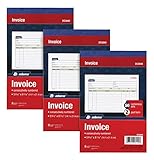
- This value 3 pack of Adams Invoice Books give you 150 two part carbonless invoices with a perforated white customer receipt and yellow duplicates for your records; 3 50-invoice books per pack
- Unique horizontal invoice sheets capture the purchased by and shipped to addresses; a compact 5-9/16 x 8-7/16 page still leaves plenty of room for details on up to 12 items sold
- Wraparound back cover prevents write-through between sets; pull out the perforated white customer receipt and the yellow carbonless duplicates stay behind for your records
- Unique 6 digit invoice numbers help you thumb through orders quickly; blank space up top gives you room for a company stamp—an affordable custom touch
- In value packs with three 50-invoice books for your small business; buy ahead to keep on site or take on the road for pop-up shop sales
How do I make electronic GST records restorable and readable?
Rule 57 requires proper electronic backups that can restore records within a reasonable period. Electronic records must be producible on demand in readable form, with the access details needed to open them. The rule does not prescribe a particular software vendor, storage product or fixed recovery-time target.
Do these 3 things before closing this tab:
1Fix the driver behind crashes, sound loss and screen glitches2Clear out junk files and repair common Windows errors3Scan for outdated or missing drivers - takes under a minute- Use at least one independent backup. Keep a copy separate from the live accounting environment and include the index, attachments and working papers.
- Test restoration. Periodically restore a sample tax-period folder and verify that invoices, spreadsheets and exported reports open correctly.
- Preserve readable formats. Keep portal acknowledgements and final reports in formats that can be opened without the original application where practicable.
- Document access. Record who controls passwords, encryption keys, file codes and administrator rights, and how an authorized auditor can obtain readable copies.
- Control deletion. Apply the retention schedule and legal holds before removing duplicate or obsolete files.
Keep an audit log for changes to accounting data where your system supports one. If a conversion or migration occurs, preserve the original export and document the mapping to the new system.
Independent reader supportYour contribution helps us test, update, and keep practical guides available for everyone.What should I do when an audit notice arrives?
First identify the GSTIN, tax periods, transactions and documents requested. Then assemble the relevant period folders without changing source records.
- Read the notice for deadlines, format requirements, place of production and the officer or authority involved.
- Assign one coordinator and a reviewer; route all responses through them.
- Run the invoice index and ledger cross-references for each requested period.
- Prepare a request-by-request schedule showing the file supplied, the responsible person and any limitation or missing item.
- Reconcile turnover, tax, refunds and ITC to the figures in the notice before submission.
- Explain unresolved differences factually and attach corrective documents, rather than silently changing historical files.
- Place the notice, response, delivery proof and subsequent correspondence in a permanent legal-hold folder.
A notice may seek records beyond the standard set described in a general guide. Follow its scope and obtain professional advice when the request involves disputed classification, large adjustments, alleged suppression or an ongoing proceeding.
Is a paper register or electronic system better?
Both can work if they produce true, correct, complete and readable records on demand. The rules refer to maintaining registers, but electronic accounting and electronic records are permitted subject to the applicable rules.
| Decision point | Manual workflow | Electronic workflow |
|---|---|---|
| Retrieval by period or invoice | Depends on a disciplined physical index and filing order | Search and filters can connect invoice, ledger and return files |
| Corrections | Requires a visible correction trail and preserved original pages | Requires version history, audit logs or locked exports |
| Backup and recovery | Needs secure duplicate storage and protection from damage | Needs tested backups, readable exports and access controls |
| Production on demand | Requires organized copies and a controlled retrieval process | Requires the ability to export and open records in readable form |
| Retention control | Needs a physical destruction register and legal-hold check | Needs retention rules that prevent premature deletion |
A paper invoice or credit-note register is therefore a convenience, not an independent legal requirement. Choose the method that lets you preserve originals, show changes and retrieve a complete period file.
What are the most common organization failures?
- Starting the retention clock from the invoice date. Use the annual-return due date and check for proceeding-related extensions.
- Keeping only the return PDF. Add invoices, ledgers, payment evidence, stock records and reconciliation notes.
- Mixing GSTINs or financial years. Separate registrations and periods at the top level.
- Overwriting corrected documents. Preserve the original and link the credit note, debit note or amendment.
- Relying on an untested backup. Perform restoration tests and keep readable exports.
- Using an incomplete invoice index. Include document number, date, GSTIN, tax period, value and file location, while checking transaction-specific exceptions.
- Leaving exceptions undocumented. Maintain a resolution log for mismatches, missing invoices and ITC reversals.
- Assuming old audit thresholds still apply. Do not rely on legacy turnover summaries; verify amendments and the rules for the relevant tax period.
How can I run a pre-audit quality check?
Run the following check for every GSTIN and financial year before an audit or annual close:
Best Value

- 2 part carbonless forms (White originals, Canary duplicates) for invoicing customers
- Wraparound cover attached to back to place between sets
- Consecutively numbered within each book
- 50 sets per book
- Space at top for company stamp
- Can a reviewer retrieve any filed return and its acknowledgement by tax period?
- Does each return total tie to the tax ledger and payment evidence?
- Can every material turnover and ITC figure be traced to source documents?
- Are credit notes, debit notes, amendments and reversals linked to original transactions?
- Do stock balances reconcile with purchases, sales, movements and documented losses?
- Are export, import, reverse-charge, advance and refund files separated where relevant?
- Has a backup been restored and found readable?
- Is the retention schedule current, including any legal hold?
- Are records for each registered place accessible?
- Is every unresolved exception assigned an owner and documented explanation?
This check is a management control, not an exhaustive statutory checklist. Tax-period-specific amendments, state GST provisions, your registration category and the wording of an audit notice can add requirements.
Frequently Asked Questions
Is a GST invoice register required to be maintained on paper?
No. Electronic records are permitted when they comply with the applicable rules and can be produced in readable form. A bound register can be useful for a manual system, but the legal obligation is to maintain the required particulars and documents, not to buy a particular book.
Recommended Free Tools
Does the 72-month period always end six years after an invoice date?
No. It is measured from the due date for the relevant annual return. For example, if an annual return were due on 31 December 2024, the ordinary period would run from that due date for 72 months; a proceeding can extend retention further.
What should I do with records covered by a GST appeal or investigation?
Place the affected files on a documented legal hold and retain them until one year after final disposal or the ordinary retention period, whichever is later. Limit the hold to the relevant subject matter, but keep all documents needed to explain the disputed transaction and response.
Can I replace an invoice file after issuing a corrected document?
Do not replace the original silently. Keep the original, the credit note, debit note or amendment, and a cross-reference explaining the correction and the return period in which it was reported.
What if records are stored at a head office but the GST registration is at another place?
Maintain access to the accounts and documents required for each registered place in accordance with the CGST Act and Rules. Your index should identify the physical or electronic location and provide a controlled way for an authorized officer to retrieve the records.
Quick wins for a faster PC:
Fix the driver behind crashes, sound loss and screen glitchesFind Drivers →Repair Windows errors before they cause bigger problemsFix Now →Scan for outdated or missing drivers - takes under a minuteDriver Scan →Quick Recap
Product prices and availability are accurate as of the date/time indicated and are subject to change. Any price and availability information displayed on Amazon at the time of purchase will apply.

