Some links on this page are affiliate links: if you buy through them we may earn a commission, at no extra cost to you.
Do not treat an AI-generated fraud detector as ready to deploy just because it runs or produces plausible scores. Treat it as a proposed model and software supply chain: define exactly what decisions it may influence, test it on representative data it has not seen, challenge its security and fairness, document an accountable approval, and launch only with human controls and monitoring in place.
There is no universal accuracy score that proves a fraud system is safe. Readiness depends on the intended use, the cost of false alarms and missed fraud, the populations and conditions represented in testing, and whether the organization can detect and respond when performance changes.
As an Amazon Associate I earn from qualifying purchases.
What does it mean to evaluate an AI-generated fraud detection setup?
It means evaluating the whole proposed system—not just the model’s score. An AI-generated setup may include code, configuration, features, data pipelines, thresholds, dependencies, and a workflow that turns an alert into an action. Any of those elements can cause harm or invalidate a seemingly strong test result.
Start with the decision the system is meant to support. A fraud score used to prioritize an investigation has different consequences from one that automatically blocks a transaction. Validation must reflect that difference. The Federal Reserve’s model-risk guidance describes testing as evaluating whether a model performs as intended and calls for out-of-sample and out-of-time testing, outcome analysis, monitoring, documentation, and third-party model validation where appropriate. It also describes effective challenge by objective experts as important across the model lifecycle.
#1 Best Overall

- AI Motion Detection 2.0 – Driving AI to the next level, human&vehicle detection and flexible detection area are more accurate than before. For quicker locating in crucial moments, human&vehicle smart searching in recordings offers you great help.
- Tried-and-True Safe Guard – This one-stop security solution can work with TVI, AHD, CVI, CVBS & IP cameras, the kit includes 1080P cams. The 8CH 3K lite DVR can hook up with 1080P@30fps or 3K/5MP@20fps cams. Therefore, you can also DIY it with other cameras in your home.
- Reliable 24/7 Continuous Recording – With a pre-installed 1TB HDD(Support up to 10TB HDD), providing 24/7 surveillance recording for you. Upgraded H.265+ saves more storage space and uses less bandwidth, recording videos longer and smoother viewing.
- Remote Access Anytime, Anywhere – Stay connected through the ANNKE Vision app. View live footage, play back recordings remotely, and check in on your property anytime, anywhere for convenient home security and greater peace of mind.
- Clear Night Vision and IP67 Weatherproof Protection – Built-in IR LEDs provide black-and-white night vision up to 100ft. With an IP67-rated design, these wired security cameras are built to withstand rain, dust, and changing weather conditions for reliable outdoor surveillance.
That makes evaluation a lifecycle activity. Pre-deployment testing is necessary, but performance and risk can change after launch as fraud patterns, data, products, and customer behavior change. NIST also cautions that validity and reliability are conditional: results do not automatically generalize beyond the conditions in which a system was developed and evaluated.
What must be decided before testing starts?
Write down the system’s intended use and operating boundaries before choosing test metrics. Without a defined decision, user, population, and consequence, a test can measure the wrong thing or conceal unacceptable trade-offs.
The Tool Desk
Outbyte PC Repair FREERepair Windows errors before they cause bigger problemsFix Now →Outbyte Driver Updater FREEFix the driver behind crashes, sound loss and screen glitchesFind Drivers →Define the scope and the action
- Specify the transactions, accounts, channels, geographies, and time periods the setup covers.
- State whether a positive signal will block or delay a transaction, trigger step-up authentication, enter a review queue, or serve only as an investigation lead.
- Identify who can see the score, who can act on it, and whether a person can override the system.
- Record excluded populations, known failure modes, assumptions, and conditions under which the model must not be used.
Set acceptance criteria around real operating costs
Agree in advance on acceptable false-positive burden, the cost of missed fraud, latency, available review capacity, and the process for remediating customers affected by an incorrect decision. These are business and risk choices, not outputs that a model can settle on its own. A threshold that catches more fraud may also send more legitimate activity to review or cause more wrongful blocks; test the operating points rather than selecting one from a single headline metric.
Australian National AI Centre guidance calls for clear test methodologies, documented results aligned with intended use and risks, and deployment authorization by an accountable person. In practice, that means recording what would count as a pass, what would trigger further work, and who has authority to make the release decision before looking at the final results.
How do you inspect an AI-generated implementation?
Freeze and inventory the precise implementation you intend to evaluate. A passing test is not meaningful if the code, prompt or configuration, model version, features, thresholds, or deployment image changes afterward without controlled review.
- Preserve the candidate release. Record the code, prompt or configuration, model version, dependency lockfile, feature definitions, thresholds, and deployment image. Keep the evaluated version identifiable so test findings can be tied to the artifact that was approved.
- Trace data and labels. Document data lineage, label definitions, feature timestamps, training and test splits, licenses, and provider terms. Establish how outcomes are confirmed, who supplies labels, and whether label delays or investigator disagreement affect what the system learns or how it is scored.
- Verify artifact integrity and access. Check hashes or signatures for models and datasets where available. Restrict access to code, data, APIs, and pipelines, and review how changes are authorized. The UK National Cyber Security Centre recommends cryptographic hashes or signatures and controls that reduce opportunities for tampering or exfiltration.
- Review generated code and configuration. Look for leakage of future information, target leakage, contamination between training and test data, insecure defaults, undocumented fallback behavior, and silent human-override behavior. Confirm that the data available at prediction time is genuinely available at that point in production.
- Check how the whole workflow behaves. Follow an alert from input through score, threshold, queue, reviewer, and final action. A technically correct prediction can still produce an unsafe outcome if an interface hides relevant context, a fallback silently changes behavior, or staff cannot override an erroneous result.
How should you test data quality and whether the model is valid?
Use data the candidate did not train or tune on, including a time-based holdout and an out-of-time evaluation that reflects the expected production population and fraud prevalence. Then test whether the system remains useful when data and operating conditions are imperfect.
Quick wins for a faster PC:
Scan for outdated or missing drivers - takes under a minuteDriver Scan →Repair Windows errors before they cause bigger problemsFix Now →Fix the driver behind crashes, sound loss and screen glitchesFind Drivers →Rank #2

- One Unified Security System, Powered by 1st-Gen aosuBase: 32GB of local storage comes ready to use, holding about 120 days of loop recording. No subscription required. Connect up to 4 cameras to one base with a stable wireless connection and centralized local storage. Recordings saved to aosuBase are event-based, triggered by detected activity.
- Multi-Cam Live View for All-at-Once Monitoring: Watch up to four live camera feeds simultaneously in the aosu app and monitor multiple areas on one screen without opening each camera individually. Live View is available through the aosu app only; the base does not support HDMI or TV output.
- 360° Coverage with Pan, Tilt, and Smart Auto Tracking: Pan and tilt to see all around your property. When activity is detected, the camera automatically follows people and other movement to keep the action in view while recording, giving you a more complete view of what happens around your home.
- 2K (3MP) Clarity with Full-Color Night Vision: Capture clear details in 2K and zoom in up to 6x for a closer look. Built-in spotlights enable full-color night vision, helping you see important color details like clothing and vehicles after dark. For more discreet monitoring, switch to infrared mode for black-and-white night vision without visible lighting.
- Quick Setup with a Pre-Paired System: Connect aosuBase to your router's LAN port with the included Ethernet cable. Cameras connect wirelessly to aosuBase instead of your home Wi-Fi. The system comes pre-paired, so simply power on the cameras and complete setup in the app without pairing each camera one by one. The cameras are designed to work with the included aosuBase, and add-on cameras connect through the base as well.
Build an evaluation set that resembles deployment
Compare predictions with confirmed outcomes, while recording how long those outcomes take to become known and where investigators disagree. Fraud labels can be delayed or revised; an evaluation that treats unresolved cases as clean negatives can give a misleading picture. Ensure that the test split does not leak records, related entities, or future-derived features into training in a way that would not be available in actual use.
Use a time-based holdout so the evaluation asks whether a model trained on earlier information works on later cases. An out-of-time test is especially useful for exposing dependence on patterns that changed between training and the period being evaluated. Document the populations and conditions represented rather than describing a result as universally valid.
Test bad and changing inputs
- Measure behavior with missing, stale, duplicated, or malformed records.
- Check whether upstream feed interruptions or degraded data change scores, actions, or fallback behavior.
- Stress seasonality, new merchants, new attack patterns, and natural changes in the customer or transaction mix.
- Include adversarially manipulated records where relevant to the threat model, not only clean historical examples.
UK risk guidance asks whether performance is tested under adverse conditions and natural drift. NIST’s validity guidance likewise makes the conditions of evaluation central: strong performance on one dataset does not establish that the system will generalize to a different geography, channel, time period, or population.
Document where the evidence stops. If a new channel, geography, or population is not represented, do not imply that the result covers it. Consider whether a simpler or more interpretable model is safer when the generated setup’s limits cannot be understood or monitored adequately.
Which performance metrics should a fraud detector pass?
Report a set of measures that reflects both fraud detection and the workload or customer impact created by alerts. No single metric—including overall accuracy—proves that the setup is ready.
- Precision and recall: precision describes how many flagged cases are confirmed fraud; recall describes how much of the confirmed fraud the system catches. Their trade-off changes with the threshold.
- False-positive and false-negative rates: false positives capture legitimate activity incorrectly flagged; false negatives capture fraud the system misses. Interpret them in the context of what the signal causes.
- PR-AUC or ROC-AUC: choose and report measures appropriate to the problem and class imbalance. These summarize ranking behavior, but do not replace a decision about the operating threshold or its consequences.
- Calibration: assess whether predicted risk levels correspond to observed outcomes. Calibration matters when scores guide thresholds, review priority, or downstream decisions.
- Operational measures: include alert volume, review yield, latency, and fraud dollars prevented. These show whether the system can be operated by the available teams and whether it contributes to the intended outcome.
Show results at the thresholds the organization is considering, not just for a model’s best-looking aggregate score. Compare the resulting fraud capture, false-positive burden, review workload, and customer impact. A threshold is a policy choice informed by evidence; it is not an automatic consequence of a metric.
Rank #3

- Outdoor 4 is our most affordable wireless smart security camera yet, offering up to two-year battery life for around-the-clock peace of mind. Local storage not included with Sync Module Core.
- See and speak from the Blink app — Experience 1080p HD live view, infrared night vision, and crisp two-way audio.
- Two-year battery life — Set up in minutes and get up to two years of power with the included AA Energizer lithium batteries and a Blink Sync Module Core.
- Enhanced motion detection — Be alerted to motion faster from your smartphone with dual-zone, enhanced motion detection.
- Person detection — Get alerts when a person is detected with embedded computer vision (CV) as part of an optional Blink Subscription Plan (sold separately).
How do you evaluate fairness across customers and use cases?
Test for differences in errors and outcomes across groups and contexts that are legally and operationally relevant to the intended use. Fairness is context-dependent, so a single aggregate result or one universal parity test cannot establish that a fraud detector is fair.
Slice performance by relevant groups, product, channel, geography, device, customer tenure, and data availability. For each meaningful slice, examine error rates, alert burden, calibration, and the consequences of the action triggered. Investigate disparate error rates and proxy features, including cases where apparently neutral fields may encode differences associated with a group or context.
Do these 3 things before closing this tab:
1Repair Windows errors before they cause bigger problems2Fix the driver behind crashes, sound loss and screen glitches3Clear out junk files and repair common Windows errorsNIST frames bias evaluation as socio-technical testing, evaluation, verification, and validation (TEVV), including for financial-services decision systems. That approach means challenging not only the model’s calculations but also the labels, the definition of fraud, the data collection process, the action attached to a score, and the way staff use or override alerts.
Have independent reviewers challenge what the system is measuring and whether the labels and trade-offs make sense. Record why selected slices matter, what was tested, what differences appeared, and how the accountable owner decided whether those differences were acceptable or required remediation. Do not infer that untested groups are covered by results for the overall population.
What security and privacy tests belong in release readiness?
Threat-model the detector as a system that can be attacked through its inputs, interfaces, data supply chain, model, and users. Security testing belongs in release readiness, not as a separate task after launch.
Challenge likely abuse paths
Consider evasion, account farms, synthetic identities, replay, poisoning, feature manipulation, prompt or pipeline injection, model extraction, membership inference, and insider misuse. Select tests according to the architecture and exposure of the setup, and preserve the findings and evidence that issues were remediated or accepted by an accountable owner.
What’s actually slowing this PC down?
Pick the symptom - the matching free tool is one click away.
Rank #4
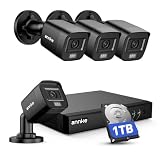
- 【AI Motion Detection 2.0】Driving AI to the next level, human&vehicle detection and flexible detection area are more accurate than before. For quicker locating in crucial moments, human&vehicle smart searching in recordings offers you great help.
- 【Tried-and-True Safe Guard】This one-stop security solution can work with TVI, AHD, CVI, CVBS & IP cameras, the kit includes 1080P cams. The 8CH 3K lite DVR can hook up with 1080P@30fps or 3K/5MP@20fps cams. Therefore, you can also DIY it with other cameras in your home.
- 【Reliable 24/7 Continuous Recording】With a pre-installed 1TB HDD(Support up to 10TB HDD), providing 24/7 surveillance recording for you. Upgraded H.265+ saves more storage space and uses less bandwidth, recording videos longer and smoother viewing.
- 【Remote Access Anytime, Anywhere】Stay connected to your home security system through your smartphone. View live footage and play back recordings remotely, keeping an eye on your property whenever and wherever you need.
- 【Clear Night Vision and IP67 Weatherproof Protection】Built-in IR LEDs provide black-and-white night vision up to 100ft. With an IP67-rated design, these wired security cameras are built to withstand rain, dust, and changing weather conditions for reliable outdoor surveillance.
The NCSC says models, applications, or systems should be released only after appropriate and effective security evaluation, such as benchmarking and red teaming, and that limitations and failure modes should be communicated. The intensity of independent penetration testing or red teaming should be proportionate to risk, but the absence of a test should not be confused with evidence that a threat is absent.
Check protective controls and auditability
- Apply least privilege and separate development, test, and production environments.
- Protect secrets, encrypt sensitive data, limit request rates, and detect abuse.
- Handle dependencies securely and review the path for controlled updates.
- Log model, user, administrator, data-pipeline, and configuration actions so investigators can reconstruct incidents.
Privacy testing should also account for what data is collected, where it flows, who can access it, and whether the system exposes information through outputs or interfaces. Membership inference and model extraction are relevant risks to consider where the system or its outputs could reveal sensitive information; testing should be appropriate to the actual design.
Who must approve the system, and what human controls are needed?
Name an accountable owner who can approve, pause, or roll back the system. The owner should have access to the evaluation evidence and authority to act on failures, rather than merely signing off on a technical report.
Define how alerts enter review, what reason codes are available, when staff may override a recommendation, how customers can appeal a consequential action, and how issues escalate. Set service-level targets that fit the intended workflow and review capacity. If the system can trigger a block or other high-impact action, the control design should make clear how an incorrect result is identified and corrected.
Crashes, No Sound, or Screen Glitches?
Random freezes, missing sound and display glitches usually trace back to one bad driver. Find and replace yours safely.Free scan · under a minutePC Slower Than It Used to Be?
A free scan shows the junk files, broken settings and background clutter dragging Windows down - then fixes them in one click.Free scan · Windows 10 & 11Maintain a model card or equivalent record covering purpose, data, tests, limitations, fairness results, security findings, version history, and the approval decision. Include the deployment boundaries and any conditions that would make the evaluation no longer applicable. Federal Reserve guidance emphasizes effective challenge: critical analysis by objective experts across the model lifecycle.
Independent reader supportYour contribution helps us test, update, and keep practical guides available for everyone.How should you launch and monitor the detector?
Stage deployment so the organization can compare the new setup against the current process and investigate problems before broad reliance. A launch is not the end of validation; it starts the monitoring phase.
Best Value

- Video Doorbell is our second-generation smart security doorbell with up to two years of battery life, an expanded field of view, and improved security features for more peace of mind, no matter where you are.
- Last longer with two-year battery life — Experience up to two years of smart security coverage on both devices with included AA Energizer lithium batteries and a Blink Sync Module (included with Outdoor 4).
- See and speak from the Blink app — Experience head-to-toe HD viewing from Video Doorbell and 1080p HD live view from Outdoor 4 as well as infrared night vision and crisp two-way audio.
- See more at your door with Blink Video Doorbell — Greet guests and watch packages get delivered, day and night, with head-to-toe HD view and infrared night vision. Use two-way talk to hear and speak through the Blink app.
- Enhanced motion detection with Outdoor 4 — With our all-new Outdoor 4, enjoy a wider field of view and be alerted to motion faster with dual-zone, enhanced motion detection.
- Run in shadow mode or a limited cohort. Compare proposed decisions with the existing process without immediately granting the candidate system full authority. Manually review a sample of alerts and misses.
- Assign monitoring owners and alert conditions. Set thresholds and ownership for performance deterioration, calibration changes, data drift, segment disparities, fraud-prevalence shifts, latency, review-queue overload, and security anomalies.
- Prepare response actions before release. Define rollback, kill-switch use, incident response, customer notification, and revalidation triggers. A trigger without a named owner and an executable response is not an effective control.
- Review logs and outcomes continuously. The UK Code of Practice for the Cyber Security of AI calls for pre-deployment testing with developer support and ongoing attention to system security. Its guidance also calls for operators to analyze logs for anomalies, breaches, data drift, and unexpected behavior, and to monitor model performance over time.
- Revalidate after material changes. Reassess the system after significant changes to data, features, model, vendor, policy, or attack patterns. Australian guidance links documented pre-deployment testing and risk-aligned authorization with ongoing risk mitigation; Federal Reserve guidance also treats validation and monitoring as lifecycle work.
Set out what happens when a monitor fires: who checks whether the change is real, who can reduce or suspend automation, how affected cases are handled, and what evidence is needed before returning to normal operation. Monitoring should cover not only model scores but also data inputs, review outcomes, overrides, system availability, and user or administrator activity.
How do you make a go/no-go decision?
Approve only the exact version and operating scope that has been evaluated, and only when the evidence supports the intended action and the organization can manage its failure modes. If a material limitation is unresolved, narrow the scope, add safeguards, run further testing, or do not deploy.
- Go: the intended decision and boundaries are explicit; representative holdout and out-of-time tests support the use; performance, fairness, and security findings have been reviewed; human and operational controls are staffed; and an accountable owner has documented approval.
- Conditional go: evidence supports a narrower use, limited cohort, shadow mode, or additional human review, but not broader automated authority. Record the conditions, owner, monitoring triggers, and date or event for reassessment.
- No-go: test leakage is unresolved, labels or data provenance are not trustworthy, consequential behavior cannot be explained or controlled, security findings remain unacceptable, material segments have unexamined disparities, or the organization cannot monitor and roll back the system.
When comparing two candidate setups, compare measured fraud capture and false-positive burden, calibration and review workload, robustness to drift and manipulation, fairness across relevant segments, explainability and override quality, latency and availability, data provenance and privacy, monitoring, rollback maturity, vendor transparency, and the cost of validation and incident response. Choose based on evidence for the intended use, not on which system produces a more persuasive demo.
Frequently Asked Questions
Can I use synthetic or simulated fraud cases to validate the detector?
They can help exercise rare scenarios or probe expected failure modes, but simulated cases do not by themselves establish performance on real production traffic. Keep synthetic-test results distinct from outcome-based holdout results and explain what the simulation represents.
How often should a fraud detection model be revalidated?
The guidance summarized here does not set one universal calendar interval. Define review triggers around observed changes and revalidate when data, features, model, vendor, policy, or attack patterns change materially; monitoring can also reveal when a scheduled review is no longer sufficient.
Should an AI-generated fraud detector make automatic decisions?
That depends on the intended action, its consequences, and the evidence and controls supporting that use. A system approved to prioritize investigation leads is not automatically validated for blocking transactions; evaluate and authorize each use within its own defined scope.
Recommended Free Tools
What should I do if the model performs well overall but poorly for one segment?
Treat the segment result as a decision-relevant finding, not something erased by the aggregate score. Investigate data coverage, labels, proxy features, and the effects of the action; then document remediation or restrict the use until the accountable owner can justify and manage the risk.
Quick Recap
Product prices and availability are accurate as of the date/time indicated and are subject to change. Any price and availability information displayed on Amazon at the time of purchase will apply.

