What’s actually slowing this PC down?
Pick the symptom - the matching free tool is one click away.
Some links on this page are affiliate links: if you buy through them we may earn a commission, at no extra cost to you.
Choose music that supports the meal without competing with it: keep the volume low enough for normal conversation, use slower-to-mid-tempo tracks while guests eat, and let the energy rise gradually after dessert if the room is ready. The right playlist depends on your food, guests, room and evening—not on one universally correct genre.
How loud should dinner-party music be?
Set the volume by how easily guests can talk, not by the number shown on a speaker or phone. People should be able to speak at normal volume without leaning toward one another or raising their voices; the music should be audible, but not the center of attention.
As an Amazon Associate I earn from qualifying purchases.
Mood Media notes that evening diners may prefer lower volume that allows easy conversation, while MONACOR recommends soft, unobtrusive background music in dining rooms. EMG describes the target as just below the threshold of conversation: the sound fills the room without dominating it. Those principles apply well at home, where conversation is usually a central part of the gathering.
Check the sound from a guest’s seat
- Start the playlist at a quiet level before guests arrive.
- Walk to the farthest seat from the speaker and listen there, rather than judging only from where the speaker or phone is placed.
- Speak at the volume you expect guests to use. If you have to project, strain to hear, or lean in to follow a normal conversation, lower the music.
- Repeat the check after guests arrive. People, table settings and movement can change how sound feels in the room.
Droc advises positioning speakers so sound fills the room evenly, and EMG recommends checking volume from the room rather than relying only on the DJ’s position. If one seat is loud while another barely hears the playlist, try repositioning the speaker before turning the volume up for everyone.
#1 Best Overall

- Outdoor-Proof Speaker: Portable design with IPX7 waterproof protection to safeguard against splashes, waves, and water vapor. Get incredible sounds at home, on camping trips, or for outdoor adventures.
- 24H Non-Stop Music: With Anker's world-renowned power management technology and a 5,200mAh Li-ion battery, the soundcore 2 speaker delivers a full day of great sound.
- Powerful Sound: The speaker features 12W power with enhanced bass from dual neodymium drivers. An advanced digital signal processor ensures pounding bass and zero distortion at any volume.
- Intense Bass: Our exclusive BassUp technology and a patented spiral bass port boost low-end frequencies to make the beats hit even harder. The soundcore 2 speaker delivers vibrant audio for home theater nights, beach parties, and sitting around a campfire.
- Grab, Go, Listen: A classic design refined with simple controls and effortless portability. Easy to use and take anywhere, and supports wireless stereo pairing.
What tempo works best for dinner?
Use slower music during the seated meal and reserve more energetic tracks for a later change in the evening. Mood Media says slower music encourages patrons to relax and eat more slowly; faster music tends to create more energy and activity.
JN Event Entertainment gives roughly 85–110 BPM as a practical dinner range. It is an undated recommendation, not a universal scientific threshold or a guarantee of a particular mood. Treat it as a starting point: a track’s feel also depends on its dynamics, arrangement and vocals, so a playlist can feel busy even when its beats per minute fit that range.
Windows Errors? Fix Them Before They Spread
Repair common Windows errors and clear accumulated junk for a smoother, more stable PC - no reinstall needed.Free scan · no reinstallCrashes, No Sound, or Screen Glitches?
Random freezes, missing sound and display glitches usually trace back to one bad driver. Find and replace yours safely.Free scan · under a minuteChoose for the feel, not just the number
- For the meal, favor a steady, unhurried feel that leaves room for conversation.
- Consider instrumentals or restrained vocals if lyrics, strong hooks or dramatic changes are drawing attention away from guests.
- Listen for abrupt volume changes between tracks. A calm song followed by a much louder or more forceful one can make the playlist feel unsettled even if both tracks are individually suitable.
- Save faster, more animated choices for after dinner, when guests begin socializing in a different way.
The BPM range is useful for screening tracks, not a rule that every song must meet. A few songs outside it may fit the atmosphere; the overall pace and the way the room responds matter more than a rigid cutoff.
What kind of music should I play at a dinner party?
Match the style to the food, the room and the people attending, while keeping the sound unobtrusive during the meal. Restaurant Association guidance treats genre, tempo, volume, cuisine, concept, acoustics and daypart as factors that should work together. For a home dinner, that means choosing a sound that makes sense for the occasion rather than defaulting to a genre because it is often labeled “dinner music.”
Use mood as a starting point
For refined or intimate meals, smooth jazz, soul, bossa nova, acoustic music or understated contemporary tracks can be useful starting points. For a casual gathering, familiar material and more variety may feel at home. These are options, not prescriptions: a quiet acoustic song can still be distracting if its vocal or dynamics command attention, while a familiar song may fit a relaxed meal if it stays in the background.
Rank #2

- [Immersive Sound & TWS Dual Pairing] Two full-range drivers deliver powerful, well-balanced sound with minimal distortion for music, movies and gaming. Pair two speakers together for true wireless stereo (TWS) - instant left and right channels that fill any room or backyard party.
- [IPX5 Waterproof & Built for Outdoors] Durable shell rated IPX5 against water splashes and spills - poolside, beach, shower steam and light rain are no problem (not for submersion). Rugged enough for camping, hiking and tailgates; just 13 oz to toss in any bag.
- [24-Hour Playtime & Bluetooth 5.3] Up to 24 hours per charge at 50% volume with lights off (expect less at full volume) plus a 100 ft wireless range on Bluetooth 5.3, stable through walls and outdoors. One press turns off the lights to stretch battery even further.
- [A Gift That Actually Gets Used] A dynamic LED light show pulses to the beat of the music and switches off with one button - party mode when you want it, invisible when you do not. A go-to white elephant gift, stocking stuffer, and Christmas or birthday gift for men, women, dads and moms.
- [Everything in the Box] 1 portable Bluetooth speaker, 1 Type-C charging cable, quick start guide and lifetime technical support. Built-in microphone for hands-free calls; 3.5mm AUX supported for non-Bluetooth devices (AUX cable not included).
Make familiarity and discovery work together
Familiar music can help a casual playlist feel approachable, while less familiar selections can add variety. The trade-off is attention: when a track surprises guests with an abrupt change in style or intensity, it may pull focus from the table. Keep transitions smooth and avoid large jumps between genres, moods or volume levels.
Think about the mix of guests as well as your own taste. A playlist built only around the host’s favorites may not suit the whole table, while trying to satisfy every preference track by track can make the sequence incoherent. A consistent overall mood, with enough variety to keep it from feeling one-note, is a more useful target than selecting a single “correct” genre.
Should the playlist change between drinks, dinner and dessert?
Yes. A staged playlist can follow the evening’s natural changes: use moderate energy while guests arrive and move around, lower both tempo and volume for the seated meal, and raise the energy gradually after dessert if the room begins to shift toward socializing.
AtYourTable recommends a moderate, mixed playlist that evolves from arrivals to the seated meal. JN Event Entertainment recommends a gradual lift after dessert or when guests begin standing. Together, these suggestions favor a planned arc rather than one unchanging queue or a sudden switch from dinner music to party music.
| Moment | Energy and volume | What to listen for |
|---|---|---|
| Arrival and drinks | Moderate energy; a little more volume than during dinner can suit a room where guests are moving and greeting one another. | People should still be able to greet each other comfortably. Keep the mix welcoming rather than forceful. |
| Seated dinner | Reduce both tempo and volume. Favor a steady feel, restrained vocals or instrumentals. | Check that the playlist stays below normal conversation and that changes between tracks are not jarring. |
| Dessert and after-dinner | Raise energy gradually only if the room is ready. | Use cues such as plates being cleared, coffee being served or guests beginning to stand. Build over several songs instead of making a sudden change. |
These are cues, not a fixed timetable. A long meal may remain conversational after dessert, while an animated group may start socializing before the plates are cleared. Let the room’s behavior guide the transition instead of changing the playlist just because a particular amount of time has passed.
Rank #3

- Wireless Bluetooth streaming
- 12 hours of playtime
- IPX7 waterproof
- Pair multiple speakers with party boost
- Premium JBL sound quality
Build transitions before guests arrive
- Make a welcome section with enough moderate-energy music to cover arrivals and greetings.
- Place your quieter, steadier dinner choices next, so the shift to eating does not feel abrupt.
- Keep a later section with slightly more energy ready, but do not begin it until the room suggests guests want that change.
- Listen to the handoffs between sections. Avoid a sudden jump in volume, vocal intensity or style at the point where one phase ends and another begins.
How do I keep music from overpowering conversation?
Combine a low enough volume with even coverage and a playlist whose dynamics do not demand attention. Volume is the first check, but a track that becomes suddenly louder or more intense can still interrupt the atmosphere even if the overall setting is modest.
Use a simple sound check
- Check the farthest seat as well as the area near the speaker.
- Listen for seats where the music is disproportionately loud or faint; reposition the speaker to improve coverage before increasing the overall level.
- Check again once guests are present and the room is in use.
- If conversation takes effort, lower the music. Do not expect guests to compensate by speaking louder.
A portable speaker can help when you need to place sound away from the phone or playback device, but the useful goal is even, low-volume coverage—not maximizing loudness. For a large or programmed dinner, such as a wedding reception, an event DJ or dinner-event audio service may be more appropriate than trying to cover every area with a single small speaker.
How can I choose between two dinner playlists?
Compare the playlists by how well they fit your particular room and guests, rather than choosing by genre label alone. A practical comparison looks at conversation, energy, fit, familiarity, vocals, transitions and sound coverage.
| Question | What a better fit looks like |
|---|---|
| Will guests be able to talk easily? | The music stays below normal conversation and does not demand attention. |
| Does the energy suit the moment? | It is measured during the meal, with a gradual lift available later. |
| Does it fit the food and guest mix? | The style feels appropriate to the cuisine and the occasion without assuming every guest likes the same genre. |
| Is the mix familiar or exploratory? | There is enough familiarity or variety for the group, without abrupt shifts that disrupt the mood. |
| Are vocals and dynamics restrained enough? | Lyrics, loud passages and dramatic changes do not compete with table conversation. |
| Do the transitions feel smooth? | Adjacent songs maintain a broadly compatible level of energy and volume. |
| Will sound cover the room evenly? | The playlist can be heard at guest seats without making the seats nearest the speaker uncomfortable. |
A quick decision rule
If one playlist is more energetic but the other better supports conversation, use the more restrained option for the meal and keep the livelier choices for later. If both seem suitable, test a few transitions at the intended volume and walk around the room. The one that works from a guest’s seat—not merely through headphones or next to the speaker—is the more useful choice.
Free tools Windows power users keep installed
One-click scans. No signup required.
What should I prepare before guests arrive?
Make the playlist easy to manage so you can pay attention to the gathering instead of adjusting music throughout dinner. A short check of the sequence, level and speaker position can prevent avoidable interruptions.
Rank #4
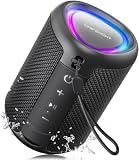
- Compact and Powerful Design: Engineered with premium craftsmanship, this portable speaker features a space-saving form measuring a mere 2.99 inches (7.6 cm) in width and length, and 4.25 inches (10.8 cm) in height. Ultra-lightweight at just 0.582 lbs (264g), it slips effortlessly into any bag. Driven by a robust 20W peak power, it delivers immersive audio with punchy bass and crisp highs, while its 15W continuous output ensures crystal-clear sound for indoor relaxation or outdoor adventures
- 【IPX5 Waterproof – Beach, Pool & Outdoor Adventures】Built for everyday outdoor fun, this portable Bluetooth speaker features IPX5 waterproof protection to handle splashes, light rain, and wet environments. Take it to the beach, pool, campsite, backyard, patio, or shower for music wherever you go. A reliable companion for travel, camping, outdoor gatherings, and weekend adventures
- 【Portable Companion – Travel, Camping & Everyday Use】At just 0.58 lbs, this compact wireless speaker easily fits into a backpack, tote, suitcase, or travel bag. The built-in lanyard makes it easy to carry or hang from a backpack, bike, hook, or shower caddy. Great for road trips, beach days, camping trips, dorm rooms, home offices, and relaxing at home
- 【Dynamic Lights – Create the Right Mood Anywhere】Dynamic LED lights add colorful visual effects to your favorite music, bringing extra energy to parties, gatherings, and everyday listening. Use it in the bedroom, dorm, backyard, patio, campsite, or party space. A fun choice for Halloween music, movie nights, sleepovers, game nights, and outdoor hangouts
- 【15W HD Sound & 15H Playtime – Music for Every Moment】Powerful 15W HD sound delivers clear, enjoyable audio for music, podcasts, games, and more. With up to 15 hours of playtime, enjoy your playlist during travel, beach trips, camping, pool days, backyard gatherings, or a relaxing night at home. Keep the music going without frequent recharging
- Set the evening’s shape. Decide which part of the playlist is for arrivals, which is for the seated meal and which is for after dinner. Keep the transition flexible rather than tying it to an exact time.
- Review the sequence. Listen for abrupt genre changes, loud tracks, intense vocals or sudden shifts in energy. Reorder or remove songs that clash with the meal’s mood.
- Place the speaker with coverage in mind. Position it so sound reaches the room evenly, rather than putting it beside one group of guests or judging its level only at the source.
- Set a starting volume and walk the room. Test at the farthest seat and speak normally. Lower the level or move the speaker if conversation is difficult or coverage is uneven.
- Stay responsive. Once the evening is underway, treat the playlist as support for the gathering. Adjust the level or shift sections if the room’s needs change.
AtYourTable’s advice to seek moderation on both volume and playlist choices captures the central balance: enough music to give the evening a mood, without making it harder for guests to share one another’s company.
Frequently Asked Questions
Can I use the same playlist for a dinner party and a cocktail hour?
You can reuse some songs, but a cocktail hour with guests moving and greeting one another may support more energy than a seated meal. If you use one playlist, arrange it so the calmer dinner portion follows the arrival section rather than leaving the whole evening at one level.
Should I let guests request songs during dinner?
You can take requests, but consider when to add them: a requested track may not suit the volume, mood or tempo of the current moment. Keep the meal’s conversational feel in mind, and save a high-energy request for a later transition if it would disrupt dinner.
Recommended Free Tools
Is instrumental music always better for a dinner party?
No. Instrumentals can be a useful choice when you want fewer lyrics competing for attention, but restrained vocal tracks can work too. The key is whether the music remains unobtrusive for the people and meal in your room.
How can I make a dinner playlist feel less repetitive?
Vary artists and textures while keeping a broadly compatible level of energy and volume. Variety can prevent the sequence from feeling one-note; avoid achieving it through abrupt shifts that pull attention away from the table.
Quick Recap
Product prices and availability are accurate as of the date/time indicated and are subject to change. Any price and availability information displayed on Amazon at the time of purchase will apply.

