What’s actually slowing this PC down?
Pick the symptom - the matching free tool is one click away.
Some links on this page are affiliate links: if you buy through them we may earn a commission, at no extra cost to you.
The best expense-management system for a university is not the one with the longest feature list. It is the platform that fits your institution’s exact boundary between travel, reimbursements, purchasing-card (P-card) reconciliation, accounts payable and procurement; exchanges reliable data with your ERP and card programs; enforces fund and grant controls; and works for employees, students, guests, delegates and approvers. Start by mapping those workflows, then require vendors to demonstrate your real scenarios—such as a grant-funded international trip, a split-coded P-card transaction and a guest reimbursement. University examples show that several products can support these processes, but none is a universal winner. The evidence is primarily from US institutions, so local tax, grant, procurement and data rules still govern the final choice.
What should a university expense-management system include?
Define the workflow boundary before comparing products. Universities commonly combine several functions, but they do not always place them in the same application or department. A finance team should document which system owns each step and where data is handed off.

As an Amazon Associate I earn from qualifying purchases.
| Process | Questions to answer | Possible system owner |
|---|---|---|
| Travel pre-authorization | Who must approve travel, by department, fund, destination or amount? Are export-control or grant checks required? | Expense platform, travel module or separate authorization tool |
| Travel booking | Must employees book through an approved channel? Are guest or student bookings handled differently? | Travel tool integrated with expense software, or the expense platform itself |
| Employee reimbursement | Which expenses are eligible, what receipts are mandatory, and how are advances cleared? | Expense platform with payroll or accounts-payable export |
| P-card reconciliation | How are card feeds imported, receipts matched, missing documents chased and transactions coded? | Expense platform connected to the card issuer |
| Invoices and payment requests | Does the system process supplier invoices, or only employee-submitted expenses? | Accounts payable or procure-to-pay system |
| Purchasing and requisitions | When is a requisition or purchase order required instead of a card or reimbursement? | Procurement system, with only approved hand-offs to expense software |
George Washington University describes a Concur-powered module covering reimbursements, P-card statements and travel advances, while its broader service includes travel, expenses, invoices and special requests. UMass Dartmouth documents a connected flow from pre-travel authorization through booking, expense reporting, approval and bank-card reconciliation. The University of Denver likewise describes booking, P-card transactions, reimbursements, receipt uploads, approval tracking and reporting.
Do not infer from those examples that every university should put purchasing in the same product. The University of New Mexico says goods and services generally belong in procurement and are usually paid by P-card or requisition/purchase order, subject to exceptions. George Washington notes that spending from federal grants and contracts can follow different requirements from spending university funds. Your requirements document should therefore state where procurement ends and expense processing begins, especially for restricted or sponsored funds.
How do you test ERP, card and identity integration?
Ask for a demonstration and technical design using your own chart of accounts, fund structure and card program. A claim that a product “integrates” is not enough; you need to see the mapping, error handling and reconciliation path your staff will operate.
#1 Best Overall

- Neatly Track & Organize Your Finances: The accounting ledger book is here for you to stay on top of your spendings & income! Clearly & neatly structured, it offers ample space for all crucial information about checks, savings, bills & other expenses or income
- Perfect For Small Business Owners: Keep it simple, yet super effective - the undated income and expense log book is an absolute must-have among small business supplies! Register your financial data and use your debit & credit records to compile a trial balance
- Premium Style With A Sturdy Cover: With the 120-page finance tracker, you can manage your finances conveniently in one place. A solid cover, thick paper and a reliable ring binding ensure maximum durability
- Beautiful Modern Minimalistic Design: A visual highlight just like you can expect from ZICOTO! The sage green cover of the ledger book, look stunning with a modern golden floral on the front - makes bookkeeping simply beautiful!
- Super Handy - Always At Hand: Thanks to its practical size, the 8.6x6.1” ledger book fits into any bag easily and is therefore always by your side. Whether used as a checkbook register or to track other financial flow, with the log book you’ve got it all sorted!
Financial-system integration
Provide vendors with representative values for fund, department, project, activity, account and any other coding dimensions. Require them to show how a submitted transaction is validated, exported and posted, and how a rejected record returns for correction. Illinois lists integration with leading financial systems as an Emburse Enterprise capability. PayMyTuition announced integrations with Ellucian Banner, Ellucian Colleague, PeopleSoft and Workday on April 29, 2025; that is vendor-authored evidence and should be validated in a live technical review against your edition, configuration and interfaces.
Card-feed integration
Confirm the issuer and card products supported, feed frequency, transaction identifiers, foreign-currency handling, credits and refunds, and what happens when a card transaction arrives without a receipt. Demonstrate matching a card charge to a receipt, splitting it across funds and sending an unresolved item to the right cardholder or business officer.
Identity, delegation and access
Test single sign-on, automated account provisioning and deprovisioning, multi-campus role changes, delegate access and emergency approver substitution. Ask whether a delegate can prepare a report without changing the final submitter, and whether an approver can act only within assigned departments or funds. Obtain the data-flow and retention details needed for your privacy, records-management and security reviews; current evidence does not establish any product’s certifications or contract terms.
Which policy and internal-control features matter most?
Controls should prevent or surface noncompliance without forcing finance staff to repair every transaction manually. Evaluate configuration depth, usability and the audit trail together.
- Pre-approval: Support travel or spending requests before a commitment is made, with rules that vary by destination, funding source, amount or traveler type.
- Approval routing: Route by department, fund, project, amount and exception status, with an auditable record of each decision and timestamp.
- Spend controls: Block or warn on prohibited merchants, duplicate claims, over-limit amounts, unsupported currencies or missing required fields.
- Documentation rules: Make receipt thresholds, business-purpose statements, attendee details and grant documentation conditional on the transaction.
- Exception handling: Permit a documented override, require the correct secondary approver and preserve the original policy failure rather than silently changing it.
- Audit and export: Let authorized reviewers search the complete history, including edits, attachments, comments, approvals and exported posting status.
Illinois describes automated routing and spend control in Emburse Enterprise. UMass Dartmouth includes policy, export-control and cybersecurity-related travel workflows. Arizona describes embedded policy reminders, audit rules, defined approval workflows and custom dashboards. Treat these as capabilities reported by the institutions, not as proof that your own policies will be configured correctly.
Use a control-focused test script
- Create a grant-funded international trip that needs pre-approval, an export-control check and a department-level approval.
- Submit a P-card purchase with no receipt and an incorrect fund. Confirm the warning, correction path, escalation and audit record.
- Enter a reimbursement that exceeds a local threshold and requires a secondary approver.
- Edit a previously approved report and verify that the change reopens the required review rather than overwriting history.
- Export approved transactions and reconcile totals, coding and status to a test ledger or ERP environment.
Can one system handle travel, P-card reconciliation and reimbursements?
Often, yes, when the product’s modules and integrations are configured for those processes. The harder question is whether it also handles your procurement, grant and nonemployee rules without creating a second manual workflow.
Rank #2

- Effective Budget Planning - Take control of your finances with the budget account book. This comprehensive planner allows you to plan and track your income, expenses, savings, and financial goals in one convenient place. With its intuitive layout and easy-to-use sections, you can stay organized and make informed decisions to achieve financial success.
- User-Friendly Layout - The budget planner features a user-friendly layout designed for easy navigation and organization. Each month, you'll find dedicated budget pages where you can set financial goals, track your income, and plan your expenses. Additional sections include debt trackers, savings goals, bill payment trackers, and more, making it simple to stay on top of your finances.
- Undated Monthly Calendar & Bonus Stickers - Featuring undated calendar each month, you'll have ample space to mark paydays, bills due, appointments, and important dates. Say goodbye to difficult writing spaces. Plus, we've included 3 cute sticker sheets that allow you to personalize your financial organizer and make budgeting more fun. Dates are not pre-printed and are completed by the user.
- Reliable and Convenient Design - Our monthly budget planner is designed for your convenience and built to last. The elastic band keeps everything securely in place, and the dual-sided pocket provides extra storage. Experience a budget planner that combines practicality and durability.
- Master Budgeting with Ease - Our financial planner includes a complete guidebook that provides valuable insights and instructions for optimal usage. From setting financial goals to tracking expenses, this guidebook offers step-by-step guidance and practical tips. Whether you're new to budgeting or an experienced user, this resource will help you make the most of your budget planner, empowering you to achieve financial success.
| University example | Documented functions | Selection lesson |
|---|---|---|
| George Washington University | Travel, expenses, invoices, special requests, reimbursements, P-card statements and travel advances | Confirm which functions are in the expense module and which remain in adjacent services. |
| UMass Dartmouth | Pre-travel authorization, booking, expense reports, approvals and bank-card reconciliation | Require an end-to-end demonstration, including policy and security-related travel checks. |
| University of Denver | Travel booking, P-card transactions, reimbursements, receipt uploads, approval tracking and reporting | Verify role-based reporting and the hand-off to finance posting. |
| University of Florida | Travel requests, booking, mobile receipt capture, expense reports and approvals | Test mobile capture under your device, accessibility and connectivity requirements. |
| UC San Diego | Concur travel, expense and card workflows | Use institutional references to ask about operating fit, not to assume identical configuration. |
When procurement is separate, define the hand-off precisely: which transaction types are blocked in the expense tool, how purchase-order references are recorded, and who resolves a transaction routed to the wrong channel. This is particularly important when a researcher, department administrator or cardholder may reasonably believe that a purchase belongs in either system.
How should you design roles for employees, students, guests and approvers?
Model users by behavior and authority, not simply by employment status. A university may have employees, supervisors, business officers, delegates, cardholders, students, guests and external travelers, each with different documentation and approval rights.
| Role | Capabilities to test | Common control concern |
|---|---|---|
| Employee traveler | Mobile receipt capture, itinerary or request linkage, mileage and reimbursement submission | Unsubmitted reports and late receipts |
| Supervisor or fund approver | Queue filtering, comments, delegation and approval from mobile or desktop | Approving a transaction without seeing fund or policy context |
| Business officer | Card reconciliation, corrections, reporting and delegation management | Overbroad access across departments or campuses |
| Cardholder | Receipt upload, business-purpose entry, split coding and dispute or credit handling | Missing documentation and personal charges |
| Student | Separate reimbursement or travel path, identity verification and appropriate payee data | Confusing academic-pursuit expenses with employment-related expenses |
| Guest or nonemployee | Limited-access submission, invitation, tax and payment-data collection | Creating a university account or approval chain unnecessarily |
Michigan reports separate employee and nonemployee workflows and distinguishes employment-related student expenses from academic-pursuit expenses. Florida describes mobile receipt capture and approvals, while Illinois lists in-application assistance and training resources. During a demo, ask a vendor to show how a guest is invited, how a student’s correct policy is selected and how a delegate’s actions appear in the audit history.
What reporting and visibility should the finance team require?
Reporting should expose work that needs attention, not merely produce a month-end file. At minimum, finance and authorized business officers should be able to see:
- Pending approvals by age, department, fund and approver.
- Unsubmitted card transactions, missing receipts and unresolved exceptions.
- Spend by fund, department, project, merchant, traveler type and payment method.
- Reimbursement status from submission through payment or rejection.
- Advance balances, overdue reports, duplicate claims and policy-exception trends.
- Export, posting and reconciliation status, with downloadable detail for audit support.
Illinois lists dashboards; Arizona describes custom dashboards and reimbursement-status visibility; Denver describes reporting tools for authorized business officers. Ask whether reports are configurable by finance staff or require vendor services, whether historical data remains available after organizational changes, and whether row-level access can be enforced for sensitive funds.
Which expense platforms have university deployment evidence?
The following options appear in documented university or vendor higher-education materials. The examples establish relevance, not comparative performance, savings or a universal ranking.
| Option | Evidence in university settings | What to validate |
|---|---|---|
| Emburse Enterprise | Illinois lists automated approval routing, spend controls, mobile approvals, financial-system and credit-card integration, training and dashboards. Michigan reports upgrading to Emburse Enterprise in August 2024 for employee reimbursements and P-card reconciliation. | Your ERP and card-feed mappings, nonemployee workflows, implementation resources and reporting depth. |
| SAP Concur | George Washington uses Concur within its iBuy+ services for expenses, travel, invoices and special requests. UMass Dartmouth documents authorization, booking, reports, card reconciliation and policy workflows. Florida, Denver and UC San Diego describe travel, expense and card use. | Which modules and connectors are included, how local policies are configured, and the division of responsibility between university staff and implementation partners. |
| PayMyTuition Expense and Spend Management | The vendor announced a higher-education-focused product on April 29, 2025, naming Banner, Colleague, PeopleSoft and Workday integrations. | Live references, production deployment history, actual connector behavior, security review, support model and any savings claims. The announcement’s statement of “up to 20% savings on spend programs” is a vendor claim without supporting methodology in that announcement. |
Do not score a product highly merely because another university uses it. Ask for references with a similar ERP, campus structure, transaction volume, grant mix and staffing model. Current evidence does not establish list prices, implementation costs, security certifications, contract terms or independently comparable performance for these products.
How can you turn requirements into a defensible shortlist?
Use a weighted scorecard, but make failure on a mandatory control a disqualifier rather than allowing a high feature score to conceal it. The percentages below are an illustrative starting point; adjust them with your controller, procurement, IT security, sponsored-programs and campus-user representatives.
| Category | Illustrative weight | Pass evidence |
|---|---|---|
| Workflow coverage and boundaries | 20% | Scripted travel, reimbursement, P-card and procurement hand-offs work without duplicate entry. |
| ERP, card and identity integration | 20% | Validated mappings, feed tests, SSO, provisioning and error recovery in a test environment. |
| Policy, approval and audit controls | 20% | Rules, exceptions, secondary approvals and immutable history match written policy. |
| User experience and adoption | 15% | Employees, delegates, students, guests and approvers complete tasks with role-appropriate access. |
| Reporting and analytics | 10% | Finance can answer aging, fund, exception and posting questions without vendor-built reports. |
| Implementation, training and support | 15% | Named resources, migration plan, training coverage, service levels and references are documented. |
Require written responses for each mandatory requirement and capture whether evidence came from a live demonstration, a reference call, a contract exhibit or a vendor statement. Keep separate scores for “works today,” “requires configuration,” “requires custom development” and “not available.” That distinction prevents an attractive roadmap from being mistaken for a delivered capability.
What scenarios should a vendor demonstrate?
A scripted demonstration is more revealing than a generic product tour. Send the same scenarios to every finalist and insist on realistic data, roles and exception paths.
- Grant-funded international trip: A faculty traveler requests authorization, selects a restricted fund, books travel, triggers an export-control review and submits foreign-currency expenses. Verify policy messages, approvals, exchange-rate treatment, receipts and ERP coding.
- P-card purchase with missing documentation: Import a card transaction, omit the receipt, add a business-purpose statement, split the charge across two funds and route it to a business officer. Confirm reminders, escalation and the final audit trail.
- Student or guest reimbursement: Invite a nonemployee, collect only necessary payee information, apply the correct policy and route approval without granting broad employee access.
- Secondary approval exception: Submit an amount or category that requires an additional reviewer. Demonstrate who is notified, what happens when the reviewer is unavailable and how an override is recorded.
- Month-end reconciliation: Show all unsubmitted card items, pending approvals, rejected exports and paid reimbursements for a defined period, then reconcile totals to the finance system.
Evaluate each scenario against your written policy. The cited universities use differing rules and workflows, so a vendor’s success in one institution does not prove compliance at yours.
The Tool Desk
Outbyte PC Repair FREERepair Windows errors before they cause bigger problemsFix Now →Outbyte Driver Updater FREEScan for outdated or missing drivers - takes under a minuteDriver Scan →Rank #4

- PERFECT FOR RECORD KEEPING: The 2 Pack account ledger books are versatile and can be used to track finances, budgets, expenses, and other business or personal records. They are perfect for individuals, entrepreneurs, or small business owners who need a reliable and efficient way to keep track of their finances. With 100 pages, customers can record transactions over an extended period, making it a handy tool for financial planning and organization.
- COMPACT AND LIGHTWEIGHT: The account ledger books are compact and lightweight with each book weighing 7 ounces and measuring 8.5 x 6.25 inch, making them easy to carry around. You can take them with them in a bag or briefcase, making them ideal for on-the-go use. This feature ensures that you can access your records at any time, whether you are at work or on the move.
- DURABLE KRAFT COVER: The kraft cover is a distinguishing feature of these account ledger books. It provides a durable layer of protection that can withstand daily wear and tear, making it suitable for long-term use. Additionally, the classic, rustic appearance of the cover gives it a timeless and professional look that can fit in any setting.
- PREMIUM QUALITY: Elegant style with the words ''Account Tracker'' embossed in fancy Gold Foils. The gold coil ring binding is a practical design feature that enhances the functionality of the account ledger books. It allows pages to turn smoothly and easily, making it effortless to flip through the book while keeping pages in place. The ring binding also ensures that pages won't fall out, preventing the loss of vital information.
How should implementation, training and change management be planned?
Implementation is an operating-model change, not just a software installation. Require a plan that covers data, configuration, integrations, testing, training, communications, support and post-go-live ownership.
- Confirm the baseline: Count transaction types, cardholders, approvers, delegates, students and guests; inventory current systems, reports, interfaces and manual spreadsheets.
- Design the future state: Approve the workflow boundary, chart-of-accounts rules, policy matrix, role model, retention requirements and procurement hand-offs before configuration.
- Prepare data and interfaces: Clean user and fund data, define card-feed mappings, establish SSO and build import/export monitoring with named owners.
- Test end to end: Run normal, exception, rejection, correction, delegation and month-end cases in a controlled environment. Require finance and campus representatives to sign off.
- Train by role: Give separate materials and practice sessions to cardholders, travelers, approvers, business officers, delegates, students and support staff.
- Pilot and support: Start with representative departments or campuses, track unresolved issues, publish escalation routes and retain a staffed help process after launch.
UMass Dartmouth describes moving from five systems to two integrated platforms and requiring training for specified user groups. Arizona describes implementation resources and campus ambassadors supporting local adoption. Those examples underline the need for local champions and role-specific training, even when the technology is centrally administered.
Arizona’s Chief Budget and Fiscal Management Officer, Garth Perry, described the purpose of its project this way: “The landscape of higher education is shifting, and we need to adapt to ensure we stay relevant. This project is one of several steps we’re taking to shift our focus from manual tasks to more meaningful work: providing faster answers, strategic insight, and improved partnership and collaboration. This shift supports the university’s commitment to operational excellence and efficiency.” Use that as a useful outcome test: will the selected workflow reduce manual repair while improving insight and partnership?
What costs and contract questions remain open?
Published university examples do not establish current subscription prices, implementation fees, transaction charges, payment terms or savings. Request a complete five-year cost model that separates licenses, modules, card or payment fees, integrations, implementation services, training, support, data migration, sandbox environments and optional reporting.
Quick wins for a faster PC:
Clear out junk files and repair common Windows errorsFree Scan →Fix the driver behind crashes, sound loss and screen glitchesFind Drivers →Repair Windows errors before they cause bigger problemsFix Now →- Ask whether pricing is based on users, transactions, spend, campuses, modules or a combination.
- Require volume assumptions for employees, students, guests, cardholders, annual reports and stored documents.
- Clarify what configuration and connector work is included and what is billed separately.
- Specify service levels for outages, card-feed failures, payment delays and critical policy defects.
- Define data ownership, export formats, retention, deletion, audit access and assistance at termination.
- Require change-notice provisions for product, connector or policy-rule changes that could affect controls.
Keep vendor marketing claims separate from verified outcomes. In particular, the “up to 20% savings” statement in PayMyTuition’s April 2025 announcement has no supporting methodology there and should not be used as an expected university result.
Best Value
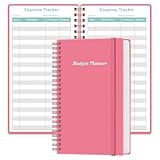
- MANAGE YOUR MONEY & ACHIEVE YOUR FINANCIAL GOALS - This budget tracker will help you keep your money organized, spend well, start saving, set and achieve financial goals. It can help you to manage all your personal finance, savings, debts, daily expense etc.
- UNIQUE DESIGN - This budget sheets expense tracker total 80 sheets/160 pages contains an annual overview (calendar from 2025-2026), yearly goals page, contact pages, important pages, and 10 pages (lined) for notes, lists, goals, etc, that help you manage your money efficiently and reach your finance goals perfectly.
- POCKET SIZE - This budget planner size of 3.75 x 6.75 inch, perfect size to fit in your bag, A6 envelopes pockets & wallet.
- SUPERIOR QUALITY - This expense budget sheets planner with 100gsm thick paper to reduce ink leakage, erase fraying and shade issues. Sturdy and flexible PP cover to protect the inner pages well. Strong metal and lay-flat twin-wire binding, Planner with inner pocket to store loose items, like tickets, cards etc and elastic closure to protect your finance planner.
- EASY TO USE - You can use this card to record your daily expenses. They can help you know where your every cent is going; Our expense tracker sheets can really help you keep track and stay on budget.
What are the most common selection mistakes?
- Choosing by brand familiarity: A product used by another university may not fit your ERP edition, fund structure or procurement boundary.
- Leaving procurement out of the design: If requisitions, purchase orders and P-cards are not clearly separated, users will route purchases inconsistently.
- Testing only the happy path: Missing receipts, split coding, rejected exports, delegates and unavailable approvers reveal more than a clean reimbursement.
- Ignoring nonemployees: Students and guests may need different policy, identity and payment handling from employees.
- Accepting “integration” without reconciliation evidence: Demand sample files, error queues, posting status and recovery procedures.
- Underestimating adoption: Without role-specific training, local champions and support ownership, a technically sound system can produce more manual work.
- Allowing custom development to hide gaps: Record every customization’s cost, maintenance owner and effect on future upgrades.
What is the final decision rule for a university finance team?
Select the finalist that passes every mandatory workflow and control test with your own ERP, card feed, roles and policy data, then offers the clearest implementation and support commitments. Use university deployments as evidence that a product is relevant, not as a substitute for technical validation. For US institutions, the strongest shortlist will usually include platforms with documented travel, reimbursement, card and approval use, but the decisive factors are your procurement boundary, restricted-fund rules, nonemployee workflows, integration behavior and ability to give finance timely, auditable visibility.
Frequently Asked Questions
What information should we prepare before inviting vendors to demonstrate?
Prepare a sanitized chart of accounts, fund and project examples, card-feed sample, approval matrix, receipt thresholds, user-role list and three months of representative transactions. Include at least one rejected export, a split-coded charge and a student or guest case so vendors cannot rely on a generic script.
How can a university compare systems when vendors quote different pricing models?
Normalize every quote to the same five-year volume assumptions and separate recurring licenses from one-time implementation, integration, training and migration work. Ask each vendor to identify which fees change if transaction volume, campuses or user groups grow.
Recommended Free Tools
Should finance or procurement own the expense-platform project?
A joint governance model is safer: finance owns accounting, policy and reconciliation outcomes, while procurement owns purchasing boundaries and sourcing controls. Include IT, sponsored-programs, travel, payroll and representative campus users so no critical hand-off is designed in isolation.
What should happen if our university operates outside the United States?
Treat the US university examples as workflow references rather than legal guidance. Validate local tax treatment, travel allowances, grant conditions, records rules, data residency and payment requirements before selecting or configuring a system.
Quick Recap
Product prices and availability are accurate as of the date/time indicated and are subject to change. Any price and availability information displayed on Amazon at the time of purchase will apply.

