Do these 3 things before closing this tab:
1Scan for outdated or missing drivers - takes under a minute2Repair Windows errors before they cause bigger problems3Fix the driver behind crashes, sound loss and screen glitchesSome links on this page are affiliate links: if you buy through them we may earn a commission, at no extra cost to you.
Choose NVIDIA Blackwell when CUDA compatibility, certified software, and tightly integrated scale-up systems reduce your integration risk. Choose an AMD Instinct accelerator when ROCm is already validated for your exact models and its HBM capacity or bandwidth lets you avoid costly model sharding. Neither family is automatically faster for every workload. Run a representative training and inference bake-off, using the same model, precision, batch or sequence length, latency target, and cluster size, before you sign a purchase order.
The name “Blackwell Ultra” is a family-level label, not a single configuration. Compare the exact NVIDIA GPU or rack, number of accelerators, memory, interconnect, cooling, networking, support, and software image with the exact Instinct SKU and server platform. A rack-level NVIDIA system and a single AMD accelerator are not like-for-like alternatives.
As an Amazon Associate I earn from qualifying purchases.
What does “Blackwell Ultra” include, and what should I compare?
“Blackwell Ultra” can describe more than one product configuration, so start by identifying the bill of materials rather than comparing family names. The NVIDIA GB200 NVL72 is one important rack-scale reference: NVIDIA says it connects 36 Grace CPUs and 72 Blackwell GPUs in a liquid-cooled rack. NVIDIA lists 13.4 TB of HBM3E and 130 TB/s of NVLink bandwidth for that rack (NVIDIA, 2025). Those figures describe the complete NVL72 domain, not one standalone card.
AMD’s Instinct figures in the available specifications are accelerator-level numbers. MI300X provides 192 GB of HBM3 and 5.3 TB/s of peak memory bandwidth; MI325X provides 256 GB of HBM3E and 6 TB/s of peak bandwidth (AMD, 2025). To make a fair comparison, request the full node and cluster design around those accelerators.
#1 Best Overall

- HIGH PERFORMANCE GPU: The PNY Quadro RTX PRO 4500 Blackwell Server Edition offers professional graphics performance for demanding server applications.
- 32 GB GDDR7 MEMORY: Generous video memory allows you to process complex datasets, AI workloads and compute-intensive visualizations.
- BLACKWELL ARCHITECTURE: Based on NVIDIA's latest Blackwell architecture for maximum computing power and efficiency in professional environments.
- SERVER EDITION: Optimized for use in server environments and supports stable, long-term data center workloads.
- PROFESSIONAL APPLICATIONS: Ideal for AI training, scientific simulations, 3D rendering and other computationally intensive tasks in the professional field.
| Option | Published memory | Published peak bandwidth | What the figure represents | Source and date |
|---|---|---|---|---|
| NVIDIA GB200 NVL72 | 13.4 TB HBM3E | 130 TB/s NVLink bandwidth | Rack-scale domain containing 72 Blackwell GPUs and 36 Grace CPUs; liquid cooled | NVIDIA, 2025 |
| AMD Instinct MI300X | 192 GB HBM3 | 5.3 TB/s | One accelerator specification | AMD, 2025 |
| AMD Instinct MI325X | 256 GB HBM3E | 6 TB/s | One accelerator specification | AMD, 2025 |
The table is useful for understanding scale and memory, but it is not a performance ranking. A rack-level NVLink number cannot be compared directly with a single-card bandwidth number. Ask each supplier for the same level of detail: accelerator count, host CPUs, local and cross-node fabric, network adapters, switch topology, cooling method, power envelope, service contract, and the tested software container.
Which details belong in the request for proposal?
- Exact GPU and server SKU, accelerator count per node, and the maximum supported cluster size.
- HBM capacity per accelerator and usable capacity after system reservations, plus the memory type.
- Intra-node and inter-node links, switch count, topology, and the collective-communication library used in benchmarks.
- Air or liquid cooling requirements, rack power, facility temperature limits, and service procedures.
- Supported driver, firmware, compiler, framework, container, and operating-system versions.
- Support response times, replacement logistics, observability tools, and who maintains custom kernels.
Is CUDA or ROCm the bigger decision?
For many organizations, software compatibility determines realized performance more than the theoretical arithmetic specification. NVIDIA CUDA includes the development environment, libraries, compiler, runtime, debugging facilities, and optimization tools used by a large ecosystem. AMD Instinct uses ROCm. ROCm can be an excellent fit, but you must validate the complete software path for your model instead of assuming that a framework’s generic support label means production readiness.
What to verify on a CUDA deployment
- CUDA, driver, and firmware versions supported by your framework and inference engine.
- GPU kernels used by attention, normalization, quantization, communication, and any custom operators.
- Tensor and pipeline parallel implementations, checkpoint formats, and distributed-training launchers.
- Container images, profiling tools, debuggers, telemetry, and security scanning accepted by your operations team.
What to verify on a ROCm deployment
- The ROCm release supported by the exact framework version, model repository, and container image.
- Whether every custom CUDA kernel has a maintained ROCm equivalent, can be rewritten, or can run through a supported portability layer without unacceptable overhead.
- Inference engines, quantization libraries, graph compilers, collective-communication libraries, and tokenization pipelines used by your application.
- Kernel compilation time, numerical behavior, checkpoint portability, profiler coverage, and the support path when a model update breaks an operator.
A model that starts on both stacks is not necessarily production-ready on both. Test the operators that dominate your trace, not just a small language-model example. Include cold-start time, compilation or graph-capture time, memory fragmentation, restart behavior, and observability in the acceptance criteria.
How do HBM capacity and bandwidth determine model fit?
First calculate whether the model and its runtime state fit in the available HBM. Include weights, optimizer states, gradients, activations, key-value cache, communication buffers, framework overhead, and safety headroom. If they do not fit, you will need tensor parallelism, pipeline parallelism, sequence or context parallelism, quantization, offload, or a smaller batch. Every workaround adds communication, operational complexity, or quality trade-offs.
When capacity matters most
Large models, long-context inference, and high-concurrency serving can be capacity-bound. More HBM per accelerator can let you keep a larger model shard or a larger key-value cache local, reducing the number of devices involved in each request. MI300X’s 192 GB and MI325X’s 256 GB therefore deserve attention when your sizing spreadsheet is close to a device boundary. The relevant comparison is usable capacity in the supplied server, not the headline number alone.
When bandwidth matters most
Bandwidth matters when the workload repeatedly streams large tensors through HBM. Long-context attention, high-throughput decoding, and memory-intensive recommendation or scientific workloads may benefit, but arithmetic throughput, kernel efficiency, sparsity, precision, and communication can dominate instead. Treat the published 5.3 TB/s for MI300X and 6 TB/s for MI325X as peak specifications, not guaranteed application throughput.
A practical sizing sequence
- Record parameter count, weight precision, optimizer and gradient precision, maximum sequence length, expected concurrent requests, and target batch size.
- Estimate weights, optimizer states, gradients, activations, key-value cache, and framework buffers separately. Add headroom for fragmentation and future model revisions.
- Map the result to one accelerator, one node, or a multi-node topology. Identify exactly where tensor, pipeline, and data-parallel traffic travels.
- Measure the resulting configuration at target quality and latency. A configuration that fits but misses the service-level objective is not a viable fit.
Which interconnect and networking design scales better?
Compare the communication domain, not just the GPU count. The GB200 NVL72 uses an NVLink-connected rack-scale design with 130 TB/s of listed NVLink bandwidth across its 72-Blackwell-GPU system. An Instinct deployment will depend on its Infinity Fabric arrangement, host design, switch topology, and cross-node network. The winning design is the one that keeps your collective operations from becoming the step that limits tokens per second or time to train.
Measure the communication patterns your model actually uses
- All-reduce: common in data-parallel training; test message sizes and overlap with computation.
- All-to-all: especially important for mixture-of-experts routing; measure tail latency and congestion, not only average bandwidth.
- Point-to-point transfers: relevant to pipeline parallelism and staged inference.
- Key-value and activation movement: important for long-context serving and disaggregated designs.
Run the same topology at the intended scale. A two-node test can hide switch contention, routing changes, or synchronization tails that appear at production scale. Record communication time separately from kernel time so a faster accelerator does not look slower merely because it was paired with an undersized network.
How should I run a Blackwell-versus-Instinct bake-off?
Use a controlled workload test before selecting a platform. MLCommons describes MLPerf as a way to enable fair comparison while encouraging innovation and to enforce reproducibility. Public MLPerf results can establish context, but an internal test with your model and software image is the purchasing evidence that matters.
1. Freeze the workload definition
- Use the production model revision, tokenizer, dataset or prompt set, and quality metric.
- Set the same numerical precision, quantization scheme, batch size, sequence length, concurrency, and maximum output length.
- Define the target: samples per second, tokens per second, time to target quality, p95 or p99 latency, or a training deadline.
- Specify the number of accelerators and nodes, parallelism strategy, checkpoint interval, and failure-recovery requirement.
2. Build equivalent software images
Pin framework, compiler, driver, firmware, communication library, container, and operating-system versions for each platform. Document every model patch and custom kernel. If one platform requires a workaround, keep it in the test record rather than silently changing the workload.
Recommended Free Tools
Rank #2
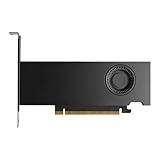
- API Supported: DirectX 12 for advanced graphics rendering and gaming performance
- API Supported: OpenGL 4.6 for professional graphics applications and cross-platform compatibility
- API Supported: Vulkan 1.4 for high-efficiency graphics and compute operations
- API Supported: OpenCL 3.0 for parallel computing and heterogeneous system programming
- Number of Monitors Supported: 4 displays simultaneously for enhanced productivity and multitasking
3. Warm up and repeat
Separate image pull, kernel compilation, graph capture, and cache warm-up from steady-state measurements. Run enough repetitions to show variance and include restarts. A single favorable run can conceal thermal throttling, compilation stalls, or intermittent collective failures.
4. Capture the metrics that drive the purchase
| Metric | Why it matters | How to record it |
|---|---|---|
| Training throughput | Shows progress rate but can hide slower convergence or quality differences. | Samples or tokens per second at a fixed quality target and scale. |
| Time to target quality | Accounts for different convergence behavior and checkpoint overhead. | Wall-clock time from job start to the agreed validation score. |
| Inference latency | Determines user experience and service capacity. | p50, p95, and p99 latency at the target concurrency and sequence mix. |
| Energy | Reveals operating cost and facility impact. | Power and energy per training step or per million output tokens. |
| Failure rate | Captures reliability that averages hide. | Job failures, device resets, communication errors, and recovery time over repeated runs. |
| Operator effort | Measures migration and maintenance cost. | Engineering hours for porting, debugging, upgrades, and incident response. |
5. Publish a decision record
For every result, retain the model commit, software versions, topology diagram, power measurement method, data set, and launch command. State whether the result came from one accelerator, one node, or a full rack. This prevents a rack-level Blackwell claim from being compared with a single-card Instinct result months later.
When is NVIDIA Blackwell the safer choice?
Blackwell is usually the lower-risk choice when your organization already standardizes on CUDA and depends on NVIDIA-certified libraries, tools, containers, or support processes. It is also compelling when a validated NVLink scale-up domain removes the need to design and tune a separate accelerator fabric.
Choose Blackwell when these conditions apply
- Your model uses CUDA kernels or third-party components that have no tested ROCm path.
- Your developers rely on CUDA-specific profilers, debuggers, libraries, or deployment automation.
- You need a turnkey rack design and want one supplier to validate the GPU, host, fabric, cooling, and software stack.
- Your benchmark shows a material advantage in time to target quality, tail latency, or failure recovery after migration effort is included.
Do not treat CUDA familiarity as proof of lower total cost. Quantify license, support, power, cooling, networking, and the cost of scaling the selected system to your required capacity.
When is AMD Instinct the better fit?
Instinct is the better fit when ROCm support is proven for the exact workload and the accelerator’s HBM capacity or bandwidth solves a real bottleneck. MI300X’s 192 GB of HBM3 and MI325X’s 256 GB of HBM3E can reduce sharding pressure for models that sit near or above common accelerator memory limits.
Choose Instinct when these conditions apply
- Your framework, inference engine, custom operators, and collective libraries have passed a production-like ROCm test.
- Your team can maintain or replace custom kernels and has a clear owner for ROCm upgrades.
- Higher per-accelerator HBM capacity or bandwidth lets you use fewer devices or a simpler parallelism plan.
- Your measured energy, latency, reliability, and operator-effort results remain favorable after complete-system costs are included.
Do not select an Instinct server solely because an accelerator price is lower. A porting project, additional networking, memory expansion, or specialist support can erase the initial saving.
How do training and inference change the choice?
Training and inference stress different parts of the system, so use separate acceptance tests. Training often exposes collective communication, checkpointing, optimizer memory, and scaling efficiency. Inference often exposes HBM capacity, key-value-cache growth, tail latency, batching behavior, and cold-start time.
For large-scale training
- Measure time to a fixed validation quality, not only step throughput.
- Test the intended number of nodes and include checkpoint save and restore.
- Measure scaling efficiency as accelerators are added; a high single-node result can collapse when synchronization dominates.
- Verify numerical stability and reproducibility across restarts and software updates.
For production inference
- Use the real prompt and response-length distribution, including long-context requests.
- Test concurrency levels that represent both normal traffic and bursts.
- Report p95 and p99 latency, queue time, throughput, and quality at each precision.
- Measure how many replicas fit in the available HBM after reserving memory for the key-value cache and runtime.
What does total cost of ownership include?
No current, like-for-like street-price figure is established for these systems, so do not build a business case around an unverified accelerator price. Request comparable quotations for complete nodes or racks and model the cost over the period you expect to operate them.
Quick wins for a faster PC:
Scan for outdated or missing drivers - takes under a minuteDriver Scan →Repair Windows errors before they cause bigger problemsFix Now →Fix the driver behind crashes, sound loss and screen glitchesFind Drivers →| Cost area | Questions to ask |
|---|---|
| Hardware | What are the accelerator, host, memory, storage, switch, rack, and spare-component costs? |
| Power and cooling | What is measured rack power at the target workload, and does the site support the required air or liquid cooling? |
| Networking | Are fabric switches, adapters, cables, optics, and installation included? |
| Software migration | How many engineering weeks are required to port kernels, tune collectives, validate quality, and maintain both stacks? |
| Support | What response time, firmware access, replacement service, and escalation path are included? |
| Operations | What staffing, monitoring, capacity planning, and training are needed for the chosen platform? |
Convert the bake-off into cost per useful output: cost per million production tokens, cost per training run that reaches the target quality, or cost per served request at the required latency. Include failed jobs and engineering time, not just the electricity meter.
Independent reader supportYour contribution helps us test, update, and keep practical guides available for everyone.What are the most common selection mistakes?
Comparing a family label with a single card
A Blackwell rack and an Instinct accelerator are different levels of comparison. Normalize the unit of analysis to a complete node, rack, or cluster before drawing a conclusion.
Rank #3

- COMPATIBILITY: EXCLUSIVELY DESIGNED for NVIDIA RTX PRO 6000 Blackwell Server Edition, NVIDIA RTX PRO 6000 Blackwell Max-Q, NVIDIA RTX 6000D 84G, and NVIDIA RTX PRO 5000 Blackwell, ensuring a perfect fit and optimal performance. Comes complete with MOUNTING HARDWARE and THERMAL GREASE for straightforward setup.
- OPTIMIZED FOR CONTINUOUS USE: Designed specifically for sustained performance in demanding environments.
- SUPERIOR BUILD MATERIALS: Features a combination of NICKEL ELECTROPLATED HIGH PURITY COPPER, STAINLESS STEEL, and POM for enhanced durability.
- ULTRA-SLIM PROFILE: The stainless steel panel design ensures a sleek, LOW-PROFILE FIT for your GPU setup. Engineered to support MULTIPLE BLOCKS IN SERIES, maximizing cooling efficiency.
- USA SUPPORT FRIENDLY AND EXPERIENCED: Tyler Direct provides friendly and knowledgeable customer support in the USA, assisting with troubleshooting and compatibility issues. You'll benefit from a comprehensive 1-year warranty covering defects.
Assuming framework support equals feature parity
A model may run while a fused kernel, quantizer, profiler, or collective path remains unsupported or slower. Inspect the operator trace and test the exact production container.
Using peak specifications as application results
HBM bandwidth, interconnect bandwidth, and theoretical compute are ceilings. Kernel efficiency, memory access patterns, communication, precision, and thermal behavior determine delivered performance.
Free tools Windows power users keep installed
One-click scans. No signup required.
Ignoring tail latency and recovery
Average throughput can look attractive while p99 latency or restart time violates the service objective. Add failure injection, node replacement, and checkpoint recovery to the test plan.
Underestimating facility constraints
The GB200 NVL72 is a liquid-cooled rack-scale design. Confirm coolant distribution, power delivery, floor loading, and service access before treating its published performance as deployable capacity.
What decision rule should a procurement team use?
Use a weighted score only after hard requirements have eliminated configurations that cannot run the workload. A practical sequence is:
- Reject incompatible software: remove any platform that cannot run the required model, precision, custom operators, and inference or training engine with an accepted support path.
- Reject insufficient capacity: remove configurations that cannot fit the model and runtime state with agreed headroom at the required context and concurrency.
- Validate scale: test the intended node count, collective pattern, network, cooling, and failure-recovery behavior.
- Score measured outcomes: compare time to target quality, tokens per second, p95 latency, energy, failure rate, and operator effort.
- Price the complete system: include power, cooling, networking, support, porting, and staffing over the planned operating period.
- Document the boundary: record which model versions, software releases, and topology produced the decision and when the test must be rerun.
In practical terms, select Blackwell when CUDA standardization, NVIDIA-certified software, or turnkey NVLink scale-up is decisive. Select Instinct when ROCm is demonstrably production-ready for your models and its memory or bandwidth advantage produces a better complete-system result. If neither platform passes the same workload test, defer the purchase and fix the software or topology gap rather than extrapolating from peak specifications.
Frequently Asked Questions
Can I combine Blackwell and Instinct GPUs in one training cluster?
Mixed-vendor clusters are technically possible only when your framework, launcher, collectives, checkpoint format, and scheduling system support heterogeneous devices. They add another compatibility and performance boundary, so treat a mixed design as a separate experiment with its own failure and scaling tests rather than assuming the faster accelerator will set the cluster speed.
Does the MI325X’s higher HBM bandwidth guarantee faster inference than Blackwell?
No. Bandwidth helps only when the workload is memory-streaming and the kernels can use it efficiently. Decode scheduling, arithmetic throughput, attention implementation, interconnect traffic, batching, and tail-latency limits can outweigh the published bandwidth difference.
Should a small AI team buy a rack-scale system immediately?
Not necessarily. A rack-scale design can simplify scale-up but creates substantial facility, networking, and operations commitments. First prove the workload and software image on a representative node or hosted environment, then size the production rack from measured scaling and utilization.
When should I repeat the comparison after choosing a platform?
Repeat it when the model architecture, precision, context limit, framework, compiler, driver, firmware, or communication library changes materially. Keep the original workload and environment so you can distinguish a real improvement from a benchmark-definition change.
The Tool Desk
Outbyte Driver Updater FREEFix the driver behind crashes, sound loss and screen glitchesFind Drivers →Outbyte PC Repair FREERepair Windows errors before they cause bigger problemsFix Now →Quick Recap
Product prices and availability are accurate as of the date/time indicated and are subject to change. Any price and availability information displayed on Amazon at the time of purchase will apply.

