Some links on this page are affiliate links: if you buy through them we may earn a commission, at no extra cost to you.
Open-weight coding models and hosted AI coding assistants are not interchangeable products. An open-weight model gives you the learned parameters to run, adapt, or serve under its license; a hosted assistant is a provider-operated workflow that may add repository indexing, terminal tools, an IDE, approvals, and agent logic around a model. A hosted service can even use an open model, so the categories overlap.
There is no defensible universal winner. Choose by the complete workflow you need: task success on a relevant benchmark, the model and agent harness behind the result, privacy boundary, license, context and latency, integration effort, and total operating cost. The figures below are dated evaluation snapshots, not a ranking of every current coding product.
As an Amazon Associate I earn from qualifying purchases.
What’s actually slowing this PC down?
Pick the symptom - the matching free tool is one click away.
What exactly are you comparing: a model or a complete coding assistant?
The first decision is to define the unit of comparison. An open-weight checkpoint is one component. A hosted coding assistant is usually a service that combines a model with context retrieval, file editing, shell or IDE tools, authentication, safety controls, and an agent loop. Comparing a bare checkpoint with a finished assistant can make the assistant appear better simply because it has more useful machinery around the model.
Open-weight means the parameters are available under model terms
With an open-weight release, the provider publishes the learned weights and documentation under a stated license. You can run those weights on your own workstation, a private server, rented GPUs, or a third-party inference service. You still need serving software, compatible hardware, an agent or chat interface, monitoring, and a way to supply repository context.
#1 Best Overall
- Network Cards
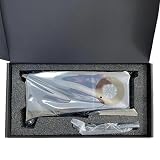
- 32GB Large Memory AI Pro R9700 Graphics Card Professional GPU Accelerator for Local AI Inference Computing
“Open-weight” does not automatically mean open-source training code, open data, unrestricted commercial use, or zero cost. Read the exact model card and license for the checkpoint you plan to deploy. For example, the Qwen3 project states that its open-weight models use the Apache 2.0 license; that statement applies to the specified Qwen3 releases, not to every model family or tool built around them. See the project documentation at Qwen3 on GitHub.
A hosted assistant is an operated workflow
A hosted assistant runs infrastructure on your behalf. The provider normally handles model serving, scaling, updates, authentication, and much of the integration. Your experience depends on the provider’s model version, context assembly, tool permissions, rate limits, review controls, and product interface—not just on the model name displayed in a menu.
The categories can overlap
A company can host an open-weight model behind an API, while a self-hosted team can build an assistant around an open checkpoint. Therefore, “open-weight versus hosted” is not a mutually exclusive product taxonomy. The useful comparison is ownership of the weights and operation of the workflow: who controls the model, who runs the infrastructure, and who controls the data path.
How should you read coding benchmark scores?
Read every score as the result of a particular model version, prompt, inference configuration, benchmark set, and agent harness. A benchmark number is not a property of a model in isolation. CodeSOTA specifically cautions that its SWE-bench Verified figures include agent scaffolding, while NIST’s Center for AI Standards and Innovation (CAISI) reports results for named models on its specified configurations.
CAISI’s May 2026 snapshot
The following figures come from CAISI’s May 2026 evaluation. They are useful as a dated reference point, but they do not establish a general market order or predict performance on your repository.
| Model | SWE-bench Verified | PortBench | What the figures mean |
|---|---|---|---|
| GPT-5.5 | 81% | 78% | CAISI result for its stated evaluation configuration |
| Claude Opus 4.6 | 79% | 60% | CAISI result for its stated evaluation configuration |
| DeepSeek V4 Pro | 74% | 44% | CAISI result for its stated evaluation configuration |
The spread between benchmarks is itself important. GPT-5.5 leads the listed systems by two percentage points on SWE-bench Verified and by 18 points on PortBench; Claude Opus 4.6 moves from close behind to a much larger gap; DeepSeek V4 Pro shows the widest difference between the two tests. That pattern warns against collapsing multiple evaluations into one “best coding model” label.
Free tools Windows power users keep installed
One-click scans. No signup required.
What to record when you reproduce a result
- Benchmark name and exact version, such as SWE-bench Verified or PortBench.
- Model name, checkpoint or product version, and whether it was quantized.
- Agent harness, system prompts, repository checkout, and available tools.
- Inference settings, context limit, retry policy, and time or token budget.
- Evaluation date and the success definition, including whether tests had to pass without human edits.
Without those details, two percentages that look comparable may describe different tasks and different amounts of automation.
Can you run an open-weight coding model locally?
Yes. You can run an open-weight coding model on local or privately rented infrastructure, but the practical requirement depends on parameter count, quantization, context length, serving engine, concurrency, and latency target. The published hardware examples below are test environments, not universal minimum specifications.
Match the model to the available memory
Qwen’s Qwen3-Coder repository lists a 256K context for the variants documented there. A long context can keep more files and history in one request, but it also increases memory pressure and can reduce throughput. Confirm the exact variant and current model card before treating that listing as a deployment specification.
Qwen’s speed-benchmark documentation reports testing on an NVIDIA H20 with 96 GB of memory. That tells you what hardware was used for that measurement; it does not mean every Qwen3-Coder configuration requires an H20 or that a 96 GB card is a universal local minimum. Smaller or quantized variants can fit different systems, while a large unquantized model can need substantially more memory.
Understand multi-GPU serving
For its Qwen3-235B evaluation, Qwen provides an example using NUM_GPUS=8 and instructs operators to adjust tensor parallelism to the GPUs available. The example illustrates the scale of a large-model deployment: you need a serving stack that can partition weights and coordinate memory across devices, not merely a powerful desktop card.
A practical local-deployment sequence
- Select the exact checkpoint. Record parameter size, context window, precision or quantization, license, and the model card’s supported serving methods.
- Estimate memory before downloading. Account for model weights, runtime overhead, key-value cache for your intended context, and room for concurrent requests. A headline GPU-memory figure alone is insufficient.
- Choose a serving engine. Verify that it supports the checkpoint, quantization format, tensor parallelism, streaming, and the API protocol your coding agent expects.
- Connect repository tools. Configure file search, patch application, terminal execution, test commands, and approval gates. Tool behavior can change coding results as much as the underlying checkpoint.
- Measure representative tasks. Use your own issue history and a fixed harness; record latency, failed tool calls, test pass rate, and operator intervention.
- Operate it continuously. Patch the runtime, monitor GPU memory and queue time, rotate logs appropriately, and establish a process for model and quantization updates.
Are open-weight models cheaper than hosted assistants?
Not as a blanket rule. An open-weight model removes or changes per-request provider charges, but you assume hardware, electricity, hosting, engineering, maintenance, and utilization costs. A hosted assistant turns much of that into subscription or usage charges, whose value depends on how heavily your team uses it and which limits apply. A comparable total-cost calculation requires current prices and your workload; the available evidence does not establish one.
| Cost component | Open-weight deployment | Hosted assistant |
|---|---|---|
| Compute | Buy or rent GPUs, storage, and system memory; pay for electricity or cloud runtime. | Included in the provider’s service charge or API metering. |
| Engineering | Install serving software, integrate tools, tune context, and maintain the stack. | Lower infrastructure burden, but product integration and administration still require time. |
| Utilization | Idle owned hardware still costs money; high utilization can improve cost per request. | Usage, seat, concurrency, or rate limits determine effective cost. |
| Scaling | Add devices or capacity planning for peaks and multiple users. | Provider handles capacity within the service’s documented limits. |
| Model changes | You choose when to download, test, and roll out a new checkpoint. | The provider controls version rollout and retirement schedules. |
Token prices alone therefore cannot answer “which is cheaper.” Calculate the cost of a complete successful change: model calls, retries, tool execution, review time, test infrastructure, and the people who keep the system reliable.
Which option gives better privacy and control?
Self-hosting can keep source code, prompts, and outputs inside a network boundary you control, subject to your infrastructure and operational practices. It also lets you choose retention, access logging, network egress, and when a model is updated. Those benefits are strongest when the organization has the skills to secure and monitor the deployment.
The Tool Desk
Outbyte Driver Updater FREEScan for outdated or missing drivers - takes under a minuteDriver Scan →Outbyte PC Repair FREERepair Windows errors before they cause bigger problemsFix Now →Rank #3

- [3352 AI TOPS, 5th Gen Tensor Cores, AI Content Creation] Accelerate AI-powered photo and video workflows like upscaling, denoise, background removal, masking, and generative AI creation for faster creator productivity.
- [32GB GDDR7 VRAM, Local LLM Inference, Larger Models] Run local LLM inference and on-device AI tools with massive VRAM headroom for larger models, longer context, and heavier multitasking across AI and creator apps.
- [28 Gbps, 512-bit, 1792 GB/s Bandwidth] High-throughput next-gen memory for demanding creator projects, complex timelines, 8K assets, and GPU-accelerated workloads that benefit from extreme bandwidth.
- [DLSS 4, Reflex 2, 4th Gen Ray Tracing Cores] Smooth modern gaming with AI-enhanced performance and responsiveness in supported titles, plus advanced ray-traced visuals for immersive experiences.
- [DP 2.1b UHBR20 x3, HDMI 2.1b, Bundle GPU Holder] Multi-display ready with up to 4 displays and support for 4K 480Hz or 8K 165Hz with DSC (display and cable dependent), plus an included GPU Holder to help reduce GPU sag and improve build stability.
A hosted service may provide enterprise controls, encryption, retention settings, regional processing, and administrative policies, but those details differ by provider and plan. Verify the current terms directly before sending proprietary code. The figures in this article do not verify any particular provider’s retention period, training-use policy, region, or contractual commitment.
Questions to ask a hosted provider
- Is submitted code used for service improvement or model training, and can that use be disabled?
- How long are prompts, repository indexes, tool transcripts, and backups retained?
- Where are requests and stored project data processed?
- Which administrators, support personnel, or subprocessors can access content?
- Can the organization delete data, export audit logs, and enforce single sign-on or role-based access?
Questions to ask a self-hosting team
- Are GPUs, model files, logs, and caches protected with the same controls as source repositories?
- Can operators prevent accidental outbound requests from tools and extensions?
- Who approves model downloads and verifies their checksums and licenses?
- How are prompts and generated patches redacted in telemetry?
- What is the rollback plan if a model update changes behavior or exposes data?
How do licenses differ between open-weight models and hosted services?
An open-weight license travels with the checkpoint and may grant rights to use, modify, and redistribute it subject to conditions. Apache 2.0 is permissive, but you must still preserve notices and comply with its terms. Other checkpoints can impose different conditions, acceptable-use rules, or restrictions, so never infer a license from the fact that a model is downloadable.
A hosted assistant is governed by service terms, acceptable-use rules, privacy commitments, and any enterprise agreement. You generally receive access to a service rather than a copy of its weights. Review both the provider’s terms and the terms of any third-party model it exposes, especially if your organization needs redistribution, on-premises operation, or audit rights.
How do setup, maintenance, and integration compare?
The operational trade-off is straightforward: open weights provide control at the cost of ownership, while a hosted assistant provides a quicker starting point at the cost of dependency on the provider’s product and policies.
| Area | Open-weight workflow | Hosted assistant workflow |
|---|---|---|
| Initial setup | Obtain weights, select a runtime, provision hardware, and connect an agent or IDE. | Create an account or organization, configure repositories and permissions, and enable the available tools. |
| Updates | You test and schedule checkpoint, runtime, and driver updates. | The provider operates updates; you must monitor release notes and behavior changes. |
| Context handling | You design indexing, truncation, caching, and retrieval policies. | The product supplies a context strategy, which may be configurable or opaque. |
| Tool control | You decide which shell, filesystem, network, and review actions are exposed. | Tools and approval controls are limited to what the service supports. |
| Failure recovery | You troubleshoot memory, drivers, queues, runtime errors, and model regressions. | You work around service incidents, limits, outages, and product changes. |
| Customization | You can change prompts, adapters, quantization, routing, and deployment location within the license. | You customize the controls and prompts the provider exposes. |
When is an open-weight workflow the better fit?
Choose an open-weight deployment when control is more important than minimizing operational work.
Strong reasons to favor open weights
- Data-boundary requirements: Source code or regulated data must remain in a controlled environment.
- Customization: You need a particular context strategy, fine-tuning or adapter, quantization, routing policy, or tool contract.
- Predictable availability: Your team needs to continue working during a provider outage or outside a service’s region.
- High sustained utilization: A continuously busy workload can justify owned or reserved infrastructure after a real cost analysis.
- Reproducibility: You want to pin a checkpoint and runtime rather than accept silent model changes.
The trade-off is that your team becomes responsible for capacity, security, model evaluation, and incident response. A large model can require multi-GPU serving, and a poorly maintained deployment can erase the theoretical privacy advantage.
When is a hosted assistant the better fit?
A hosted assistant is usually the pragmatic choice when a team wants a working repository workflow quickly and does not want to run GPU infrastructure.
Rank #4

- 【YOUR PRIVATE TOKENS POWERED BY LOCAL LLM】 Driven by NIMO OS and local AI computing power, allocation optimizes local model inference for fast global search, custom AI agent workflows, and multimodal knowledge bases. It delivers secure storage, smart photo organizing, audio processing, and isolated multi-user privacy—offering a seamless, safe environment to handle your documents, photos, audio and videos without subscription fees.
- 【5080 GPU FOR AI CREATION & CREATIVE WORK】A BALANCED CHOICE FOR CREATORS AND AI USERS – Equipped with a 5080 GPU for local AI inference, image generation, video processing, 3D rendering and GPU-accelerated creative workflows, making it a strong fit for creators, AI enthusiasts and advanced home users.
- 【RUN LOCAL AI WHERE YOUR DATA LIVES】KEEP MODELS, DOCUMENTS AND DATA CLOSE – Build local workflows for AI inference, RAG, AI agents, image generation and development without separating your storage server from your compute workstation.
- 【UP TO 204TB HYBRID STORAGE】ARCHIVE BIG, WORK FAST – Combine six SATA bays and three M.2 NVMe slots for up to 168TB of flexible hybrid storage. Store media libraries, backups and large datasets on high-capacity HDDs, while high-speed NVMe SSDs accelerate AI models, applications, VMs and active project files.
- 【BUILT FOR CREATORS WITH LARGE PROJECT FILES】STORE, EDIT, PROCESS AND ARCHIVE – Video editors, photographers and digital creators can centralize project libraries, keep active files on NVMe and use dedicated GPU compute for rendering and AI-assisted production.
Strong reasons to favor hosted operation
- Fast onboarding: Developers can start with an existing IDE, repository connection, terminal integration, and review flow.
- Variable demand: The team avoids buying hardware that sits idle between projects.
- Small operations team: The provider handles serving, scaling, and much of the runtime maintenance.
- Integrated collaboration: Central identity, permissions, usage reporting, and policy controls are already part of the product.
- Access to multiple models: You can test different model families without downloading and operating each checkpoint.
Hosted convenience does not remove evaluation work. Confirm exactly which model version, context sources, tools, and approval steps are active, then verify the provider’s data-handling terms against your organization’s requirements.
Windows Errors? Fix Them Before They Spread
Repair common Windows errors and clear accumulated junk for a smoother, more stable PC - no reinstall needed.Free scan · no reinstallOutdated Drivers Are Slowing You Down
One free scan finds every outdated or missing driver and matches the right update for your exact hardware.Free scan · exact hardware matchWhat does a hybrid approach look like?
A hybrid design uses hosted and self-operated components for different risk and performance profiles. For example, a team might keep sensitive repositories on an internal open-weight deployment while using a hosted assistant for low-risk documentation or burst capacity. Another design uses a hosted interface that routes selected requests to an open model, which preserves a familiar workflow but does not automatically place all data under your control.
How to define a safe split
- Classify repositories and tasks by sensitivity, regulatory requirements, and acceptable data destinations.
- Define which prompts, files, and tool outputs may leave the internal network.
- Use separate credentials and audit streams for internal and hosted paths.
- Apply the same patch review and automated test gates to both workflows.
- Measure quality and latency by task class instead of assuming one route is universally superior.
How should a team run a fair comparison?
Use a fixed, representative evaluation rather than a leaderboard screenshot. The goal is to measure the complete workflow your developers will actually use.
- Sample real work. Select bug fixes, feature requests, refactors, test additions, and documentation changes from your repositories. Include tasks with different languages and dependency patterns.
- Freeze the task definition. Write acceptance tests and a reproducible checkout. Do not let one system receive hidden hints or a cleaner repository state.
- Pin versions. Record the exact open checkpoint or hosted model version, quantization, context limit, prompts, and agent harness.
- Equalize tools. Give each candidate comparable file access, terminal commands, test execution, and approval rules. If tools differ, report that difference rather than presenting a pure model comparison.
- Set a budget. Cap elapsed time, retries, token use, and human interventions. Record both successful and abandoned attempts.
- Score outcomes. Measure tests passed, patch correctness, security or style regressions, latency, tool failures, review edits, and total cost.
- Repeat enough tasks. Model output is nondeterministic. Repeated runs or a larger task sample give a more useful range than one impressive demonstration.
- Review operational burden. Include deployment work, monitoring, license review, data controls, and incident handling in the decision—not just generated-code quality.
What checklist should you use before choosing?
- Have you decided whether the comparison is between checkpoints, assistant products, or complete agent workflows?
- Is the benchmark relevant to your languages, repository size, test suite, and issue types?
- Have you recorded model version, date, inference settings, and agent scaffolding?
- Can the open-weight option meet your context, memory, concurrency, and latency targets?
- Have you read the exact checkpoint license and the hosted service terms?
- Where will source code, prompts, logs, indexes, and tool transcripts be stored?
- What is the total cost at your actual utilization, including engineering and hardware?
- Who owns updates, security patches, monitoring, and rollback?
- What approval gates prevent an agent from making unsafe filesystem, network, or production changes?
- Have developers trialed both options on a fixed set of representative tasks?
What is the defensible conclusion?
The evidence supports a use-case decision, not a universal ranking. The CAISI May 2026 scores show that relative performance changes by benchmark, and Qwen’s own evaluation guidance notes that nondeterminism, compute needs, query cost, and availability all affect model choice. An open-weight model is compelling when deployment control, customization, or a specific data boundary outweighs infrastructure work. A hosted assistant is compelling when integrated tools, rapid adoption, and provider-operated capacity matter more. Evaluate the exact model-and-agent combination you intend to run, then choose the workflow that meets your quality, privacy, license, and operating constraints.
Frequently Asked Questions
Does open-weight mean the model’s training code and data are public?
No. Open-weight normally refers to access to trained parameters. Training datasets, training code, post-training recipes, and evaluation harnesses can remain partly or entirely undisclosed, so inspect the individual project documentation rather than treating the label as a complete openness guarantee.
How does a 256K context window change coding work?
It allows more repository material, history, and tool output to fit in one request, which can reduce some retrieval steps. Larger contexts also consume more memory and may increase latency, so measure whether your agent actually benefits instead of assuming the maximum window is always preferable.
Can quantizing an open model change its coding behavior?
Yes. Quantization reduces memory use and can improve serving efficiency, but it may alter output quality, tool-call reliability, or long-context behavior. Compare the exact quantized build with the precision level you would deploy, using the same tasks and harness.
What should an internal evaluation report contain?
Include the task set and acceptance tests, model and agent versions, tool permissions, context and retry settings, hardware or hosted plan, run date, success and intervention counts, latency, and cost. Keeping those fields together makes later model updates comparable instead of turning the report into an unrepeatable leaderboard snapshot.
Quick Recap
Product prices and availability are accurate as of the date/time indicated and are subject to change. Any price and availability information displayed on Amazon at the time of purchase will apply.
Do these 3 things before closing this tab:
1Repair Windows errors before they cause bigger problems2Fix the driver behind crashes, sound loss and screen glitches3Clear out junk files and repair common Windows errors
