Some links on this page are affiliate links: if you buy through them we may earn a commission, at no extra cost to you.
Online marketplace GST depends on the transaction type and the platform’s legal role. For ordinary goods and services, the seller generally registers when required, issues the GST invoice, reports the sale in GSTR-1 and pays the resulting liability through GSTR-3B. Goods sold through an operator required to collect tax collected at source (TCS) usually require registration even below the turnover threshold. For notified services covered by section 9(5) of the CGST Act, the operator—not the seller—pays the GST, while both parties report the supply in designated return fields. Accurate order, return, invoice, settlement and TCS records are what make the filings reconcile.
What kind of marketplace transaction is it?
Classify every sales stream before deciding your registration, invoice and return treatment. A platform can facilitate a sale without becoming the person liable for GST, or it can be legally required to collect TCS or pay tax on a notified service.
As an Amazon Associate I earn from qualifying purchases.
Recommended Free Tools
| Transaction category | Who is generally liable for output GST? | Registration and return focus |
|---|---|---|
| Ordinary goods or services sold through a marketplace | The seller | Seller issues the invoice, reports outward supplies and pays the liability in its returns. |
| Supplies through an operator required to collect TCS under section 52 | The seller for the supply; the operator separately collects and reports TCS | Goods supplied through such an operator generally require GST registration regardless of turnover. Seller reports the supplies in the applicable e-commerce tables. |
| Notified services covered by section 9(5) | The operator pays the GST on the notified service | Seller reports the supply in the section 9(5) supplier field; the operator reports and pays the tax in its own return. |
| Exempt, nil-rated or non-GST supplies | No output GST on that supply | Report the supply in the appropriate exempt, nil-rated or non-GST sections and retain evidence of its classification. |
Do not assume that every marketplace collects TCS or that every platform service falls under section 9(5). Confirm the operator’s registration, contractual role and the exact notified category for each line of business.
Do I need GST registration to sell through a marketplace?
Often, yes. The general PAN-based threshold cited in CBIC registration guidance is ₹20 lakh, with ₹10 lakh for specified special-category states. Those thresholds are not a safe exemption for every online seller because compulsory-registration provisions can apply first.
#1 Best Overall

- Two-Part Carbonless Invoice Book: Each invoice book has 50 sets of invoices, each with a white/light yellow section, with the yellow section retained in the invoice book to maintain detailed records.
- Consecutively Numbered: Enlarged red 6-digit numbers in the upper right corner of each invoice receipt book help you quickly navigate through your orders.
- Wraparound Divider Flap: A thick folded cardboard divider is integrated into the back of each invoice book for use between each two-part sales order to prevent the written content from rubbing off on subsequent copies of the invoice, resulting in wasted invoices.
- 2 Packs/50 Sets (100 Sets Total): Each invoice book provides 50 sequentially numbered carbonless sets of 2 invoice books for long-term use.
- Customizable Space: Each invoice book for small business has space at the top to add a company seal or sticker.
Cases that can make registration compulsory
- Making inter-State supplies can trigger compulsory registration, subject to the applicable statutory exceptions.
- Supplying goods through an e-commerce operator that is required to collect TCS under section 52 does not receive the normal threshold exemption, according to CBIC’s e-commerce FAQ.
- Other compulsory-registration categories in the GST law may also apply to your business activities.
Specified service suppliers
Some specified service suppliers can use a threshold exception even when selling through an operator, but the exception depends on the service and the current notification. It cannot be extended automatically to goods or to an unrelated service. Keep separate classifications where a business sells both products and services, and verify the operator’s treatment before relying on a threshold.
What to verify before registering or remaining unregistered
- Identify whether the operator is required to collect TCS for your transaction.
- Determine whether the supply is goods, an ordinary service or a notified section 9(5) service.
- Check whether the sale crosses State borders or falls into another compulsory-registration category.
- Check current CBIC notifications and the operator’s GST instructions because thresholds and exceptions can change.
The ₹20 lakh and ₹10 lakh figures come from CBIC’s 2017 registration FAQ and remain subject to statutory exceptions and later amendments. They should be treated as starting points for analysis, not as a universal online-selling exemption.
The Tool Desk
Outbyte Driver Updater FREEScan for outdated or missing drivers - takes under a minuteDriver Scan →Outbyte PC Repair FREERepair Windows errors before they cause bigger problemsFix Now →What must a GST invoice contain?
A registered seller’s tax invoice must identify the supplier, the supply and the tax calculation well enough for the buyer and the tax authority to trace the transaction. Marketplace settlement statements do not replace the seller’s invoice.
| Invoice element | What to include |
|---|---|
| Supplier identity | Legal name, address and GSTIN. |
| Invoice control | A consecutive serial number, in one or more series, unique for the financial year, plus the issue date. |
| Recipient identity | Recipient GSTIN or UIN where registered. In specified cases involving an unregistered recipient, include the recipient’s name, address and the delivery State and code. |
| Classification | HSN for goods or the applicable Accounting Code/SAC for services, with a description. |
| Quantity and value | Quantity and unit for goods, total value, taxable value and the applicable tax rate and tax amount. |
| Place and tax treatment | Place of supply for inter-State trade and an indication of reverse charge where relevant. |
| Authentication | The supplier’s signature or digital signature. |
“a consecutive serial number, in one or multiple series, containing alphabets or numerals or special characters hyphen or dash and slash symbolised as “-” and “/” respectively, and any combination thereof, unique for a financial year.” — Central Board of Indirect Taxes and Customs, Invoice Rules (current page accessed 25 October 2026).
Rank #2
 Adams Sales Order Book, 2-Part, Carbonless, White/Canary, 4-3/16 x 7-3/16 Inches, 50 Sets per Book (DC4705)
- QUALITY INVOICES: Adams Order books provide a professional invoice or customer receipt; a great way to create and maintain a professional image for small businesses and service providers
- 50 TWO-PART CARBONLESS FORMS: Customers get the perforated white top copy; retain the canary and pink copies for your records
- WRAP-AROUND COVER: Fold the back cover between sets to keep invoices neat and legible
- ROOM FOR CUSTOMIZATION: A blank space at top leaves room for your company stamp; a big savings over custom-printed forms
- CONSECUTIVELY NUMBERED: Large 6-digit numbers in the upper right hand corner help you thumb through orders quickly
A registered composition taxpayer, or a supplier making exempt supplies, uses a bill of supply instead of a tax invoice where the rules require it. A paper invoice register can help you monitor sequence gaps, but it is only an optional record-keeping aid; it does not replace electronic records, GST Portal filings or e-invoicing obligations where those obligations apply.
What records should I assemble before filing?
Build the return from transaction-level records rather than from the amount deposited into your bank account. Marketplace settlements usually combine sales, refunds, commissions, shipping or other deductions and TCS, so the payout is rarely equal to taxable turnover.
- Order-level sales data with order date, invoice number, customer registration status, State, HSN/SAC, taxable value and tax split.
- Cancellation, return, refund and replacement records, linked to the original invoice.
- Credit and debit notes, including the period and invoice they amend.
- Marketplace settlement statements showing gross sales, deductions, returns and net payout.
- Operator TCS statements and the corresponding entries visible in GST records.
- Export documents, advances, exempt or nil-rated supplies and non-GST supplies where applicable.
- Input-tax-credit records and purchase invoices needed for the GSTR-3B calculation.
Use one reconciliation key—normally the marketplace order or invoice number—across your accounting system, invoice register and settlement export. That makes it possible to explain a difference without treating a bank credit as a sale.
How do I report marketplace sales in GSTR-1?
GSTR-1 is the statement of outward supplies for normal and casual registered taxpayers. It is required for a nil period as well as for a period with sales. Prepare the ordinary invoice-level sections and then complete the dedicated e-commerce tables that match your classification.
Rank #3

- QUALITY INVOICES: Adams Invoice books provide a professional invoice or customer receipt; easily customize by using the extra space at the top and your company stamp
- 50-TWO PART CARBONLESS FORMS: Customers get the perforated white top copy; retain the yellow copy for your records
- WRAP-AROUND COVER: Fold the back cover between sets to keep invoices neat and legible
- CONSECUTIVELY NUMBERED: Large 6-digit numbers help you thumb through invoices quickly
- STOCK UP: Each book includes 50 white/canary sets; order several to keep your favorite forms on hand
- Close the period. Freeze the order, return, credit-note and invoice data for the month or quarter. Confirm that every issued invoice has a valid serial number and tax calculation.
- Separate supply types. Split B2B invoices, specified large inter-State B2C supplies, exports, advances, credit/debit notes, amendments and exempt, nil-rated or non-GST supplies.
- Report e-commerce supplies. For tax periods from January 2024, use Table 14 for supplier-reported summaries of supplies made through an operator. Table 14(a) is for supplies where the operator is liable to collect TCS under section 52; Table 14(b) is for supplies where the operator is liable under section 9(5).
- Correct earlier entries when needed. Use amendment Table 14A for later corrections to Table 14 data. Keep the original invoice and the reason for the amendment in your records.
- Check operator-reported section 9(5) data. Table 15 is used for operator-reported section 9(5) supplies, with amendment Table 15A available from February 2024. Compare the operator’s figures with your own transaction register.
- Validate totals. Compare taxable value and tax by rate with invoices, returns, credit notes and the settlement report before filing. A GSTR-1 figure should be traceable to source documents.
- File even when there is no activity. A nil GSTR-1 still has to be filed for a required period.
GSTN’s advisory states that values reported by a supplier in Table 14 for TCS-category supplies do not automatically populate tax liability in GSTR-3B. Section 9(5) supplier values do flow to the relevant GSTR-3B field, so the two categories must not be treated as interchangeable.
How do I file GSTR-3B and pay the tax?
GSTR-3B is a summary return used to declare liabilities and discharge them. Reconcile it to the filed or prepared GSTR-1, marketplace settlements, returns, credit notes and eligible input tax credit before submitting payment.
Ordinary marketplace supplies
For ordinary goods and services, include the taxable outward supplies and output tax in the applicable GSTR-3B liability fields, claim only supported input tax credit and pay the net amount through the permitted electronic ledgers. The amount paid by the marketplace to your bank is not the figure to copy into GSTR-3B.
Section 9(5) supplies
For a notified section 9(5) service, the operator reports and pays the tax in GSTR-3B Table 3.1.1(i). The registered supplier reports the corresponding supplies in Table 3.1.1(ii) and does not pay that output tax itself. This treatment applies only to notified categories; a platform’s involvement alone is not enough.
Rank #4
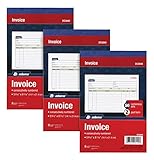
- This value 3 pack of Adams Invoice Books give you 150 two part carbonless invoices with a perforated white customer receipt and yellow duplicates for your records; 3 50-invoice books per pack
- Unique horizontal invoice sheets capture the purchased by and shipped to addresses; a compact 5-9/16 x 8-7/16 page still leaves plenty of room for details on up to 12 items sold
- Wraparound back cover prevents write-through between sets; pull out the perforated white customer receipt and the yellow carbonless duplicates stay behind for your records
- Unique 6 digit invoice numbers help you thumb through orders quickly; blank space up top gives you room for a company stamp—an affordable custom touch
- In value packs with three 50-invoice books for your small business; buy ahead to keep on site or take on the road for pop-up shop sales
Due-date framework
| Filing pattern | GSTR-3B due date described in GSTN guidance |
|---|---|
| Monthly filer | Generally the 20th day of the following month. |
| Quarterly filer | The notified 22nd or 24th day of the month following the quarter, depending on the State or Union Territory grouping. |
These are standard framework dates; a notification can extend a deadline for a particular period or jurisdiction. Check the GST Portal notice for the return period you are filing.
Independent reader supportYour contribution helps us test, update, and keep practical guides available for everyone.What is marketplace TCS and how do I reconcile it?
TCS is collected by the e-commerce operator on supplies covered by section 52 and reported supplier-by-supplier in the operator’s GSTR-8. The operator calculates it on the net value of supplies after returns, so your reconciliation must use the same return-adjusted base.
Understand the portal validation change
For periods before July 2024, the GST Portal manual recorded a validation that total TCS had to equal 1% of the net amount. From July 2024 onward, the accepted range recorded in the manual is 0.5% to 1%, with the portal’s stated tolerance. Treat these percentages as period-sensitive and verify the rate and validation shown for the relevant filing period.
Five-way reconciliation
- Start with the order register and remove cancellations and returns that belong in the operator’s net-supply calculation.
- Match the resulting taxable base to the operator’s settlement statement and GSTR-8 data by supplier and period.
- Separate GST charged on the sale from commission, logistics or other commercial deductions; a deduction from settlement is not automatically a reduction in taxable turnover.
- Compare the TCS amount with the credit reflected in your GST records and investigate timing or invoice-level differences.
- Document unresolved differences, raise them with the operator and preserve the settlement and return evidence for the period in which the correction is made.
For illustration only, a ₹1,00,000 net amount would produce ₹1,000 at a 1% validation rate or ₹500 at a 0.5% rate. The applicable percentage is determined by the period and current notification, not by the seller’s preference.
Best Value

- 2 part carbonless forms (White originals, Canary duplicates) for invoicing customers
- Wraparound cover attached to back to place between sets
- Consecutively numbered within each book
- 50 sets per book
- Space at top for company stamp
How are ordinary supplies, TCS supplies and section 9(5) supplies different?
The most important operational difference is who pays the output tax and where the supply appears in the returns.
| Decision point | Ordinary supply | Section 52 TCS supply | Section 9(5) notified service |
|---|---|---|---|
| Output-tax payer | Seller | Seller; operator separately collects TCS | Operator |
| Seller’s GSTR-1 treatment | Normal outward-supply tables | Table 14(a) from January 2024; Table 14A for amendments | Table 14(b) from January 2024; Table 14A for amendments |
| Operator-reported section 9(5) data | Not applicable | Not applicable | Table 15, with Table 15A amendments available from February 2024 |
| Seller’s GSTR-3B treatment | Declare and pay own liability | Declare and pay own liability; TCS is reconciled separately | Report in Table 3.1.1(ii); do not pay that output tax |
| Main reconciliation risk | Invoice, tax and input-credit mismatch | Returns, net value, settlement deductions and TCS mismatch | Misclassifying a service and paying or omitting tax incorrectly |
What common mistakes should marketplace sellers avoid?
- Using the turnover threshold without checking compulsory registration. Goods supplied through a TCS-collecting operator generally cannot rely on the threshold exemption.
- Copying the bank settlement into the return. Reconstruct gross taxable supplies and separately account for returns, deductions and TCS.
- Assuming every platform transaction is section 9(5). Only notified services qualify, and the operator’s role must be confirmed.
- Leaving out place of supply or HSN/SAC. These fields affect tax treatment and invoice validity.
- Breaking invoice sequences. Keep a financial-year sequence and document cancelled or amended numbers rather than silently reusing them.
- Expecting Table 14 TCS values to populate GSTR-3B liability. GSTN specifically distinguishes that behavior from section 9(5) supplier reporting.
- Treating a paper register as the compliance system. It can support numbering control but cannot replace electronic records, portal returns or e-invoicing where applicable.
- Ignoring nil-period filings. A required GSTR-1 must be filed even when there are no outward supplies.
What should a monthly or quarterly compliance checklist contain?
- Confirm registration status, operator TCS obligations and any section 9(5) classification.
- Issue sequential invoices or bills of supply with the required fields.
- Export orders, returns, credit notes and settlements for the period.
- Reconcile gross supplies to the net amount used for operator TCS.
- Prepare GSTR-1, including Tables 14, 14A, 15 or 15A where applicable.
- Reconcile GSTR-1 totals, input-tax-credit records and settlement data to GSTR-3B.
- Pay ordinary output tax by the applicable due date; ensure the operator handles section 9(5) tax.
- Archive invoices, amendments, settlement statements, GSTR-8/TCS evidence and filing acknowledgements.
Frequently Asked Questions
Can a marketplace settlement statement be used as my GST invoice?
No. A settlement statement explains the platform’s payout and deductions; it does not contain every supplier and supply field required on your tax invoice or bill of supply. Keep both records and link them through the order or invoice number.
Windows Errors? Fix Them Before They Spread
Repair common Windows errors and clear accumulated junk for a smoother, more stable PC - no reinstall needed.Free scan · no reinstallCrashes, No Sound, or Screen Glitches?
Random freezes, missing sound and display glitches usually trace back to one bad driver. Find and replace yours safely.Free scan · under a minuteWhat should I do if the operator’s TCS figure does not match my books?
Recalculate the operator’s net-supply base after returns, then compare the period, supplier GSTIN and individual orders with the GSTR-8 data. Preserve the disputed settlement and raise a documented correction request rather than changing your invoice register to force a match.
How should a business handle both goods and platform-facilitated services?
Map goods and each service category separately because registration exceptions, TCS and section 9(5) liability can differ. Use distinct HSN/SAC, invoice and return mappings so one stream does not inherit another stream’s treatment.
Should a quarterly filer review marketplace data every month?
Yes. Quarterly filing changes the return cadence, not the need for timely controls. Monthly settlement and TCS reviews expose missing invoices, returns or operator errors while the source records are still available.
Quick Recap
Product prices and availability are accurate as of the date/time indicated and are subject to change. Any price and availability information displayed on Amazon at the time of purchase will apply.
Free tools Windows power users keep installed
One-click scans. No signup required.

