Quick wins for a faster PC:
Fix the driver behind crashes, sound loss and screen glitchesFind Drivers →Clear out junk files and repair common Windows errorsFree Scan →Some links on this page are affiliate links: if you buy through them we may earn a commission, at no extra cost to you.
Websites stay reachable by splitting the work among several systems: DNS tells a browser where a hostname should go, a CDN can serve cached content from an edge location, and cloud load balancers distribute requests among origin servers. Together, these layers can reduce delays, absorb some traffic spikes, and route around certain failures. They do not make a site infallible: an uncached request still depends on a reachable origin, and caching and DNS time-to-live settings affect how quickly updates or failures are reflected.
How do DNS, a CDN, and a cloud provider fit together?
They handle different stages of a web request. DNS resolves a name to an address; a CDN may answer the request from a nearby cache; and a load balancer can send requests that need the origin to an available backend. A cloud provider may supply some or all of these services, but their roles remain distinct.
As an Amazon Associate I earn from qualifying purchases.
It helps to think of a website as a chain rather than a single machine. A visitor needs to find the service, reach an endpoint that can respond, and receive the requested content. If one layer has a problem, another layer may help only when it has been configured to do so. For example, a CDN cache can serve an eligible saved response without contacting the origin, but it cannot supply a response it does not have.
What each layer does
- DNS: translates a domain name into an IP address. It directs a browser toward a destination; it does not deliver the web page.
- CDN: places cacheable responses at distributed edge locations. A cache hit can be returned from the edge; a miss is sent onward toward the origin.
- Cloud load balancer: distributes requests among configured backend services or servers, including dynamic or uncached requests that need the origin.
- Origin: the backend that produces or supplies the response when an edge cache cannot answer.
The provider choice matters because the services may offer different geographic reach, cache controls, health checks, traffic policies, security controls, observability, data-residency choices, support, and total cost. Those are evaluation criteria, not interchangeable guarantees: a particular deployment depends on the features and policies actually configured.
#1 Best Overall

- Complete M6 rack screws kit: This M6 rack screws hardware kit comes with 45 square rack cage nuts, 45 rack mount screws and 45 black washers. All nuts and bolts are neatly stored in a sturdy compartmentalized plastic storage box, letting you quickly find hardware during server cabinet assembly, upgrade or maintenance. Ideal server rack accessories for your rack installation projects
- Durable carbon steel with black nickel plating: These M6 screws, rack screws and cage nuts are built from heavy-duty carbon steel with premium black nickel plating. The coating offers powerful resistance to rust, corrosion, oxidation and abrasion, prevents fingerprints and discoloration, and delivers dependable performance in high and low temperature environments for extended service life
- Precise sharp threads for secure installation: Our server rack screws and rack mount hardware feature deep, clean-cut sharp threads and smooth burr-free surfaces. These m6 screw threads install smoothly without stripping, creating firm fastening to stop loose connections on rack and cabinet equipment during long-term use
- Universal compatibility for square-hole racks: Our M6 x 16mm cabinet screws fit standard 10mm square-hole server racks and cabinets seamlessly. Great for mounting servers, switches, routers, A/V devices and TV mounts. Perfect bolts and nuts for data centers, server rooms, IT closets and commercial workspaces
- Tight tolerance manufacturing: These M6 rack screws are precision made to strict metric standards with average error below 0.01mm. The tight-tolerance thread design creates a snug fit and even force distribution, resisting slipping and deformation to keep rack-mounted hardware securely fixed. Works great with rack studs for square hole cabinet setups
How does DNS direct my browser?
DNS is the lookup step that lets a browser use a human-readable domain instead of requiring the visitor to enter an IP address. A recursive resolver follows the domain’s delegation to authoritative name servers, obtains the relevant answer, and can cache it for the record’s time to live, or TTL.
In broad terms, the browser asks a resolver for the domain’s address. The resolver checks whether it can use a still-valid cached answer. If not, it follows the DNS delegation path to an authoritative name server for the domain and returns the answer to the browser. The browser can then attempt to connect to the returned address. DNS has selected a destination; the response still has to be served by the CDN, load balancer, or origin at that destination.
Free tools Windows power users keep installed
One-click scans. No signup required.
Managed DNS services can use anycast to serve queries from multiple locations. Google Cloud DNS describes its managed zones as served using anycast, and Google Public DNS also routes queries to a nearby anycast location. Anycast describes how the service can answer from distributed locations; it does not mean that every later step in loading the website is automatically redundant.
DNS caching is useful because resolvers can reuse answers rather than asking authoritative servers for every visit. The trade-off is that a changed record may not become visible to every resolver immediately. A resolver that already has an answer may continue using it until the old TTL expires. For a planned move, the TTL therefore affects how quickly the new destination is broadly seen; changing the record does not erase cached copies held elsewhere.
What does a CDN do after DNS resolution?
A CDN serves eligible content from distributed edge locations, which can reduce the distance a response travels and reduce requests reaching the origin. It commonly acts as a reverse proxy: the visitor’s request reaches the CDN first, and the CDN either responds from cache or forwards the request toward the origin.
Static assets such as images, CSS, and JavaScript are cacheable by default in Cloudflare’s description. Dynamic HTML is not cached by default there. That distinction matters: putting a site behind a CDN does not mean every page or request will be served from the edge. Cache behavior depends on the content and the rules in effect.
Do these 3 things before closing this tab:
1Repair Windows errors before they cause bigger problems2Fix the driver behind crashes, sound loss and screen glitches3Clear out junk files and repair common Windows errorsRank #2

- 【Powerful Load-bearing】12U Network Rack Open Frame is constructed from durable cold rolled steel; Rack shelf supports enhance stability, wall-mounted capacity of 130lbs, the ground-mounted up to 260lbs
- 【Considerate Designs】Open-frame layout, including a top panel adding space, anti-slip shelf stops fixing devices and compatible racks for stack and expansion to meet requirements of home server rack
- 【Complete Accessories】A 12U open frame server rack, two ventilated shelves, four shelf stops, four velcro straps and a set of equipment mounting screws
- 【Versatile Application】Ideal for space-efficient multi-device setups in warehouses, retail, classrooms, offices and more; Excellent choices as AV Rack/IT Rack
- 【Effortless Setup】 Network Rack includes hardware, a comprehensive manual, mounting hole drilling template and an online assembly video to simplify setup
What happens on a cache hit?
If the requested response is present and usable in the edge cache, the CDN returns the stored response without asking the origin for it. Google Cloud CDN describes this request path through edge Google Front Ends (GFEs): when a GFE finds the user’s response in the Cloud CDN cache, it sends that cached response to the user.
Serving a hit at the edge can lower origin load because the backend does not have to produce that response again for each request. It can also help keep cached material available during some origin-side problems, but only for responses the CDN has actually retained and is permitted to serve.
What happens on a cache miss?
When the edge does not have the requested response, the request must travel onward. In Google Cloud CDN’s documented path, a miss is forwarded through an external Application Load Balancer to an origin backend. If the resulting response is cacheable, it can be stored for later users.
A miss is therefore not a failure by itself. It is the normal path for new or uncached content and for content that must be fetched again. It does mean that the request depends on the route to the load balancer and a functioning origin backend. A CDN can reduce how often the origin is needed; it does not replace the origin for responses that must be generated there.
How can these layers help during a traffic spike or outage?
They improve resilience in different ways. A CDN can distribute requests across edge servers and reduce repeated requests to the origin; a cloud load balancer can spread requests among backend services or servers; and redundant DNS or edge locations can make it possible for traffic to reach another available location. None of these mechanisms guarantees that every failure is recovered from automatically.
When an edge location has a problem
Cloudflare’s reference architecture describes anycast advertising the same IP address from multiple locations. Routing can direct requests to another nearby site when one location fails. Its 2026 reference architecture describes a network spanning “hundreds of cities worldwide,” places 95% of the world’s Internet-connected population within 50 milliseconds, and reports network capacity of over 405 Tbps. These are Cloudflare’s stated network figures, not a promise that every visitor will see a particular response time or that a specific site is immune to outages.
Rank #3
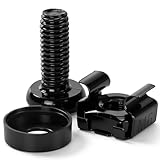
- 【UNIVERSAL 19-INCH RACK COMPATIBILITY】No more ill-fitting hardware! Our M6 x 16mm fasteners fit all standard 19-inch SERVER RACKS, network cabinets and data centers—seamless lock-in, zero size guesswork, no return risks for mismatched parts. Perfect for your rack mount setup
- 【DURABLE BLACK ZINC-PLATED BUILD】Fight mild rust and stripping! Our RACK MOUNT HARDWARE features thick BLACK ZINC PLATING on carbon steel—resists wear, bending and indoor/semi-outdoor corrosion for 2+ years. Sturdier than generic flimsy fasteners
- 【50-PACK ALL-IN-ONE CAGE NUTS KIT】No mid-install part runs! Our complete 50-pack of CAGE NUTS includes matching M6 screws, washers + FREE self-locking cable ties—exact parts for rack/cabinet builds, no extra hardware store trips
- 【TOOL-FREE SNAP-ON EASY INSTALL】Skip complex tools and slow builds! Our RACK MOUNT SCREWS pair with snap-on cage nuts (hand-installed)—twist in with a basic Phillips driver, no stripping. Finish your rack setup in 10-15 mins, even for first-timers
- 【MULTI-USE RACK ACCESSORY HARDWARE】Max out your setup versatility! This hardware works for all NETWORK AND SERVER RACK ACCESSORIES—small business racks, office cabinets, home labs, audio racks. Washers prevent scratches, cable ties tidy wiring
Distributed edge locations provide more than one place to serve traffic, but the visitor’s experience still depends on routing and on what the chosen edge can serve. If the edge needs a fresh response, it must be able to reach a working path to the origin.
When an origin backend has a problem
A load balancer can distribute requests among backend services or servers, and health-check-based routing can help avoid sending traffic to an unhealthy backend when the relevant checks and policy are configured. Requests that are already cache hits may avoid the origin altogether. Dynamic or uncached requests still need a backend that can answer.
DNS-integrated load-balancing logic can also select an origin according to a configured policy rather than simply returning one fixed IP address. That is a different decision point from a cloud load balancer distributing a request among backends. Which mechanism is appropriate depends on where the routing policy is applied and what failure it is intended to handle.
When traffic grows suddenly
Cached responses can absorb repeat requests at the edge, lowering the volume that reaches origin servers. Requests that cannot be served from cache remain a responsibility of the origin tier, where load balancing can distribute them across backends. Resilience therefore depends on a useful cache policy as well as enough capacity and healthy services behind the load balancer; the presence of a CDN alone does not establish that the origin can handle every spike.
Does a CDN replace website hosting?
No. A CDN can serve cached responses, but it does not automatically replace the origin that creates or supplies dynamic and uncached content. In a common arrangement, the CDN is in front of an origin and may send cache misses through a load balancer to backend services.
Some requests can be fulfilled at the edge, while others need the application or backend. A static image that remains cacheable may be returned without contacting the origin; a dynamic page that is not cached by default needs a functioning route to the origin. The site operator still needs an origin or another configured source for responses the CDN does not have.
Recommended Free Tools
Rank #4
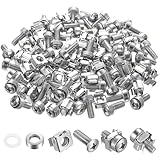
- Exquisite Material: Our rack mount screws are made of high-quality carbon steel, with high strength, strong durability, and high corrosion resistance, are not easy to deform or break, are reliable and stable, and can maintain good performance in any environment.
- Easy to Install: Cage nuts and screws have clear threads, uniform pitch, and better grip, nylon washers ensure better fixation of the screws, providing you with a smooth and satisfying installation process, the dimensions conform to standardized metric systems, making your work easier and more efficient.
- Easy to Store: All server rack screws and cage nuts are placed in storage boxes with labels and partitions, providing you with clear identification and orderly storage, and can also avoid loss, which is convenient and practical.
- Multi-scenario Application: These rack screws are compatible with most square hole racks and cabinets, suitable for installing various server rack hardware, such as rack server cabinets, server racks, equipment enclosures, A/V equipment enclosures, etc.
- M6 Rack Screw Kit: You will receive 55 pieces of rack mount screws with washers(M6x20mm), and 55 pieces of square cage nuts, sufficient quantity can meet your usage and replacement needs on different occasions, bringing you good Use experience.
A reverse-proxy CDN can also help obscure the origin from direct visitor traffic and provide traffic filtering or DDoS mitigation, as described in Cloudflare’s reference architecture. These are security and routing functions, not a substitute for maintaining the application and its backend services. The degree of protection depends on the service and configuration; the architecture description does not establish that all attacks or origin exposure are prevented.
What is the difference between DNS, a CDN, and a cloud load balancer?
DNS chooses or returns a destination for a hostname lookup, a CDN decides whether it can serve a request from an edge cache, and a load balancer distributes requests among backends. They can be used together, but one does not perform the complete job of the others.
| Layer | Primary decision | What it can help with | What it does not do by itself |
|---|---|---|---|
| DNS | Which address or configured destination is returned for a hostname | Directing queries; DNS-integrated policy can select an origin | Delivering the page or distributing each application request among origin servers |
| CDN | Whether an edge can return a cached response or must forward the request | Serving cacheable content nearer to users and reducing repeated origin requests | Replacing the origin for dynamic or uncached responses |
| Cloud load balancer | Which backend service or server receives a request | Spreading origin traffic across backends; configured health checks and policies can inform routing | Resolving the hostname for the visitor or supplying a cached response it does not hold |
These layers can overlap in how they contribute to availability, but their failure modes differ. A DNS answer can be cached after a record change; an edge can lack a requested response; or a backend can be unhealthy. Diagnosing an outage means identifying which step is failing rather than treating “the cloud” as one service.
Independent reader supportYour contribution helps us test, update, and keep practical guides available for everyone.How do TTLs and cache rules affect updates?
TTL values determine how long DNS answers or cached content may be reused, while cache-control and CDN rules determine whether a response is cacheable and how it is refreshed. Longer reuse can reduce repeated work, but it also means changes may take time to become visible or a stored response may remain usable after the origin has changed.
The Tool Desk
Outbyte Driver Updater FREEFix the driver behind crashes, sound loss and screen glitchesFind Drivers →Outbyte PC Repair FREEClear out junk files and repair common Windows errorsFree Scan →DNS TTL and CDN cache TTL are separate controls. DNS TTL governs how long a resolver may retain a DNS answer. CDN freshness rules govern how long an edge may reuse a response. Changing one does not automatically change the other, so an operator moving a site or updating content needs to consider both the destination lookup and the content served from caches.
Documented Google Cloud CDN defaults
Google Cloud’s documentation, accessed in 2026, lists a default client TTL of 3600 seconds, a default cache TTL of 3600 seconds, a maximum TTL of 86400 seconds, and a serve-while-stale period of up to 86400 seconds in its documented defaults. These are documentation defaults, not values guaranteed for every configuration or cache behavior.
Best Value

- Pro Grade – Here is our new Black M6 Rack Screws and Cage Nuts Set [50 x Server Rack Screws, 50 x Cage Rack Nuts, 50 x Washers] used for mounting server racks, enclosures, cabinets, and more.
- Strong & Durable – Our Rack Cage Nuts & Relay Rack Screws for server rack have a high-grade carbon steel construction to prevent stripping. The M6 Cage Nuts and Bolts have also been coated in zinc chromate plating for resistance from corrosion.
- Wide application – Our rack screws & nuts are universally compatible with all square hole racks & cabinets. This makes the rack cage nuts and screws suitable for mounting all server rack hardware, including rack server cabinets, server shelves, A/V device enclosures, and other server mounting procedures.
- Easy to install – Our server rack screws and clip nuts have a Phillip’s truss-head with self-guiding pilot points to allow you to install in no time. The rackmount screws and nuts thread are extra sharp, clean & accurate, offering a smooth & satisfying installation process.
- Essential Bundle – Our Cage nuts & screws m6 set includes all the essential parts for mounting your server equipment. Pack not only includes screws & cage nuts; we have also thrown in additional heavy-duty washers to reduce any marks or scratches when installed. We truly believe our server rack nuts and bolts set is the best in the marketplace and we stand by that. If our cage nut set starts driving you nuts, we’ll FULLY REFUND YOU. So, click “Add to Cart” now and buy with confidence.
Google Cloud CDN also documents revalidation using ETag or Last-Modified and cache eviction. Revalidation allows the cache to check whether a stored response remains current; eviction means a cached response can be removed. For that reason, a TTL is a freshness rule, not a guarantee that a particular object will remain stored for the full period or that all users will switch to an updated version at the same instant.
What stale content means in practice
Serving while stale allows eligible cached content to be served for a defined period after it would ordinarily be considered fresh, according to the documented behavior. That can preserve access to a stored response when fetching a fresh one is not possible, but it can also mean the visitor sees an older version. Whether that trade-off is appropriate depends on the content: an image or stylesheet may tolerate a different update window than a response that must reflect current application data.
How should you assess an online-availability setup?
Start by mapping the request path and the failure you need to withstand. A useful review asks not just whether a service is present, but which requests it covers, what it does when a component fails, and how quickly cached or DNS changes take effect.
- DNS: Check whether DNS is managed redundantly, whether anycast is used, what policy selects destinations, and how record TTLs affect a move or recovery.
- Edge reach: Check the CDN’s geographic footprint and whether it can serve the content types that matter to your site.
- Cache behavior: Identify which responses are cacheable, their freshness rules, how updates or invalidations are handled, and whether stale responses may be served.
- Origin routing: Confirm whether misses pass through a load balancer, how backend health is evaluated, and what policy directs traffic when a backend is unhealthy.
- Security controls: Review available DDoS mitigation, traffic filtering, and WAF controls rather than assuming a reverse proxy blocks every threat.
- Operational fit: Compare observability, data-residency options, support, and total cost across the services being considered.
A good design makes the intended behavior explicit: which content can be served from cache, which requests need an origin, what happens when a backend is unhealthy, and how operators can tell which layer is failing. Availability is the result of those decisions working together, not a single feature label.
Frequently Asked Questions
Can visitors still see a website if its origin server goes offline?
Sometimes, if the edge already has a response that it is allowed to serve, including under a configured serve-while-stale policy. That possibility is limited to the cached responses available at the time; it does not mean the application can generate new dynamic responses while the origin is unreachable.
Why might two visitors see different versions of a page after an update?
Their requests may be answered by different cached copies or by resolvers holding different DNS answers, depending on what each cache has retained and its freshness rules. The exact behavior depends on the record TTL and the CDN’s cache and revalidation settings.
PC Slower Than It Used to Be?
A free scan shows the junk files, broken settings and background clutter dragging Windows down - then fixes them in one click.Free scan · Windows 10 & 11Outdated Drivers Are Slowing You Down
One free scan finds every outdated or missing driver and matches the right update for your exact hardware.Free scan · exact hardware matchIs DNS failover the same as a load balancer health check?
No. DNS-integrated policy can choose which origin address to return, while a load balancer distributes requests among backend services or servers. They operate at different points in the request path and should be evaluated according to the failure each is meant to handle.
Quick Recap
Product prices and availability are accurate as of the date/time indicated and are subject to change. Any price and availability information displayed on Amazon at the time of purchase will apply.

