Some links on this page are affiliate links: if you buy through them we may earn a commission, at no extra cost to you.
Data centers use electricity to run servers, storage and networking equipment, plus the cooling and power-delivery systems that keep that equipment operating. In the United States, the Department of Energy and Lawrence Berkeley National Laboratory estimate data centers used 192 terawatt-hours (TWh) in 2024, or 4.7% of the country’s electricity. AI is increasing demand because specialized, high-power servers need substantial electricity and generate heat that facilities must remove.
What uses electricity in a data center?
A data center’s electricity bill covers both information-technology equipment and the facility systems supporting it. The IT load performs the computing, stores information and moves data; infrastructure delivers electricity to that equipment and removes the heat it produces.
As an Amazon Associate I earn from qualifying purchases.
| Use | What it does | Why it draws electricity |
|---|---|---|
| Servers | Run computing workloads, including AI applications. | Processors and other components consume power while performing computations. |
| Storage | Retains data for applications and users. | Storage equipment needs power to operate and serve data. |
| Networking | Moves data between servers, storage and connected systems. | Network equipment consumes power as data is transferred. |
| Cooling and other facility infrastructure | Removes equipment heat and supports operation of the IT load. | Cooling equipment uses electricity; power-delivery infrastructure also contributes, including distribution losses. |
The 2025 DOE/LBNL update attributes 31% of U.S. data-center electricity use in 2024 to infrastructure. That leaves the larger share for IT equipment, but the split is not fixed: it varies with the facility, its equipment and the cooling and power-delivery systems it uses. Infrastructure’s share fell from 36% in 2018 to 31% in 2024 as the estimated national average power usage effectiveness improved.
Why networking belongs in the picture
Networking is a smaller but growing part of the total. In the same DOE/LBNL estimates, its share rose from 3.4% of U.S. data-center electricity in 2018 to 4.5% in 2024. That matters because a data center is not just a collection of processors: equipment that transfers information also contributes to facility demand. A workload can therefore increase electricity use through computation, data storage and the movement of data among systems.
#1 Best Overall

- Versatile and Space-Saving: This 1U Rack mount PDU features a compact design that allows for efficient use of space in standard 19-inch racks. 16 rear-facing plug outlets and three front-facing outlets provide ample connectivity for your devices
- Efficient USB Power: Featuring four USB ports, it enables simultaneous power supply to your favorite devices, ensuring convenience and productivity
- Built-in Circuit Breaker: The PDU is equipped with a built-in 12-Amp circuit breaker that protects against circuit overloads. This ensures reliable performance and helps prevent damage to your equipment
- Heavy-Duty Construction: The power distribution unit is designed with heavy-duty components and a sturdy metal housing for durability and long-lasting use
- Convenient Mounting: The PDU features mounting ears on the back panel for easy installation in a standard 19-inch rack
IT load and facility load are linked
It is useful to separate the two categories without treating them as independent. More servers increase the IT load, but they also increase the amount of heat to remove and the amount of power that must be distributed. Conversely, an improvement in cooling or power delivery can reduce overhead without changing the computing task. The national percentages describe an average across many sites, not a fixed rule for every building.
How much electricity do U.S. data centers use?
The latest estimate in the 2025 DOE/LBNL update is 192 TWh for 2024, equal to 4.7% of total U.S. electricity consumption. This is a national estimate for data centers, not a measurement of electricity used only by AI facilities.
Quick wins for a faster PC:
Clear out junk files and repair common Windows errorsFree Scan →Scan for outdated or missing drivers - takes under a minuteDriver Scan →Repair Windows errors before they cause bigger problemsFix Now →For context, an earlier DOE announcement summarizing the prior LBNL report put 2023 U.S. data-center use at 176 TWh, about 4.4% of U.S. electricity. The two figures refer to different years and report editions; the 2023 figure is useful historical context, not a replacement for the later 2024 estimate.
How to read the 2030 projection
The 2025 update’s 2030 reference case estimates 649 TWh, or 11.8% of forecast U.S. electricity use. DOE’s resource hub summarizes the modeled range of 2030 outcomes as 9.5% to 15.3% of U.S. electricity. These figures are projections, not observed consumption: they depend on assumptions about future data-center growth and electricity demand.
An earlier DOE announcement gave a 325–580 TWh estimate for 2028. It came from the preceding report and uses a different forecast year and analysis edition. It should not be combined with the later report’s 2030 reference case as though the numbers were successive measurements on one certain path.
How to compare the estimates fairly
Every comparison needs the same basic labels: year, geography, report edition, equipment included and status as historical use, a reference case or a scenario. The 192 TWh number is an estimate of U.S. data-center consumption in 2024. The 649 TWh number is a modeled U.S. reference case for 2030, while 9.5%–15.3% describes a range of modeled outcomes. A percentage of national electricity and a TWh total also have different denominators: the percentage depends on total U.S. consumption in that year or forecast year.
Free tools Windows power users keep installed
One-click scans. No signup required.
Rank #2

- Rack mount 9-outlet power distribution unit (PDU) designed for standard 19-inch server racks, ideal for data centers, server rooms, and network closets
- Wide spacing for 2 outlets to accommodate larger plugs and adapters, improving cable management and reducing outlet overcrowding
- Individual on/off switches for each outlet, allowing convenient and independent control of connected devices
- 1u PDU includes 2 high-speed USB fast charging ports and 2 type C ports for simultaneous power supply and device charging
- Built-in overloading protection safeguards connected equipment from power surges and overloads, ensuring safe, reliable operation
TWh measures energy accumulated over a year. It does not reveal the instantaneous power draw of one facility, the highest demand during a hot afternoon or the capacity a utility must reserve at a particular connection. Those questions require facility- and location-specific information that the national estimates do not provide.
Why do AI data centers need so much power?
AI workloads use specialized servers, and the rapid deployment of those systems is one driver of data-center demand growth. High-power equipment concentrates more computing in a facility and produces heat; the site needs enough electrical delivery and cooling capacity to support that load.
The national consumption figures include servers, storage, networking and facility infrastructure across data centers. They are not a separate accounting of electricity used by AI alone. It would therefore be inaccurate to describe the 192 TWh estimate, or the 2030 projection, as AI-only demand.
More computing means more than just server electricity
Adding high-power IT equipment affects connected systems as well as the servers themselves. A facility has to deliver electricity to the equipment and remove the heat it generates. Consequently, the power requirement associated with an AI installation includes the IT load and the infrastructure needed to support it, even though the precise balance depends on the site.
Crashes, No Sound, or Screen Glitches?
Random freezes, missing sound and display glitches usually trace back to one bad driver. Find and replace yours safely.Free scan · under a minutePC Slower Than It Used to Be?
A free scan shows the junk files, broken settings and background clutter dragging Windows down - then fixes them in one click.Free scan · Windows 10 & 11High-density equipment makes cooling a capacity-planning issue, not merely an operating expense. If computing hardware is added faster than cooling systems or electrical distribution can be expanded, the facility cannot safely use the full intended IT load. The opposite is also possible: infrastructure built for a projected load may be underused if deployment or demand changes.
This is why power availability and cooling capacity are linked planning questions. A site that can house additional servers still needs a dependable supply and infrastructure capable of handling their load. The sources cited here establish the relationship, but they do not provide a single electricity-per-AI-server figure that applies across facilities.
Rank #3

- 1U 8-OUTLET RACK MOUNT PDU: Built-in 8ft. (2.4m) NEMA 5-15P Power Cord; 8x NEMA 5-15R Outlets; 125V Max. Input/Output; 15A Circuit Breaker; Ideal power supply for server rooms, server closets, small data centers and recording studios
- ON/OFF OUTLET SWITCHES: Each outlet features an individual illuminated rocker switch for controlled power management; Enumerated switch labels clearly identify the corresponding outlet; Safety covers prevent accidental power cycling
- 15 AMP CIRCUIT BREAKER: This 8-port rackmount power distribution unit features a self-tripping and resettable circuit breaker with 15A trip-point to protect connected equipment
- 1U RACK DESIGN: This horizontal power distribution unit installs in 1U of rack space on network racks and is compatible with all 19-inch server racks 4" or deeper; Compatible with ANSI/EIA RS-310-D standards
- OPTIMIZED DESIGN: Heavy-duty steel housing with rear facing outlets; Attached 8 ft. (2.4m) long power cord
What does PUE say about data-center electricity use?
Power usage effectiveness, or PUE, compares a facility’s total energy use with the energy used by its IT equipment. In formula form, PUE is total facility energy divided by IT-equipment energy. A lower PUE means less facility overhead for each unit of IT energy, but PUE is not a measure of computing output or AI efficiency.
The 2025 DOE/LBNL update estimates that the national average PUE improved from 1.55 in 2018 to 1.45 in 2024. As a ratio, 1.45 means the facility’s total energy is 1.45 times its IT-equipment energy; the difference represents energy used outside the IT load. It does not mean that all facilities have that ratio or that every site improved by the same amount.
The Tool Desk
Outbyte PC Repair FREEClear out junk files and repair common Windows errorsFree Scan →Outbyte Driver Updater FREEScan for outdated or missing drivers - takes under a minuteDriver Scan →The report separately estimates an average PUE of 1.145 in 2024 for facilities serving AI equipment. That estimate describes a different population from the national average, so the values should not be treated as a direct like-for-like comparison. Nor does the lower ratio by itself prove that an AI-serving facility uses less electricity overall: its total depends on the size and amount of computing it performs.
PUE is therefore best used to discuss facility overhead, alongside a clear description of the IT workload. Comparing two sites only by PUE can mislead if one site is much larger or performs substantially more computing. A lower ratio indicates a different relationship between facility energy and IT energy; it does not establish which site has lower total consumption or greater useful output.
Why does data-center growth matter to the electric grid?
Large facilities need dependable, continuous power, and their demand can be concentrated in particular locations. That makes data-center growth a question for utilities, regulators and other customers as well as for the facilities themselves: new electrical infrastructure must serve the load reliably, and its costs have to be allocated.
DOE’s large-load rate-design brief identifies three concerns: cost allocation, the risk of stranded investment if infrastructure built for a large customer becomes underused, and reliability. These are planning risks to consider, not proof that any particular project will cause a reliability problem or leave infrastructure unused.
Rank #4
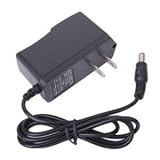
- 2-flat-pin plug
- 110V input voltage / 9VDC 1A output voltage
- For use with Arduino Uno, Mega and MB102 Power supply boards
- Connector size: 5.5 x 2.1mm with Center Tip positive, sleeve is negative
- These adapters do not work for guitar pedals or label makers which require negative tip power adapters
Cost allocation asks who pays for new service and grid upgrades. Reliability asks whether the system can meet a large, ongoing load under expected operating conditions. Stranded-investment risk asks what happens if a project is delayed, downsized or retired after infrastructure has been built for it. Considering all three helps distinguish a facility’s private electricity bill from the broader system costs that may accompany a new connection.
Power supply proposals are options, not facility-specific proof
Arrangements discussed by DOE include matching consumption with carbon-free resources and using onsite generation. These approaches may be considered as part of serving large loads, but discussion of an option does not establish that a particular data center uses it or that the facility is fully supplied by a specific energy source.
The distinction matters when reading claims about clean electricity. A national estimate of data-center consumption describes how much electricity the sector uses; it does not identify the source of power for an individual facility. The 2024 DOE announcement quoted Jennifer M. Granholm, then U.S. Secretary of Energy, saying, “We can meet this growth with clean energy.” That statement expresses a possibility, not evidence about the current supply mix at any specific site.
Independent reader supportYour contribution helps us test, update, and keep practical guides available for everyone.Could geothermal energy or thermal storage help?
DOE describes geothermal energy and cold underground thermal energy storage as approaches that could contribute to reliable power or shift cooling demand away from peak periods. They address related but distinct needs: geothermal is discussed as a potential energy resource, while thermal storage could help manage when cooling electricity is needed.
Recommended Free Tools
Shifting cooling demand can change the timing of electricity use without eliminating the underlying need to remove heat. A resource that contributes reliable power addresses supply; cold thermal storage addresses flexibility in cooling demand. Their value therefore depends on local conditions, system design and the operating profile of the facility.
These are approaches being explored, not universal solutions or evidence that all data centers already use them. Their relevance depends on the facility and the system being planned; the available DOE material does not establish a single best option for every location.
Best Value

- 10-Outlets Power Distribution Units - This PDU provides 10 AC outlets (110V/15A), features 10 individual on/off power switch, you can use to shut off electronics when not in use for power/energy saving, with 10ft power extension cord(14AWG)for plug your devices in while leaving the rack mobile
- Rack Mount Surge Protector - The power supply PDU strip provides surge protection to prevent excess voltage from reaching electronics with LED indicators, and built with PSD surge protection, Further ensuring the safety of electronic devices
- 1U Rack Mountable Design - The rackmount power strip compatible with all 19” server racks, and 1u power supply fits many network racks, data centers, network closets, and VoIP Phone systems
- ETL Listed & Overload protection - Reliable ETL safety certification with the rack power strip, with Overload protection, built-in circuit breaker and reset switch, ensuring a dependable performance of your networking equipment,Protects your equipment professonally
- Versatile Rackmount Options - Our rackmount power strip is made of industrial-grade metal housing, which is high quality and heavy duty, and allows for the PDU to be installed vertically or horizontally
What should readers take away from the numbers?
- Separate annual energy from instantaneous demand. TWh is a measure of energy over a period, such as a year; it does not tell you the exact power a particular facility needs at a given moment.
- Keep geography and date attached to every figure. The 192 TWh estimate is for U.S. data centers in 2024, while the 649 TWh figure is a modeled 2030 reference case for the United States.
- Do not treat a forecast as a result. The 2030 percentage range represents modeled scenarios, while 2024 is an estimate of historical use.
- Distinguish facility efficiency from workload efficiency. PUE describes overhead relative to IT energy; it does not show how much useful computing a facility produces for each unit of electricity.
- Do not equate data-center demand with AI demand. The sector totals include facilities and equipment serving many kinds of workloads.
- Read infrastructure shares as averages. The 31% infrastructure share in 2024 and the 36% share in 2018 describe national estimates, not a required ratio for an individual site.
- Ask what a proposed solution actually addresses. Carbon-free supply and onsite generation concern electricity supply, while thermal storage concerns the timing of cooling demand; neither is established as universal.
Frequently Asked Questions
Are the 192 TWh and 2030 figures global totals?
No. The 2025 DOE/LBNL estimates discussed here are for the United States. They should not be used as worldwide data-center consumption figures.
Does the 2030 reference case mean U.S. data centers will definitely use 649 TWh?
No. It is a modeled reference case, and the DOE resource hub also summarizes a wider 9.5%–15.3% range of modeled outcomes. Neither is a measured future result.
Do these 3 things before closing this tab:
1Fix the driver behind crashes, sound loss and screen glitches2Clear out junk files and repair common Windows errors3Scan for outdated or missing drivers - takes under a minuteCan these figures tell me whether a particular data center runs on renewable electricity?
No. National consumption estimates do not identify the power sources serving an individual facility. A facility-specific claim needs evidence about that site’s electricity supply.
Is all data-center electricity use caused by AI?
No. The totals include servers, storage, networking and infrastructure serving many workloads. AI is one important source of growth, but the published totals are not an AI-only accounting.
What does a PUE of 1.45 mean?
It means total facility energy is estimated at 1.45 times the energy used by IT equipment. The ratio describes facility overhead; it does not measure computing performance or compare total electricity without considering workload and facility size.
Why is the AI-serving PUE of 1.145 not a direct comparison with 1.45?
The figures describe different populations. The 1.45 value is a national average, while 1.145 is an average for facilities serving AI equipment in 2024. A lower ratio does not automatically mean lower total electricity use.
What’s actually slowing this PC down?
Pick the symptom - the matching free tool is one click away.
Why do cooling and grid planning appear in an article about server electricity?
Servers convert electricity into computing and heat. Facilities must deliver that electricity continuously and remove the heat, while utilities must plan for the resulting large, geographically concentrated load.
Could geothermal power or cold thermal storage solve data-center demand everywhere?
No. DOE presents them as approaches being explored. Geothermal may contribute reliable energy, while cold underground storage may shift cooling demand; suitability depends on the facility and local system.
The Bottom Line
U.S. data centers used an estimated 192 TWh in 2024, including servers, storage, networking and the infrastructure that powers and cools them. AI increases attention because specialized high-power equipment raises both computing and heat-removal needs. The 649 TWh figure for 2030 is a modeled reference case, not a certainty, and grid impacts depend on location, reliability requirements, cost allocation and how supply and cooling are managed.
Quick Recap
Product prices and availability are accurate as of the date/time indicated and are subject to change. Any price and availability information displayed on Amazon at the time of purchase will apply.

