Quick wins for a faster PC:
Repair Windows errors before they cause bigger problemsFix Now →Fix the driver behind crashes, sound loss and screen glitchesFind Drivers →Some links on this page are affiliate links: if you buy through them we may earn a commission, at no extra cost to you.
AI agent loops fail when the system can keep acting without proving that it is finished, making progress, or staying within authority and budget. The practical fix is not one more prompt: define a deterministic success predicate, impose hard iteration, retry, token, time and spend limits, detect repeated actions, validate every tool exchange, persist checkpoints, and route consequential decisions to human approval. The six failure modes below show what to instrument, which breaker to trip, and how to recover without losing an auditable trace.
Why do AI agent loops fail?
An agent loop combines model decisions, tools, state and an evaluator. A typical cycle is: inspect state, choose an action, call a tool, read the result, then decide whether to continue. Failure occurs when any part of that cycle can continue without a reliable proof of completion or a safe reason to stop.
As an Amazon Associate I earn from qualifying purchases.
Microsoft’s Agent Framework documentation puts the core rule plainly: “Always bound autonomous loops. A completion condition can fail, a model can stall, and an evaluator can be probabilistic.” In production, a loop therefore needs two independent classes of control: progress controls that determine whether the task is moving toward its goal, and resource and safety controls that stop it even when the model is still generating plausible actions.
The six patterns below are distinct but can combine. For example, a malformed tool call can trigger a retry loop, while a vague evaluator can keep requesting revisions after the underlying state has stopped changing.
#1 Best Overall

- Dual-Brain Hybrid Power: Combines the Qualcomm Dragonwing QRB2210 MPU (Quad-core Arm Cortex-A53 @ 2.0 GHz CPU, Adreno GPU, AI acceleration) and the real-time, low-power STM32U585 MCU for advanced applications like object recognition, voice commands, and motion detection.
- AI & Linux Capabilities: Unlocks AI-powered vision and sound solutions; runs Linux Debian OS for coding in Python and supports the Arduino ecosystem with libraries and Sketches; quick start with Arduino App Lab.
- Advanced Features: Equipped with 4 GB LPDDR4 RAM, 32 GB eMMC built-in storage, ideal for single-board computer (SBC) mode, running multiple simultaneous high-level processes, more complex AI or ML models, extensive logs. Dual-band Wi-Fi 5 (2.4/5 GHz), Bluetooth 5.1, and high-speed headers for vision, audio, and display peripherals.
- Seamless Expansion & Connectivity: Features the classic UNO form factor for shields compatibility, an 8x13 LED matrix, and a Qwiic connector for easy expansion with Modulino nodes; power and connect via the USB-C connector.
- Intended Use & Development: The perfect platform for prototyping robotics or IoT projects, empowering innovators with a unified development experience to mix Arduino Sketches, Python scripts, and containerized AI models in a single interface.
| Failure mode | Primary signal | First guardrail | Recovery path |
|---|---|---|---|
| No reliable stop condition | Completion marker or predicate never becomes true | Hard iteration cap, timeout and deterministic success predicate | Stop, report current state and request review |
| Repeated action without progress | Same or near-identical tool input with no state delta | Progress record and repetition circuit breaker | Escalate, substitute a tool or restore a checkpoint |
| Retries repeat the same failure | Identical error and unchanged inputs across attempts | Semantic retry policy and per-task retry budget | Change prompt, model or tool; terminate if unchanged |
| State, plan or output drifts | Plan adherence, grounding or invocation errors | Durable checkpoints and schema validation | Replay from a known checkpoint with fresh observations |
| Evaluator mistakes activity for progress | Critique passes increase while acceptance evidence does not | Measurable criteria, evidence requirement and critique cap | Return the best supported result for human judgment |
| Controls fail open | Calls, tokens, spend or side effects rise beyond policy | Independent quotas, circuit breakers and approval gates | Freeze actions, preserve logs and obtain authorization |
What happens when an agent has no reliable stop condition?
The loop keeps requesting another action because its completion test is missing, impossible to satisfy or dependent on a probabilistic evaluator. A model may also stall while producing superficially reasonable thoughts, so “the model is still responding” is not evidence of progress.
How to define completion before writing the loop
Write the success predicate first. It should be deterministic wherever possible and test observable state rather than the model’s assertion that it is done. Examples include “the deployment record reports the target version and health check is passing” or “the requested file exists, matches the schema and passes validation.” Keep the predicate separate from the model’s natural-language plan.
Outdated Drivers Are Slowing You Down
One free scan finds every outdated or missing driver and matches the right update for your exact hardware.Free scan · exact hardware matchWindows Errors? Fix Them Before They Spread
Repair common Windows errors and clear accumulated junk for a smoother, more stable PC - no reinstall needed.Free scan · no reinstallWhich limits belong on every task?
- Iteration cap: maximum decision-and-tool cycles for one task.
- Timeout: wall-clock deadline that covers model and tool latency.
- Token budget: cumulative input and output tokens, including retries and critics.
- Spend budget: an explicit monetary ceiling for model and external API usage.
- Retry cap: a separate limit for recovery attempts, rather than counting only total iterations.
Caps and early termination serve different purposes. AWS guidance describes caps as protection against the worst case and early termination as a way to remove unnecessary iterations when success or failure is already evident. Use both.
Where should human approval sit?
Keep approval outside the autonomous cycle for consequential actions. The loop can prepare a proposed change and supporting evidence, then exit into a pending-approval state. Approval, rejection or expiration becomes an explicit workflow event; it should not be simulated as another model tool call.
How do I detect an agent repeating an action without making progress?
The strongest operational signal is repeated tool activity with no meaningful state change. Exact string equality is too narrow: an agent can vary whitespace, IDs or wording while attempting the same ineffective operation.
Record a progress tuple on every iteration
Persist at least four fields: the normalized action, the relevant observed state, the state delta since the previous iteration and the next expected milestone. Also record elapsed time, tool latency, tool output and cumulative cost. This record lets the controller distinguish a legitimate repeated read from a write or request that is failing to advance the task.
Combine signals instead of trusting one counter
Camunda recommends combining unchanged state, unusually long thinking or tool time and rising call counts because no single signal proves a stuck loop. A slow call may be a legitimate long-running job; an unchanged state may be expected while polling. Treat the combination as evidence and define a policy threshold for intervention.
Trip a semantic repetition breaker
Normalize arguments before comparison, remove volatile request IDs, and compare the target resource and intended effect. Trip the breaker when the same effective action recurs without a state delta or new evidence. The safe response is not automatically another prompt: escalate to a different model, substitute a tool, ask for clarification or restart from the latest valid checkpoint.
Rank #2
- Dual-Brain Hybrid Power: Combines the Qualcomm Dragonwing QRB2210 MPU (Quad-core Arm Cortex-A53 @ 2.0 GHz CPU, Adreno GPU, AI acceleration) and the real-time, low-power STM32U585 MCU for advanced applications like object recognition, voice commands, and motion detection.
- AI & Linux Capabilities: Unlocks AI-powered vision and sound solutions; runs Linux Debian OS for coding in Python and supports the Arduino ecosystem with libraries and Sketches; quick start with Arduino App Lab.
- Advanced Features: Equipped with 2 GB LPDDR4 RAM, 16 GB eMMC built-in storage, ideal to develop in PC-connected mode, running the OS, Python scripts, and basic network services (SSH) without a demanding GUI or heavy multitasking; great for lightweight AI and memory-optimized TinyML applications, needing local storage for basic OS and core libraries. Dual-band Wi-Fi 5 (2.4/5 GHz), Bluetooth 5.1, and high-speed headers for vision, audio, and display peripherals.
- Seamless Expansion & Connectivity: Features the classic UNO form factor for shields compatibility, an 8x13 LED matrix, and a Qwiic connector for easy expansion with Modulino nodes; power and connect via the USB-C connector.
- Intended Use & Development: The perfect platform for prototyping robotics or IoT projects, empowering innovators with a unified development experience to mix Arduino Sketches, Python scripts, and containerized AI models in a single interface.
for iteration in range(task.max_iterations):
    observation = read_state()
    action = choose_action(observation)
    if repeats_without_delta(action, observation, progress_log):
        return request_review("repeated action without state change")
    result = call_tool(action)
    progress_log.append(action, observation, result)
    if success_predicate(read_state()):
        return completed_result()
return bounded_failure("iteration limit reached")
The example illustrates control flow, not a drop-in framework. In a real implementation, the repetition detector must be aware of tool semantics and the state fields that matter for that task.
Why do retries repeat the same failure?
A retry helps only when something material changes. Replaying a deterministic HTTP 400 response, malformed tool invocation or unchanged build failure consumes tokens and API budget while preserving the cause.
Classify the failure before retrying
- Transient failure: a timeout, rate limit or temporary service outage may justify a bounded backoff retry.
- Input or schema failure: a malformed argument or validation error requires correction, not repetition.
- Deterministic task failure: an unchanged build or impossible constraint needs a new strategy or human decision.
- Authority or safety failure: a denied permission or triggered policy should leave the loop for review.
Store the error class and the attempted remedy. A retry policy should require a semantic change such as a revised prompt, model escalation, tool substitution or a new input supplied by a person. If the same class and evidence recur, terminate early.
Separate retry and iteration budgets
An agent can consume its entire iteration allowance on retries before it performs useful work. Set a per-task retry limit, then enforce the broader iteration, token, time and spend ceilings as independent controls. Include critic and evaluator calls in the same accounting so a “review” cannot bypass the task budget.
How do state, plans and tool outputs drift during a long loop?
Long-running loops can lose session state, follow an obsolete plan, misread a tool response or gradually diverge from the user’s intent. These are different defects and should not be collapsed into a generic “model error.”
Use durable checkpoints
Azure distinguishes deterministic workflows, whose control paths are fixed by code, from agent-directed workflows, whose runtime path is chosen by the model. Use deterministic orchestration for boundaries such as authorization, payment, deployment and data deletion; let the model choose among bounded options inside those stages. Persist checkpoints before and after side effects so a failed run can replay from a known state rather than improvising from a truncated conversation.
Durable execution also gives operators a way to pause, resume and audit a run. A checkpoint should include the user intent as understood at that point, the current plan version, relevant tool outputs, pending approvals and the budget counters.
Validate both directions of every tool exchange
- Validate arguments against a strict schema before invocation; reject unknown fields and unsafe values.
- Validate the returned payload against its declared schema before placing it in the model context.
- Check grounding rules: distinguish a missing field, an empty result and a successful result.
- Attach provenance and timestamp information so stale output cannot silently become current state.
AgentRx separates plan-adherence failure, invention of new information, invalid invocation, tool-output misinterpretation and intent-plan misalignment. That separation is useful for debugging: a valid call that returns data the model misreads needs a different fix from a call that violated the tool contract.
Rank #3
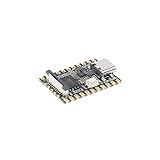
- Single core ARM Cortex-A7 32-bit core, integrated with NEON and FPU
- Built in Micro's self-developed 4th generation NPU, with high computational accuracy and support for mixed quantization of int4, int8, and int16. Among them, int8 has a computing power of 0.5 TOPS and int4 has a computing power of up to 1.0 TOPS
- Built in self-developed 3rd generation ISP3.2, supports 4 million pixels, and supports various image enhancement and correction algorithms such as HDR, WDR, and multi-level denoisin
- It has powerful encoding performance, supports intelligent encoding, adapts to save bit rates according to the scene, and saves more than 50% of the bit rate compared to conventional CBR mode, making the captured images high-definition, smaller in size, and doubling the storage space
- The design with built-in RISC-V MCU supports low-power fast startup, 250ms fast capture, and simultaneous loading of AI model library, enabling facial recognition to be completed within 1 second
Reconcile intent before continuing
At checkpoint boundaries, compare the current plan with the user’s original constraints and any newly approved changes. If the plan no longer serves the intent, pause for clarification instead of allowing the model to “repair” the goal by inventing requirements.
Why can an evaluator mistake activity for progress?
A critic or judge can keep requesting another pass when its criterion is vague, ungrounded or impossible to satisfy. The loop appears busy, but output quality and task state do not improve.
Recommended Free Tools
Turn quality into measurable acceptance tests
Define what evidence is sufficient before the first critique call. Acceptance criteria should refer to observable artifacts, such as required fields present, tests passing, policy checks clear or a target state reached. Ask the evaluator to cite the evidence it used and to return a structured accept or reject decision with the unmet criterion.
Cap review passes independently
Google Cloud notes that review-and-critique loops add model calls, latency and operational expense, and that a loop can run indefinitely if the exit state is never produced. Set a maximum number of critique passes and a separate critic token budget. If the cap is reached, return the best supported artifact with the unmet criteria and evidence exposed for a person to decide.
Require state change, not just new prose
A revised paragraph, plan or answer is not progress unless it changes the artifact or satisfies a previously unmet criterion. Compare structured fields, test results or other task-specific state rather than counting words or tool calls.
Independent reader supportYour contribution helps us test, update, and keep practical guides available for everyone.What if resource or safety controls fail open?
Unbounded loops multiply model calls, tokens, API requests, latency and cloud spend. They can also exhaust shared quotas or repeat external side effects such as sending messages, changing records or creating infrastructure.
Enforce independent limits
OWASP recommends hard caps on tool calls, API requests and tokens, circuit breakers for abnormal rates or repetition, and independent per-user and per-tenant limits. A global quota alone lets one noisy tenant starve everyone else; a per-user limit alone does not protect the service from aggregate load.
| Budget or boundary | What to count | Action when reached |
|---|---|---|
| Tool-call budget | Successful, failed and rejected invocations | Freeze further calls and emit a bounded-failure event |
| API-request budget | Requests across all external services for the task | Stop or switch to an approved offline path |
| Token budget | Prompt, completion, retry and evaluator tokens | Return the current artifact with cost data |
| Time budget | Wall-clock duration, including waiting | Cancel cancellable work and preserve a checkpoint |
| Spend budget | Accumulated model and service charges | Require authorization for any continuation |
| Authority boundary | Actions requiring a role, approval or policy exception | Leave autonomy and route to human review |
Make side effects idempotent and approval-aware
Where a tool can change an external system, require an idempotency key or a preflight lookup so a retry cannot create a duplicate effect. Keep the proposed operation separate from its commit operation, and make pending approval a terminal state for the autonomous loop. If a safety, budget or authority boundary is reached, stop and preserve the evidence; never let a failed guardrail default to “continue.”
Rank #4

- 【POWERFUL ESP32‑S3 CONTROLLER】Built‑in Xtensa 32‑bit LX7 dual‑core processor, 512KB SRAM, 8MB PSRAM, 16MB Flash for stable AI voice computing and multitask processing.
- 【Preloaded Dual AI Platforms】Comespre-installed with complete Deepseek and OpenAI voice dialogue projects.Experience intelligent voice interaction instantly. (Note: OpenAI functionality requires your own API key.)
- 【STABLE WIRELESS & CLEAR AUDIO】Integrated 2.4GHz Wi‑Fi + Bluetooth 5 (LE); dedicated audio decoding module for natural, responsive voice interaction.
- 【USER‑FRIENDLY VISUAL & PLUG‑AND‑PLAY】2” TFT‑SPI color screen shows real‑time chat; modular design, no extra wiring, ready to use after setup.
- 【FULL LEARNING SUPPORT】45 programmable GPIOs, rich interfaces, online web tutorials, free technical support for beginners & developers.
What should a production agent loop log and test?
Observability is part of the control system, not a dashboard added after an incident. A replayable trace should show why each action was allowed and what changed afterward.
Minimum trace fields
- Task, user and tenant identifiers, with access controls on sensitive data.
- Model and tool versions, prompt or policy version and plan version.
- Iteration, retry, token, elapsed-time and spend counters.
- Normalized tool inputs, validated outputs, error classes and latency.
- State snapshots or hashes, state deltas, checkpoints and approval events.
- Success-predicate results, evaluator evidence and the exact stop reason.
Inject failures deliberately
Test timeouts, malformed outputs, unavailable tools, contradictory observations and repeated identical results. Verify that each case stops at the intended boundary, leaves an auditable trace and can resume only from an approved checkpoint. Include load tests for per-user and per-tenant quotas so a breaker does not fail open under concurrency.
Do these 3 things before closing this tab:
1Clear out junk files and repair common Windows errors2Fix the driver behind crashes, sound loss and screen glitches3Repair Windows errors before they cause bigger problemsUse a failure taxonomy for diagnosis
Microsoft Research’s AgentRx benchmark contains 115 manually annotated failed trajectories (2026). Its taxonomy covers nine categories: plan adherence failure, invention of new information, invalid invocation, misinterpretation of tool output, intent-plan misalignment, under-specified user intent, intent not supported, guardrails triggered and system failure. AgentRx reported a 23.6% improvement in failure localization and a 22.9% improvement in root-cause attribution over prompting baselines. The practical lesson is to label the failure that occurred, not merely the final symptom that the loop timed out.
How can I implement the guardrails in the right order?
Build from the stop condition outward. This sequence prevents instrumentation and retries from masking an undefined goal.
- Write the success predicate. Identify the observable state that proves completion and the evidence required by a reviewer.
- Choose the workflow boundary. Keep authorization, irreversible side effects and policy decisions in deterministic code; constrain model-directed choices to approved operations.
- Set budgets. Configure iteration, retry, token, time, spend, tool-call and API-request limits for the task, user and tenant.
- Define progress. Name the state fields that must change and the milestones expected after each action.
- Validate exchanges. Enforce argument and output schemas, grounding checks, freshness and provenance before the next decision.
- Add repetition detection. Normalize semantically equivalent actions and trip a breaker when they recur without a state delta.
- Persist checkpoints. Save plan, intent, state, tool results, counters and approvals before and after side effects.
- Design semantic retries. Permit a retry only when the prompt, model, tool, input or strategy changes in a recorded way.
- Gate evaluation. Use measurable criteria, evidence-backed decisions and a finite critique budget.
- Exercise failure paths. Inject the conditions above, confirm the stop reason and review traces for unauthorized continuation.
What is the practical rule for stopping an AI agent loop?
Stop when any of three facts is true: the deterministic success predicate is satisfied, a bounded budget or safety boundary is reached, or the controller has evidence that the next action would repeat without progress. Return the current artifact, state, evidence and exact stop reason. A loop that fails safely is more useful than one that keeps working until its budget, quota or authority is exhausted.
Frequently Asked Questions
How much history should an agent carry between iterations?
Carry the minimum state needed to evaluate the next action, plus a durable reference to the full trace. Summarize old observations into structured fields with provenance rather than repeatedly appending raw transcripts, and invalidate summaries when the underlying state changes.
What’s actually slowing this PC down?
Pick the symptom - the matching free tool is one click away.
Should a timeout cancel the tool or only the model?
Cancel both when the tool supports cancellation; otherwise mark the operation as uncertain and prevent a second side effect until its final status is reconciled. A timeout should create a checkpoint and an explicit recovery state, not silently return control to the model.
How do I prevent two workers from bypassing a tenant limit?
Enforce quotas at a shared service boundary with atomic reservations, not only inside each worker process. Reserve budget before dispatch, release unused capacity afterward, and include queued and in-flight calls in the tenant’s accounting.
When is restarting from scratch safer than resuming a checkpoint?
Restart when the checkpoint contains stale credentials, corrupted tool output, an invalidated plan or an external state change that cannot be reconciled. Resume when the checkpoint is verified, the intent is unchanged and the next action remains within the original authority and budgets.
Quick Recap
Product prices and availability are accurate as of the date/time indicated and are subject to change. Any price and availability information displayed on Amazon at the time of purchase will apply.
The Tool Desk
Outbyte Driver Updater FREEScan for outdated or missing drivers - takes under a minuteDriver Scan →Outbyte PC Repair FREEClear out junk files and repair common Windows errorsFree Scan →
