Quick wins for a faster PC:
Repair Windows errors before they cause bigger problemsFix Now →Fix the driver behind crashes, sound loss and screen glitchesFind Drivers →Clear out junk files and repair common Windows errorsFree Scan →Some links on this page are affiliate links: if you buy through them we may earn a commission, at no extra cost to you.
A faster mobile chipset can improve battery life, but only when it completes your work with less total energy. Peak speed by itself is not a guarantee: power limits, heat, throttling, the modem, display, battery capacity, signal quality and software can outweigh the processor difference. To make a sound buying decision, compare complete phone models under the same workloads, then check sustained performance, energy per task and whole-phone endurance.
The practical rule is simple: treat the chipset as one component in a phone-level power system, not as a battery-life rating. A newer Snapdragon or Dimensity may be more efficient than its predecessor, yet two phones using the same silicon can have very different runtimes because their screens, cooling, firmware and radios differ.
As an Amazon Associate I earn from qualifying purchases.
What does a faster chipset have to do with battery life?
Speed and efficiency are related, but they are not the same measurement. A fast CPU can finish a photo export, web page or game-rendering task quickly and return to an idle, low-power state. If it uses less energy to complete that task than a slower chip, the phone gains battery life. This is often called race-to-idle.
The opposite can also happen. A chipset that reaches a higher peak frequency may draw substantially more power, create more heat and remain active longer because the workload or background services keep it busy. If the extra performance is not needed, the faster part can consume more energy for the same result.
Popular on Amazon

- Never Let a Dead Battery Ruin Your Drive. The LISEN 4 in 1 Retractable Car Charger delivers reliable power for your entire journey. Compatible with standard 12V cigarette lighter sockets, it keeps phones, tablets, and devices charged during daily commutes, road trips, and long drives — the perfect practical gift for dads, truck drivers, and anyone who lives on the road.
- Daily Driver Essential: Always Ready When You Need It. Featuring two retractable cables ( USB C & Old iPhone Charging Cable ) that extend up to 31.5 inches and dual USB ports, this charger solves cable clutter while charging up to 4 devices simultaneously. Ideal for busy fathers, commuters, and families who want a tidy car and never worry about low battery again.
- Deliver full-speed PD fast charging for iPhone 18 Pro Max & iPhone 18 Pro Max & iPhone 18 Pro right inside your car. The built-in 45W PD USB-C port hits the peak charging speed for these latest iPhone models, juicing up your phone to 50% power in just 15 minutes while you drive.(Note: Maximum 45W PD output is available under 24V vehicle power supply. When used with standard 12V car sockets, the peak output is limited to 36W.)
- Standard 12V Power Solution: Designed as a dedicated USB power supply for charging devices. Note: Does NOT support CarPlay, Bluetooth, or data transfer. Compatible with most phones, tablets, and small electronics. This retractable charger is a core car organization tool, keeping your vehicle tidy. Not compatible with Micro-USB devices.
- Clutter-Free Tech Organization: Featuring dual USB ports and retractable cables, the LISEN 4 in 1 charger provides a clean car storage solution. Perfect for truck enthusiasts or as a thoughtful gift for drivers, it supports fast USB-C charging for devices like the iPhone 18Pro & iPhone 18 ProMax. Keep your vehicle organized while ensuring efficient power delivery for all your tech on the road.
Think in terms of energy per completed task, not a single benchmark score. A useful comparison asks: did both phones finish the same job, under the same conditions, and how much battery did each consume? Performance per watt and energy per task answer that question more directly than a peak CPU or GPU number.
Generational improvements can be real. Qualcomm, for example, reports a 45% CPU-performance increase and a 44% power-efficiency improvement for its Oryon mobile CPU versus a previous generation; those are Qualcomm’s own figures and should be treated as directional until independent tests of a shipping phone confirm them. Historical analysis such as Harvard researchers’ study of mobile CPU design trends also shows why architecture and process changes can alter the power cost of performance, but it does not produce a universal battery-life ranking for every handset.
What’s actually slowing this PC down?
Pick the symptom - the matching free tool is one click away.
How is battery life calculated from power and capacity?
The basic relationship is:
Battery life (hours) = battery energy (watt-hours) ÷ average power draw (watts).
This is the formula Qualcomm uses in its smartphone battery and SoC benchmarking guidance. A 5-watt-hour battery powering a phone that averages 2 watts would theoretically last 2.5 hours. Real phones vary because power changes constantly, the usable battery energy is lower than the label in some conditions, and the operating system changes workload and brightness.
Battery capacity is usually printed in milliamp-hours (mAh), but watt-hours are more useful when comparing devices with different battery voltages. A rough conversion is mAh × nominal voltage ÷ 1,000. Do not compare mAh alone across phones unless their voltage and battery-management assumptions are comparable.
Average phone power includes far more than the application processor. Qualcomm’s guidance identifies the modem, CPU, GPU, display, sensors and other active board components as contributors to battery-level power. That is why an isolated SoC efficiency chart cannot predict a handset’s screen-on time by itself.
Recommended Free Tools
Why does a whole-phone result matter more than a chipset specification?
The same SoC can produce different battery results in different phones. Manufacturers choose different sustained power limits, cooling materials, display panels, camera pipelines, radio components and background services. Firmware can also change scheduler behavior and modem sleep timing after launch.
Also popular on Amazon

- ✅【Designed for Magsafe】 - The most fashionable iphone car mount in 2026 Magsafe is designed for iPhone 18 Pro Max/17/16/15/14/13/12 Pro Max Mini and official Magsafe cases and other magnetic phone cases and can be fixed directly to these phones without the need to affix metal plates. All Android Phones Will Work: Metal rings are provided; they fit cases and other phones without magsafe. Based on Unique Grandmaster Design (Protected by US Design Patent No. US D1,112,194 S)
- ✅【STRONG MAGNETIC MagSafe Car Mount】 - This powerful magnetic phone holder can create a powerful attraction that firmly supports your device while allowing you to drive without distraction. it easily and securely holds your phone through bumps, sharp turns or even sudden stops, no worrying of dropping your phone.
- ✅【SUPER STICK FORCE】 - VHB Dash Mounted Holders adhesive provides strong stick force between the dashboard and the car phone holder, which can firmly stick to any plane in the car, fix your device, adapt to a variety of road conditions such as sudden braking, speed bump, and rugged mountain road.
- ✅【SAFE DRIVING VIEW】 - Mini-size, not taking up space, it is placed in the dashboard without blocking the view at all, and does not need to look down at the device to ensure your safe driving. Cell Phone Car Mount is suitable for most cars, pickups, SUV, taxi; It is the best assistant for Uber and Lyft drivers
- ✅【360° FREE ROTATION】 - With an adjustable swivel ball joint, you can rotate your smartphone or device at your own will, providing the best viewing angle. Quickly pick and place with one hand, free your hands and make calls and GPS navigation more convenient
- Display: A large, bright, high-resolution panel at 120 Hz can consume more than the CPU during browsing or video. Variable-refresh modes and realistic brightness settings matter.
- Modem and reception: A weak 5G or LTE signal makes the radio work harder and can dominate power draw. Network band support and modem firmware differ by region and model.
- Battery: A larger battery can hide inefficient components in an endurance test, while a thin phone may use a smaller cell to achieve a lower weight.
- Thermal design: Vapor chambers, graphite, chassis materials and software limits determine whether the chip can sustain performance without repeatedly boosting and throttling.
- Software: Background sync, vendor services, update policy and aggressive app suspension can change idle drain and mixed-use results.
- Cameras and sensors: Image processing, GPS, haptics and always-on features add board-level consumption that a CPU benchmark omits.
For a buyer, the exact model number and regional variant are therefore more informative than a chipset family name. A phone with a slightly slower chip and a more efficient display or modem can last longer than a faster phone with a small battery and bright panel.
How should I compare two phones before buying?
Use the following sequence. It prevents a flashy peak score from deciding a battery question it cannot answer.
- Define your workload. Write down whether you care about web browsing, video playback, camera recording, navigation, messaging, gaming or a mixed day. Efficiency is workload-dependent; a result for sustained 3D gaming says little about standby or video decoding.
- Identify the complete phone. Record the exact model, storage and memory configuration, region, battery capacity, display size and refresh-rate modes, modem generation and software version. Do not stop at “Chip X versus Chip Y.”
- Find matched whole-phone endurance tests. Prefer tests that use the same brightness, refresh rate, network connection, audio level and starting charge. Look for separate figures for browsing, video, camera, gaming and standby rather than one unexplained “all-day” claim.
- Check sustained behavior. Seek long-duration CPU, GPU or mixed stress results, not only a one-minute burst. Record performance retention, frame-rate stability and reported surface temperature. A phone that throttles heavily may be less efficient over a long task even if its initial score is higher.
- Compare energy efficiency. If a source reports power, calculate performance per watt. If it reports battery percentage used for an identical job, calculate energy per completed task. Ensure the phones finished the same work; a faster completion with a larger battery percentage drop is not an efficiency win.
- Normalize the display and radio conditions. A 60 Hz test is not directly comparable with a 120 Hz test. Likewise, Wi-Fi, strong 5G and weak indoor LTE create different radio loads. Give priority to results that disclose these settings.
- Check software maturity. Launch firmware can have excessive drain or unfinished scheduler tuning. Look for results after stable updates and note the update policy, because a phone’s power behavior can change during its useful life.
- Use vendor data as a clue, not a verdict. Architecture whitepapers and product pages are useful for understanding intended gains. Confirm them with independent measurements of the retail phone.
Which measurements reveal chipset efficiency?
Use several axes because no single metric covers every use case.
PC Slower Than It Used to Be?
A free scan shows the junk files, broken settings and background clutter dragging Windows down - then fixes them in one click.Free scan · Windows 10 & 11Outdated Drivers Are Slowing You Down
One free scan finds every outdated or missing driver and matches the right update for your exact hardware.Free scan · exact hardware match| Measurement | What it tells you | What can mislead |
|---|---|---|
| Performance per watt | How much work the phone performs for a given power level. | Different workloads, cooling and power limits make cross-test comparisons unreliable. |
| Energy per task | The battery cost of completing a defined export, encode, webpage batch or game session. | The task may not represent your own usage; test setup and battery percentage accuracy matter. |
| Whole-phone endurance | Practical runtime with display, modem, storage and software included. | Brightness, refresh rate, network signal and test scripts can change the ranking. |
| Sustained performance | Whether speed remains stable after heat builds up. | A short burst benchmark can hide throttling after several minutes. |
| Temperature | Thermal headroom and likely comfort during long workloads. | Skin temperature is not the same as internal chip power; ambient temperature matters. |
| Idle and standby drain | Background efficiency when the screen is off or lightly used. | Account sync, cellular reception and app configuration can dominate the result. |
Arm’s Principles of High Performance guide places a typical smartphone SoC power budget around 2.5 to 3.5 watts. That range explains why passive cooling and chassis design matter: once heat accumulates, the phone may reduce clocks or voltage, changing both performance and energy per task.
Why do sustained tests matter more than peak benchmark scores?
Peak scores measure a brief burst while the battery and thermal system have plenty of headroom. During a long game, 4K recording session, navigation trip or large file export, heat builds and the operating system may lower frequency and voltage. The resulting sustained performance is what you experience after the initial burst.
Look for a graph or repeated runs showing how scores, frame rates or task times change over 10 to 30 minutes. A small decline can indicate good thermal control; a steep decline means the first score overstates long-session capability. Also check whether the test used a case, a fan or a cool room. Those details can materially change results.
Thermal efficiency is not merely a gaming concern. A hot phone can keep the display, modem and other components in higher-power states, and heat accelerates battery aging over time. A cooler design may therefore deliver similar real-world speed with lower average draw, even if its peak benchmark is lower.
Also popular on Amazon

- High Quality Material: The coaster is made of environmentally friendly silicone, safe, non-toxic and odorless. Soft with toughness, easily embedded in the cup holder. Very durable, wear-resistant, long service life. High temperature resistance, can withstand 100 ℃ high temperature water cups.
- Wide Compatibility: The coaster has a diameter of 3.15 inches and a height of 1.18 inches, which is widely used in most vehicles, such as SUV, sedan, MPV, etc., as long as the size fits your car cup holder.
- Protection Function: Our car cup holder coaster has a carry handle design and a stand-up ring edge on its edge to effectively prevent food crumbs, drinks and water from leaking out and preventing the car cup holder from getting dirty.Meanwhile,Thickened design effectively prevents the cup holder from being scratched by the cup when driving on bumpy roads and eliminates the annoying thumping sound, making your journey more enjoyable.
- Easy to Use and Clean: With embedded installation, you just need to put it flat on the car cupholder. It is also very quick to remove, there is a small bump on the coaster, pinch it and you can easily remove the coaster. It is very easy to clean, rinse with water or wipe with a wet towel (be careful not to clean with sharp tools).
- 100% Satisfaction: Our products have quality assurance, if you have questions or are not satisfied after receiving the product, don't worry, please contact us as soon as possible, we provide after-sales service.
How do display and modem choices change the answer?
The display is often the largest visible power variable. Compare panel size, resolution, maximum brightness and refresh-rate control. Adaptive refresh can reduce power for static content, but a phone locked to a high refresh rate may use more energy during ordinary scrolling and messaging. Video playback can favor a phone with efficient hardware decoding even when its CPU is not the fastest.
Radio conditions are equally important. In a weak-signal area, the modem increases transmit effort and may search across bands. A phone tested on strong Wi-Fi can appear dramatically better than the same phone on cellular data. For your purchase, give more weight to tests using the network you actually rely on and to reviews that disclose signal conditions.
Dual-SIM operation, satellite positioning, hotspot use and mmWave or other high-band 5G modes can add bursts of radio power. If these features are central to your routine, seek dedicated tests rather than extrapolating from a Wi-Fi browsing loop.
How should I interpret Qualcomm and MediaTek efficiency claims?
Vendor data is valuable for understanding design intent, but it is not a substitute for a phone review. Qualcomm distinguishes isolated SoC measurements from smartphone-level power in its battery-life and SoC benchmarking guidance. A chart made on a development platform may not include the display, modem, camera, thermal limits or firmware found in a retail handset.
MediaTek’s Dimensity 9300 whitepaper presents power-versus-performance curves and reports higher multi-core performance at the same power than a cited Snapdragon 8 Gen 3 comparison. That is a vendor whitepaper comparison with a stated test setup, not proof that every Dimensity 9300 phone lasts longer than every Snapdragon 8 Gen 3 phone. Check the workloads, software versions, cooling and measurement method before applying the result.
When a manufacturer quotes a percentage improvement, ask three questions: improvement in what workload, measured at what power, and on which platform? A 44% efficiency gain at a particular CPU operating point may not translate to 44% longer mixed-use battery life if the display or modem dominates your day.
Can a slower chip be the better battery choice?
Yes. If you mainly read, stream video, message and browse, the display, modem and battery capacity may matter more than peak CPU speed. A midrange chip that handles those tasks comfortably, stays cool and spends most of its time idle can outlast a flagship chip paired with a brighter display and smaller battery.
Also popular on Amazon
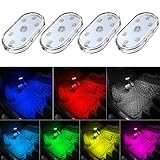
- 7 Colors Car Light: The led interior car lights are built-in 6 RGB LED lamp beads, which can be changed 7 different colors by touching, such as white, red, green, blue, yellow, pink purple, ice blue. The colors are bright and vivid, but not dazzling.Attention: Please charge before use.
- Touch Switch Design: Our led lights for car interior features touch control, one-key perspective lighting. Long touch to turn on/off, touch once to change the colors.
- Easy to Use: Stick the the iron plate in one place with double-sided tape, then put the light on it to complete the installation and fixation. Due to magnetic design, quickly install and remove, you also can attach the interior car lights to other metals.
- Portable & USB Rechargeable: Compact size, easy to carry, does not take up space. The wireless car led lights interior is charged by the USB cable, only need takes 40 minutes to fully charge the lights at a time, and keep lighting for about 2 hours.
- Wide Application: LED touch lights can be installed in dark places, such as storage boxes, armrest boxes, seat corners, etc. It's also suitable for bedside lights, wardrobe lights, reading lights, backpack lights, place it anywhere in the room, any dark place can be illuminated by it.
A faster chip becomes more attractive when it reduces the time spent on demanding work: frequent photo processing, local video export, navigation with live camera overlays or high-frame-rate gaming. In those cases, compare energy per completed task and sustained results rather than assuming “newer” means “longer lasting.”
Free tools Windows power users keep installed
One-click scans. No signup required.
What is a fair way to normalize battery comparisons?
Start with identical conditions: same brightness in nits or the same calibrated setting, same refresh mode, same volume, same app versions, same Wi-Fi access point or cellular band, and the same starting battery temperature. Disable only the features the test explicitly excludes; otherwise you risk comparing unrealistic settings.
Battery percentage is convenient but coarse. If a source provides watt-hour energy or measured average watts, use those values. If it provides only runtime, record battery capacity beside it and avoid treating a larger cell as proof of better chipset efficiency. A 20-hour result from a 6,000 mAh phone cannot be compared directly with a 20-hour result from a 4,000 mAh phone to infer component efficiency.
For a simple spreadsheet, create columns for phone, SoC, battery Wh, display settings, network, workload runtime, sustained score, temperature and software version. Flag any row that lacks test conditions. Missing context is a reason to lower confidence, not to fill in a guess.
What mistakes cause buyers to misread chipset efficiency?
- Equating benchmark rank with endurance: Peak single-core or GPU scores do not include the display, radio or background services.
- Comparing different battery sizes without noting them: Capacity can mask a component-level advantage.
- Ignoring refresh rate and brightness: These settings can overwhelm a modest CPU difference.
- Using launch claims as final evidence: Vendor percentages may come from controlled platforms rather than retail phones.
- Overlooking throttling: A first-run score can be irrelevant to a 30-minute workload.
- Mixing network conditions: Strong Wi-Fi and weak cellular reception are not equivalent.
- Assuming software is static: Updates can improve or worsen background drain and scheduler behavior.
- Expecting one universal ranking: The best chip for gaming efficiency may not be the best choice for camera, standby or modem-heavy use.
Worked example: how to reason without a universal ranking
Imagine two phones with the same 5 Wh battery. In an illustrative CPU task, Phone A completes the job in 10 minutes at an average 3 W, using 0.5 Wh. Phone B takes 15 minutes at 2.2 W, using 0.55 Wh. Phone A is faster and slightly more energy-efficient for that task despite its higher instantaneous power.
Now add the rest of the phone. Suppose Phone A has a brighter 120 Hz display and weaker reception during a mixed-use day, while Phone B has a more efficient panel and strong Wi-Fi. Phone B could still provide longer overall runtime. The example shows why task energy and whole-phone endurance must both appear in your decision; neither peak watts nor chipset branding is sufficient.
What buying checklist should I use?
Before ordering, verify each item:
- The exact model, region and modem configuration are identified.
- Battery capacity is recorded in mAh and, where available, watt-hours.
- Whole-phone browsing, video and gaming results exist under disclosed conditions.
- At least one sustained test shows performance and temperature after the phone heats up.
- Display resolution, brightness and refresh-rate behavior match your intended settings.
- Tests include the network type and signal environment you normally use.
- Independent results broadly agree with vendor efficiency claims.
- The software version and update policy are known, especially for a newly released device.
- Your decision uses energy per task or performance per watt, not only a peak score.
If several phones remain close, choose based on battery size, display efficiency, modem reliability and support policy. Those factors often have a larger effect on daily endurance than a small difference in chipset benchmark results.
Also popular on Amazon

- Creative DIY Mode: Choose from 16 million available colors or customize car led light effects to your liking in DIY mode via Govee Home app. Make your car stand out in unique style with creative freedom and outdoor decorations.
- Dynamic Music Mode: Built-in mic helps interior car lights sync with any music type. Liven up your road trips, weekend getaways or evening commute with colors that dance vibrantly to your favorite songs.
- Smart App Control: Manage the colors and brightness of car lights or choose music mode by one simple tap with Govee Home app. Enjoy a comfortable and vibrant driving experience with convenient control.
- 2 Lines Design: 2 lines design connect the 4 car led strip lights, attaching the inside car lights easily to any car model without worrying about exposed wiring or an untidy look.
- Simple Installation: Before you install, make sure the installation surface is clean and dry. Then attach the led lights for car to your vehicle with adhesive and support clips. Rubber tubing outside protects lights from water spills.
Is a faster mobile chipset worth choosing for battery life?
Choose the faster chip for battery reasons only when evidence shows it does your workload with equal or lower energy and maintains that advantage after heat builds. Otherwise, prioritize the complete phone: battery, display, modem, thermal design, software and tested endurance. Chipset efficiency is real and important, but it is a system property that must be measured in context.
For background on the power relationship and measurement limits, see Qualcomm’s low-power and thermal-efficiency design material and its smartphone benchmarking guidance. Use those sources to understand the claims, then rely on matched tests of the exact phones you can buy.
Frequently Asked Questions
Does fast charging reduce the battery-life advantage of an efficient chipset?
Fast charging changes how quickly you can restore energy; it does not make an inefficient phone consume less while running. Charging heat and charge limits can affect long-term battery health, so compare charging behavior separately from runtime.
Should I compare phones by milliamp-hours alone?
No. Milliamp-hours omit battery voltage and say nothing about display, modem or software consumption. Use watt-hours when available, then compare measured runtime under matching conditions.
How much can a weak cellular signal change battery life?
A weak signal can make the modem transmit at higher power and search more often, substantially changing endurance compared with Wi-Fi or strong coverage. Reviews that disclose network and signal conditions are more useful for predicting your experience.
Can an operating-system update change chipset efficiency?
Yes. Scheduler tuning, modem firmware, background-service rules and display drivers can alter power draw after launch. Treat an old review as a snapshot and check whether later tests used current stable software.
The Tool Desk
Outbyte PC Repair FREERepair Windows errors before they cause bigger problemsFix Now →Outbyte Driver Updater FREEScan for outdated or missing drivers - takes under a minuteDriver Scan →
