Some links on this page are affiliate links: if you buy through them we may earn a commission, at no extra cost to you.
Cursor has introduced Composer 2, a new coding-focused model built for agentic software development inside its editor. The launch matters because Cursor is no longer just packaging third-party AI models into a developer workflow; it is pushing its own model deeper into code generation, multi-file editing, debugging, and repository-aware automation.
Early reported results position Composer 2 ahead of Claude Opus 4.6 on some coding benchmarks, while still behind GPT-5.4 at the top end. That makes the model notable, but not definitive: coding benchmarks can favor specific tasks, tool setups, and evaluation styles, so real-world usefulness will depend on how well Composer 2 performs across messy codebases, long-running tasks, and day-to-day developer workflows.
As an Amazon Associate I earn from qualifying purchases.
Windows Errors? Fix Them Before They Spread
Repair common Windows errors and clear accumulated junk for a smoother, more stable PC - no reinstall needed.Free scan · no reinstallOutdated Drivers Are Slowing You Down
One free scan finds every outdated or missing driver and matches the right update for your exact hardware.Free scan · exact hardware matchFor developers already using Cursor, Composer 2 could mean faster in-editor assistance, tighter integration, and potentially more predictable coding-agent behavior, depending on pricing, availability, and model limits. It also signals a faster race among AI coding tools, where the next competitive edge may come less from raw benchmark scores and more from reliability, context handling, tool use, and how smoothly agents fit into existing engineering teams.
What Cursor Announced With Composer 2
Cursor introduced Composer 2 as its next-generation coding model built specifically for agentic software development inside the Cursor editor. Rather than positioning it as a general chatbot model adapted for programming, Cursor framed Composer 2 as a model optimized for the tasks developers perform in an IDE: reading a repository, planning edits across files, generating code, applying changes, responding to compiler or test output, and iterating without constant manual prompting.
Popular on Amazon

- Brilliant Color Illumination- With 11 unique backlights, choose the perfect ambiance for any mood. Adjust light speed and brightness among 5 levels for a comfortable environment, day or night. The double injection ABS keycaps ensure clear backlight and precise typing. From late-night tasks to immersive gaming, our mechanical keyboard enhances every experience
- Support Macro Editing: The K671 Mechanical Gaming Keyboard can be macro editing, you can remap the keys function, set shortcuts, or combine multiple key functions in one key to get more efficient work and gaming. The LED Backlit Effects also can be adjusted by the software(note: the color can not be changed)
- Hot-swappable Linear Red Switch- Our K671 gaming keyboard features red switch, which requires less force to press down and the keys feel smoother and easier to use. It's best for rpgs and mmo, imo games. You will get 4 spare switches and two red keycaps to exchange the key switch when it does not work.
- Full keys Anti-ghosting- All keys can work simultaneously, easily complete any combining functions without conflicting keys. 12 multimedia key shortcuts allow you to quickly access to calculator/media/volume control/email
- Professional After-Sales Service- We provide every Redragon customer with 24-Month Warranty , Please feel free to contact us when you meet any problem. We will spare no effort to provide the best service to every customer
The launch is notable because Cursor is not just adding another model option to its product; it is pushing further into owning the model layer that powers its coding assistant. Cursor became popular by wrapping strong third-party models in a developer-focused interface, but Composer 2 signals a more direct effort to tune the full coding experience around its own model behavior. That matters for latency, edit quality, tool use, and how well the assistant understands Cursor-specific workflows such as multi-file changes, inline editing, terminal-aware fixes, and long-running agent tasks.
Cursor said Composer 2 is designed to be fast, practical, and capable on real engineering work. The emphasis is less on producing impressive isolated snippets and more on completing larger repository-level tasks with fewer interruptions. In day-to-day use, that means developers should expect the model to handle prompts such as “add this feature,” “fix the failing tests,” “refactor this module,” or “trace this bug through the codebase” with more autonomy than older assistant-style coding models.
What stands out in the announcement
- Agent-first design: Composer 2 is aimed at multi-step coding tasks that require reading context, deciding which files matter, making edits, and checking the result.
- Repository-scale context: The model is intended to work across larger codebases rather than only the currently open file or a small pasted excerpt.
- Integrated editing: Its value depends on how well it applies changes inside Cursor, not only on the raw quality of text completions.
- Competitive benchmark positioning: Cursor reported that Composer 2 outperforms Claude Opus 4.6 on relevant coding evaluations while still landing behind GPT-5.4.
- Product-level optimization: Because Cursor controls the editor experience, it can tune model behavior around its own apply, diff, review, and agent interfaces.
Availability details are the part developers will want to check directly in Cursor, since model access can vary by plan, region, rollout stage, and workspace configuration. In launches like this, newer models are often introduced gradually, with usage limits or pricing differences depending on whether a user is on a free, Pro, Business, or enterprise tier. Teams evaluating Composer 2 should look at not only headline capability but also request limits, speed under load, data controls, and whether the model is available for their compliance requirements.
The announcement also reinforces a broader shift in AI coding tools: the model and the IDE are becoming harder to separate. A coding model that performs well in a benchmark may still feel clumsy if it cannot apply diffs reliably, recover from tool errors, or maintain a coherent plan across a multi-file task. Cursor’s pitch with Composer 2 is that a model trained and deployed close to the editor can deliver a smoother development loop than a generic frontier model accessed through a thin plugin.
How Composer 2 Compares With Claude Opus 4.6 and GPT-5.4
Cursor is positioning Composer 2 as a major step up for agentic coding inside its editor, especially against premium general-purpose models used for software tasks. The headline comparison is that Composer 2 reportedly outperforms Claude Opus 4.6 on Cursor’s coding evaluations, while still falling behind GPT-5.4. That places it in an interesting middle tier: strong enough to challenge one of the leading frontier models for practical development work, but not yet the top performer in the category by Cursor’s own framing.
The most meaningful part of that comparison is not just raw score ranking. Claude Opus 4.6 has been associated with careful , strong code understanding, and high-quality long-form responses, while GPT-5.4 is being treated as the higher bar for complex agentic coding. If Composer 2 can beat Opus 4.6 in Cursor’s environment, it suggests the model may be highly optimized for the way developers actually use Cursor: navigating repositories, making edits across files, responding to diagnostics, and iterating through implementation tasks without requiring as much manual prompting.
Also popular on Amazon

- Tri-mode Connection Keyboard: AULA F75 Pro wireless mechanical keyboards work with Bluetooth 5.0, 2.4GHz wireless and USB wired connection, can connect up to five devices at the same time, and easily switch by shortcut keys or side button. F75 Pro computer keyboard is suitable for PC, laptops, tablets, mobile phones, PS, XBOX etc, to meet all the needs of users. In addition, the rechargeable keyboard is equipped with a 4000mAh large-capacity battery, which has long-lasting battery life
- Hot-swap Custom Keyboard: This custom mechanical keyboard with hot-swappable base supports 3-pin or 5-pin switches replacement. Even keyboard beginners can easily DIY there own keyboards without soldering issue. F75 Pro gaming keyboards equipped with pre-lubricated stabilizers and LEOBOG reaper switches, bring smooth typing feeling and pleasant creamy mechanical sound, provide fast response for exciting game
- Advanced Structure and PCB Single Key Slotting: This thocky heavy mechanical keyboard features a advanced structure, extended integrated silicone pad, and PCB single key slotting, better optimizes resilience and stability, making the hand feel softer and more elastic. Five layers of filling silencer fills the gap between the PCB, the positioning plate and the shaft,effectively counteracting the cavity noise sound of the shaft hitting the positioning plate, and providing a solid feel
- 16.8 Million RGB Backlit: F75 Pro light up led keyboard features 16.8 million RGB lighting color. With 16 pre-set lighting effects to add a great atmosphere to the game. And supports 10 cool music rhythm lighting effects with driver. Lighting brightness and speed can be adjusted by the knob or the FN + key combination. You can select the single color effect as wish. And you can turn off the backlight if you do not need it
- Professional Gaming Keyboard: No matter the outlook, the construction, or the function, F75 Pro mechanical keyboard is definitely a professional gaming keyboard. This 81-key 75% layout compact keyboard can save more desktop space while retaining the necessary arrow keys for gaming. Additionally, with the multi-function knob, you can easily control the backlight and Media. Keys macro programmable, you can customize the function of single key or key combination function through F75 driver to increase the probability of winning the game and improve the work efficiency. N key rollover, and supports WIN key lock to prevent accidental touches in intense games
| Model | Reported position | Practical interpretation for developers |
|---|---|---|
| Composer 2 | Above Claude Opus 4.6, below GPT-5.4 | Likely tuned for fast, integrated coding-agent workflows inside Cursor |
| Claude Opus 4.6 | Behind Composer 2 in Cursor’s reported coding comparison | Still likely strong for explanation-heavy tasks, code review, and careful refactoring |
| GPT-5.4 | Ahead of Composer 2 | Remains the benchmark target for the most demanding multi-step coding tasks |
For teams already using Cursor, the comparison matters because a native model can have advantages that are not captured by a generic chat benchmark. Composer 2 can be shaped around Cursor’s context system, edit application flow, agent controls, and repository indexing. That can make it feel more responsive or more predictable than a larger outside model, even when the outside model has stronger general scores. In day-to-day use, the difference may show up in fewer broken patches, better file selection, cleaner multi-file changes, and less time spent correcting the assistant’s assumptions.
At the same time, “beats Claude Opus 4.6” should be read as a specific reported result, not a universal verdict across every programming language, stack, or codebase. A model that performs better on Cursor’s internal or preferred evals may still lose on tasks involving unusual frameworks, deeply ambiguous product requirements, security-sensitive changes, or very large legacy systems. Developers comparing Composer 2 with Claude Opus 4.6 and GPT-5.4 should test the models on their own repositories: bug fixes, migrations, test generation, dependency upgrades, and feature work that resembles their real backlog. The ranking is useful, but the best model for a team will depend on latency, cost, reliability, context handling, and how often the agent produces changes that can be merged with minimal cleanup.
Key Coding Capabilities and Workflow Improvements
Composer 2 is positioned less like a chat model bolted onto an editor and more like a coding agent tuned for multi-step software work inside Cursor. The headline improvement is stronger end-to-end handling of real development tasks: reading a codebase, planning a change, editing mulle files, running checks, and iterating when something breaks. For developers, that matters more than a single clever autocomplete because many high-value tasks involve coordination across services, tests, configuration files, and existing conventions.
One notable capability is broader context use across a project. A coding model needs to understand how a repository is structured before it can make safe changes, especially in larger TypeScript, Python, Go, Java, or full-stack applications. Composer 2 is designed to navigate that context more effectively, infer dependencies between files, and preserve local style. That can improve tasks such as adding an API endpoint with matching client updates, refactoring a shared utility, or modifying a database-backed feature without forgetting migrations, tests, or type definitions.
Workflow improvements developers are likely to notice
- More reliable multi-file edits: Composer 2 is built for changes that span components, routes, tests, and documentation rather than isolated snippets.
- Better agentic iteration: The model can propose a plan, make edits, observe errors from tools or tests, and revise its approach within the Cursor workflow.
- Repository-aware suggestions: Instead of generating generic code, it can better follow project-specific naming, folder structure, framework patterns, and linting expectations.
- Faster coding loops: If the model reduces back-and-forth correction, developers spend less time restating constraints and more time reviewing concrete diffs.
- Improved debugging assistance: Composer 2 can help trace failures across call sites, configuration, and tests, which is often where coding agents create the most leverage.
The practical benefit is not that Composer 2 replaces engineering judgment, but that it may reduce the friction of routine implementation. A developer can ask for a feature, a migration, a test suite update, or a refactor and get a more complete first pass. In a modern editor workflow, that shifts the human role toward reviewing architecture, validating assumptions, checking edge cases, and deciding whether the generated diff is maintainable. This is especially useful for teams already using Cursor as their main development environment, because the model’s value is tied to how smoothly it operates in the editor rather than only to raw benchmark scores.
Composer 2 also reflects a broader design trend in coding models: better tool use and fewer context switches. Developers do not want to paste stack traces into a separate chatbot, copy files back and forth, or manually explain every dependency. The stronger the integration between the model, the repository, terminal output, diagnostics, and version-control diff, the more useful the assistant becomes. That integration can turn coding assistance from a question-and-answer experience into a continuous development loop, where the model helps with implementation while the developer remains responsible for review, testing, and final merge decisions.
Also popular on Amazon
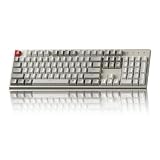
- The Keychron C2 (non-backlight version) is a 104 keys full size wired retro color keycaps mechanical keyboard made for Mac and Windows. Engineered to maximize your productivity with most popular full size layout with number pad.
- With a layout optimized for Mac, the C2 has all necessary multimedia and function keys (Num Lock works with Windows only), while compatible with Windows, and comes with a dedicated Siri or Cortana key. Extra keycaps for both Mac and Windows operating systems are included.
- Designed with reliability in mind, the C2 comes with USB Type-C wired connection with a braid cable, which ensures a constant power supply, and best to fit home and light gaming. Inclined bottom frame and 2 level adjustable feet (6˚ & 9˚) makes the C2 more comfortable to type.
- The pre-installed tactile Keychron switch providing unrivaled tactile responsiveness with up to 50 million keystroke durable lifespan.
- Outfitted the C2 Non-Backlight version with retro-inspired color scheme looks as good in the office as it does in the game room.
Benchmark Results and Why They Need Context
Cursor’s headline claim for Composer 2 is that it outperforms Claude Opus 4.6 on selected coding-agent evaluations while still landing behind GPT-5.4. That positioning matters because Claude Opus has been a common high-end choice for complex refactors, multi-file , and careful code review, while GPT-5.4 is being treated as the current ceiling in several agentic software-engineering tests. If Composer 2 is genuinely ahead of Opus in Cursor’s workflows, it gives Cursor a stronger native model story rather than relying only on third-party frontier models inside the editor.
The main caveat is that coding benchmarks are increasingly sensitive to how the agent is wired, not just how smart the base model is. A model running inside Cursor can benefit from repository indexing, editor state, terminal access, file search, retrieval, and tool-use scaffolding. Those pieces can dramatically affect success rates on tasks such as fixing bugs across mulle files, adding tests, or completing issue-style prompts. A benchmark result may therefore measure the full product loop as much as the raw model. That is useful for developers choosing a tool, but it is not the same as a clean model-to-model comparison.
The Tool Desk
Outbyte Driver Updater FREEFix the driver behind crashes, sound loss and screen glitchesFind Drivers →Outbyte PC Repair FREERepair Windows errors before they cause bigger problemsFix Now →What to check before reading too much into the leaderboard
- Task mix: Small algorithm questions, real GitHub issues, UI changes, migrations, and test repair all stress different abilities.
- Agent setup: Access to search, shell commands, linters, test runners, and previous context can change outcomes substantially.
- Scoring method: Pass/fail unit tests are cleaner than subjective review, but they can still miss code quality, maintainability, and security issues.
- Token and time limits: A slower or more expensive model may solve harder tasks if allowed more iterations, while a cheaper model may win on throughput.
- Prompt contamination: Public benchmark tasks can leak into training data or optimization loops, making repeated benchmark wins less meaningful.
For teams evaluating Composer 2, the practical test is not whether it sits above Claude Opus 4.6 on a chart. The better question is whether it completes the work your team actually delegates to an agent. That includes making changes in a large internal codebase, following house style, preserving architecture boundaries, writing useful tests, and stopping before it causes damage. Developers should run side-by-side trials on real tickets: one bug fix, one feature addition, one refactor, and one test-improvement task. Measure accepted pull requests, review comments, regressions, latency, and cost per successful change.
Reported benchmark gaps also need to be weighed against availability and pricing. If Composer 2 is bundled into Cursor plans or priced more aggressively than premium frontier options, a slightly lower score than GPT-5.4 may still be attractive for everyday coding. Conversely, for high-risk changes, security-sensitive code, or deep architectural work, teams may still route tasks to the strongest available model even if it is slower or more expensive. The next phase of the coding-agent race will likely be less about single leaderboard numbers and more about reliable end-to-end performance: planning, editing, testing, debugging, and producing changes that human reviewers can merge with confidence.
What This Means for Developers Using Cursor
For developers already working inside Cursor, Composer 2 makes the editor feel less like a chat sidebar and more like an active coding partner that can plan, edit, and iterate across a project with fewer handoffs. The practical benefit is not just faster completions; it is the ability to ask for a feature, refactor, migration, or bug fix and have the model operate across mulle files while preserving more of the surrounding context. If Composer 2’s reported gains hold up in day-to-day work, Cursor users should see the biggest lift on tasks that involve repository navigation, dependency awareness, test repair, and multi-step changes.
The comparison with Claude Opus 4.6 and GPT-5.4 matters because many developers now choose tools based on agent quality rather than editor features alone. A model that beats Claude Opus 4.6 in certain coding benchmarks gives Cursor a stronger default option for teams that want high-end agentic coding without constantly switching providers. At the same time, trailing GPT-5.4 means Composer 2 is not automatically the best choice for every hard problem. Developers should expect it to be highly competitive for common product engineering work, while still validating its output carefully on complex architecture changes, unfamiliar frameworks, security-sensitive code, and performance-critical paths.
Recommended Free Tools
Also popular on Amazon

- 【Dreamy Rainbow Gaming Keyboard】K521 Gaming Keyboard Adopts a Different LED Backlight Design, Upgraded on the Traditional LED Backlight Effect, Making the Light More Penetrating, Giving You a More Dazzling Visual Effect, Making Your Gaming Process More Enjoyable
- 【One Touch Opens & Visual Feast】The K521 Red Dragon Keyboard has a One-Touch on/off Lighting Button for Added Convenience. It also has a Three-Position Adjustable Breathing Mode and a Four-Position Adjustable Brightness Lighting Mode
- 【Mechanical Feeling & Fast Tapping】The PC Keyboard Keys are Designed for Mechanical Feeling, Giving You a Better Feel During Use and the Ability to Trigger Keys Quickly, Allowing You to Win All Your Games
- 【19 Keys Anti-Ghosting Keyboard】Anti-Ghosting Ensures Every Button Can Be Triggered. This Allows You to Trigger Key Combinations In The Game Accurately, And Each Skill Can Be Accurately Released to Increase Your Winning Rate. Redragon K521 Will Be Your Perfect Partner
- 【12 Multimedia Combination Keys】The K521 Wired Gaming Keyboard is Equipped with 12 Multimedia Keys That Can Greatly Enhance Your Gaming/Office Efficiency and Make It More Convenient to Use
Where Cursor users may notice the difference
- Longer coding sessions: Composer 2 should be more useful when a task requires several rounds of edits, test runs, and corrections rather than a single prompt.
- Repository-wide changes: Refactors that touch routes, components, database layers, and tests may require less manual stitching between files.
- Faster prototyping: Developers can move from issue description to a working first pass more quickly, especially for well-scoped features.
- Lower context switching: Keeping planning, editing, and review inside Cursor can reduce the need to copy code into external chat tools.
Teams using Cursor should treat Composer 2 as a productivity upgrade, not a replacement for engineering judgment. The safest workflow is to give the model narrow objectives, review diffs file by file, run the full test suite, and ask follow-up questions when the generated approach looks too broad. For larger changes, developers may get better results by asking Composer 2 to first inspect the codebase and propose a plan before allowing it to edit. That pattern helps expose incorrect assumptions early and keeps the agent from making sweeping changes based on incomplete context.
Availability and pricing will also shape how much impact Composer 2 has in real teams. If access is bundled into existing Cursor plans or offered as a selectable model inside the editor, adoption can be immediate for individuals and small teams. If usage is metered, rate-limited, or restricted to higher tiers, engineering managers will need to weigh its gains against model costs and compare it with external options such as GPT-5.4-powered tools or Claude-based workflows. The next thing to watch is whether Cursor can pair model improvements with stronger agent controls: clearer plans, safer automated edits, better test integration, and more reliable rollback. In the coding-agent race, the winning experience will be the one that turns benchmark strength into dependable, reviewable changes in real repositories.
Independent reader supportYour contribution helps us test, update, and keep practical guides available for everyone.The Bigger AI Coding Model Race
Composer 2 lands in a market that is moving from general-purpose chatbots toward specialized coding agents that can read a repository, plan changes, edit mulle files, run tests, and recover from errors without constant prompting. Cursor is no longer competing only on editor design or autocomplete quality; it is competing on the intelligence, latency, tool use, and reliability of the model sitting inside the development loop. That puts Composer 2 in direct comparison with frontier systems such as Claude Opus 4.6 and GPT-5.4, but also with agentic coding products from GitHub, Google, JetBrains, Cognition, and open-source model providers.
The strategic shift is clear: coding assistants are becoming execution environments. A strong model is expected to understand large codebases, preserve architectural patterns, make safe refactors, follow project conventions, and produce changes that pass real tests. Leaderboard scores still matter, but the race is increasingly about end-to-end productivity inside messy repositories. A model that is slightly weaker on a synthetic benchmark may still be more useful if it is faster, cheaper, better integrated with the editor, or less prone to over-editing files.
What’s actually slowing this PC down?
Pick the symptom - the matching free tool is one click away.
Where the competition is heading
- Native agent workflows: Vendors are pushing beyond chat panels toward background agents that can take tickets, open pull requests, and iterate after CI failures.
- Repository-scale context: The next advantage will come from models that can reason over large projects without losing track of dependencies, tests, build systems, and historical decisions.
- Lower latency: Developers will favor models that feel interactive during editing, especially for multi-file changes and test-driven loops.
- Cost control: Teams will compare subscription tiers, usage limits, premium-model access, and whether expensive reasoning calls are reserved for complex tasks.
- Trust and governance: Enterprises will care about data handling, audit trails, permission boundaries, and controls that prevent agents from making risky changes.
Composer 2’s reported edge over Claude Opus 4.6 gives Cursor a stronger story: it can claim that its own model is not just a wrapper around another frontier provider, but a serious coding engine built for the Cursor workflow. That matters commercially because model ownership can improve margins, reduce dependency on third-party rate limits, and let Cursor tune behavior for its editor. If Composer 2 is faster or more tightly optimized for common coding tasks, it may also help Cursor keep users inside its ecosystem rather than sending them to standalone chat tools or competing IDE agents.
GPT-5.4 remaining ahead in reported performance also shows the ceiling is still rising. OpenAI, Anthropic, Cursor, and other labs are likely to trade wins across different evaluations: bug fixing, long-horizon tasks, frontend generation, code review, test creation, and security remediation. Developers should expect a period where the “best” coding model changes by task, language, repository size, and budget. The most practical approach is to test models on real internal work: a flaky test, an overdue refactor, a dependency migration, or a small feature with clear acceptance criteria.
Also popular on Amazon

- Tactile Quiet mechanical key switches with a satisfying tactile bump you feel - for precise feedback, reactive key reset, and less noise so your typing doesn't disturb those around you
- Low-profile keys, more comfort: A keyboard layout designed for effortless precision, with a full-size form factor and low-profile mechanical switches for better ergonomics
- Smart illumination: Backlit keys light up the moment your hands approach the cordless keyboard and automatically adjust to suit changing lighting conditions
- Faster workflow, more customization: Customize Fn keys, assign backlighting effects, enable Flow cross-computer, multi-device control, and more in the improved Logi Options+ (1)
- Multi-device, multi-OS: Pair MX Mechanical Bluetooth wireless keyboard with up to 3 devices on nearly any operating system via Bluetooth Low Energy or included Logi Bolt receiver(2)
The next phase of the coding-agent race will be less about a single benchmark headline and more about dependable autonomy. The winning tools will not simply generate impressive diffs; they will know when to ask for clarification, when to run tests, when to stop, and how to explain changes in a way reviewers can trust. Composer 2 raises Cursor’s position in that race, but the gap between model demos and daily engineering value will remain the measure that matters most.
Frequently Asked Questions
What is Cursor Composer 2?
Composer 2 is Cursor’s new coding-focused AI model built for agentic software development inside the Cursor editor. It is designed to plan changes, edit across mulle files, follow project context, and help developers move from prompt to working code with less manual back-and-forth.
Free tools Windows power users keep installed
One-click scans. No signup required.
How does Composer 2 compare with Claude Opus 4.6 and GPT-5.4?
Cursor says Composer 2 outperforms Claude Opus 4.6 on its reported coding benchmarks, but it still does not match GPT-5.4. That makes it a serious option for Cursor users, especially if its speed, integration, or cost are favorable, but not necessarily the strongest general coding model in every scenario.
Can developers use Composer 2 outside Cursor?
Availability appears centered on the Cursor product, so developers should expect the model to be accessed through Cursor’s editor and agent workflows rather than as a standalone public API unless Cursor announces otherwise. Teams that already use Cursor will likely get the most immediate benefit because the model is tuned for that environment.
Should I switch from Claude or GPT-5.4 to Composer 2 for coding work?
It depends on your stack, workflow, and tolerance for agentic changes across a codebase. Composer 2 may be appealing if you want tighter Cursor integration and strong coding-agent performance, while GPT-5.4 may still be preferable for the hardest coding tasks if its lead holds in your own testing.
How seriously should I take the benchmark claims?
Benchmarks are useful signals, but they rarely capture every real development task, such as maintaining legacy code, debugging flaky tests, or making product-specific architectural decisions. Developers should test Composer 2 on representative issues from their own repositories before making it the default model for work.
Do these 3 things before closing this tab:
1Fix the driver behind crashes, sound loss and screen glitches2Clear out junk files and repair common Windows errors3Scan for outdated or missing drivers - takes under a minuteBottom Line
Composer 2 shows that Cursor is serious about building models tuned for real software work, not just wrapping third-party AI inside an editor. If its reported edge over Claude Opus 4.6 holds up in day-to-day use, developers may see faster iteration, better agentic coding workflows, and fewer reasons to leave the Cursor environment.
That said, GPT-5.4 still appears to set the pace at the top end, and benchmarks only tell part of the story. The next step is to test Composer 2 on your own codebase, watch how pricing and availability evolve, and track whether Cursor can keep narrowing the gap in reliability, speed, and complex multi-file tasks.

