Do these 3 things before closing this tab:
1Scan for outdated or missing drivers - takes under a minute2Repair Windows errors before they cause bigger problems3Fix the driver behind crashes, sound loss and screen glitchesSome links on this page are affiliate links: if you buy through them we may earn a commission, at no extra cost to you.
TIDAL is the clearest option you can use immediately to avoid identified AI-generated recordings: its Settings control can prevent AI-labeled tracks from playing and removes them from refreshed personalized recommendations. Deezer is the strongest long-term match because it announced a full catalog-exclusion toggle, but its global rollout was scheduled to finish by the end of 2026. Qobuz is a good choice if you mainly want human-curated discovery, while Spotify, YouTube Music and Apple Music currently emphasize labels, credits or spam reduction rather than a guaranteed listener-controlled block.
The distinction matters. “Avoiding AI music” can mean blocking playback, removing tracks from recommendations, or simply seeing a disclosure before listening. No service can identify every partially AI-created recording perfectly, so the best choice depends on how strict your filter must be and where you live.
As an Amazon Associate I earn from qualifying purchases.
The Tool Desk
Outbyte PC Repair FREEClear out junk files and repair common Windows errorsFree Scan →Outbyte Driver Updater FREEFix the driver behind crashes, sound loss and screen glitchesFind Drivers →Which music streaming services offer the strongest AI-music controls?
The table separates hard playback blocking from recommendation controls and disclosure. A service may be strong on one axis without offering the others.
| Service | Hard playback block | Personalized recommendation control | Labels and disclosure | Availability and limits |
|---|---|---|---|---|
| Deezer | Announced toggle to exclude AI-generated music from the catalog | Exclusion is intended to remove AI music from the streaming experience | AI tagging system launched in June 2025 | Global rollout announced for completion before the end of 2026; availability can depend on rollout timing |
| TIDAL | Yes, for AI-labeled recordings: turn off the setting and those recordings will not play | Removed from refreshed personalized recommendations when the setting is off | Wholly AI-generated recordings are labeled | Identification is best-efforts and can produce false positives or false negatives |
| Qobuz | No universal listener-facing block documented | Identified AI content is excluded from algorithmic recommendations | Visible badge; in-app tag announced in September 2026 | Human editorial teams guide selections, releases, playlists and reviews; partial AI can be difficult to identify |
| Spotify | No universal listener-controlled AI-song block described | Spam filter can stop tracks using spam tactics from being recommended; AI Persona profiles are excluded from recommendations by default | AI credits and AI Persona badges | Reported removal of more than 75 million spammy tracks in the prior 12 months; spam controls are not the same as an AI-only filter |
| YouTube Music | No blocking setting described | No AI-exclusion control described | Player labels for songs created primarily with generative AI | Announcement dated October 14, 2026; uses partner declarations and detection tools |
| Apple Music | No listener-facing exclusion control described | No AI-removal control described | Transparency Tags can identify AI involvement in artwork, tracks, compositions and music videos | Coverage depends on labels and distributors submitting accurate metadata |
On the evidence available in October 2026, choose TIDAL for a documented setting you can use now, watch for Deezer’s rollout if you want the broadest exclusion, and choose Qobuz when curated human discovery is more important than an absolute block.
#1 Best Overall

- 【64GB BUILT-IN LARGE STORAGE CAPACITY】Different from other large memory MP3 players on the market, the AGPTEK M3 boasts an impressive 64GB of internal storage, can expandable 128GB memory card (total up to 192G). [Other brands have no built-in memory and can only be used with TF card.]【Tip: The file size of a single transfer should not exceed 3GB to ensure the transfer speed and stability.】
- 【Bluetooth 5.3 & Automatic Reconnection】AGPTEK M3 MP3 music player adopts Bluetooth 5.3 technology, more stable connection, better compatibility, and lower consumption. You can pair the Bluetooth MP3 Player with wireless headphones or a Bluetooth speaker, automatically connects to the last Bluetooth device it was connected to, as soon as it is activated.
- 【HiFi Lossless Sound & Sports Partner】 With a professional audio decoding chip and smart noise reduction chip, AGPTEK MP3 player brings you original lossless music. With breakpoint resume function, perfect for doing sports, Yoga, exercise, running, travel, etc. Supports music formats like MP3/APE/FLAC/WMA/WAV/AAC [Note It does not directly support Audible, Apple music and iTunes.]
- 【Multi-function & Long battery life】 M3 MP3 player with Music Play, Video, Recording, Radio, Pictures, e-Books, Pedometer, A-B repeat, etc. Built-in 500mAh battery, it only takes 2.5 hours to fully charge and enjoy long hours of music. Perfect solution to replace mobile phone music, save mobile phone power. (To save power, the player will automatically power off after 5 minute of inactivity. You can turn it off in the settings.)
- 【 2.4'' SCREEN & LINE-IN FUNCTION】Features a 2.4-inch TFT color screen, bringing a clear and beautiful display. Metal middle frame with ABS plastic back shell,the size is approximately 4.4 inches × 2.06 inches × 0.39 inches, Weight: approximately 3.6 oz. And it supports Line-in recording and playback capabilities. Use a LINE IN cable to record from two MP3 players or connect with other devices for recording or play music.
What does “avoid AI-generated songs” actually mean?
These are three different goals, and a service can satisfy one without satisfying the others.
1. Block playback
A playback block prevents a classified track from starting when you select it or encounter it in a playlist. This is the strictest outcome, but it only works for recordings the service has identified and classified.
2. Remove AI tracks from recommendations
Recommendation suppression keeps classified tracks out of refreshed mixes, radio stations and other personalized surfaces. It does not necessarily stop a track from playing if you search for it directly or open a playlist that contains it.
3. Show a disclosure
A label, badge or credit tells you that AI was used. Disclosure preserves access to the recording but lets you decide whether to skip it. It is useful when you want transparency rather than a blanket ban.
Before subscribing or changing services, decide which of these outcomes you require. A label-only service cannot deliver the same result as a playback filter, and a recommendation filter cannot guarantee that a manually selected track will be blocked.
Which service is best for completely blocking AI-generated music?
TIDAL is the strongest documented choice today; Deezer has announced the most comprehensive exclusion, subject to the timing of its rollout.
TIDAL: the clearest control available now
TIDAL’s AI Policy says wholly AI-generated recordings receive an AI label. Its Settings include a control to turn off AI-labeled recordings. When that control is off, TIDAL says the labeled recordings will not play and will be removed from refreshed personalized recommendations.
- Open TIDAL’s Settings.
- Find the control for AI-labeled recordings described in TIDAL’s AI Policy.
- Turn the control off.
- Refresh your personalized mixes or recommendations after changing the setting; TIDAL says the exclusion applies to refreshed recommendations.
- If you still encounter an unlabelled track you believe is wholly AI-generated, treat that as a detection limitation rather than proof that the setting failed.
The setting is not a promise that every AI-assisted or synthetic element will be detected. TIDAL describes identification as best-efforts and warns that false positives and false negatives can occur. Its policy concerns wholly AI-generated recordings, so a song with limited or undisclosed human intervention may not be handled the same way.
Deezer: the most ambitious exclusion, still tied to rollout
Deezer launched an AI tagging system in June 2025. The company reported that nearly one-fifth of daily uploads—18%, or more than 20,000 tracks—were 100% AI-generated at that time. In October 2026, Deezer announced a toggle that lets members exclude AI-generated music from the catalog and said the global rollout would be completed before the end of 2026.
That announcement makes Deezer the clearest match for someone who wants an all-service exclusion rather than recommendation cleanup alone. However, “announced for global rollout” is not the same as “visible in every account on October 25, 2026.” If you do not see the control, your account, app version or region may not yet have received it.
Recommended Free Tools
- Update the Deezer app or open the current web player.
- Check the playback, content or privacy settings for the AI-music exclusion toggle.
- Enable the exclusion if it is available on your account.
- Test a known AI-tagged recording only after the setting is enabled; an unavailable toggle indicates that rollout is still pending for you.
Deezer CEO Alexis Lanternier said the company was responding to user demand “to remove this content completely from their streaming experience on Deezer, and focus only on human creators.” The practical qualification is that the promise depends on Deezer’s tagging and detection coverage.
Rank #2

- No Setup, Just Play: Preloaded with Spotify, Spotify Kids, Amazon Music, Pandora, Deezer, TIDAL, and YouTube Music; save time and enjoy your favorite songs, audiobooks, and podcasts the moment you power on
- Hear Every Detail, Feel Every Note: HiBy Music preloaded for lossless playback; customizable modes adapt to your style; pure, uninterrupted sound keeps you immersed in music you love
- Open Stories, Dive In: Audible, Libby, and LibriVox preloaded; enjoy rich sound, free library books, and classic tales anytime for an easy, immersive storytelling experience
- Clearer Sound, Smoother Play: 12nm CPU powers stable performance; hardware-level FLAC/APE decoding reveals richer details in every track
- Stay Synced, Play Seamless: Android 14 with Google Play keeps apps updated automatically; your playlists, favorites, and subscriptions follow you across phone, tablet, and player
Which service is best for human-curated discovery rather than a hard block?
Qobuz is the strongest fit when you want editorial teams to keep identified AI content out of prominent discovery areas, even though it does not document a universal playback switch.
Qobuz: human editorial selection plus recommendation exclusion
Qobuz’s AI Charter says human teams guide its editorial selections, new releases, playlists and reviews. Identified AI-generated content receives a visible badge, is not highlighted in human editorial areas and is excluded from algorithmic recommendations. Qobuz also announced an in-app tag for identified AI-generated music in September 2026.
This approach reduces the chance that an AI-heavy catalog will dominate discovery surfaces. It does not stop you from finding a tagged recording yourself, and Qobuz does not document a universal listener-facing switch that blocks every identified AI track from playback.
Qobuz explicitly acknowledges that no reliable solution identifies all AI content with certainty, particularly when human intervention is partial. Choose it if the quality and provenance of editorial discovery matter more to you than a guaranteed technical block.
Spotify: useful anti-spam work, not an AI-only switch
Spotify announced a music-spam filter designed to identify spam tactics, tag tracks and stop them from being recommended. It reported removing more than 75 million spammy tracks during the previous 12 months. That can reduce low-quality mass uploads, but spam and AI generation are not identical categories: a human-made track can be spammy, and an AI-generated track might not trigger a spam rule.
Spotify also supports AI credits and announced AI Persona badges. Spotify says AI Personas will not be included in editorial or algorithmic recommendations by default. These signals improve identity and recommendation transparency, but the cited controls do not give listeners a universal “never play AI music” setting.
Which services mainly label AI involvement instead of blocking it?
YouTube Music and Apple Music are currently disclosure-oriented choices. They can help you make an informed skip decision, but neither service describes a catalog-wide listener exclusion control in the announced features.
What’s actually slowing this PC down?
Pick the symptom - the matching free tool is one click away.
YouTube Music: labels appear in the player
On October 14, 2026, YouTube Music announced that labels would appear directly in the player for songs created primarily with generative AI. The scope includes cases involving generated composition and generated vocals. YouTube combines declarations from partners with its own detection tools.
The player label answers “was generative AI substantially involved?” before or while you listen. The announcement does not describe a setting that automatically blocks labeled tracks or removes them from recommendations, so you must still skip them yourself.
Apple Music: supplier-submitted Transparency Tags
Apple’s Transparency Tags let labels and distributors identify AI involvement in artwork, tracks, compositions and music videos. This is broader than a single audio-generation label because it can describe different parts of a release.
The system depends on suppliers submitting metadata. Missing or inaccurate declarations can therefore leave coverage incomplete, and the described feature is a transparency mechanism rather than a listener-facing exclusion switch. Apple Music is a reasonable choice if you want provenance information while retaining access to the catalog.
Outdated Drivers Are Slowing You Down
One free scan finds every outdated or missing driver and matches the right update for your exact hardware.Free scan · exact hardware matchPC Slower Than It Used to Be?
A free scan shows the junk files, broken settings and background clutter dragging Windows down - then fixes them in one click.Free scan · Windows 10 & 11Rank #3
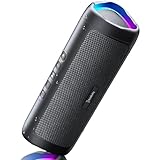
- [Immersive Sound & TWS Dual Pairing] Two full-range drivers deliver powerful, well-balanced sound with minimal distortion for music, movies and gaming. Pair two speakers together for true wireless stereo (TWS) - instant left and right channels that fill any room or backyard party.
- [IPX5 Waterproof & Built for Outdoors] Durable shell rated IPX5 against water splashes and spills - poolside, beach, shower steam and light rain are no problem (not for submersion). Rugged enough for camping, hiking and tailgates; just 13 oz to toss in any bag.
- [24-Hour Playtime & Bluetooth 5.3] Up to 24 hours per charge at 50% volume with lights off (expect less at full volume) plus a 100 ft wireless range on Bluetooth 5.3, stable through walls and outdoors. One press turns off the lights to stretch battery even further.
- [A Gift That Actually Gets Used] A dynamic LED light show pulses to the beat of the music and switches off with one button - party mode when you want it, invisible when you do not. A go-to white elephant gift, stocking stuffer, and Christmas or birthday gift for men, women, dads and moms.
- [Everything in the Box] 1 portable Bluetooth speaker, 1 Type-C charging cable, quick start guide and lifetime technical support. Built-in microphone for hands-free calls; 3.5mm AUX supported for non-Bluetooth devices (AUX cable not included).
How reliable are AI labels and filters?
No service in this comparison establishes perfect detection. Filtering works only when a recording is identified, classified and included in the relevant control, and each stage can fail.
Partially AI-created music is the hardest case
Most of the documented controls focus on wholly or primarily AI-generated recordings. A song may use a human-written melody with synthetic vocals, AI-assisted mastering, generated artwork or a mixture of human and machine contributions. Those cases may receive a different label—or no label—depending on the provider’s policy and the metadata supplied.
Metadata can be missing or wrong
Apple explicitly relies on labels and distributors to submit Transparency Tags, while YouTube combines partner declarations with its own tools. A missing declaration can leave a track unmarked; an inaccurate declaration can misdescribe it. TIDAL warns that its best-efforts identification can create both false negatives and false positives.
Rollouts and catalog refreshes matter
Deezer’s exclusion control was announced for global completion before the end of 2026, so availability can vary while the rollout is in progress. TIDAL’s recommendation removal applies to refreshed recommendations, not necessarily a list that was cached before you changed the setting. Qobuz’s September 2026 in-app tag is likewise a current feature rollout, not evidence that every historical upload has already been reviewed.
Free tools Windows power users keep installed
One-click scans. No signup required.
What to do when a suspicious track slips through
- Check whether the service displays an AI label, credit or badge on the track page.
- Use the service’s reporting or feedback option if the track appears misclassified.
- Refresh personalized recommendations after changing a filter.
- Keep in mind that an unlabelled track is not proof that no AI was used.
- If avoiding AI is essential, combine a playback filter with human-curated playlists rather than relying on one detection signal.
How should you choose among these services?
Use the decision table below to match the service to the outcome you actually want.
| Your priority | Best fit | Why | Main compromise |
|---|---|---|---|
| Stop identified AI recordings from playing now | TIDAL | Its Settings control blocks AI-labeled recordings and removes them from refreshed personalized recommendations | Best-efforts detection can miss tracks or flag some incorrectly |
| Exclude AI music across the catalog once available | Deezer | Announced a dedicated catalog-exclusion toggle | Global rollout was scheduled to finish before the end of 2026, so it may not yet be enabled for every account |
| Keep AI out of curated discovery | Qobuz | Human editorial teams guide selections, and identified AI content is excluded from algorithmic recommendations | No documented universal playback block |
| Reduce low-quality or manipulative uploads | Spotify | Spam filtering and recommendation suppression address mass-upload tactics | Spam controls do not equal a complete AI-music filter |
| See a warning before listening | YouTube Music | Player labels identify songs created primarily with generative AI | No blocking setting described |
| Inspect AI involvement across a release | Apple Music | Transparency Tags can cover artwork, tracks, compositions and videos | Supplier metadata can be incomplete or inaccurate |
What should you check before changing services?
Subscription prices were not stated consistently across the available announcements and vary by country, tax and plan. Check the current plan page for your market rather than relying on a price quoted elsewhere. The AI controls described here are policy and feature differences, not a claim that one service is universally cheaper.
- Confirm the control exists in your account. A company announcement may describe a rollout that has not reached every region or app build.
- Read the scope of the label. “Wholly AI-generated,” “primarily created with generative AI” and “AI involvement” are not interchangeable definitions.
- Decide whether recommendations are enough. If you manually search for tracks, recommendation suppression will not provide the same protection as playback blocking.
- Refresh after changing settings. Recommendation systems may continue showing older cached results until they rebuild.
- Keep editorial and technical controls separate. Human-curated playlists reduce exposure, but they cannot guarantee that every selected recording was made without AI.
Which service should you choose in October 2026?
Choose TIDAL if your immediate requirement is a documented setting that prevents AI-labeled recordings from playing. Choose Deezer if you want the most direct catalog-wide exclusion and the toggle has reached your account; its announced global rollout makes it the service to watch for the broadest control.
Choose Qobuz when human editorial judgment and less algorithmic exposure are your priorities. Choose Spotify, YouTube Music or Apple Music when labels, credits, spam reduction or supplier disclosures are useful but a guaranteed AI-only block is not essential. Whichever service you select, treat labels as evidence rather than an infallible boundary: partial AI use, missing metadata and detection errors mean that “AI-free” cannot currently be verified for every recording.
Frequently Asked Questions
Can I avoid AI-generated music completely on every streaming service?
No. The documented controls apply to recordings a service has identified, and providers acknowledge that detection can miss partially AI-created music or misclassify a track. Even with a playback toggle enabled, an unlabelled recording may still contain undisclosed AI involvement.
Do these filters remove AI-assisted human performances too?
Not necessarily. The clearest policies target recordings that are wholly or primarily AI-generated, while mixed human-and-AI productions can fall outside that definition. Check the wording of the individual service’s label before assuming that every AI-assisted track will be excluded.
Does TIDAL pay royalties on wholly AI-generated recordings?
TIDAL says wholly AI-generated recordings are not eligible for royalty attribution under its AI Policy. That royalty rule is separate from the listener setting that hides AI-labeled recordings.
Why might a track still appear after I turn off an AI setting?
Recommendation lists can be refreshed on a schedule, and a track may not have been identified or labeled yet. TIDAL specifically describes removal from refreshed personalized recommendations, so an older cached list may need time to update.
Quick Recap
Product prices and availability are accurate as of the date/time indicated and are subject to change. Any price and availability information displayed on Amazon at the time of purchase will apply.

