Outdated Drivers Are Slowing You Down
One free scan finds every outdated or missing driver and matches the right update for your exact hardware.Free scan · exact hardware matchWindows Errors? Fix Them Before They Spread
Repair common Windows errors and clear accumulated junk for a smoother, more stable PC - no reinstall needed.Free scan · no reinstallSome links on this page are affiliate links: if you buy through them we may earn a commission, at no extra cost to you.
Liquid cooling is worth the added complexity when AI racks push beyond what room air can remove economically; air cooling remains the simpler, lower-risk choice for lower-density or mixed workloads. The practical answer is often a hybrid: direct liquid cooling in dense GPU/HPC zones and optimized air cooling elsewhere. Rack power, climate, economizer hours, water policy, floor loading, maintenance capability and the pace of GPU upgrades determine the better design—not a universal efficiency label.
ASHRAE guidance places many AI environments above 50–100 kW per rack, a range where traditional room-air systems become difficult to scale. This guide compares air, rear-door heat exchangers, direct-to-chip loops and immersion across energy, water, capital cost, retrofit disruption, reliability, serviceability and future capacity.
As an Amazon Associate I earn from qualifying purchases.
The Tool Desk
Outbyte PC Repair FREERepair Windows errors before they cause bigger problemsFix Now →Outbyte Driver Updater FREEFix the driver behind crashes, sound loss and screen glitchesFind Drivers →Why does rack density decide between air and liquid cooling?
Rack density is the first sizing test because every watt consumed by a processor becomes heat that must be captured and rejected. As density rises, an air system must move more air through tighter spaces, increase fan speed, deliver colder supply air or add more cooling equipment. Those responses consume space and power and can create uneven temperatures.
ASHRAE advises adopting liquid or liquid-assisted architectures—rear-door heat exchangers, direct-to-chip systems or immersion—for AI clusters while retaining air for lower-density zones. Its guidance also says purpose-built AI data centers with compute densities routinely above 50–120 kW per rack and potential to trend higher should use a thermal control system (TCS). The thresholds are planning guidance, not a universal failure point: server design, allowable inlet temperature, containment and local climate can move the boundary.
#1 Best Overall

- Made of 6061 aluminum offering good-grade contact surface
- 6x7 Inch - The size of the plate well suited to collect the products.
- FABRIC BAG COVERED - The chilling pad includes a fabric bag for conveniently placing in Freezer or Refrigerator
- INSULATING WOODEN FEETS - The plate includes 4 wooden legs for keeping cool
- COLLECTION TOOL - It works well when collecting drips directly
What air can handle comfortably
- Enterprise servers, storage and networking with moderate heat output.
- Mixed halls where rack loads vary and equipment is replaced over time.
- Sites with generous white-space area, strong hot-aisle/cold-aisle containment and favorable economizer weather.
- Retrofits where adding facility liquid piping would require unacceptable shutdowns or structural work.
When liquid becomes the practical requirement
- GPU clusters whose rack power leaves insufficient airflow cross-section or fan capacity.
- Purpose-built halls designed for a density roadmap that exceeds current server generations.
- Facilities where reducing room airflow, chiller load or white-space footprint has greater value than minimizing first cost.
Because AI deployments often combine dense accelerator racks with ordinary servers, designing the entire building for one method can waste capacity. Zoning by heat density usually produces a more resilient expansion path.
How does air cooling work, and where does it reach its limits?
Air cooling uses server fans to draw air across heatsinks, then relies on room distribution and computer-room air handlers (CRAHs) or computer-room air conditioners (CRACs) to remove the heat. Containment keeps hot exhaust from mixing with cold supply air; controls then adjust airflow and cooling output as load changes.
Advantages of an air-cooled hall
- Simpler IT service: technicians can replace a server without opening a facility liquid circuit or managing coolant.
- Broad equipment compatibility: conventional servers, storage and network appliances arrive with air heatsinks and fans.
- Lower integration burden: no rack manifolds, coolant distribution units (CDUs), dripless couplings or leak-detection network are required at the IT rack.
- Flexible retrofit: containment, higher-capacity CRAHs, supply-air changes and airflow balancing can often be installed in stages.
Air-cooling penalties at high density
- Fan power: server and facility fans consume more electricity as resistance and required airflow rise.
- Space: ducts, raised-floor openings, containment clearances and larger air handlers consume capacity that could otherwise hold racks.
- Temperature uniformity: bypass air, recirculation and pressure differences can create hot spots even when average room temperature looks acceptable.
- Chiller dependence: colder supply air may be needed when economizer conditions are unavailable, increasing mechanical-cooling energy.
- Density ceiling: a rack can run out of practical airflow before the building runs out of total cooling tons.
Air is therefore not inefficient by definition. A well-contained hall with a mild climate and long economizer season can outperform a poorly designed liquid system. The question is whether the air path can meet the peak rack heat load without disproportionate fan, chiller and floor-space costs.
What liquid-cooling architectures are available for AI racks?
Liquid cooling transports heat through a fluid loop instead of asking room air to carry all of it. A facility loop feeds a CDU or heat-exchange assembly; an IT loop then carries heat from the rack to the CDU and back. Pumps, controls, filtration, fluid chemistry and leak detection become part of the operating system.
Rear-door heat exchangers
A rear-door heat exchanger replaces or supplements a server rack’s rear door. Hot exhaust air passes through a liquid-cooled coil before it returns to the room, removing a large share of rack heat while leaving the servers themselves air-cooled. This is a useful bridge for retrofits because it limits changes to the rack boundary, but it still depends on server fans and room airflow for heat transfer inside each chassis.
Direct-to-chip cooling
Cold plates attach directly to CPUs and GPUs, capturing heat at the silicon before it enters the room. A liquid-cooling cold plate must match the exact processor package, mounting pressure, tubing connections and approved coolant chemistry; a plate that fits mechanically may still be unsuitable for the server’s warranty or flow requirements. CDUs separate the IT loop from the facility loop, regulate temperature and pressure, and provide expansion, filtration and monitoring.
Direct-to-chip is generally the most scalable liquid option for dense AI and HPC because it targets the dominant heat sources while allowing some residual components—memory, drives and power supplies—to remain air-cooled. Those residual loads still need room airflow or supplemental cooling.
Immersion cooling
Immersion places complete servers, or selected components, in a dielectric fluid inside a tank. Heat capture can be excellent and the warm fluid can support heat reuse, but tanks, fluid handling, component compatibility and service procedures differ substantially from conventional racks. Technicians need a method to remove, drain or service hardware without contaminating the work area, and operators must plan for fluid aging and filtration.
Rank #2
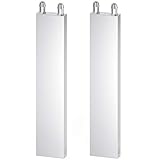
- ★ Water cooling block size: 40 x 200 x 12mm; Material: aluminum alloy.
- ★ The surface of the water cooling block is polished, the inner flow channel is extruded into an M-shaped flow channel, brazing parts into a whole.
- ★ The pagoda nozzle has a minimum outer diameter of 7mm and can be connected to an inner diameter of 7-8mm Water pipe.
- ★ This water cooling block applicable to computer CPU, graphics gpu heat, motherboard, xbox consoles cpu, graphics, semiconductor cooling piece, industrial inverter driver, laser head cooling and industrial control cabinet cooling.
- ★ Package Content: 2 x Aluminum Water Cooling Block.
Which method uses less energy?
Liquid cooling can reduce fan and room-air movement and may permit warmer facility water, improving heat rejection. The savings depend on climate, supply temperature, economizer operation, pump efficiency, CDU design and whether the heat-rejection plant is optimized for the new temperatures.
| Energy measure | What the evidence indicates | What determines the result |
|---|---|---|
| Server-level energy | IEA 4E estimates liquid cooling savings potential of about 8% in servers. | Fan speed, cold-plate pressure drop, pump power and the fraction of components cooled by liquid. |
| Facility-level energy | IEA 4E identifies potential savings of roughly 30–40% at facility level. | Chiller set points, free cooling, pump and fan controls, heat-rejection equipment and climate. |
| Overall site energy | IEA 4E places potential overall savings at approximately 10–21%. | IT load mix, operating temperatures, economizer hours and the efficiency of the existing air plant. |
| Economizer interaction | A 2026 modeled comparison in Energy found economizers cut air-system power by up to 40% under the modeled conditions. | Outdoor temperature and humidity, control strategy, filtration, allowable supply temperature and hours available for free cooling. |
| PUE comparison | The same modeled study reported annual PUE for immersion with a water-side economizer 0.078 lower than air cooling. | This is a modeled result, not a guaranteed field premium; tank losses, pumps and heat rejection must be included. |
Cooling can represent a large portion of the electrical budget. The California Energy Commission reported in 2024 that data centers account for approximately 2% of California electricity demand and that cooling uses approximately 40% of data-center electricity. Those figures describe a regional aggregate, not the expected performance of a particular design.
A fair comparison models the same IT load, inlet-temperature limits, redundancy level, climate file, maintenance state and operating schedule. Comparing a new liquid plant with an old, poorly contained air hall exaggerates liquid’s advantage; comparing liquid with a highly optimized air system may narrow it.
Which cooling method uses less water?
Water performance is not binary. The answer depends more on heat-rejection equipment and operating strategy than on whether the rack interface is air or liquid.
How air systems consume water
Air-cooled IT commonly relies on chillers or direct-expansion equipment. If the plant uses cooling towers or evaporative condensers, water is consumed through evaporation and blowdown. Air systems paired with dry coolers can use little operational water but may require more electricity or larger heat-rejection surfaces during hot weather. Adiabatic assistance uses water only during selected conditions, trading some consumption for lower peak energy.
How liquid systems consume water
A closed IT liquid loop does not continually consume water at the rack. Water may still be present in the facility loop, and the heat-rejection plant can be evaporative, dry or adiabatic. A dielectric immersion loop may avoid water at the tank while still exchanging heat through a water-cooled CDU or a dry cooler.
Recommended Free Tools
Evaluate water-use effectiveness (WUE) by site and season. Include makeup water, blowdown, treatment, wastewater, drought restrictions and the hours when adiabatic systems operate. A low-WUE liquid design is possible, but a liquid interface connected to an evaporative tower is not automatically water-free.
How much more expensive is liquid cooling?
No credible universal dollar premium applies to every AI data center. Liquid cost depends on whether the project is a greenfield build or retrofit, how much heat is liquid-cooled, the redundancy target, local labor and water prices, and the value of fitting more compute into the same floor area. IEA 4E identifies high initial cost, standardization and long-term reliability as barriers.
Rank #3

- High-Efficiency Cooling Design: Precision-engineered M-shaped flow channel maximizes heat exchange area, paired with vacuum aluminum brazing for leak-proof durability. Ideal for rapid heat dissipation in demanding applications.
- Universal Compatibility: Designed for CPUs, GPUs, motherboards, Xbox consoles, semiconductor refrigeration sheets, industrial inverters, and control cabinets. Perfect for gaming rigs or industrial setups.
- Robust Aluminum Construction: 40x40x12mm lightweight aluminum alloy block with polished contact surface for optimal heat absorption. Resists rust, corrosion, and wear for long-lasting performance.
- Easy Installation: Includes 10mm pagoda nozzles compatible with standard 7-9mm inner diameter tubing. Pre-drilled mounting holes simplify integration into existing cooling systems.
- Value-Packed Bundle: Includes 2 water cooling blocks. Ready to upgrade dual systems or keep a backup for maintenance.
Build a total-cost model that compares both capital and recurring costs:
| Cost category | Air-cooling scope | Liquid-cooling scope |
|---|---|---|
| Heat-rejection plant | CRAH/CRAC units, chillers, pumps, cooling towers or dry coolers, distribution and controls. | Existing plant plus temperature-compatible heat exchangers, CDUs, pumps, dry coolers or towers and controls. |
| IT-side hardware | Server fans, heatsinks, containment and airflow accessories. | Cold plates or immersion tanks, manifolds, quick disconnects, hoses, fluid, filtration and compatible servers. |
| Building work | Power and air-distribution upgrades, floor openings and containment. | Pipe routes, supports, floor-loading review, drains or spill containment, access clearances and commissioning zones. |
| Operations | Fan and chiller energy, filter replacement, airflow balancing and refrigerant or tower maintenance. | Pumping energy, coolant testing, filtration, leak detection, CDU service, fluid replacement and technician training. |
| Risk and capacity value | Potential stranded floor space or a density ceiling. | Downtime and leak exposure offset by additional rack capacity and lower room-air demand. |
Liquid may have a higher first cost but still produce a better project return if it avoids a building expansion, enables more GPUs per room or delays a substation and chiller upgrade. Conversely, a low-density hall may never recover the integration cost. Use an hourly model with the site’s weather, load forecast, energy tariff, water tariff and planned GPU generations instead of applying a percentage markup.
What are the main liquid-cooling retrofit risks?
Retrofit risk comes from integrating a new fluid system into equipment, floors, controls and work practices that were designed for air. A staged survey and commissioning plan reduces surprises.
- Inventory every rack and server. Record GPU and CPU models, allowable inlet temperatures, liquid-cooling support, residual air load, rack power, floor loading and warranty conditions.
- Map the heat path. Confirm where CDUs, manifolds, headers, pumps and heat exchangers can be installed, and verify that pipe routes do not block egress or maintenance access.
- Check structural and environmental limits. Tanks, full fluid mass and overhead piping can change floor loads. Provide spill containment, drainage strategy, humidity control and safe electrical separation.
- Specify fluid compatibility. Match coolant, seals, tubing, cold plates, quick disconnects and filtration to the server manufacturer’s approved materials and chemistry.
- Design detection and isolation. Use leak sensors, dripless connectors, automatic or manual isolation valves, pressure monitoring and clear alarm escalation. Define what happens to a rack when a sensor trips.
- Commission one zone first. Pressure-test and flush the loop, validate flow at the most remote rack, measure supply and return temperatures, and test failover before expanding.
- Train service teams. Write procedures for draining, replacing a cold plate, handling contaminated fluid, recovering a server and restarting after an isolation event.
- Protect uptime during cutover. Schedule parallel cooling, spare CDUs and temporary air capacity where possible. Do not remove an operating air path until the liquid loop has passed load and fault tests.
The most common failure is treating liquid as a plumbing add-on. It is a controls, maintenance and operational-discipline project as much as a mechanical one.
Which method is easier to operate and service?
| Operational concern | Air cooling | Liquid cooling |
|---|---|---|
| Routine inspection | Visual checks of fans, filters, containment, temperatures and airflow. | Those checks plus fluid quality, pressure, flow, CDU status, valves and leak sensors. |
| Hardware replacement | Familiar server swap with no facility-loop intervention. | Requires dripless disconnection or tank procedure and protection against fluid contamination. |
| Failure mode | Fan, CRAH, chiller or airflow imbalance can create hot spots. | Pump, CDU, control, connector or leak failure can affect a defined liquid zone. |
| Containment of incidents | Air faults generally stay within thermal and electrical systems. | Good isolation can limit a leak, but poor detection or response can damage equipment and interrupt service. |
| Staffing | Uses established data-center mechanical and IT skills. | Needs those skills plus fluid, controls and contamination-management expertise. |
Liquid can improve reliability when it removes a major airflow bottleneck and provides independent cooling zones. It can also introduce new common-mode risks if one CDU or header serves too many racks. Segment loops, provide bypass or spare capacity where justified, and monitor trends rather than waiting for a temperature alarm.
Can liquid cooling improve heat reuse?
Higher-temperature liquid returns are easier to connect to heat exchangers than low-grade room air. That can support building heating, domestic hot water or industrial processes when a nearby sink exists year-round. The business case depends on return temperature, distance, seasonal demand, heat-pump requirements and whether the data center can operate reliably when the reuse customer is unavailable.
Quick wins for a faster PC:
Clear out junk files and repair common Windows errorsFree Scan →Scan for outdated or missing drivers - takes under a minuteDriver Scan →Repair Windows errors before they cause bigger problemsFix Now →Air systems can also recover heat, but the lower temperature and diffuse collection path often require larger air-to-water heat exchangers or heat pumps. Do not count reuse revenue or avoided fuel until the receiving system, controls, metering and backup heat source are designed.
Independent reader supportYour contribution helps us test, update, and keep practical guides available for everyone.How should a data center scale for future GPU generations?
Design for the density roadmap rather than today’s nameplate. Reserve electrical capacity, pipe corridors, CDU locations, floor loading and control points even if the first deployment uses fewer liquid-cooled racks. A modular approach lets operators add CDUs and headers by zone instead of rebuilding the hall.
Rank #4

- Fast and Efficient Cooling Beer Wort: FERRODAY compact heat exchanger is designed for chilling your beer/ wort/water. The plate wort chiller's heat exchange design enables rapid wort cooling, quickly lowering temperature from boiling to fermentation level while preserving flavor integrity and enhancing brewing efficiency. Compared with the immersion chiller, our plate heat exchanger has 60 brazed plates and cools wort within minutes rather than several hours
- Durable Food-Grade Material: This wort chiller is made of 304 stainless steel plates with 99.9% copper brazed. Using home brew wort chiller can reduce oxidation in your homebrew heat exchange. With more plates for increased cooling surface area, this 60-plate chiller ensures ultra-fast wort chilling and superior brewing efficiency
- Easy to Use & Clean: Standard 1/2 NPT+ 3/4 NPT thread port, compatible with most home brewing equipment systems. The wort cooler can't be dissembled to clean. So firstly you can run 5 gallons of cleaning solution through this brewing plate chiller. Then running some clear water through the wort chiller. After done, dry the chiller before storage
- Can Work With Water Pump: The wort-in port of the chiller connect your mash tun, the wort-out port connect your fermenter, the wort can be transferred by a wort pump. One side of the water hose connects to your water tap and the other side connects to the water-in port of our plate chiller. Using another hose to connect the water-out port of the chiller to remove the warm water
- Multifunctional Usage: Using for cooling wort/beer/water. It's perfect to use in the lab, for beer brewing, or for any application that requires the exchange of heat between two fluids. Please install a filter for the wort to prevent clogging of the wort chiller. Cannot be used for viscous liquids. We are committed to offering you high-quality products as well as superior service! Please feel free to tell if any problems, We will do our best to provide you with technical support
- Use liquid-ready rows where future racks are expected to exceed the air strategy’s practical limit.
- Keep lower-density storage, management and general-purpose compute on optimized air.
- Specify rack and manifold standards that can accept multiple server vendors without forcing incompatible quick disconnects or fluid chemistries.
- Measure rack inlet temperature, liquid supply and return temperature, flow, pressure, fan power and facility energy so the next expansion is based on operating data.
Future GPU generations may raise heat flux faster than rack dimensions change. A facility that has only added larger CRAHs may run out of airflow and floor area before it runs out of electrical capacity; a liquid-ready backbone preserves more options.
When is a hybrid cooling design the best choice?
Hybrid cooling is usually the practical answer for mixed-load campuses. Direct-to-chip or rear-door systems handle dense AI/HPC rows, while air serves lower-density enterprise equipment. The boundary can be moved as workloads and server generations change.
Free tools Windows power users keep installed
One-click scans. No signup required.
Choose predominantly air when
- Rack loads are moderate and unlikely to cross the site’s airflow limit during the planning horizon.
- The facility has strong containment, ample white-space room and many economizer hours.
- Fast hardware swaps and a conventional service model matter more than maximum rack density.
- Water availability, floor loading or retrofit access makes liquid infrastructure impractical.
Choose predominantly liquid when
- Dense accelerator racks are the core workload and room airflow would require excessive fan or chiller power.
- New construction can integrate CDUs, headers, controls and heat rejection from the start.
- Additional compute per square meter has a clear financial value.
- Operations can support fluid testing, leak response and liquid-service procedures.
Use a hybrid plan when
- AI clusters will grow inside an existing mixed-use hall.
- Only some racks justify liquid today, but later GPU generations may expand that share.
- The site wants to preserve air compatibility for storage, networking and general-purpose servers.
What should an operator do before selecting a cooling method?
- Set the density forecast. List current and planned rack power, accelerator count, utilization profile and replacement cycle.
- Model the baseline air plant. Include fan, CRAH/CRAC, chiller, pump and heat-rejection energy at hourly weather conditions.
- Model liquid alternatives. Add CDU and pump power, residual room-air load, fluid maintenance, heat rejection and redundancy.
- Quantify water and wastewater. Separate closed-loop inventory from evaporative consumption and include drought or discharge limits.
- Price disruption. Include shutdown windows, temporary cooling, structural work, commissioning labor, training and downtime exposure.
- Value capacity. Credit only rack capacity that the electrical, network, software and operations teams can actually use.
- Pilot and measure. Instrument one representative zone, verify performance under peak load and use the results to set expansion standards.
The best design is the one that meets the density roadmap with acceptable energy, water, capital, service and uptime risk. For many AI campuses, that means liquid where heat flux is highest, air where it remains efficient, and a shared infrastructure plan that can shift the boundary over time.
Frequently Asked Questions
Can direct-to-chip cooling be added to existing servers?
Only when the server chassis, processor package, mounting hardware and manufacturer warranty support the required cold plates and plumbing. Some platforms offer conversion kits; others require factory-built liquid configurations, so verify compatibility before buying facility equipment.
What happens if a liquid-cooling loop loses flow?
Controls should alarm on pressure, flow and temperature changes and isolate the affected branch before silicon exceeds its limits. The operating procedure should define automatic throttling or shutdown, spare cooling capacity and how technicians restore the loop without exposing neighboring racks.
Do liquid-cooled racks still need room air conditioning?
Usually yes, because memory, storage, power supplies, voltage regulators and other components may remain air-cooled. The room system can be smaller, but it must remove the residual IT load, pump heat and any heat released during service.
Is immersion cooling suitable for a mixed-vendor data center?
It is harder to standardize across mixed vendors because tanks, dielectric fluids, seals, boards and service tooling must be compatible. Immersion is easier to deploy when a dedicated cluster has uniform hardware and a service process designed around the tanks.
Quick Recap
Product prices and availability are accurate as of the date/time indicated and are subject to change. Any price and availability information displayed on Amazon at the time of purchase will apply.

