What’s actually slowing this PC down?
Pick the symptom - the matching free tool is one click away.
Some links on this page are affiliate links: if you buy through them we may earn a commission, at no extra cost to you.
Yes—AI is beginning to make and carry out decisions in space, not just analyze mission data on Earth. Flight demonstrations in 2025–2026 have included satellite attitude control, event detection, rover route planning, image analysis and fault diagnosis. But “AI takes command” does not mean machines have replaced mission teams: people still set goals, validate risky plans and retain the final say when crew safety is at stake. The turning point is that uncrewed spacecraft are starting to act between ground commands—and, in some cases, to decide what is worth investigating.
Why do experts say this is a turning point?
Because onboard systems are moving from following prewritten instructions toward interpreting situations and choosing a response. Dr. Paul Sanjoy, identified by Futura-Sciences as a Rice University researcher, called it a shift “from missions controlled by humans to missions conceived by machines.” His formulation captures a real change in capability, but it should not be mistaken for proof that AI now runs space exploration broadly. No surveyed figure establishes what share of active spacecraft operate under onboard AI control.
| # | Preview | Product | Price | |
|---|---|---|---|---|
| 1 |
|
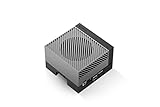
NVIDIA Jetson AGX Orin 64GB Developer Kit with Ethernet, USB, Display Port | $3,399.00 | Buy on Amazon |
| 2 |

|
Official Jetson AGX Orin 64GB Developer Kit 275 Tops, with 1TB SSD AI Embodied Intelligence... | $5,249.00 | Buy on Amazon |
As an Amazon Associate I earn from qualifying purchases.
The Tool Desk
Outbyte PC Repair FREERepair Windows errors before they cause bigger problemsFix Now →Outbyte Driver Updater FREEScan for outdated or missing drivers - takes under a minuteDriver Scan →Three changes help explain the phrase. First, a robot can become a cognitive teammate rather than a remote-controlled tool: it can perceive conditions, plan a route or flag an event. Second, uncrewed vehicles can take action without waiting for a round trip to Earth. Third, AI may help identify science targets or patterns that mission teams did not specify in advance. These capabilities are arriving at different levels of maturity; a successful demonstration in one function does not establish that a system can safely run an entire mission.
IEEE Spectrum’s 2026 reporting describes a growing interest in nondeterministic generative AI, systems whose behavior can depend on the context that led to a situation. Robert Ambrose, former chief of NASA’s Software, Robotics, and Simulation Division, warned: “Autonomy often does not have a deterministic outcome, which means that how you got into a certain situation changes the behavior.” That flexibility may help a spacecraft respond to unfamiliar conditions, but it complicates verification. IEEE Spectrum also cautioned that the technology remains far from trustworthy enough to hand over spacecraft control wholesale.
Popular on Amazon
- The NVIDIA Jetson AGX Orin 64GB Developer Kit makes it easy to get started with Jetson Orin. Compact size, lots of connectors, and up to 275 TOPS of AI performance make this developer kit perfect for prototyping advanced AI-powered robots and other autonomous machines.
- The developer kit includes a Jetson AGX Orin 64GB module, and can emulate all the Jetson Orin modules. It supports multiple concurrent AI application pipelines with the NVIDIA Ampere GPU architecture, next-generation deep learning and vision accelerators, high-speed IO and fast memory bandwidth. Now you can develop solutions using your largest and most complex AI models to solve problems such as natural language understanding, 3D perception, and multi-sensor fusion.
- Jetson runs the NVIDIA AI software stack, and use-case specific application frameworks are available, including Isaac for robotics, DeepStream for vision AI, and Riva for conversational AI. You can save significant time with NVIDIA Omniverse Replicator for synthetic data generation (SDG), and by using NVIDIA TAO toolkit to fine-tune pretrained AI models from the NGC catalog.
- Jetson ecosystem partners offer additional AI and system software, developer tools, and custom software development. They can also help with cameras and other sensors, as well as carrier boards and design services for your product.
- With the computing capability of more than 8 Jetson AGX Xavier systems in a developer kit that integrates the latest NVIDIA GPU technology with the world’s most advanced deep learning software stack, you’ll have the flexibility to create tomorrow’s AI solution as well as today’s.
Why can’t Earth control every decision?
Communication delay makes continuous ground control impractical as missions move farther away, while spacecraft must react on the timescale of the event in front of them. An onboard system can recognize a hazard or fault and respond before a human operator could receive the data, decide what to do and send a command back.
TechTimes reports about 1.3 seconds of one-way light time between Earth and the Moon, or a minimum round trip of about 2.6 seconds. Even that interval can matter during a fast maneuver. Cislunar space—the region around and between Earth and the Moon—is also about 1,728 times the volume of the geostationary belt, according to TechTimes, making constant close supervision a poor fit for a growing number of vehicles.
Windows Errors? Fix Them Before They Spread
Repair common Windows errors and clear accumulated junk for a smoother, more stable PC - no reinstall needed.Free scan · no reinstallCrashes, No Sound, or Screen Glitches?
Random freezes, missing sound and display glitches usually trace back to one bad driver. Find and replace yours safely.Free scan · under a minuteNavigation adds another complication: GPS does not cover cislunar space. GPS satellites orbit at approximately 12,550 miles (20,200 km), while geostationary orbit is around 22,236 miles (35,786 km); cislunar space extends beyond it. At Mars, the delay is much larger: the average Earth–Mars distance is about 140 million miles (225 million kilometers), and a round-trip communication delay can reach 44 minutes, according to Mars Daily and ICT&health. A rover cannot wait for Earth to approve every adjustment to its route.
That does not mean operators disappear. They can define mission constraints, upload objectives, monitor telemetry when a link is available and approve plans before execution. The important shift is from needing a human for every immediate choice to giving the spacecraft authority over a bounded set of choices.
What has AI already done in space?
The most persuasive evidence is a collection of distinct demonstrations, not one system that autonomously runs a spacecraft from launch to mission end. The examples below show different functions and different degrees of authority.
| System and status | Function | What happened | Human role |
|---|---|---|---|
| NASA MEDOS on the MMS mission; flight-verified | Event detection and instrument protection | Fused live telemetry, estimated confidence that an event was occurring, and selected a response. It detected a Van Allen radiation-belt passage missed by ground predictions and flagged a high-voltage stand-down. | Encoded expert knowledge guided responses; the system did not need large volumes of labeled training data. |
| InnoCube; on-orbit demonstration in October 2025 | Attitude control | A deep-reinforcement-learning controller trained in a high-fidelity simulator used reaction wheels to point the satellite at a target, without human input during the test pass. The test was repeated on later passes. | People trained and uploaded the controller; the satellite executed the bounded pointing task. |
| Perseverance; AI-planned drives in December 2025 | Rover route planning | JPL used Anthropic Claude models with HiRISE imagery and digital elevation models to generate waypoints. The rover drove 210 meters on December 8 and 246 meters on December 10. | Engineers checked commands in JPL’s digital twin before uplink. These were AI-planned routes, not unsupervised driving. |
| ISS Astrobee; NASA Technology Readiness Level 5 | Robot motion planning | A Stanford machine-learning warm-start planner was evaluated on 18 trajectories, each run with a cold start and an AI warm start. Somrita Banerjee reported the warm-start approach was 50 to 60% faster, especially in more challenging situations. | This was a control-planning demonstration, not a robot independently managing station operations. |
| Loft Orbital YAM-9; reported orbital vision-language demonstration in April 2026 | Image classification from natural-language queries | NASA JPL’s NAVI-Orbital harness used Google DeepMind’s Gemma 3 to classify imagery without a ground analyst making each classification. | The demonstration processed requests onboard; it did not establish that the satellite could independently define and execute an entire Earth-observation mission. |
| KAI BEE-1012; simulated-fault pilot in October 2026 | Satellite self-diagnosis | An onboard Mobilint neural processing unit analyzed a simulated fault, its cause and scope, and returned a countermeasure report. KAI said full autonomous-operation demonstrations were planned from December 2026. | The reported October event was a pilot using a simulated fault, not evidence that the satellite autonomously recovered from a real failure. |
| Google Project Suncatcher; prototype orbital TPU response in October 2026 | On-orbit model inference | Gemma 4 running on an orbital TPU generated a haiku during a Svalbard pass. The prototype has four TPUs, but uses only one at a time for about 20 minutes. | This was a technology demonstration, not a public cloud service or a spacecraft-control system. |
The Astrobee speed figure is from Banerjee’s account as reported by Interesting Engineering; it is a result for that planner and comparison, not a general measure of AI’s effect on spacecraft. NASA’s MEDOS demonstration is notable for a different reason: it used encoded subject-matter expertise to react to telemetry in real time, rather than relying on a large labeled training set. Together, the cases show that “AI in space” includes quite different approaches, from transparent rules to reinforcement learning and generative models.
Can AI fly a spacecraft without humans?
AI can already control a limited spacecraft function without a person issuing each immediate command, as InnoCube’s attitude-control demonstration showed. That is not the same as handing an AI unrestricted authority over a mission. In many current systems, people still train or configure the model, set limits, validate plans and decide which actions it may take.
A useful way to distinguish autonomy levels is to ask what authority the system actually has:
- Recommend: detect a possible event and advise operators, as in a diagnostic report.
- Plan, then wait for approval: generate a route or maneuver that people validate before it is sent to the spacecraft, as with the Perseverance drives.
- Decide and act within limits: execute a bounded response onboard, as in the InnoCube pointing test or MEDOS event response.
- Operate with no commands from Earth: a more ambitious level announced for future missions, such as AstroForge’s planned Autonomy-1 flight—not yet a completed demonstration.
These levels also depend on the job. A system may be permitted to point a satellite or protect an instrument but not to change the mission objective. The critical questions are what the software can command, what safety checks constrain it, and what happens when it encounters a condition outside its training or rules.
Is AI taking over space missions—and will it replace astronauts?
No. The current direction is greater autonomy for uncrewed systems, not the removal of people from space missions. Researchers and mission teams remain responsible for objectives, risk decisions and oversight; the machine takes on tasks where waiting for a human response is too slow or costly.
The crew-safety boundary remains especially important. Sanjoy’s account to Futura-Sciences says that on crewed missions, “the machine still recommends while humans decide.” A separate NASA and Google Public Sector project illustrates that distinction: a laboratory proof of concept used Physical Intelligence’s open-source Pi0 vision-language-action model to locate and move a medical bag. Google reported an initial 85 percent success rate. A human crew medical officer remains responsible for interpreting images and making treatment decisions. The work was in a lab, not a flown medical robot.
The demonstration also shows why a good result on a narrow task should not be read as readiness for general medical autonomy. Google reported fine-tuning the four-billion-parameter model on Cloud G4 in about 2.5 hours, and the team evaluated about 15 devices over two years for power, weight and volume. Those constraints matter in a spacecraft, where compute, electricity and physical space are limited. As distance and communication delay increase, AI may assist more; that does not make it a substitute astronaut or a qualified medical officer.
What spacecraft hardware is making this possible?
Onboard AI depends on compact edge computing that can process sensor data locally, under spacecraft constraints. Loft Orbital’s YAM-9, launched in November 2025, carries an NVIDIA Jetson AGX Orin module. A later Orbitworks satellite, launched October 1, 2026 as the first of a fifty-satellite program Loft describes as worth $1 billion, carries two Jetson AGX Orin modules. Loft says every satellite in the constellation will use NVIDIA accelerated computing and that it has flown more than twenty AI missions since March 2024.
The Orbitworks onboard software stack includes CUDA 12.6, TensorRT and JetPack 6.2.1. Loft says the satellite runs models including Mistral’s Ministral 3 in 3B and 8B sizes, alongside models for ship detection, cloud masking, wildfire and flood mapping, burn-scar analysis, super-resolution and scene description. These are company-reported program details, not a claim that every model or task has the same demonstrated capability. TechCrunch/Yahoo reported that Loft estimated 50 to 100 YAM-9-class satellites would be needed for real-time Earth coverage; at that time the company operated 12 spacecraft.
Free tools Windows power users keep installed
One-click scans. No signup required.
Hardware distinction: NVIDIA’s Jetson AGX Orin Developer Kit is a terrestrial development kit in the same product family, not a flight-qualified spacecraft module. NVIDIA’s 2026 marketplace listing gives it 275 TOPS, a 2048-core Ampere GPU with 64 Tensor Cores, a 15W–60W power range and a $3,499 price. Those developer-kit specifications should not be treated as the specifications or price of the hardware flying on a satellite.
Also popular on Amazon
- AGX Orin 64GB Development Kit makes it easy to get started with AGX Orin. Its compact size, rich interfaces, and AI performance of up to 275 TOPS make it ideal for building advanced AI robots and other autonomous machine prototypes.
- The development kit includes AGX Orin 64GB module and can emulate all Orin modules. It utilizes the Ampere GPU architecture, next-generation deep learning and vision accelerators, high-speed I/O, and fast memory bandwidth. You can leverage the largest and most complex AI models to develop solutions for problems such as natural language understanding, 3D perception, and multi-sensor fusion.
- Jetson runs AI software and provides application frameworks for specific use cases, such as Isaac for robotics, DeepStream for visual AI, and Riva for conversational AI. Using Omniverse Replicator for Synthetic Data Generation (SDG) can save you significant time; while fine-tuning pre-trained AI models from the NGC catalog using the TAO toolkit can further enhance your results.
- Yahboom offers four kits for users to choose from. The AIlarge model voice module utilizes examples of AI large models and multimodal models; it provides 1TB/2TB SSDs with pre-flashed driver image files; and an 8MP USB industrial camera for image processing.
- It offers various online and offline mainstream AI large model development materials. The system is pre-configured with AI vision examples, ROS case studies, and AI large models. It supports offline/online deployment of large models for voice interaction, real-time video analysis, and visual positioning, helping you quickly get started with localized AI agent development.
Google’s Project Suncatcher is testing a different route: a prototype with four data-center-class TPUs and power use of up to 1 kilowatt, limited to one TPU at a time for approximately 20 minutes. Its first reported response—a haiku generated by Gemma 4 during a Svalbard pass—was a demonstration of orbital computing, not evidence of an operational AI satellite service. Radiation-induced bit flips remain an explicit next test, and two satellites linked optically are planned for 2027. Developers cannot deploy applications to the prototype as if it were a public cloud product.
Independent reader supportYour contribution helps us test, update, and keep practical guides available for everyone.Why is the Air Force asking AI to fly to the Moon?
The US Air Force is seeking commercial software that can become flight-ready quickly and operate in cislunar space without a real-time uplink. TechTimes reported that an Air Force request for information was posted to SAM.gov on November 9, 2026, with white papers due December 4. It seeks capabilities including autonomous orbital maneuvering, fault detection and recovery, trajectory optimization in the Earth–Moon three-body problem, and sensor management. The requested integration-to-flight-ready window is 90 days after contract award.
Maj. Gen. Stephen Purdy, the Air Force senior advisor for space acquisition, said: “This is not a four- or five-year science project. This is about getting capability out soon.” This is a procurement request, not proof that a particular AI has already been selected or deployed. The RFI details here come from TechTimes reporting; the primary SAM.gov document was not available in the available data.
Do these 3 things before closing this tab:
1Clear out junk files and repair common Windows errors2Fix the driver behind crashes, sound loss and screen glitches3Repair Windows errors before they cause bigger problemsThe broader military interest includes cybersecurity as well as navigation. At a November 2026 briefing, Mike Dean, director of Command, Control and Communications Infrastructure for the Pentagon CIO, said adversaries are using machine learning to find vulnerabilities, coordinate cyberattacks and generate synthetic telemetry that could deceive ground controllers. He described efforts to run containerized software and AI-driven cyber defense on satellite payloads, including sending a cryptographically verified patch to orbit within hours. The operational idea is that a spacecraft should be able to detect or contain a problem even when a ground connection is unavailable. It also creates a need to make onboard updates trustworthy and prevent compromised autonomy from becoming a new attack path.
What are the risks and limits of autonomous spacecraft?
Autonomy changes the failure problem rather than eliminating it. A spacecraft may have to act on incomplete sensor data; a model may interpret an unfamiliar event incorrectly; or a sequence of locally reasonable decisions may lead away from mission goals. The more capable and nondeterministic a system becomes, the harder it can be to predict every response in advance. Safe deployment therefore depends on bounded authority, validated operating envelopes, independent checks and a way to understand why a system acted.
Hardware limits are part of the safety case. Space computers must work with constrained power and compute, while radiation can corrupt electronics and models. Google’s orbital TPU prototype explicitly has bit-flip testing ahead. Robot behavior also cannot simply be imported from Earth: Icarus Robotics’ Joy free-flying cargo robot completed zero-gravity testing in Canada ahead of a planned ISS deployment, initially using teleoperation. Its CTO Jamie Palmer warned that Earth-trained physical models may fail in zero gravity because they expect dropped objects to fall. A terrestrial robot model is not automatically a space-ready robot model.
Some announced capabilities are still plans, not flight results. AstroForge says its Autonomy-1 mission, booked for early 2027, will use its Solo transformer above deterministic flight software and attempt its objectives after separation without commands from Earth; an earlier flight is intended to run Solo in shadow mode. Those are company plans, not a completed autonomous mission. China’s ADASPACE and Shanghai Jiao Tong University Space Computing Joint Laboratory have also claimed a demonstration in which a satellite network processes voice commands and directs a ground robot; the claim is single-source and should be treated as a company/research demonstration, not independently established operational capability.
Recommended Free Tools
Is space law ready for AI-controlled military action?
Not according to the governance picture in the available reporting. The 1967 Outer Space Treaty prohibits placing weapons of mass destruction in orbit or on celestial bodies, but it does not address autonomous military action. The research identified no agreed rules of engagement for cislunar space. As governments pursue autonomous maneuvering and cyber defense beyond reliable real-time ground control, the question is not only whether the software works; it is who authorizes an action, how responsibility is assigned and what limits apply.
TechTimes has also reported on planned cislunar programs, including up to five seed satellites by 2029 and an initial operational capability target of 2031, plus a reported $30 million Lunar Prime effort. Those details are secondary reporting, and launch schedules can change: Oracle-M’s December 2026 target was under review, while Oracle-Prime was described as targeting 2027. The broader point is more solid than any single schedule: military and commercial organizations are treating autonomy as operational infrastructure, while the rules governing autonomous action remain unsettled.
What does “AI takes command in space” really mean?
It means that onboard systems are beginning to perceive events, recommend or plan responses, and execute selected actions without waiting for a human command to arrive from Earth. The practical change is strongest for uncrewed spacecraft operating where communication delay, mission scale or fast-moving conditions make ground-in-the-loop control too slow. It does not mean that AI has taken over space exploration, that every satellite is AI-controlled, or that humans have ceded authority over crew safety.
The turning point is therefore both technical and institutional. Demonstrations now range from event detection and attitude control to AI-assisted science planning, while defense requests and commercial constellation plans seek more autonomy at scale. The next test is whether these systems can remain dependable, explainable and properly constrained when the situation is not the one engineers anticipated.
Frequently Asked Questions
Does a satellite need GPS to navigate in cislunar space?
No. GPS satellites serve Earth’s near-space region and do not provide ordinary coverage throughout cislunar space. Spacecraft operating there need other navigation methods, such as onboard sensors and mission-specific tracking or ranging systems.
Can an AI model be updated after a satellite launches?
In principle, software can be sent to a spacecraft over a communications link, but the update must be authenticated and safely installed. Pentagon officials have described interest in cryptographically verified patches; that is a security requirement, not a guarantee that every satellite can accept updates quickly or without risk.
Why can’t an Earth-trained robot simply work in zero gravity?
Its learned expectations may assume gravity, friction and objects falling when released. A robot or model intended for space needs evaluation under the relevant environment and hardware constraints rather than relying on terrestrial performance alone.
Is Google’s orbital TPU available for developers to use?
No. Project Suncatcher is a prototype technology demonstration, not a public cloud or deployment service. The reported orbital model response shows that inference was possible during a pass, not that outside developers can submit workloads to the satellite.

