Recommended Free Tools
Some links on this page are affiliate links: if you buy through them we may earn a commission, at no extra cost to you.
AI GPUs are difficult to obtain because the bottleneck is a complete, powered data-center system—not just a processor. Accelerator supply, high-bandwidth memory, advanced packaging, optical links, liquid cooling, electricity, buildings and financing all have to arrive together. NVIDIA’s filing for the quarter ended July 26, 2026, reports supply constraints for Blackwell and continued heavy demand, while IDC says power and facility limits can leave one region short even when another has unused capacity. If you need compute now, start with a capacity reservation through a certified cloud partner, widen acceptable GPU generations or regions, and move suitable inference to open-weight or private infrastructure. None of these guarantees a date, price or model-quality match; validate the full configuration against your workload.
Why are AI GPUs so hard to get?
An AI deployment is a chain of dependent resources. A vendor may have accelerator chips but not enough HBM memory, advanced packaging, optical networking, liquid-cooling equipment, powered racks or a finished data-center shell. Conversely, a cloud operator may have installed GPUs but lack the power, network path or regional availability your contract requires. A shortage at any link delays usable capacity.
As an Amazon Associate I earn from qualifying purchases.
Chip and system constraints
NVIDIA’s Form 10-Q for the quarter ended July 26, 2026 (filed August 26, 2026) says Blackwell accounted for most system shipments, Vera Rubin production shipments began in the third quarter of fiscal 2027, and the company was experiencing certain supply constraints while increasing supply and capacity commitments. That disclosure describes one supplier’s position; it does not mean every GPU model or cloud region is sold out.
IDC identifies bottlenecks around the accelerator die: high-bandwidth memory (HBM), other memory, TSMC CoWoS system integration and advanced packaging, ABF substrates, optical components, power parts, liquid cooling and basic data-center power equipment. A GPU allocation therefore may not translate into a rack that can be delivered and operated.
#1 Best Overall

- System Compatibility Note: This 2-slot card measures 271 x 112 x 39 mm and requires a single 12V-2x6-pin power connector. Please verify chassis and PSU compatibility before purchase.
- Dedicated Support: Please contact us directly through Amazon for any product questions or assistance you may require.
- Professional Intel Arc Pro B70 GPU: Built on the Intel Xe2-HPG architecture, it features 32 Xe cores and 256 XMX engines, designed to accelerate AI, rendering, and complex visualization workloads.
- Massive 32GB GDDR6 VRAM: Equipped with 32GB of high-speed GDDR6 memory on a 256-bit bus, running at 19 Gbps, which allows for handling large AI models and complex datasets locally.
- High-Performance Engine Clock: Delivers an engine clock of 2540 MHz, providing the compute power needed for demanding professional applications and AI inference.
Power, buildings and capital
NVIDIA says land, power, a data-center shell and capital are crucial to customers’ ability to build complete AI infrastructure. Expanding those resources is a complex, multi-year process. IDC similarly reports that grid access and facility capacity constrain near-term growth, with shortages in one location coexisting with underused capacity elsewhere. “No GPUs” can therefore mean no chips, no powered rack, no suitable region or no financing for the deployment you need.
How large is the capacity problem?
The following IDC figures are 2026 projections or survey results, not guaranteed outcomes for an individual provider. Keep the date and attribution attached when using them.
| Measure | IDC figure | What it indicates |
|---|---|---|
| Service-provider AI infrastructure procurement revenue | $401 billion in 2025 projected to $1.45 trillion annually in 2030 | Rapid growth in provider purchasing pressure |
| Data-center facilities capital expenditure, excluding IT infrastructure | $276 billion in 2025 projected to $655 billion in 2030 | Buildings and site work are major constraints |
| Provisioned racks | 25 million in 2026 projected to 58 million in 2030 | Physical deployment must expand alongside chip supply |
| Data-center energy consumption | 519 TWh in 2025 projected to 1,308 TWh in 2030 | Electricity availability is a limiting resource |
| Planned U.S. capacity delayed or canceled for 2026 | Almost 7 GW because of inadequate power | Purchased hardware cannot operate without energised sites |
| Projected U.S. power shortfall by 2028 | 45 GW | Grid expansion may lag demand |
| 2026 DRAM and NAND supply growth forecasts | 16% and 17%, respectively | Memory supply is growing but remains part of the constraint chain |
| HBM4 demand balance | Output not expected to meet demand until mid-2027 | Next-generation memory can delay new systems |
| CoWoS capacity versus demand in 2027 | Capacity projected to grow about 80%; demand close to doubling | Packaging growth may still trail system demand |
IDC also estimates that AI-ready data centers take five to seven years to site and build, while accelerator generations turn over every 12 to 18 months. That mismatch explains why adding a purchase order rarely fixes an immediate shortage: the facility designed for one generation may not be ready before the next is shipping.
How can I reserve GPU capacity now?
The most direct near-term route is a capacity reservation with a cloud provider that has an already powered site or a scheduled deployment. NVIDIA’s Compute Matchmaking System lets buyers browse participating certified NVIDIA Cloud Partners, filter by GPU platform, region and dates, submit requirements, receive a partner acceptance or rejection, and then finalize a contract. The service is a discovery and contracting path, not proof that a particular configuration is currently free.
Rank #2

- NVIDIA Volta GV100 Architecture — 4,608 CUDA Cores, 640 1st-Gen Tensor Cores delivering 14 TFLOPS FP32 and 112 TFLOPS deep learning performance for AI training, inference, HPC, and scientific computing workloads
- 32GB HBM2 ECC Memory — 900 GB/s Bandwidth — High-bandwidth memory on a 4096-bit bus with ECC error correction provides the memory capacity and throughput required for the largest AI models, simulations, and datasets
- PCIe 3.0 x16 Interface — 250W TDP — Standard PCIe Gen3 connectivity with passive cooling designed for enterprise rack server deployment in HPE ProLiant, Dell PowerEdge, and Supermicro platforms with adequate chassis airflow
- NVLink — Scale to 96GB Unified Memory — Connect two V100 GPUs via NVLink at 300 GB/s bi-directional bandwidth to scale GPU memory from 32GB to 96GB for larger AI training and HPC workloads
- Multi-Precision Computing — Supports FP64 (7 TFLOPS), FP32 (14 TFLOPS), FP16 (112 TFLOPS) and INT8 precision modes for flexible deployment across training, inference, and scientific simulation workloads
- Define the workload. Record model name and size, training or inference, number of GPUs, memory per GPU, interconnect needs, storage throughput, expected utilization, latency target and start date.
- Search by platform, region and dates. The marketplace lists H100, H200, GB200, GB300, B200, B300, RTX 6000 Pro, L40S and Vera Rubin NVL72 options. Treat every listing as date-sensitive.
- Submit an exact requirement. State quantity, minimum acceptable alternatives, run length, data-residency region and whether you need single-node, multi-node or a particular topology.
- Evaluate the partner response. Ask what is physically installed, what date is firm, and what is contingent on delivery, power or network completion.
- Contract only after technical and commercial checks. Confirm the service-level commitment, cancellation rules, utilization limits and all recurring and one-time charges.
What to request in a capacity quote
- Exact accelerator model, quantity, generation, memory capacity and GPU-to-GPU interconnect topology.
- Region, data-residency controls, network path, storage type and throughput, and data-egress pricing.
- Guaranteed start date, reservation duration, minimum utilization, burst policy and queuing behavior.
- Security controls, isolation model, compliance scope, support response and maintenance windows.
- Full price including compute, storage, networking, software, setup, taxes, minimum commitments and cancellation fees.
Compare the capacity that can actually run your job, not the headline accelerator count. Eight GPUs with inadequate interconnect or storage can deliver less useful throughput than a smaller, better-matched cluster.
Can changing the GPU or region get capacity faster?
Often, yes—if your software and performance target permit it. Search earlier generations, alternative accelerators, additional cloud regions and specialty providers rather than treating one model and one geography as mandatory. NVIDIA’s marketplace explicitly exposes platform, region and date filters, which makes these trade-offs visible during procurement.
The Tool Desk
Outbyte Driver Updater FREEScan for outdated or missing drivers - takes under a minuteDriver Scan →Outbyte PC Repair FREEClear out junk files and repair common Windows errorsFree Scan →Do not assume that an older or different GPU is cheaper, compatible or immediately available. Verify framework and kernel support, maximum model size, precision formats, interconnect bandwidth, storage locality, data-transfer latency and total cost with a representative benchmark. Moving a regulated dataset to another country may also require a security or legal review. A broader search increases options; it does not establish price parity or equivalent performance.
Should suitable inference move to open-weight, private or edge systems?
For some inference workloads, changing the model or deployment location can reduce dependence on scarce frontier-scale clusters. IDC reports that 31% of companies shifted at least some workloads from proprietary to open-weight models during the prior 12 months, based on its 2026 AI Economics and Cost Management Survey. IDC also expects more inference to move to private, sovereign and edge environments.
Rank #3

- Powered by Radeon AI PRO R9700 - Supercharge you workflow with the cutting-edge RDNA 4 Architecture and 2nd-gen AI Accelerators.
- 32GB GDDR6 with 256-bit memory bus - Tackle larger, more complex projects without limits.
- PCIe Gen 5 - Unlock lightning-fast data transfers with PCIe Gen 5 support.
- GIGABYTE TURBO Fan Cooling System - Indented metal cover and blower fan increase airflow intake, while the vapor chamber, all copper heat sink, and metal frame offer efficient heat dissipation. Optimized airflow design allows for easy multi-GPU scalability.
- Double Ball Bearing Fan - Delivers superior heat resistance and rotational efficiency for better performance and a longer lifespan compared to conventional sleeve fans.
When the move is practical
- Responses can use a smaller or quantized model without unacceptable quality loss.
- Privacy, sovereignty or predictable latency favors equipment under your control.
- Traffic is steady enough to keep owned or reserved GPUs busy.
- Your team can operate model serving, patching, monitoring and incident response.
What must be revalidated
Benchmark accuracy, hallucination rates, context length, tool use, throughput and tail latency on your own prompts. Review licensing, training-data obligations, security boundaries, telemetry and update procedures. An open-weight model or edge server is not a universal substitute for large-scale frontier-model training, and operating it transfers work from a cloud provider to your organization.
Can engineering reduce the amount of scarce capacity?
Before buying more GPUs, profile the workload to find idle time, memory pressure, serialization and data-input stalls. Evaluate batching, quantization, caching, request routing and right-sizing as hypotheses. The available evidence does not quantify savings for a particular stack, so measure each change against quality, latency and reliability requirements rather than assuming a fixed percentage reduction.
Do these 3 things before closing this tab:
1Scan for outdated or missing drivers - takes under a minute2Repair Windows errors before they cause bigger problems3Fix the driver behind crashes, sound loss and screen glitches- Profiling: measure GPU utilization, memory use, host-to-device transfer, storage wait and queue time by request type.
- Batching: combine compatible inference requests when added latency is acceptable.
- Quantization: test lower-precision weights and activations for quality and stability.
- Caching: reuse deterministic embeddings, retrieval results or repeated prompts where data policy allows.
- Right-sizing: place small models on smaller accelerators and reserve large systems for jobs that need their memory or interconnect.
IDC describes AI infrastructure as increasingly purpose-built for training, inference and agent environments. Matching hardware and scheduling policy to the job can therefore improve effective capacity even when the number of physical GPUs does not change.
Is building owned AI infrastructure faster than renting?
For an urgent project, usually not. Owned infrastructure can provide control and predictable locality, but site, power, cooling, network, financing and supplier lead times must be solved together. IDC’s five-to-seven-year estimate for siting and building an AI-ready data center illustrates why a new facility is a strategic program rather than an emergency workaround.
Rank #4
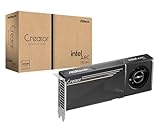
- System Compatibility Note: 2-slot card, 271x112x39mm, single 8-pin power, 200W TDP. Verify chassis clearance and PSU capacity before purchase.
- Dedicated Support: Please contact us directly through Amazon for any product questions or assistance you may require.
- 24GB GDDR6 on 192-Bit Bus: Massive 24GB memory with 456 GB/s bandwidth – ideal for LLMs, AI inference, 3D rendering, and generative design.
- Intel Xe2-HPG Architecture: Built on Intel's next-gen architecture with 20 Xe cores and 160 XMX engines for AI acceleration (197 INT8 TOPS).
- PCIe 5.0 Support: PCI Express 5.0 x16 interface for maximum bandwidth with the latest workstation platforms.
| Route | Time to usable compute | Control and obligations | Best fit |
|---|---|---|---|
| Cloud reservation | Potentially the quickest when listed capacity and a firm date exist; verify both | Provider operates facility; buyer accepts contract, region and service terms | Immediate or variable demand |
| Hosted or partner deployment | Depends on rack, power and interconnect readiness | Shared responsibility for hardware, software and support | Organizations needing more control without owning a site |
| Owned facility | Multi-year when new power and construction are required | Buyer funds and operates site, cooling, network, hardware and staffing | Large, sustained and predictable demand |
| Private, sovereign or edge inference | Can be short if suitable equipment and a site already exist | Buyer handles model operations, security and lifecycle | Latency, privacy or sovereignty-sensitive inference |
A GPU purchase order is not a deployment date. Confirm electrical service, rack density, cooling method, network fabric, storage, spares, maintenance access and financing before committing to a delivery forecast.
Independent reader supportYour contribution helps us test, update, and keep practical guides available for everyone.How should I compare competing capacity offers?
Use a workload-based scorecard and record assumptions beside every quote. A low hourly rate can become expensive if egress, idle reservations, storage or poor scaling prevent useful utilization.
| Comparison axis | Questions to answer |
|---|---|
| Usable performance | Does the exact GPU, memory, precision and interconnect meet model throughput and latency targets? |
| Availability | Is the start date inventory-backed, and what happens if delivery slips? |
| Location and governance | Is the region approved for data residency, sovereignty, security and latency needs? |
| Network and storage | Are bandwidth, topology, persistent storage, snapshots and egress suitable for the job? |
| Commercial terms | What are utilization minimums, reservation length, cancellation, burst, support and all-in costs? |
| Operational control | Which party patches hosts, replaces failed GPUs, monitors jobs and handles incidents? |
Run a small acceptance test before a long commitment. Measure startup time, distributed-training scaling, inference tail latency, storage throughput and failure recovery with representative data. Keep personal or regulated data out of an unapproved test environment.
What should I do if every provider says “sold out”?
- Ask whether “sold out” applies to a specific platform, region or date rather than all inventory.
- Request the nearest acceptable GPU generation, a second region and a split start date for partial capacity.
- Ask for a waitlist position, cancellation queue, short-term burst option or partner marketplace match.
- Separate training from inference: reserve scarce high-memory GPUs for training and use a smaller, available fleet for serving if benchmarks permit.
- Reprofile and reduce demand while procurement continues; document every quality and governance trade-off.
- Escalate power, data-residency and contract constraints internally so procurement does not reject viable alternatives late in the process.
If no option meets the workload, date and governance requirements simultaneously, the honest choice is to reset the project schedule or scope rather than sign for nominal GPUs that cannot run the job.
Best Value

- Professional AI & Creator Workstation: AMD Radeon AI PRO R9700 GPU with 32GB GDDR6 is engineered for AI development, professional content creation, and compute-intensive workloads.
- Massive 32GB Memory Capacity: 32GB of GDDR6 memory on a 256-bit bus provides ample bandwidth for large AI models, 8K video editing, and complex 3D rendering.
- Advanced RDNA 4 with AI Accelerators: 64 Compute Units with 3rd Gen Ray Tracing and dedicated 2nd Gen AI Accelerators for groundbreaking AI performance and visual computing.
- Professional Blower Cooling: Efficient single blower design exhausts heat directly out of the chassis, ideal for multi-GPU workstation and server configurations.
- Enterprise-Grade Thermal Solution: Vapor chamber heatsink with industrial Honeywell PTM7950 thermal interface material ensures reliable cooling under sustained professional loads.
What does the outlook mean for planning?
Near-term availability will remain uneven because accelerator releases, memory and packaging output, power interconnections and facility construction move on different clocks. IDC forecasts HBM4 supply will not meet demand until mid-2027 and expects CoWoS capacity to grow about 80% in 2027 while demand approaches twice its current level. These are forecasts, not promises about a particular supplier.
Plan capacity in layers: maintain a small immediately usable reservation, qualify at least one alternative platform or region, and create a longer-term facility or private-deployment plan if demand is durable. Revisit the plan whenever your model, latency target, data location or utilization changes; those variables can turn an apparently available GPU into unusable capacity.
Frequently Asked Questions
Are AI GPU shortages the same in every country and cloud region?
No. Grid access, data-center construction, import rules and local demand differ by location. A provider can have idle capacity in one region while lacking powered racks or approved inventory in another, so ask for region-specific dates rather than a global availability claim.
Does reserving a next-generation GPU guarantee better results?
No. Performance depends on memory size, precision, interconnect, software support and how efficiently your model scales. Require a workload acceptance test and a fallback platform before signing a long reservation.
Can I use consumer graphics cards for production AI services?
A consumer card may be unsuitable for memory capacity, reliability, virtualization, support or data-center operating requirements. This article concerns production-grade data-center capacity; evaluate any lower-cost hardware separately against uptime, security and software requirements.
What contract clause protects me if a promised cluster is late?
Ask for a committed service-ready date, remedies or credits for delay, cancellation rights, substitution rules and transparent treatment of partial delivery. Have counsel check how those terms interact with minimum-spend and data-egress obligations.
Free tools Windows power users keep installed
One-click scans. No signup required.
Quick Recap
Product prices and availability are accurate as of the date/time indicated and are subject to change. Any price and availability information displayed on Amazon at the time of purchase will apply.

