Some links on this page are affiliate links: if you buy through them we may earn a commission, at no extra cost to you.
Australian scientists have designed and synthesized cyclooctatetraene-metsulfuron methyl (COT-MM), an experimental herbicide that temporarily pauses weed growth instead of maximising plant death. By replacing metsulfuron methyl’s phenyl ring with a flexible cyclooctatetraene ring, the team changed how the molecule fits the acetolactate synthase (ALS) enzyme. In laboratory tests on invasive rubber vine, COT-MM stopped growth for the period reported by the investigators, while treated plants showed lower mortality and later resumed vertical growth. The result is a proof of concept for herbistasis—reversible chemical growth suppression—not a field-ready product. No field efficacy, crop selectivity, environmental-safety data, registration or commercial formulation has yet been established.
What did the scientists make?
The team led by Craig Williams at The University of Queensland modified the established sulfonylurea herbicide metsulfuron methyl. Instead of retaining its phenyl ring, they attached a cyclooctatetraene ring and named the resulting molecule cyclooctatetraene-metsulfuron methyl, or COT-MM.
As an Amazon Associate I earn from qualifying purchases.
Cyclooctatetraene is a carbon ring whose atoms continually change their three-dimensional arrangement. That movement is the feature the chemists wanted to test: a ring that does not present one rigid shape to an enzyme, but a shifting set of shapes that can bind differently from a static aromatic group.
Williams described the design this way: “And is in constant dynamic equilibrium – shape shifting – and thus engages enzyme and receptor active sites differently to that of a static molecular moiety.” The statement describes molecular behaviour, not a claim that the compound is automatically safer or more selective.
#1 Best Overall
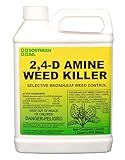
- Low, economical use rate of 1 to 4 pints per acre
- Controls many broadleaf weeds & woody plants
- Use in turf, pastures, rangeland, ditch banks, fences…
What is a shape-shifting carbon ring?
A shape-shifting carbon ring is a ring-shaped carbon framework that rapidly interconverts between conformations. Cyclooctatetraene does not stay locked in one flat geometry; its changing shape alters which parts of the molecule are presented to a protein at any instant.
That flexibility matters because herbicide activity depends on a close fit between a molecule and a target protein. A rigid group can occupy a binding pocket in a relatively consistent orientation. A dynamic ring can make several transient contacts, fit less completely or leave the pocket more readily. COT-MM was created to test whether that weaker, more reversible interaction could moderate ALS inhibition.
Free tools Windows power users keep installed
One-click scans. No signup required.
How does COT-MM act on weeds?
COT-MM retains metsulfuron methyl’s target: acetolactate synthase (ALS). ALS is required to produce branched-chain amino acids that plants need for growth. Inhibiting the enzyme restricts that amino-acid supply and, in turn, slows development.
Kinetic experiments, binding measurements and molecular-docking analysis indicated that the cyclooctatetraene substitution prevents the aromatic portion of the modified molecule from fitting fully into ALS. Compared with metsulfuron methyl, COT-MM binds more weakly and can move into and out of the enzyme’s binding channel. The resulting inhibition is less severe, so amino-acid synthesis is reduced rather than shut down as strongly.
Rank #2

- KILLS WEEDS AND GRASSES: Use on driveways and walkways, and around fences, trees, flower beds, shrubs and other listed areas
- ACCUSHOT SPRAYER: Includes continuous power sprayer with extendable wand
- KILLS THE ROOT: Visible results as fast as 3 hours — replant new flowers, trees and shrubs the same weekend
- RAINFAST: Rainfall or watering 15 minutes after application will not wash away effectiveness
This is a change in degree and timing, not a new biological target. Both molecules act through ALS; the ring substitution changes how tightly and how persistently the inhibitor engages that target.
What is herbistasis?
Herbistasis is the deliberate use of a herbicide to pause or restrict plant growth temporarily rather than relying on lethal injury. The desired outcome is a period in which a weed remains alive but makes little or no new vertical growth, with the possibility that growth resumes as the chemical effect fades.
PC Slower Than It Used to Be?
A free scan shows the junk files, broken settings and background clutter dragging Windows down - then fixes them in one click.Free scan · Windows 10 & 11Crashes, No Sound, or Screen Glitches?
Random freezes, missing sound and display glitches usually trace back to one bad driver. Find and replace yours safely.Free scan · under a minuteIn the rubber-vine experiment, The University of Queensland’s 2025 summary says COT-MM stopped growth for six weeks. A detailed account published by Chemistry World in 2025 reports that vertical growth resumed eight weeks after treatment and describes the effect as reversible. Those figures use different observation points and wording; together they indicate a temporary growth response rather than permanent sterilisation of the plant.
COT-MM-treated plants also had lower mortality than plants treated with metsulfuron methyl. That difference is consistent with a herbistatic treatment that restrains growth while leaving more plants alive, compared with the parent herbicide’s stronger lethal action.
Rank #3

- FAST-ACTING FORMULA: The fast-acting weed and grass killer concentrate starts working immediately and is rainproof in 1 hour
- HOW TO USE: Apply this weed killer concentrate for sprayer by mixing 24 fl. oz. per gallon of water and using a tank sprayer to treat up to 300 sq. ft.
- COVERAGE: One 2 gal. container of Ortho GroundClear Year Long Vegetation Killer2 Concentrate weed spray makes enough product to treat up to 3,200 sq. ft.
- WHERE TO USE: Use this weed control product where no plant growth is wanted for at least a year on driveways, sidewalks, fence lines, paver patios, walkways, gravel areas, parking areas, and other hardscapes
- LONG-LASTING CONTROL: Ortho GroundClear Year Long Vegetation Killer2 Concentrate kills weeds, grasses and existing vegetation, and prevents regrowth for up to 1 year
How does herbistasis differ from conventional herbicide treatment?
The central trade-off is straightforward: conventional treatment usually seeks maximum weed mortality, while herbistasis seeks a controlled period of suppressed growth. The experiment supports some molecular and short-term biological differences, but it does not yet answer the operational questions that determine whether the approach works in agriculture or conservation.
| Comparison point | COT-MM herbistasis concept | Metsulfuron methyl or conventional lethal use | What the experiment establishes |
|---|---|---|---|
| Primary outcome | Temporary growth suppression with more plants surviving | Stronger injury and higher mortality in the comparison | Observed in laboratory-treated rubber vine |
| Reversibility and duration | Growth was reported stopped for six weeks; vertical growth resumed after eight weeks in the detailed account | Not measured as a reversible-growth endpoint in the cited comparison | Only the COT-MM duration and recovery observations were reported |
| ALS binding | Weaker, less complete fit; movement in and out of the binding channel | Stronger fit and inhibition from the unmodified molecule | Supported by kinetic, binding and docking work |
| Resistance-selection hypothesis | Lower selection pressure is proposed as a possibility because plants are not exposed to an all-or-nothing lethal outcome | Resistance risk is not resolved by this experiment | Hypothesis only; it requires testing across generations and field conditions |
| Crop selectivity | Not established | Not assessed by this comparison | No crop-safety data were reported |
| Field performance | Not established | Not assessed in this study | The work was a laboratory proof of concept on one invasive species |
| Environmental fate and registration | Not established | Outside the scope of the experiment | No environmental-safety, regulatory or commercial data were reported |
Could pausing growth reduce herbicide resistance?
Williams suggested that restricting growth instead of trying to kill every treated plant might reduce the selective pressure that drives resistance. The idea is plausible enough to test, but COT-MM does not demonstrate it. A resistance claim would require repeated-generation experiments, measurements of survivors’ reproduction and genetic changes, and comparisons with standard lethal programs.
A reversible treatment could also create different management demands. If a rubber vine resumes growth after the suppression window, managers would need to know whether a second application, a complementary control method or removal of surviving plants is required. None of those schedules has been established for COT-MM.
Why was rubber vine used in the test?
The compound was tested on rubber vine (Cryptostegia grandiflora), an invasive plant. The species provided a real weed target for examining whether an intentionally weakened ALS inhibitor could produce a measurable, temporary growth response.
Rank #4

- Water-Based Formulation: Experience the power of our unique water-based formulation that ensures superior control and faster plant uptake, delivering results you can see quickly
- Extended Residual Control: Enjoy up to 30 days of residual control, keeping your turfgrass free from troublesome weeds for longer periods and reducing the need for frequent applications; Rainfast in less than an hour
- Broad-Spectrum Weed Control: Effectively targets a wide range of weeds, including crabgrass, foxtail, kikuyu grass, signal grass, torpedo grass, and key broadleaves like bindweed, clover, dandelion, black medic, and horseweed
- Versatile Application: Perfect for residential lawns, golf courses, commercial properties, and other non-residential turfgrass sites. It is labeled for use on both warm-season and cool-season turf types, ensuring adaptability to various environments; See label for proper mixing instructions
- USE AS INTENDED: Read, understand and follow label safety and application instructions; Follow proper storage and disposal instructions; NY can only be applied as a spot application; Proper PPE required long sleeve shirt, long pants, socks and shoes, chemical resistant gloves; See label for environmental hazards; State restrictions may apply
Testing one invasive species is not the same as demonstrating broad-spectrum weed control. Plants differ in uptake, metabolism, ALS sensitivity, growth rate and ability to recover. Results from rubber vine cannot be transferred automatically to crops, pasture weeds or other invasive plants.
How was the molecular effect investigated?
The scientists combined three types of evidence:
- Kinetic work examined how the modified inhibitor affected ALS activity.
- Binding measurements assessed the strength and behaviour of the interaction with the enzyme.
- Molecular docking modelled how the cyclooctatetraene substitution changed the molecule’s fit inside the ALS binding channel.
Across those analyses, the dynamic ring was associated with incomplete positioning of the aromatic portion, weaker binding and exchange between bound and unbound states. The biological test on rubber vine then linked that moderated enzyme interaction with a temporary growth pause.
Quick wins for a faster PC:
Fix the driver behind crashes, sound loss and screen glitchesFind Drivers →Clear out junk files and repair common Windows errorsFree Scan →Has COT-MM been tested in fields?
No. The cited work is a laboratory proof of concept conducted on one invasive species. It does not establish field-scale efficacy, performance under weather and soil variability, effects on neighbouring plants, crop selectivity, environmental persistence, breakdown products, impacts on non-target organisms or an approved use pattern.
No registration or retail formulation is reported. COT-MM should therefore be treated as an experimental research compound, not as a product that growers, land managers or gardeners can legally purchase and apply.
Best Value
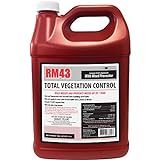
- Concentrated mix with water, add to sprayer
- Serious Weed Control
- Up to one year control
- Total Vegetation control
What are the main scientific limits so far?
- Small biological scope: the demonstrated plant response concerns rubber vine only.
- Unresolved duration: the six-week and eight-week descriptions come from different accounts of the same temporary response and do not define a universal control period.
- Survival versus control: lower mortality may be useful for studying herbistasis, but surviving weeds can resume growth and reproduce unless a wider management plan prevents that.
- Resistance evidence is absent: reduced selection pressure remains a proposal, not a measured outcome.
- Safety and selectivity are unknown: dynamic binding does not predict environmental fate, crop tolerance or non-target effects.
- Regulatory status is unknown: no field authorization, formulation or commercial availability has been reported.
How significant is this result for weed science?
The work expands the design space beyond the usual objective of making an herbicide bind as tightly and kill as quickly as possible. It shows that deliberately weakening a known ALS inhibitor can produce a measurable, reversible growth response while retaining the same target pathway.
The concept is still rare. Chemistry World reported that only four previous examples of herbistasis had been identified before this work. Williams emphasized that the field remains unsettled because cyclooctatetraene-metsulfuron methyl is one of only a few synthetic herbistatic agents made so far. More compounds and longer-term studies are needed to determine when growth pausing is agronomically useful, how it should be combined with other controls and whether it changes resistance evolution.
Recommended Free Tools
What should happen before anyone considers practical use?
- Repeat dose-response tests: establish how concentration, application timing and plant age affect suppression and recovery.
- Measure recovery and reproduction: determine whether surviving rubber vines merely resume growth or also flower and set seed during the rebound period.
- Test other species: compare invasive weeds, crops and non-target plants to identify any useful selectivity window.
- Run resistance experiments: expose populations to repeated herbistatic and lethal programs over generations and sequence survivors where appropriate.
- Conduct controlled-environment and field trials: examine rain, soil, temperature, canopy, application technology and interactions with other control methods.
- Characterise environmental behaviour: measure persistence, degradation products, movement through soil and water, and effects on non-target organisms.
- Complete regulatory assessment: generate the safety, efficacy and manufacturing data required for any future registration.
Until those steps are completed, COT-MM is best understood as a molecular and ecological experiment: evidence that herbicide design can target a temporary pause in growth, not evidence of a ready replacement for conventional weed control.
Frequently Asked Questions
Is herbistasis the same as natural plant dormancy?
No. Dormancy is a biological state controlled by the plant and its environment, whereas herbistasis in this context is a chemically induced reduction in growth. The term describes the intended management outcome, not a claim that treated plants enter a normal seasonal dormancy program.
Does a flexible ring make an herbicide environmentally safe?
No. Molecular flexibility only describes how the compound can change shape and interact with a target enzyme. Safety would require separate measurements of persistence, breakdown products, movement and effects on non-target organisms.
What publication contains the COT-MM study?
The underlying paper is by H. Xing and colleagues in Chemical Science, volume 16, page 649 (2025), DOI 10.1039/d4sc06923d. The publication reports the synthesis, ALS-related analyses and rubber-vine experiments.
Can growers buy or apply COT-MM now?
There is no reported retail formulation, field authorization or commercial availability. The compound remains an experimental research molecule, so users should not treat it as an approved herbicide or attempt to formulate it independently.
Quick Recap
Product prices and availability are accurate as of the date/time indicated and are subject to change. Any price and availability information displayed on Amazon at the time of purchase will apply.

