What’s actually slowing this PC down?
Pick the symptom - the matching free tool is one click away.
x402 can coordinate an HTTP resource request with a payment, but it does not guarantee an atomic exchange in which payment and delivery either both happen or neither does. Production safety depends on the selected scheme’s ordering, exact client–facilitator compatibility, trustworthy verification, durable state, and application controls for retries, budgets, replay, and fulfillment failures.
What an x402 production request actually does
x402 v2 defines three roles: a resource server, a client, and a facilitator. A typical HTTP cycle begins when a client requests a resource and the server responds with 402 Payment Required and payment requirements. The client chooses a compatible requirement and sends a signed payment payload. The server verifies that payload locally or through a facilitator; resource execution and settlement then proceed according to the selected scheme’s flow. A successful response includes the resource and a settlement response.
As an Amazon Associate I earn from qualifying purchases.
The important operational detail is that these steps cross boundaries: HTTP request handling, authorization, facilitator communication, chain submission and confirmation, and application delivery. The protocol defines shared message types, payment logic, facilitator APIs, schemes, and security considerations. It does not define a complete application policy for client budgets, sessions, retries, or framework-specific integration. Those responsibilities remain with the service and client operators.
Why payment and delivery are not automatically atomic
There is no single universal order for verification, fulfillment, and settlement. In the v2 specification’s default authorization flow, the server verifies authorization before executing the resource, and settlement follows. A scheme may define a different order, including settlement before fulfillment. Follow the chosen scheme’s documented sequence rather than assuming that every x402 request has the same payment boundary.
#1 Best Overall

- Get your money as soon as the next business day.
- Get set up quickly with no long-term commitments. Download the Square Point of Sale app for free, create an account, and start taking payments anywhere.
- Run your business all in one place with the free Square Point of Sale app. Track your sales, manage inventory, accept tips, send receipts digitally, and more.
- Works with Apple devices with a Lightning connector.
| Flow boundary | What can fail | Production implication |
|---|---|---|
| Verification succeeds; resource work begins; settlement follows | Fulfillment may consume compute or create another side effect, then settlement may fail or remain unconfirmed. | Track fulfillment and payment state separately; decide whether work can be safely retried, compensated, or withheld. |
| Settlement happens before fulfillment | Payment may be submitted or confirmed, then resource generation or delivery may fail. | Make fulfillment recovery explicit. Do not assume a failed HTTP response means no payment occurred. |
| Broadcast succeeds; confirmation is uncertain | The service may time out or lose its RPC response after the transaction was broadcast. | Treat the result as pending when indicated and reconcile the transaction before retrying. |
These are consequences of ordering, not claims about how often a particular outcome occurs. Maintain durable request and payment state across process restarts so that recovery does not depend on an agent, worker, or web process remaining alive.
Match the exact compatibility tuple
Compatibility is not established by a shared product name or by seeing one supported option. The client and facilitator must support the selected protocol version, scheme, and network combination. Extensions and signers may also affect whether that specific path works. A challenge can contain several payment options; one may be unusable even when another is valid.
- At startup or deployment, query the chosen facilitator’s
/supportedendpoint. - Compare the reported capabilities with the exact version, scheme, network, extensions, and signer configuration your client and route will use.
- Advertise only combinations you have confirmed with the selected facilitator, and test each advertised combination end to end.
- Define what the client and server do when a particular option is unsupported or becomes unavailable; do not silently treat a different tuple as equivalent.
A capability response is a report, not proof that the full payment path is secure or healthy. It does not establish key protection, replay resistance, confirmation quality, partial-failure behavior, uptime, or incident handling.
Rank #2

- Product Dimensions: You will receive 5 USB-C connector. Current: Maximum support 3A current; dimensions approximately 0.98x0.39 inches/25x10mm. The quantity is ample and sufficient for your daily needs.
- Reliable Materials: The USB-C adapter is made of plastic and brass, providing insulation. The metal construction is robust and stury for long-term use. It is for powering devices only and not for data transfer.
- Practical Design: This USB-C breakout features a solderless design, requiring no soldering tools. It's simple to use; a screwdriver is all you need for easy wiring, saving installation time and effort. Disassembly is also very convenient.
- Easy DIY: The loose USB-C port fix charging plug is clearly marked with positive "+" and negative "-" for easy soldering. It is compatible with USB interfaces and Type-C adapter boards.
- Versatile Use: This USB-C male to male adapter can be used to repair most USB-C devices, such as mobile phones, game consoles, tablets, speakers, LED lights, small household appliances, etc.
Choose who operates facilitation—and assign the failure owner
A facilitator is an architectural role, not a required third party. Official Solana guidance describes managed, separately operated, and in-process facilitation. The choice shifts responsibility for fee-payer keys, RPC, transaction submission, scaling, and upgrades. The x402 repository also directs production operators to choose a supported production provider, operate a facilitator, or self-facilitate; it cautions against assuming the public x402.org facilitator is the default production path for mainnet EVM routes.
| Model | Key and transaction responsibilities | Operational questions to settle |
|---|---|---|
| Managed facilitator | The provider operates facilitation infrastructure; confirm the actual fee-payer key custody and protection arrangement rather than assuming it. | Which exact tuples are supported? What are timeout and confirmation semantics? How are logs and data handled? What is the incident process and upgrade policy? |
| Dedicated self-hosted facilitator | Your organization operates facilitator services and assumes the associated key, RPC, transaction-submission, storage, scaling, and upgrade responsibilities. | Who rotates and protects keys? How is RPC health monitored? How are failover, partial failures, capacity, and incidents handled? |
| In-process facilitation | Payment logic runs within the application process or service boundary, shifting operational control and burden to the application team. | How are payment operations isolated from request load? Can overload or application failure impair both resource service and payment handling? Who owns upgrades and recovery? |
Provider-specific service levels, prices, and support matrices are not established here; verify them with the provider you intend to use. Whatever model you select, authenticate facilitator traffic, validate response structure and meaning, set strict timeouts, and fail closed when verification is uncertain. A transport error or malformed response is not evidence that a payment is valid.
Handle pending settlement without creating duplicate payment
The v2 specification defines settlement_pending for a transaction that has been broadcast but whose receipt is not confirmed. The response carries the transaction hash and network so the operator can reconcile it. An RPC timeout or error after broadcast does not establish that no funds moved.
Rank #3

- Pay one transparent rate per swipe for Visa, Mastercard, Discover and American Express.
- Works in conjunction with most downloadable Square point-of-sale apps on your device. Customers can pay, tip and sign directly on your device. Track payments in cash, gift cards and more. Also lets you send receipts via e-mail or text message, makes it easy to apply discounts, keeps a data and sales history log and more.
- Accepts magstripe credit card payments, including those from Visa, Mastercard, Discover and American Express (fees apply).
- App sends deposits to your bank account within 1 to 2 business days, or enjoy instant deposits (fees apply).
- Persist the payment/request state and the returned transaction hash and network.
- Reconcile that transaction using the appropriate network confirmation path before resubmitting or declaring the payment failed.
- Use idempotency and duplicate suppression in the application recovery path so a retry does not repeat fulfillment or payment handling blindly.
- Record the final reconciled outcome and connect it to the resource-delivery state.
Represent at least verified, fulfilled, settled, pending, failed, and reconciled outcomes as distinct states. The exact transitions depend on the scheme’s ordering, but collapsing them into one generic “paid” or “failed” flag makes ambiguous outcomes much harder to recover safely.
PC Slower Than It Used to Be?
A free scan shows the junk files, broken settings and background clutter dragging Windows down - then fixes them in one click.Free scan · Windows 10 & 11Crashes, No Sound, or Screen Glitches?
Random freezes, missing sound and display glitches usually trace back to one bad driver. Find and replace yours safely.Free scan · under a minuteThreat-model replay, substitution, and concurrency
The protocol identifies replay prevention and trust minimization as security concerns. At the application boundary, bind authorization to the intended resource and context, compare the incoming payload with the exact requirements offered for that request, and reserve one-time request state before starting expensive or irreversible work. Protect that state with concurrency controls so two workers cannot both treat the same authorization as unused.
Two 2026 preprints provide reasons to make these checks explicit, but their results are implementation- and sample-specific:
Rank #4
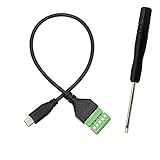
- Type C Male With Screw Terminal Block Cable can extend the length of the USB cable and DIY high-quality cables for data transmission and charging. The cable is 30cm long.
- USB-C Solderless terminal is fixed with screws, no soldering required. You only need to use stranded or solid wires and a small screwdriver (give screwdriver) to create custom wiring jigs. Simple and convenient, saving time and effort.
- This typec cable of 5 Pin pluggable screw terminal can connect a shielded wire, made cable has shielding function, can effectively shield the interference of external signals.
- This Type-c terminal cable plug is USB2.0, the bandwidth is 480MB/S, theoretically it can transmit 60MB of data per second (actual speed is about 20MB-60MB/S according to different cable lengths), the signal is stable and safe.
- Compact design and reliable connection are compatible with wide, suitable for mobile phones, tablets, computers and other devices with USB Type-C interfaces.
- A May 2026 preprint by Shengchen Ling, Yihang Huang, Yuan Chen, Yajin Zhou, Lei Wu, and Cong Wang reports cross-resource substitution and concurrency-related duplicate service in implementations it tested. It also reports that exploits against tested dynamic authorization patterns could expose merchants to allowance overdrafts, infrastructure limits, and unpaid compute. Its reported resource leakage ratio of “up to 100%” applies to the authors’ tested scenarios, including production middleware they evaluated; it is not a general x402 loss rate.
- A July 2026 preprint by Qinying Wang, Yong Yang, Yuan Chen, Shouling Ji, and Mathias Payer reports security-rule violations in all 15 facilitators in its evaluated sample and describes analysis of more than 119 million recent Base and Solana transactions. The “all” result applies to that sample and study procedure, not every facilitator or current release. The authors report responsible disclosure and mitigations, including Coinbase changes.
These studies justify version-specific threat modeling and validation, not a blanket conclusion that all current deployments are vulnerable. Check the status of the exact implementation and release you plan to operate.
Independent reader supportYour contribution helps us test, update, and keep practical guides available for everyone.Put limits around dynamic pricing and sponsored work
When a service accepts authorization whose effective amount or resource cost can vary, a valid signature alone may not bound the merchant’s exposure. A client or attacker may trigger work whose cost exceeds the intended payment, depending on the authorization design and implementation. Define application-level controls appropriate to the scheme:
- Set per-request payment and resource-cost caps.
- Rate-limit clients and bound concurrent work.
- Bind signed authorization to the request, resource, and relevant pricing context.
- Lock or reserve one-time state before costly execution.
- Reconcile post-settlement accounting against fulfilled work and configured limits.
The protocol does not supply a complete spending-budget or session policy; choose and enforce those limits at the application layer.
Best Value

- iPad to POS in Minutes: Slide in an iPad and download the included Square point of sale app to get started. No training or service visits needed.
- Your entire business in one place: Power every part of what you do, all on one device. That’s payments, your website, daily reporting, and so much more.
- No extra readers required: Super fast built-in payments mean far fewer cords, zero fears of disconnecting, and a cleaner counter from here on out.
- Keep selling, even offline: Keep taking payments with offline payments even when your Wi-Fi or connectivity is down. Just reconnect to the internet within 24 hours to upload transactions. Terms and conditions apply.
- Stay powered even without power: if you need to unplug or if you lose power, Square Stand can run off a full iPad battery. iPad-powered mode only on USB-C compatible version.
Plan for key, RPC, and request-load failures
Self-hosting or running facilitation in-process reduces dependence on a managed facilitator, but does not remove operational risk. It transfers responsibility. Fee-payer key protection, RPC health, transaction submission, storage, capacity, and upgrades become part of the operator’s system. In-process payment code also shares a failure domain with application request load; official guidance calls for isolation and operational review.
Document the deployment model and name the team responsible for each failure boundary. Review key protection, replay behavior, transaction confirmation, partial failures, incident response, and load isolation before exposing a route to production traffic.
Exercise the failure paths before launch
Use staging to verify recovery behavior deliberately, not only the happy path. These are recommended test cases derived from the protocol’s documented states and the scoped implementation findings above:
Recommended Free Tools
- An unsupported version, scheme, or network tuple, including a multi-option challenge with one unusable option.
- A malformed facilitator response, a delayed response, and a facilitator transport failure.
- An RPC timeout after transaction broadcast, followed by reconciliation using the transaction hash and network.
- A duplicate request or concurrent replay of the same payload.
- A fulfillment error after payment in a settle-first flow, and a settlement error after fulfillment in an authorization-first flow.
- Dynamic pricing or high request load that reaches configured per-request, rate, and concurrency limits.
For each case, assert the resulting durable state, whether resource work was performed, whether another payment submission is permitted, and how an operator can reconcile or investigate the event.
Quick Recap
Product prices and availability are accurate as of the date/time indicated and are subject to change. Any price and availability information displayed on Amazon at the time of purchase will apply.




