Windows Pro includes Hyper-V, Microsoft’s built-in virtualization platform, as an optional feature. You can use it to create virtual machines for testing software, trying another operating system, or keeping development environments separate—without downloading a separate Hyper-V product. Microsoft has not published usage data establishing how many Pro users have opened it, so the headline’s “most” is a conversational hook, not a measured statistic.
What is Hyper-V used for?
Hyper-V is a type-1 hypervisor: it lets Windows host virtual machines (VMs), each with its own virtual hardware and operating system. Microsoft describes the Windows client feature as useful for development and testing. For example, a VM can give you a separate place to test a configuration change, try another operating system, or maintain a development setup without making those changes directly to your everyday Windows installation. What will run well depends on the computer’s hardware and the workload.
As an Amazon Associate I earn from qualifying purchases.
Hyper-V is an optional Windows feature, not an app that every Pro user must enable. Microsoft says, “Hyper-V is built into Windows as an optional feature—there’s no Hyper-V download.” Microsoft’s installation guide explains how to enable it.
Do these 3 things before closing this tab:
1Clear out junk files and repair common Windows errors2Scan for outdated or missing drivers - takes under a minute3Repair Windows errors before they cause bigger problemsWhich Windows editions include Hyper-V?
Edition availability depends on the Windows release. Microsoft’s Windows 11 overview lists Hyper-V for Pro, Enterprise, and Education; its installation guide covers Windows 10 and Windows 11 Pro or Enterprise. Windows Home cannot install the full Hyper-V role. Check your Windows edition and version before following the steps. Microsoft’s installation guide and Windows 11 overview describe the supported editions.
#1 Best Overall

- EXCEPTIONAL BUSINESS VALUE - The Lenovo V15 combines a sleek design, dependable everyday performance, and MIL-STD-810H tested durability with business-ready security features. Offering many of the essential business capabilities of the ThinkPad E16 at a more affordable price, it's an ideal choice for professionals, students, and small businesses.
- POWERFUL PERFORMANCE - Powered by the AMD Ryzen 3 7320U processor with integrated AMD Radeon 610M Graphics, this laptop delivers responsive performance for everyday computing. Combined with 16GB LPDDR5 5500MHz memory for smooth multitasking and 512GB PCIe NVMe M.2 SSD for fast boot-ups, quick file access, and ample storage, it keeps your workflow efficient from start to finish.
- IMMERSIVE VISUAL EXPERIENCE - Enjoy sharp, vibrant visuals on the 15.6" FHD (1920 × 1080) anti-glare display, designed for comfortable viewing during work or entertainment. HDMI and USB-C support up to two external 4K monitors at 60Hz without a docking station, providing an expanded workspace for efficient multitasking. An HD webcam with a privacy shutter ensures clear video calls while protecting your privacy when the camera is not in use.
- VERSATILE CONNECTIVITY - Stay connected with one USB-C port supporting Power Delivery and DisplayPort 1.2, two USB-A ports, HDMI 1.4, Ethernet (RJ-45), and an audio combo jack for seamless connections to monitors, peripherals, and wired networks. A full-size keyboard with a Numeric Keypad enhances data entry and everyday productivity, while built-in Wi-Fi 6 and Bluetooth 5.3 deliver fast, stable wireless connectivity for work, streaming, and daily use.
- OPERATING SYSTEM - Preinstalled with Windows 11 Pro 64-bit and AI Copilot, this system delivers a modern, intuitive user experience with advanced security and productivity features. Built-in tools such as BitLocker encryption, Remote Desktop, and enhanced device management help protect data and simplify system administration. Seamless compatibility with a wide range of applications, peripherals, and business software ensures reliable performance for everyday computing.
What does Hyper-V need to run?
Hyper-V requires processor support, firmware settings, and enough memory and storage for both Windows and any running VMs. Microsoft’s documented requirements are:
- A 64-bit processor with Second Level Address Translation (SLAT).
- VM Monitor Mode extensions.
- Hardware-assisted virtualization enabled in BIOS or UEFI: Intel VT or AMD-V.
- Hardware-enforced Data Execution Prevention (DEP).
- Enough memory for the host and the VMs running at the same time.
The installation guide lists 4 GB of RAM as a requirement, but that minimum does not mean 4 GB is sufficient for comfortable use of Windows alongside a VM. The memory needed depends on the host and guest operating systems and how many VMs you run. Microsoft’s hardware requirements explain the checks and memory considerations.
Rank #2

- [High Speed RAM And Enormous Space] 4GB high-bandwidth RAM to smoothly run multiple applications and browser tabs all at once; 128GB PCIe NVMe M.2 Solid State Drive allows to fast bootup and data transfer
- [Processor] Intel Core i5-13420H Processor (8 Cores, 12 Threads, 12MB Intel Smart Cache, Base at 1.5 GHz, Up to 4.6 GHz Max Turbo Frequency), with Intel UHD Graphics
- [Display] 15.6" FHD (1920 x 1080) Display
- [Tech Specs] 1 x USB 3.0 Type-A, 1 x USB 2.0 Type-A, 1 x USB Type-C, 1 x HDMI, 1 x RJ45, 1 x headphone/microphone combo, Webcam, Numeric Keypad, Wi-Fi and Bluetooth
- [Operating System] Windows 11 Pro - Organize open apps with pre-configured layouts to optimize productivity, Navigate with more intuitive experience to get things done, Collaborate with teams with more features
Check compatibility with Systeminfo.exe
Run Systeminfo.exe in Windows and inspect the Hyper-V Requirements section. If every listed requirement says “Yes,” the system meets the listed requirements for the role. If the output says a hypervisor has been detected, Windows has already detected one; in that case, the requirements section may not display the individual results in the same way. Microsoft documents the Systeminfo.exe check.
How do I enable Hyper-V in Windows 11 Pro?
On a supported Windows edition, enable the feature from Windows Features or use an elevated PowerShell session. Save your work first: Windows may prompt you to restart, and the feature will not be ready until the required restart is complete.
Rank #3
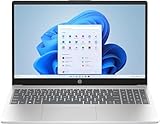
- 【Display】The 15.6" 250nits Non-Touch Anti-glare, 45% NTSC LED display has a thin bezel and 85% screen-to-body ratio, which provides a comfortable viewing space for your videos, photos, and documents. Paired with Intel UHD Graphics, making the display colors more vivid and delicate
- Open Control Panel and go to Programs > Programs and Features.
- Select Turn Windows features on or off.
- Select Hyper-V, then confirm the change. If the Hyper-V entry is unavailable, check the Windows edition and the hardware and firmware requirements.
- Restart the computer if Windows prompts you to do so.
Alternatively, open PowerShell as an administrator and run:
Enable-WindowsOptionalFeature -Online -FeatureName Microsoft-Hyper-V -AllFollow any restart prompt. The command does not bypass edition, processor, or firmware requirements. See Microsoft’s install instructions for the supported Windows versions and enablement methods.
Rank #4

- 256 GB SSD of storage.
- Multitasking is easy with 16GB of RAM
- Equipped with a blazing fast Core i5 2.00 GHz processor.
What do you need to create your first virtual machine?
Once Hyper-V is enabled, you can create a VM in Hyper-V Manager or with PowerShell. Before starting, make sure the host has enough physical memory and disk space for Windows and the VM files. You will also need an operating-system installer or disk if the VM does not already have an operating system.
- Operating system: An ISO image can be used to install an OS, or you can use an existing virtual hard disk (VHD or VHDX).
- Networking: A virtual switch is optional; create or select one if the VM needs network access.
- Storage and memory: Allow room for the VM’s files and virtual disk, and account for the memory used by the host and any VMs running together.
Windows 11 also offers Quick Create for a more streamlined VM setup. The available choices and configuration depend on what you want to run. Microsoft’s VM creation guide covers setup in Hyper-V Manager and PowerShell.
Best Value

- 【Unbeatable Assurance & Support for Your Laptop】Shop with confidence on this laptop on sale, backed by a 2-Year Warranty & 6-Month Return Policy. Get 24/7 online support and direct help at 800‑606‑1179 for peace of mind.
- 【Ready-to-Use System - Windows 11 Pro Laptop】Out-of-the-box productivity: This Windows 11 Pro laptop comes fully equipped with Windows 11 Pro and Office 365—no setup required, ready for work or study.
- 【Immersive 15.6" Display on Traditional Laptop Computers】Experience sharp, vibrant visuals on a 15.6-inch 1920×1080 IPS screen. This traditional laptop computer offers wide viewing angles perfect for work, streaming, and learning.
- 【Up to 6-Hour All-Day Battery Life for Laptops】Stay powered on the go with a 5000mAh battery supporting up to 6 hours of mixed use. An ideal laptop for business trips, classes, and daily mobility.
- 【180° Hinge Design - Flexible Use for Laptop Computer Windows 11】The 180° hinge allows the screen to lay flat, perfect for sharing content in team meetings. The integrated webcam, mic, and speakers ensure clear communication on every call—great for business work and college student use.
Hyper-V, Windows Sandbox, or WSL 2?
These features are related to virtualization, but they serve different purposes. Choose based on whether you need a configurable, persistent machine, a temporary isolated Windows session, or a Linux development environment.
| Option | Best fit | Control and persistence |
|---|---|---|
| Hyper-V VM | General operating-system testing, software testing, or a separate development environment. | A configurable VM managed in Hyper-V Manager or PowerShell; use it when you want a VM you can keep and manage. |
| Windows Sandbox | A temporary isolated Windows session. | A separate Windows isolation feature, not simply another name for a manually managed Hyper-V VM. Its configuration documentation says it uses the Hyper-V default switch. |
| WSL 2 | Linux development within a Windows workflow. | Uses a subset of Hyper-V architecture; it is not equivalent to setting up and managing a general-purpose Hyper-V VM. |
Microsoft says, “The newest version of WSL uses a subset of Hyper-V architecture to enable its virtualization.” That does not, by itself, establish that you must manually enable the full Hyper-V role to use WSL 2. WSL 2 networking can behave like a VM, including using an IP address different from the Windows host. For configuration details, see Microsoft’s Windows Sandbox configuration documentation and WSL FAQ.
Quick Recap
Product prices and availability are accurate as of the date/time indicated and are subject to change. Any price and availability information displayed on Amazon at the time of purchase will apply.




