Different numbers do not, by themselves, prove that either laboratory is wrong. A result only makes sense alongside what was measured, how it was measured, the conditions, and the uncertainty. Before choosing which result to trust, establish whether the two reports are genuinely comparable.
What does “the same thing” mean in a lab report?
Metrology calls the quantity intended to be measured the measurand. That definition needs to be specific enough to tell whether two results concern the same property, material, and measurement basis. In some tests, the method itself defines the measurand. In that case, the method and its version are part of what the result means, not incidental details. NIST guidance on method-defined measurands says the method should be made clear when reporting such a result.
As an Amazon Associate I earn from qualifying purchases.
Two laboratories may therefore use the same everyday label for results that are not directly interchangeable. They may have tested different properties, different sample preparations, or the same nominal property using methods that define it differently. First compare the report definitions, not just the figures.
Quick wins for a faster PC:
Repair Windows errors before they cause bigger problemsFix Now →Fix the driver behind crashes, sound loss and screen glitchesFind Drivers →Why can two labs get different results?
Methods and conditions differ
Operators, equipment, locations, timing, sample preparation, and supervisory conditions can affect results. In its sector-specific overview for petroleum and related products, ISO 4259-1:2026 notes that measurements of the same property on a sample do not usually agree exactly, even with the same test method. It describes reproducibility conditions that include a different operator, equipment, geographic location, and supervisory control. This is an illustration from a particular industry standard, not a universal rule for every kind of laboratory test.
#1 Best Overall

- ACCURATE, FAST RESPONSE-The labe scale is equipped with a high precision strain gauge sensor, which enables it to weigh quickly and accurately with a wide range of 600g.
- 6 Units Conversion- Easily switch between six different units of measurement by pressing the MODE button. The available units are: gram (g), ounce (oz), carat (ct), pennyweight (dwt), Tola (T), grain (gr).
- POWERING MODE-The analytical balance can be powered both by AC adapter and 2pcs 1.5V AA batteries(not included).
- LCD DISPLAY-The results can be read clearly and quickly because of its large LCD display.
- Functions- This digital scale offers a variety of useful functions: 1. Counting Function: Ideal for counting small items with consistent weights; 2. Tare Function: Subtract the weight of containers with just one press, allowing you to weigh only the contents; 3. Auto-Off Feature: To conserve battery life, the scale will automatically turn off after 270 seconds of inactivity.
Ordinary variation and systematic differences both matter
Repeated measurements can vary within a laboratory; results can also differ between laboratories. A persistent offset between lab averages is different from random scatter around similar averages. A single pair of values usually cannot reveal which pattern is present, much less identify its cause.
Interlaboratory comparisons can be designed to estimate variation across a population of laboratories, identify systematic differences among a defined group, or assign a value to an artifact or group of artifacts. The design matters: participating labs, artifact stability and number, timing, and within-lab replicates all affect what conclusions the comparison can support. See NIST’s overview of interlaboratory comparisons.
Rank #2

- 6kg Capacity with 0.1g Readability - This lab scale handles up to 6kg with 0.1g resolution, minimum start weight 1g, and ±0.3g tolerance. Accurate, reliable results for laboratory, jewelry, and industrial weighing.
- 6 Switchable Units - Press the UNIT key to toggle between gram (0.0 g), ounce (0.00 oz), pound (0.000 lb), kilogram (0.000 kg), tl (0.00 tl), carat (0.0 ct).
- Stainless Steel Pan & Durable ABS Body - The 5.71" x 5.71" stainless steel platform on this gram scale resists wear and wipes clean easily. Compact and portable - smaller than standard analytical balances for easy storage.
- Tare & Counting Functions for Daily Efficiency - Tare instantly subtracts container weight for net readings. Counting streamlines small parts inventory like screws, beads, or coins - practical for lab and jewelry work.
- Adapter & 2 AA Batteries Included - Plug in for continuous use or run on batteries for portable weighing. Both the adapter and 2 AA batteries come in the box, so you're ready to weigh right away.
Samples and references may not provide the same basis
A difference may reflect the material tested, how it was handled, or what reference was used in calibration. Certified reference materials can support comparisons across time and place, but the materials must deliver the same measurand within their stated uncertainty for the comparison to be meaningful. NIST’s discussion of reference-material comparability explains this condition; having a reference material or calibration traceability alone does not guarantee that two results are comparable.
Recommended Free Tools
Reporting conventions can obscure agreement or create apparent disagreement
Check quantity names, units and symbols, conversions, rounding, and terminology. A conversion error, inconsistent unit, or poorly reported uncertainty can make a report difficult to interpret even when the underlying measurement work is sound. NIST’s guidance on communicating measurement results identifies these kinds of reporting problems.
Rank #3

- 0.01g HIGH PRECISION-This analytical balance has 8 optional ranges from 200g-5000g with an accuracy of 0.01g. To ensure to get the results quickly and accurately, the precision scale is equipped with an upgraded high-sensitivity build-in sensor, adjustable feet, level bubble overload alarm, error indication, and external calibration.
- MATERIAL-Stainless steel made large weighing pan (180X140mm) enables this digital scale to weigh multiple things like jewelry, screws, powder and etc. which can be widely applied to laboratories, schools, businesses, jewelers. Non-slip mat design makes this lab balance suits different weighing environment better.
- FEATURES-1.Large LCD Display: easy to read, clear and precise reading even in dark environment. 2. Functions: This laboratory scale has multiple functions of tare, memory, counting, fault visualization and etc.
- 13 UNIT CONVERSION-Unit can be converted from g, ct, oz, ozt, N, lb, dr, GN, dwt, %, t/T, T, T/A/R by simply pressing "UNIT" button.
- WARRANTY-You are always welcomed to contact us if any problem of the scale or charger occurs. We will help you replace it within 1 year. NOTICE: For scales of range 200g-3000g, calibration weights are included in the package. For 5000g scale, calibration weights are NOT included for the weights are too heavy and might damage the scale during shipment.
How should you compare two lab reports?
Compare the reports in sequence. If they differ at an early step, later arithmetic cannot make the results equivalent.
- Confirm the measurand. Check that both reports concern the same property, material or comparable sample, and measurement basis. If a method defines the measurand, compare the method and version as well.
- Align units and reporting conventions. Verify quantity names, units, symbols, conversion arithmetic, and rounding. Make sure the figures have not been reported on different bases.
- Compare methods and conditions. Record sample preparation, method and version, operator, equipment, location, timing, and relevant supervisory conditions. Ask whether any difference is expected to affect the result.
- Read uncertainty and reference information alongside each value. A measurement result includes a value and associated uncertainty; the number alone is incomplete. Compare what each uncertainty covers and what reference or certified material underpins calibration. NIST’s summary of combining results for the same measurand describes the importance of relating results to their uncertainties and common measurand.
- Look for evidence about variation or offset. Ask whether there are replicate measurements, within-lab data, or results from an interlaboratory comparison. Replicates and a suitable comparison design can help distinguish repeatability within a lab from differences between lab means; two reported values alone generally cannot.
- Use a criterion suited to the method and purpose. Some interlaboratory comparisons use normalized error, with
|En| ≤ 1as a common criterion. It is not a universal grade for laboratory quality. NIST’s 2022 analysis of inter-laboratory comparison data cautions that large transfer-standard or participant repeatability uncertainty can reduce the normalized error and make passing easier. A separate NIST paper notes that transfer-standard uncertainty can also leave comparisons inconclusive: Transfer Standard Uncertainty Can Cause Inconclusive Inter-Laboratory Comparisons. - Escalate consequential differences. Ask both labs for their measurand definition, method and version, uncertainty information, calibration traceability, sample-handling record, replicate data, and any relevant proficiency-testing or interlaboratory-comparison results. Which items matter depends on the test and its governing requirements.
Which lab result should you trust?
There is no reliable way to select a winner from the two numbers alone. First determine whether the reports describe the same measurand and use comparable methods, conditions, units, and reference basis. Then assess the difference against the stated uncertainties and any precision or acceptance rule specified for that particular method or decision.
Rank #4
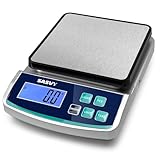
- 0.1g ACCURACY: The laboratory scale can weigh up to 5000g with 0.1g accuracy. Features sensitive sensors, non-slip feet, rechargeable battery for better weighing.
- LCD DISPLAY:Easy-to-read backlit screen provides clear visibility even in low light. Features include unit conversion(oz/lb/g/kg), tare function, precise weighing, piece counting, backlit display and can be calibrated, which can save you time and improve efficiency.
- CALIBRATABLE: The digital scale supports calibration, allowing it to maintain accuracy at all times. The ideal choice for weighing in science, jewelry, kitchen, and school.
- TRIPLE POWER SUPPLY: This lab scale can be powered by built-in rechargeable battery, USB cable and 2 x AAA Batteries(NOT Included). Move freely without being tethered to power outlets—perfect for mobile or outdoor applications.
- WIDELY USED: This scientific scale has a weighing plate (5.9*5.9inch) made of stainless steel, which can weigh various items such as jewelry, screws, powders, etc. It can be widely used in laboratories, schools, home baking, enterprises, and jewelry merchants.
NIST puts the first requirement plainly: “If measurement results between or among laboratories are compared, scientists must be able to talk about the same things.” Its reporting guidance treats clear units, symbols, terminology, and uncertainty as part of making results interpretable. If the reports lack those details, request clarification before treating a discrepancy as evidence of poor performance.
When is a more formal comparison needed?
If the result affects safety, compliance, money, or another consequential decision, ask whether the governing method or standard defines repeatability, reproducibility, or an acceptance rule. A method-specific precision limit is more relevant than a generic threshold, and it should be applied using the conditions and definitions for which it was established.
Best Value
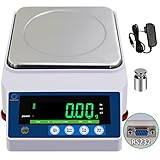
- ✔FAST ACCURATE RESPONSE SAVES YOU TIME AND MONEY: To ensure to get the results quickly and accurately. The lab precision analytical balance scale is equipped with an upgraded high-sensitivity build-in sensor, Designed to give you more accurate results in your lab, business or at-home workspace. Scientific scales can measure results in seconds or less. The built-in counting function can total multiple pieces automatically potentially saving you time and money tallying inventory and other items.
- ✔The 01g scale's 170X170mm large stainless steel weighing square pan can hold chemicals, powders, herbs, jewelry, precious metals, tickets, coins and other small items. Easy conversions between grams (g), ounces (oz), carats (ct) and pounds (lb) make the scale ideal for scientific laboratories, schools and universities, businesses, jewelers, and more. which can fulfill your different needs.
- ✔HIGH ACCURACY PRECISION: The electronic weighing scale has a high, 0.01g precision. To ensure accuracy, the gram scale features a built-in level; adjustable leveling feet; an overload alarm; error indication; and external calibration. Preheating time: 5-30 mins,Stabilization time: ≤5s,Linearity error: ±0.03g. The balance also has a large, easy-to-read high-definition LED display.
- ✔LAB QUALITY MATERIALS: The digital precision scale is built from lab-quality materials to give you accurate readings year after year. The lab scale has a strong strain gauge sensor; a stainless steel weighing pan; and a durable ABS body. Every balance is calibrated, tested and inspected before it is shipped to our customers.
- ✔We take quality seriously and back all our instruments with 30-day returns and 1 year warranties. Our products also come with detailed user instructions and access to our knowledgeable customer support. ⚠NOTICE: With RS232 interface, Does not contain RS232 data line. Calibration weights are included in the package. Does not include batteries.
When the reports still cannot be reconciled, a designed interlaboratory comparison with stable artifacts, appropriate replicates, and relevant uncertainty components can provide stronger evidence than comparing one result from each lab. Statistical control and repeatability, reproducibility, and uncertainty—including possible bias—have long been central to precision measurement, as discussed in NIST’s historical collection of precision-measurement papers. The design must fit the question: estimating general lab-to-lab variation is not the same task as checking a fixed set of labs or assigning a reference value.
Quick Recap
Product prices and availability are accurate as of the date/time indicated and are subject to change. Any price and availability information displayed on Amazon at the time of purchase will apply.




