Free tools Windows power users keep installed
One-click scans. No signup required.
Grand Theft Auto has appeared on Nintendo hardware, but comparatively rarely—and the confirmed releases show two different approaches: a game built around the Nintendo DS’s distinctive controls, and a later Switch compilation of older titles. Rockstar’s comments offer a period-specific explanation for why a Wii version did not feel like a natural fit, but the available evidence does not establish one policy or reason behind every gap in the series’ Nintendo release history.
Which Grand Theft Auto games are confirmed for Nintendo systems?
The clearest documented examples are Grand Theft Auto: Chinatown Wars for Nintendo DS and Grand Theft Auto: The Trilogy – The Definitive Edition for Nintendo Switch. They are not equivalent kinds of releases: Chinatown Wars was designed specifically for the DS, while the Switch release brought a compilation of older GTA games to Nintendo hardware.
As an Amazon Associate I earn from qualifying purchases.
| Release | Nintendo system | What the release was | Release details established by the cited announcements |
|---|---|---|---|
| Grand Theft Auto: Chinatown Wars | Nintendo DS | A DS-focused GTA game, described by Nintendo UK as built from the ground up for the system. | Take-Two said it was available in North America on March 17, 2009, and set its European release for March 20, 2009. Nintendo UK lists March 20, 2009, as the European release date. The publisher identified Rockstar Leeds and Rockstar North as developers; the ESRB rated it M for Mature. |
| Grand Theft Auto: The Trilogy – The Definitive Edition | Nintendo Switch | A compilation of three older GTA games, rather than a new mainline entry created specifically for a Nintendo system. | Rockstar announced a physical Switch release for December 7, 2021, and described Switch-specific gyro aiming and touch-screen functions. That announcement establishes the planned physical release date; it does not establish current stock or availability. |
These examples are enough to rule out the claim that GTA has never appeared on a Nintendo system. They are not a complete inventory of every handheld GTA release or Nintendo SKU, so the careful answer is that GTA has had notable Nintendo releases, but far fewer prominent releases than the series’ presence on other kinds of platforms might lead a player to expect.
What’s actually slowing this PC down?
Pick the symptom - the matching free tool is one click away.
Why did Chinatown Wars come to DS?
Rockstar’s public explanation of Chinatown Wars centers on designing around the DS, rather than simply shrinking a conventional console GTA to fit a handheld. In a March 2009 GameSpot interview, Gordon Hall, then president and founder of Rockstar Leeds, said the DS felt less like a “portable console” than the PSP and had different capabilities. The team had to work out how to make a large, 3D Liberty City fit the hardware and the way people would play on it.
#1 Best Overall
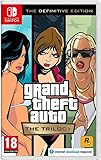
- Grand Theft Auto III: It all starts in Liberty City. With the revolutionary freedom to go anywhere and jack anyone, Grand Theft Auto III puts the center of the criminal underworld at your fingertips, if you have enough guts to take it.
- Grand Theft Auto: Vice City: Welcome to the 1980s. From the decade of big hair and pastel suits comes the story of one man's rise to the top of the criminal pile. Grand Theft Auto returns with Tommy Vercetti’s tale of betrayal and revenge in a neon-soaked tropical town full of excess and brimming with possibilities.
- Grand Theft Auto: San Andreas: Five years ago, Carl ‘CJ’ Johnson escaped the haze of Los Santos, San Andreas...a city tearing itself apart with gang trouble, drugs, and corruption. Now, it's the early 90s. CJ’s got to go home - his mother has been murdered, his family has fallen apart, and his childhood friends are all heading towards disaster.
The touch screen shaped the interactions
The DS touch screen gave the developers a way to make some actions feel immediate and tied to the situation on screen. Hall described using it for contextual activities such as hot-wiring cars and making Molotov cocktails. The point was not that every part of the game had to use the stylus; rather, touch input could make selected actions feel like hands-on tasks while the rest of the experience retained recognizable GTA elements.
That distinction matters when explaining the release. A DS adaptation had a clear design rationale: use the platform’s particular input method for interactions that could benefit from it, while adapting the scale and presentation of the city. Sam Houser, Rockstar’s founder, described the project in a 2008 announcement as an experience “truly unique to Nintendo’s handheld platform” and specifically highlighted its use of the touch screen. This is evidence of an intentional handheld design, not evidence that Rockstar had a broad plan to bring every GTA game to Nintendo systems.
It was an adaptation to a platform, not proof of a general strategy
Hall’s comments describe a development challenge and a design choice for one DS project. They do not say that the same approach could be reused unchanged for a Wii game or for every later Nintendo console. Different systems have different controls, performance characteristics, audiences, and development contexts; the sources here document the DS team’s thinking, but do not establish how Rockstar assessed each of those factors for every Nintendo platform.
Rank #2

- Grand Theft Auto III: It all starts in Liberty City. With the revolutionary freedom to go anywhere and jack anyone, Grand Theft Auto III puts the center of the criminal underworld at your fingertips, if you have enough guts to take it.
- Grand Theft Auto: Vice City: Welcome to the 1980s. From the decade of big hair and pastel suits comes the story of one man's rise to the top of the criminal pile.
- Grand Theft Auto: San Andreas: Five years ago, Carl ‘CJ’ Johnson escaped the haze of Los Santos, San Andreas...a city tearing itself apart with gang trouble, drugs, and corruption.
Likewise, calling Chinatown Wars “built from the ground up” for DS is useful because it separates the game from a straightforward port. It should not be read to mean that the DS hardware was identical to a home console or that Rockstar had solved a universal technical recipe for future Nintendo releases. The concrete evidence is narrower: the team adapted the game around DS capabilities, including the touch screen, and worked to fit Liberty City to the handheld.
Why didn’t GTA come to Wii?
The most direct public remark in the available record is Sam Houser’s reported response about a Wii GTA: “It didn’t feel natural to us, I guess.” GameSpot reported the comment in October 2008 as part of its coverage of an interview with Houser in Nintendo Power. The same report connected the DS project’s appeal to its stylus and minigames and to Rockstar’s handheld-focused team. It also said Houser described Rockstar as not having done concrete, major thinking about the Wii one way or the other.
That account supports a limited conclusion: at that time, Houser reportedly did not see a Wii GTA as a natural fit, while the DS project had a more evident creative connection to the handheld’s controls and to the team working on it. The wording is tentative and tied to a particular interview and period. It is not a formal statement that Rockstar would never make a Wii game, and it does not explain why no later title appeared on every Nintendo system.
Rank #3

- UK version, region-free, fully compatible with all Nintendo Switch consoles worldwide
What the Wii remark does—and does not—tell us
A remark that a game “didn’t feel natural” is a statement about creative fit, not a detailed technical report. The contemporaneous account does not give a specification-based explanation, a sales forecast, a licensing issue, or a corporate rule. It also does not establish that Nintendo rejected GTA. Turning the quote into any of those claims would go beyond what the report says.
The contrast with DS is more informative than a sweeping explanation: Rockstar had publicly described a way for the DS touch screen to contribute to a GTA game, whereas Houser reportedly did not see an equally compelling fit for Wii at that moment. The sources do not give enough detail to say whether control design, team experience, business priorities, or another consideration was decisive. The correct answer is therefore about the public evidence, not a guess at private deliberations.
Why is the Switch Trilogy different from Chinatown Wars?
The Switch release demonstrates that GTA did return to Nintendo hardware, but through a compilation rather than a new Nintendo-first mainline game. Rockstar’s announcement gave the Switch edition platform-specific features, including gyro aiming and touch-screen functions, and specified a physical release on December 7, 2021. Those details show that the Switch version had controls and a release format tailored to that system; they do not make the compilation the equivalent of a new game designed from its first concept for Nintendo hardware.
Rank #4
- Grand Theft Auto III: It all starts in Liberty City. With the revolutionary freedom to go anywhere and jack anyone, Grand Theft Auto III puts the center of the criminal underworld at your fingertips, if you have enough guts to take it.
- Grand Theft Auto: Vice City: Welcome to the 1980s. From the decade of big hair and pastel suits comes the story of one man's rise to the top of the criminal pile. Grand Theft Auto returns with Tommy Vercetti’s tale of betrayal and revenge in a neon-soaked tropical town full of excess and brimming with possibilities.
- Grand Theft Auto: San Andreas: Five years ago, Carl ‘CJ’ Johnson escaped the haze of Los Santos, San Andreas...a city tearing itself apart with gang trouble, drugs, and corruption. Now, it's the early 90s. CJ’s got to go home - his mother has been murdered, his family has fallen apart, and his childhood friends are all heading towards disaster.
That difference helps make sense of the release history without overstating it. Chinatown Wars was presented as a distinct DS project, with the handheld’s touch input part of its design. The Switch Trilogy, by contrast, packaged older games for a newer Nintendo platform and added system-specific functionality. Both are legitimate Nintendo releases, but they answer different questions: one is evidence of a purpose-built handheld adaptation, and the other is evidence that older GTA games were later made available on Switch.
For a player looking for a Nintendo version today, the Switch Trilogy is the relevant release in Rockstar’s announcement, though the announcement alone cannot tell you whether a physical copy is in stock at a particular retailer. The DS release is historically important as the clearest example of Rockstar building a GTA experience around Nintendo handheld features.
Was GTA absent from Nintendo because it was too violent?
The available statements do not establish that violence or Nintendo’s family-oriented reputation caused the gaps. The DS game was explicitly described as a mature-audience title by Nintendo UK, and Take-Two said the ESRB rated it M for Mature. That confirms the game’s rating and intended audience; it does not show that Nintendo banned the series or that content restrictions explain platform decisions.
Best Value
![Grand Theft Auto: The Trilogy - Definitive Edition (Nintendo Switch) [video game]](https://m.media-amazon.com/images/I/51FDQfY5qzL._SL160_.jpg)
- Three iconic cities, three epic stories. Play the genre-defining classics of the original Grand Theft Auto Trilogy: Grand Theft Auto III, Grand Theft Auto: Vice City and Grand Theft Auto: San Andreas updated for a new generation.
- Grand Theft Auto III: It all starts in Liberty City. With the revolutionary freedom to go anywhere and jack anyone, Grand Theft Auto III puts the centre of the criminal underworld at your fingertips, if you have enough guts to take it.
- Grand Theft Auto: Vice City: Welcome to the 1980s. From the decade of big hair and pastel suits comes the story of one man's rise to the top of the criminal pile. Grand Theft Auto returns with Tommy Vercetti’s tale of betrayal and revenge in a neon-soaked tropical town full of excess and brimming with possibilities.
- Grand Theft Auto: San Andreas: Five years ago, Carl ‘CJ’ Johnson escaped the haze of Los Santos, San Andreas...a city tearing itself apart with gang trouble, , and corruption. Now, it's the early 90s.
It is easy to turn an apparent contrast between GTA’s mature content and Nintendo’s broader image into a simple story about rejection. But the documented comments point instead to a DS-specific design opportunity and a reported lack of natural fit for Wii at the time. Neither source attributes the Wii absence to content policy. Nor do they settle the reasons for releases or omissions across later generations.
What can be said confidently—and what remains unknown?
The evidence supports a precise answer, not a single all-purpose explanation. Rockstar’s developers described Chinatown Wars as a distinct adaptation shaped by the DS, and Houser was reported as saying a Wii GTA did not feel natural to the company at that time. Rockstar later released a Switch version of a trilogy of older games. These facts explain why “rarely” is more accurate than “never,” while leaving the larger pattern partly unresolved.
- Established: Nintendo DS received Chinatown Wars, which Nintendo UK described as built from the ground up for the system.
- Established: Rockstar’s DS team discussed adapting a large 3D Liberty City and using the touch screen for contextual interactions.
- Established as a reported period comment: In GameSpot’s account of a 2008 Nintendo Power interview, Houser said a Wii GTA did not feel natural at that time.
- Established: Rockstar announced a Switch compilation release with gyro aiming and touch-screen functions, and a physical release date of December 7, 2021.
- Not established by these sources: One comprehensive reason for every missing GTA release on Nintendo hardware, a permanent Rockstar policy, a Nintendo ban, or a content-based rejection.
That is why the strongest answer is deliberately qualified. There are documented examples of GTA on Nintendo systems, but they represent different kinds of projects rather than a continuous run of mainline releases. The public explanations illuminate particular decisions—the DS’s distinct design possibilities and a reported lack of Wii fit in 2008—not every decision made across the series’ history.
Recommended Free Tools
Quick Recap
Product prices and availability are accurate as of the date/time indicated and are subject to change. Any price and availability information displayed on Amazon at the time of purchase will apply.




