AI data centers can make gaming hardware more expensive because they draw on many of the same scarce chips, memory products, advanced packaging lines and substrates used in consumer PCs. The result is supply pressure—not a universal, provable percentage increase on every graphics card or RAM kit.
What connects an AI server to a gaming PC’s price?
A gaming GPU and an AI accelerator are different products, but they depend on overlapping parts of the semiconductor supply chain. Both may require high-performance silicon, advanced packaging, memory chips, substrates, testing capacity and electricity-intensive manufacturing. When cloud providers and other large data-center buyers reserve capacity for thousands of accelerator systems, fewer resources may remain for consumer products or for the components those products need.
As an Amazon Associate I earn from qualifying purchases.
The pressure is strongest where manufacturing is difficult to expand quickly. A new fabrication plant takes years to build, advanced packaging equipment has long lead times, and high-bandwidth memory (HBM) must be stacked and tested to demanding specifications. A shortage in any one of those steps can constrain the finished system even when ordinary GPU wafers are available.
Windows Errors? Fix Them Before They Spread
Repair common Windows errors and clear accumulated junk for a smoother, more stable PC - no reinstall needed.Free scan · no reinstallCrashes, No Sound, or Screen Glitches?
Random freezes, missing sound and display glitches usually trace back to one bad driver. Find and replace yours safely.Free scan · under a minuteHow the supply chain transmits AI demand to gamers
1. Accelerators consume advanced packaging capacity
Modern AI accelerators are large packages that combine processor dies with multiple memory stacks. Connecting those dies requires advanced packaging processes rather than the simpler packaging used by many mainstream chips. Packaging lines, interposers, substrates and final-test capacity are all finite. If a supplier commits those lines to high-volume data-center contracts, consumer GPU launches may receive less capacity or less scheduling flexibility.
#1 Best Overall

- Requires overclocking/BIOS adjustments. Maximum speed and performance depends on system components, including motherboard and CPU.
- G.SKILL Flare X5 Series DDR5 U-DIMM Memory Kit, Model: F5-6000J3636F16GX2-FX5
- Non-ECC, DDR5 U-DIMM, 288-pin, for Desktop PC & Gaming
- Includes JEDEC default profile, and AMD EXPO & Intel XMP 3.0 memory overclock profile
- Do not mix memory kits. Memory kits are sold in matched kits that are designed to run together as a set. Mixing memory kits will result in stability issues or system failure.
NVIDIA said demand for its Blackwell systems was expected to exceed supply for several quarters and warned that constraints in complex data-center builds could affect results. That statement describes a data-center bottleneck directly; it does not establish that every gaming card will be delayed, nor does it quantify a retail-price increase.
2. Memory suppliers serve several markets
The memory connection is broader than HBM. Micron’s 2025 filing identifies HBM, DDR5, DDR4, LPDDR5 and GDDR6 in its data-center sales while also documenting consumer DRAM and NAND products. Those categories cover memory used in AI servers, graphics cards, desktops, laptops and storage devices. A supplier can therefore face strong demand in one category while managing capacity across the wider portfolio.
HBM is not the same physical product as the GDDR6 or GDDR7 memory attached to a gaming graphics card, so an HBM shortage does not automatically remove a specific gaming GPU from stores. However, the products share manufacturing resources and supplier relationships. Tightness in wafers, packaging, substrates, testing or memory-factory output can raise costs or complicate allocation across several product lines.
Recommended Free Tools
3. Large contracts can receive priority
Hyperscale customers often buy at much larger volumes than individual PC builders and may commit to capacity before a product launch. It is a reasonable supply-chain inference that suppliers prioritize contracted, higher-value orders when capacity is constrained. The cited company filings establish strong AI demand and sold-out HBM; they do not publish a universal rule saying that consumer orders are always cut first.
4. Higher component costs reach the retail shelf
If memory, packaging, substrates or testing become more expensive, a graphics-board maker or system builder may face a higher bill of materials. A company can respond by raising the recommended price, shipping fewer units at launch, delaying discounts, changing the memory configuration or reserving premium versions for customers willing to pay more. Retailers may then show higher prices even if the GPU’s core architecture has not changed.
Those effects are uneven. A product with existing inventory may keep its price for months, while a new model that depends on constrained memory or packaging may launch higher. Exchange rates, shipping, retailer margins, tariffs and normal product-cycle decisions can move prices at the same time. No available evidence supports one percentage that can be applied to every gaming GPU or PC.
Rank #2
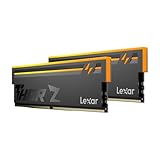
- Unleash Next-Gen Dominance: Experience Lexar DDR5 RAM performance with the Lexar THOR Z Series RGB DDR5 RAM 32GB Kit (2x16GB). Clocking at a blistering 6000MHz with low CL38 latency, this DDR5 desktop memory delivers up to 6000 MT/s for a full-throttle advantage. Whether you're building a high-end gaming rig or a professional workstation, this Lexar 32GB RAM kit ensures your system keeps pace with next-gen titles
- Sleek & Robust Thermal Design: Engineered for both aesthetics and endurance, this Lexar DDR5 RAM 6000MHz features an all-new streamlined design. The solid, sandblasted aluminum heatsink fuses a minimalist, razor-sharp aesthetic with uncompromising thermal control. This Lexar THOR Z Series armor ensures your DDR5 memory stays cool under pressure, delivering sustained peak performance during intense gaming sessions
- Game in Style with Brighter RGB Lighting: Elevate your build's aesthetics with the enhanced customizable RGB lighting on this Lexar RGB DDR5 RAM. Brighter and more vibrant than previous generations, the Lexar THOR Z Series RGB DDR5 RAM allows you to synchronize lighting effects with your components, creating a truly immersive gaming atmosphere that stands out from the crowd
- On-die ECC & PMIC for Rock-Solid Stability: Go beyond speed with reliability. This Lexar DDR5 RAM kit integrates On-die Error Correction Code (ECC) to automatically correct data errors, vastly improving stability and reliability for your critical tasks. The onboard Power Management Integrated Circuit (PMIC) ensures efficient power delivery, boosting the overall power efficiency of your DDR5 desktop memory for a longer-lasting, more stable system
- Seamless Compatibility with Intel & AMD: Worry-free upgrade guaranteed. The Lexar THOR Z Series DDR5 RAM is built for broad compatibility with the latest platforms. It fully supports Intel XMP 3.0 and AMD EXPO one-click overclocking, making it effortless to achieve the rated speeds. Trust Lexar DDR5 RAM to deliver seamless performance with mainstream DDR5 motherboards
What the company figures show
Financial results illustrate the scale of the demand shift, although revenue is not the same as chip volume and does not by itself prove a consumer price change.
What’s actually slowing this PC down?
Pick the symptom - the matching free tool is one click away.
| Measure | Reported figure | What it indicates |
|---|---|---|
| AMD Data Center revenue, 2024 | $12.6 billion | Data-center sales grew rapidly and represented a major demand pool for server processors and accelerators. |
| AMD Data Center year-over-year growth, 2024 | 94% | A sharp expansion in the market competing for advanced semiconductor capacity. |
| AMD Client revenue, 2024 | $7.1 billion | Consumer and client products remained a substantial business alongside data-center growth. |
| AMD Client year-over-year growth, 2024 | 52% | Client demand also increased; AI demand is not the only factor affecting PC component pricing. |
| Micron HBM revenue growth, fiscal Q3 2025 | Nearly 50% sequentially | HBM sales accelerated sharply in one quarter as AI systems expanded. |
| Micron data-center revenue growth, fiscal Q3 2025 | More than doubled year over year | Data-center demand was expanding much faster than a stable replacement cycle. |
| Micron HBM availability statement, fiscal Q2 2025 | “We are sold out of our HBM output for calendar 2025.” | A direct statement that planned HBM production was already committed for that calendar year. |
| AMD client-processor average selling price, 2024 | Up 13% | Client CPUs became more expensive on average amid strong Ryzen demand; this does not prove AI alone caused the increase. |
Micron chairman, president and chief executive Sanjay Mehrotra said in the company’s fiscal Q3 2025 release: “Micron delivered record revenue in fiscal Q3, driven by all-time-high DRAM revenue including nearly 50% sequential growth in HBM revenue.” The statement confirms the importance of HBM to the period’s results, not a specific gaming-memory price effect.
Are gaming GPUs more expensive because of AI?
AI competition is one plausible contributor, especially for newly launched, high-end cards that use advanced process nodes, large packages and substantial memory. It is not the sole explanation. GPU prices also reflect design costs, board power delivery, cooler materials, retailer margins, exchange rates, tariffs, launch scarcity, cryptocurrency-related demand in earlier cycles and the manufacturer’s product segmentation.
The strongest defensible conclusion is narrower: AI data-center demand can tighten shared inputs and reduce the amount of flexibility available to consumer GPU makers. That can support higher launch prices or slower discounts, but the evidence does not provide a causal coefficient such as “AI adds 20 percent” to every card.
Is AI making RAM more expensive?
It can contribute to pressure on memory markets, but the effect depends on the memory type and the time period. HBM is designed for accelerators and is not interchangeable with the DIMMs installed in a gaming desktop. DDR5 desktop RAM is a clearer physical example of a product in a supplier portfolio that also serves data centers, while GDDR memory is used on graphics cards.
Quick wins for a faster PC:
Fix the driver behind crashes, sound loss and screen glitchesFind Drivers →Clear out junk files and repair common Windows errorsFree Scan →Scan for outdated or missing drivers - takes under a minuteDriver Scan →Memory prices move with factory output, inventory levels, PC shipments, server orders, contract negotiations and transitions between generations. A data-center boom can tighten supplier capacity or encourage manufacturers to allocate more investment toward server products. Conversely, a period of weak PC demand can leave consumer memory plentiful even while HBM remains constrained. Check the current price of the exact capacity, speed and kit configuration rather than assuming that an HBM shortage maps one-for-one to DDR5 pricing.
Rank #3

- Boosts System Performance: 32GB DDR5 overclocking desktop memory RAM kit (2x16GB) that operates at 6000MHz to improve gaming, multitasking and system responsiveness for smoother performance
- Accelerated gaming performance: Every millisecond gained in fast-paced gameplay counts—benefit from lower latency for higher frame rates, perfect for AAA games
- Optimized DDR5 compatibility: Compatible 13th gen intel core CPUs or newer AMD Ryzen 9000 series CPus
- Trusted Micron Quality: Backed by 42 years of memory expertise, this DDR5 RAM is rigorously tested at both component and module levels, ensuring top performance and reliability
- Top-Tier Overclocking: 32GB of DDR5 RAM 32GB, 6000MHz at extended timings of 36-38-38-80 provide stable overclocking performance and lower latency compared to usual Crucial Pro Series DRAM modules
Could AI cause gaming-hardware shortages?
Shortages are possible when a component has limited qualified suppliers and demand arrives faster than production can expand. The most exposed points are likely to be newly launched GPUs, premium memory configurations, advanced packages and complete systems that require several constrained parts at once. NVIDIA’s expectation that Blackwell demand would exceed supply for several quarters is evidence of a data-center supply constraint; it is not a forecast that every gaming product will be unavailable.
Shortages can also appear indirectly. A board may be assembled but held back because a memory module, voltage-regulator component, substrate or testing slot is late. A system builder may have processors and graphics cards but not enough power supplies or cooling hardware to complete the advertised configuration. These bottlenecks can produce regional stock differences and abrupt price changes.
What happens to CPUs?
AI servers use large numbers of CPUs as host processors, but the evidence here points more strongly to accelerator and memory pressure than to a direct gaming-CPU shortage. AMD reported that its 2024 client-processor average selling price rose 13% while Ryzen demand was strong. That demonstrates that client pricing can rise during a period of broad semiconductor demand. It does not establish that AI caused the increase, because product mix, performance improvements and AMD’s own pricing decisions also affect an average selling price.
How to buy gaming hardware when AI demand is strong
Set a performance target before watching prices
Choose the resolution, refresh rate and games you actually intend to run. A target such as 1440p at a chosen frame-rate range is more useful than buying the largest available model. This prevents a temporary shortage from pushing you into an expensive tier whose extra performance you will not use.
Compare the complete cost, not just the GPU label
| Check | Why it matters |
|---|---|
| Total system price | A cheaper card may require a new power supply, case or cooling solution. |
| Performance per dollar | Use reviews and current benchmarks for your games; architecture names alone do not determine value. |
| VRAM capacity | More VRAM can help at high resolutions and with texture-heavy games, but capacity does not replace GPU compute performance. |
| System memory type and capacity | Confirm whether the platform uses DDR5 or an older standard and price the required kit before buying the motherboard. |
| Power-supply and cooling requirements | High-end cards can require larger power supplies, additional connectors and stronger case airflow. |
| Warranty | Review the term, regional coverage and return procedure for the exact board or prebuilt system. |
| Current stock | Availability and pricing change by country, retailer and date; a listing is not a lasting market condition. |
Consider a previous generation only after checking support
An older GPU can be sensible when its price is clearly lower and it meets your VRAM and feature requirements. Compare actual performance, power use, warranty and driver support. Do not pay a “shortage premium” for an older model simply because a newer generation is temporarily unavailable.
Buy the rest of the system independently when practical
Memory, storage, cases and power supplies often have different price cycles from GPUs. Purchasing an available, properly warranted component separately can avoid paying a high bundle markup. Confirm compatibility first: motherboard memory support, power connectors, cooler clearance and the case’s graphics-card length all matter.
Rank #4

- Elevated performance for gamers & creators: 128GB kit DDR5 for enhanced productivity—accelerate demanding tasks and enjoy higher frame rates with this high-speed RAM
- Enhanced PC performance: Crucial Pro RAM 128GB kit with 2x64GB DDR5 operating at the speed of 5600MHz with 5200MHz or 4800MHz downclock support
- Top-tier RAM capacity: 128GB DDR5 RAM kit (2x64GB) compatible with latest Intel Core Ultra Series 2 & 14th Gen Core CPUs and AMD Ryzen 9000 Series desktop CPUs and above
- Low-profile, matte black heat spreader: Enhance your gaming rig with a sleek, modern look. With our integrated low-profile heat spreader, Crucial DDR5 Pro can even fit in smaller PCs
- Supports Intel XMP 3.0 and AMD EXPO on the same module: Achieve easy performance recovery on CPUs that suppress rated memory speeds with Intel XMP 3.0 or AMD EXPO turned on in the UEFI/BIOS settings. Get the full value of your investment without overpaying for performance
Use price history and a return window
Retail prices are geography- and date-sensitive. A short-lived launch price or promotional discount should not be treated as the normal market value. Keep receipts, verify the seller and use the return period to check temperatures, stability and whether the card matches the advertised specification.
The Tool Desk
Outbyte PC Repair FREEClear out junk files and repair common Windows errorsFree Scan →Outbyte Driver Updater FREEScan for outdated or missing drivers - takes under a minuteDriver Scan →What could ease the pressure?
Relief depends on several events: additional wafer and packaging capacity coming online, more HBM production, improved yields, completed data-center build-outs and demand growing slowly enough for inventories to recover. A slowdown in AI infrastructure spending could free capacity, but it could also reduce supplier revenue and delay expansion. The timing is therefore uncertain.
Even when supply improves, retail prices may not immediately return to an earlier level. Manufacturers may have signed long-term contracts, changed product tiers or raised prices for reasons unrelated to a single component. Track current listings and independent market data rather than relying on a predicted normalization date.
The practical answer for gamers
AI data centers raise gaming-hardware costs through competition for shared semiconductor, packaging, substrate and memory resources. The pressure is documented most clearly in explosive data-center revenue and Micron’s statement that its HBM output for calendar 2025 was sold out. Those facts support a mechanism for tighter supply and higher costs, but they do not prove that AI alone determines the price of every GPU, RAM kit or gaming PC.
For a purchase, compare the complete system cost, real performance, VRAM, memory platform, power and cooling requirements, warranty and current stock. Treat availability as a snapshot tied to your region and date, and avoid paying an unexplained premium merely because AI demand is in the headlines.
Quick Recap
Product prices and availability are accurate as of the date/time indicated and are subject to change. Any price and availability information displayed on Amazon at the time of purchase will apply.

