There is no evidence-based universal winner for “the sport that demands the most from its players.” The answer depends on what you measure: endurance, sprinting, repeated bursts, contact, strength, or the ability to perform skills while tired. Elite soccer is a clear example of a sport that combines several of those demands, but the available figures do not establish it as the hardest sport overall.
What does “physically demanding” mean?
A useful comparison needs to define its measure first. A long match with extensive running stresses players differently from a short contest with frequent collisions, heavy resistance, or repeated maximal efforts. Substitutions, rest periods and position also change what an individual player experiences.
| # | Preview | Product | Price | |
|---|---|---|---|---|
| 1 |
|
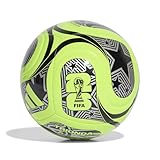
Adidas Unisex-Adult World Cup Soccer Ball, Lucid Lemon/Black/Silver Metallic, 5 | $24.99 | Buy on Amazon |
| 2 |

|
adidas Starlancer Club Soccer Ball, 1 Pack | $18.00 | Buy on Amazon |
| 3 |

|
adidas Unisex-Adult Tango Glider Soccer Ball, White/Black, 5 | $25.00 | Buy on Amazon |
As an Amazon Associate I earn from qualifying purchases.
Relevant dimensions include:
- Work volume: the duration and amount of activity across a match.
- High-speed work: sprinting and other fast running.
- Repeated efforts: how often intense actions recur and how much recovery follows.
- Acceleration and braking: starting, stopping and changing speed or direction.
- Contact: the frequency and severity of physical collisions.
- Energy demands: the mix of aerobic work and short, anaerobic bursts.
- Skill under fatigue: whether players must keep making precise technical or tactical decisions while tired.
These measures are not interchangeable. A sport can rank highly on one and not another, so a single league table would need consistent definitions, comparable athletes and equivalent competition contexts.
Why soccer is a demanding case
Soccer is an intermittent sport: players cover ground at varying intensities, with brief, repeated periods of harder work rather than a steady pace throughout. Jens Bangsbo’s 2006 review describes average oxygen uptake at about 70% of maximum and estimates 150–250 brief intense actions in a game. These are review-level estimates from 2006, not guarantees for every player, match or modern competition. Bangsbo’s review
#1 Best Overall
- Inspired by the world's largest soccer matchup, the adidas FIFA World Cup 26 soccer ball pairs design with performance. A seamless TSBE surface enhances touch. The butyl bladder ensures consistent shape retention for every match or practice session.
- TSBE TECHNOLOGY: Seamless surface for better touch and lower water uptake
- KEEPS ITS SHAPE: Butyl bladder for best air retention
- REQUIRES INFLATION: Ships flat, pump not included
- FIFA QUALITY AND OFFICIALLY LICENSED: Officially licensed by FIFA, the ball passed FIFA tests on circumference, weight, rebound and water absorption
The combination matters. Aerobic capacity supports sustained activity and recovery between harder efforts, while short bursts call on anaerobic energy pathways. A player may need to accelerate, decelerate or sprint, then continue moving and remain ready to repeat the effort.
Why averages can miss the hardest passages
A whole-match average can smooth over the most demanding moments. A 2023 professional-soccer match-performance paper reports a peak locomotor-demand example of about 200 metres covered in a one-minute window, including about 61 metres of high-speed running and 30 metres of sprinting, alongside roughly four high-intensity accelerations or decelerations. This is a peak-window example, not a typical minute for the entire match or a match-wide average. 2023 match-performance paper
Rank #2
- A recreational soccer ball with a resilient butyl bladder for casual games
- SOFT AND DURABLE: Machine-stitched construction ensures a soft touch and high durability
- KEEPS ITS SHAPE: Butyl bladder for best air retention
- REQUIRES INFLATION: Ships flat, pump not included
That distinction is useful for understanding conditioning: preparing for total match exposure is not identical to preparing for the hardest passage. Match analysis is used to inform conditioning and injury-prevention strategies, taking account of both overall workload and demanding periods. UEFA expert group statement on nutrition in elite football (2020)
The Tool Desk
Outbyte PC Repair FREEClear out junk files and repair common Windows errorsFree Scan →Outbyte Driver Updater FREEFix the driver behind crashes, sound loss and screen glitchesFind Drivers →Demand varies by position—and by sport
Players in different positions do not face identical workloads. A 2010 review of Australian football match demands reports that midfielders perform approximately 98 high-intensity efforts per game and typically sustain those efforts longer, with shorter recovery, than players in other positions. That is a position-specific Australian-football finding, not a ranking of Australian football against soccer or other sports. 2010 Australian football review
Rank #3
- Regulation-size soccer ball
- Machine-stitched construction for high durability
- Butyl bladder for best air retention
- Size 5 ball (official size) suggested for ages 12 plus
- Requires inflation
Comparisons across sports need similar care. A soccer peak-running window cannot be directly ranked against a collision count, a strength measure or effort totals from another sport unless the populations, rules, measurement methods and definitions match. The available figures illustrate different demands; they do not provide a harmonized cross-sport score.
Independent reader supportYour contribution helps us test, update, and keep practical guides available for everyone.What the energy estimates do—and do not—show
The 2020 UEFA expert group statement cites studies estimating energy expenditure of about 1,300–1,600 kcal during a match and about 3,500 kcal across a total match day. These are cited estimates, not direct measurements made by the statement’s authors, universal values for every player, or personal nutrition prescriptions. The match-day estimate is not match-only expenditure. UEFA expert group statement
So, which sport demands the most?
There is no supported categorical answer across all sports. If “demand” means sustained running combined with repeated high-intensity movement, elite soccer is a strong example. If the measure is collision exposure, strength, explosive power or another quality, a different sport may present a greater challenge. The fairest answer is that the most demanding sport depends on the metric, the athlete’s role and the match context.
Windows Errors? Fix Them Before They Spread
Repair common Windows errors and clear accumulated junk for a smoother, more stable PC - no reinstall needed.Free scan · no reinstallOutdated Drivers Are Slowing You Down
One free scan finds every outdated or missing driver and matches the right update for your exact hardware.Free scan · exact hardware matchQuick Recap
Product prices and availability are accurate as of the date/time indicated and are subject to change. Any price and availability information displayed on Amazon at the time of purchase will apply.




