Outdated Drivers Are Slowing You Down
One free scan finds every outdated or missing driver and matches the right update for your exact hardware.Free scan · exact hardware matchWindows Errors? Fix Them Before They Spread
Repair common Windows errors and clear accumulated junk for a smoother, more stable PC - no reinstall needed.Free scan · no reinstallCompare calories for the amount you will actually drink, then check total sugars, added sugars and the ingredient list. A “zero-calorie” or “sugar-free” claim alone does not tell you how many servings are in the bottle, which sweetener it contains or whether it provides useful nutrients.
Start with the serving size and calories
On the Nutrition Facts label, check both the serving size and the servings per container. A bottle may contain more than one labeled serving, so the calories listed per serving may not represent the whole bottle. The CDC notes that serving size reflects how much people are likely to consume, not necessarily the portion they should consume. For a fair comparison, use the same basis for both drinks—for example, the whole bottle or an equal volume—and adjust the calories accordingly. CDC: Understanding food labels
As an Amazon Associate I earn from qualifying purchases.
Compare total sugars and added sugars
Total sugars include sugars naturally present in a drink as well as sugars added during processing. Added sugars include sugars from sweeteners, syrups, honey and concentrated fruit or vegetable juices. Naturally occurring sugars in fruit, vegetables and milk are not counted as added sugars. The FDA does not set a Daily Value for total sugars, but its Daily Value for added sugars is 50 grams per day, based on a 2,000-calorie diet. On the label, 5% Daily Value or less is considered low in added sugars; 20% or more is considered high. These percentages are a quick way to compare products, not a personal daily target. FDA: Added sugars on the Nutrition Facts label
Recommended Free Tools
Read the claim and the ingredient list together
“Sugar-free” does not necessarily mean zero calories
FDA guidance generally defines “sugar-free” as less than 0.5 grams of sugars per reference amount and labeled serving. The phrase is not a complete calorie claim: if a product is not low- or reduced-calorie, accompanying language may be required. Check the Nutrition Facts panel rather than inferring calories from the front label. “Low calorie,” “zero calorie,” “sugar-free” and “no added sugar” are not interchangeable descriptions. FDA: Guidance for Industry—Food Labeling Guide
#1 Best Overall

- Includes 18 (12 fl oz) bottles of Gatorade Zero Thirst Quencher Sports Drink: (6) Glacier Freeze, (6) Glacier Cherry, & (6) Berry
- Don’t count the days. Make the days count. Grab your home workout equipment then replenish during your at-home workout with the electrolytes from G Zero
- Gatorade Zero has no sugar while maintaining the same proven hydration and fueling benefits of Gatorade Thirst Quencher
- When you sweat, you lose more than water. Losses in fluids and electrolytes can negatively impact performance. Gatorade Zero contains critical electrolytes to help replace what’s lost in sweat
- During training, your energy needs are unique. Gatorade Zero lets you replace what you’ve lost without adding more of what you may not need
Find out which sweetener is used
When comparing a sweetened drink with a diet or sugar-free version, look for the sweetener by name in the ingredients. FDA discusses high-intensity sweeteners including aspartame, sucralose and stevia-derived substances; they can also appear in powdered drink mixes. Ingredient lists help identify what a product uses, but do not establish that one option tastes better or suits every person. FDA: High-intensity sweeteners
Check other label details that matter to you
Calories are only one part of the comparison. Use the Nutrition Facts label to check nutrients such as sodium, and do not assume a zero-calorie drink supplies meaningful nutrients. If you are considering a zero-calorie drink mix packet for portable flavor, check the packet’s own Nutrition Facts and ingredient list; a sweetened mix is not the same thing as plain water. CDC: Understanding food labels
Rank #2

- FLAVOR: Snapple Zero Sugar Peach Tea is made from the finest blend of black and green tea leaves and our classic peach flavor.
- ZERO SUGAR: Snapple Zero Sugar Peach Tea is big on flavor, low in calories and contains zero sugar.
- QUALITY: Our teas, fruit drinks, and lemonades are always made from quality ingredients.
- VARIETY: Snapple always brings the flavor. Snapple Zero Half 'n Half Lemonade Iced Tea is just one of our favorite flavors; you can find us in more than 30 flavors today.
- 100% RECYCLED: Our 16oz and 20oz bottles are recyclable and made from 100% recycled plastic (excludes cap and label).
Understand what sweetener guidance does—and does not—say
FDA says sweeteners used in foods must meet applicable safety requirements and says scientific evidence continues to support its determination that aspartame is safe for the general population when used under approved conditions. That regulatory safety statement is different from asking whether a sweetener is a useful long-term weight-control strategy. FDA: Aspartame and other sweeteners in food
What’s actually slowing this PC down?
Pick the symptom - the matching free tool is one click away.
CDC says replacing added sugars with low- or no-calorie sweeteners may reduce calorie intake in the short term, while questions remain about long-term effectiveness for weight management. WHO’s 2023 conditional guideline recommends against using non-sugar sweeteners to control body weight or reduce the risk of noncommunicable diseases. It applies to people generally except those with pre-existing diabetes, is not a toxicological assessment of individual sweeteners, and is not a replacement for safe-intake guidance. WHO excludes sugar alcohols (polyols) from this recommendation because they are caloric sugar derivatives rather than non-sugar sweeteners as defined in the guideline. The recommendation is not proof that a particular diet drink is harmful. WHO: Use of non-sugar sweeteners · CDC: Rethink your drink
Rank #3
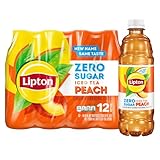
- Includes 12 (16.9 fl oz) bottles of Lipton Zero Sugar Peach Iced Tea
- Say hello to a sip of sunshine with Lipton Iced Tea Zero Sugar Peach!
- Lipton Zero Sugar Peach Iced Tea is a sugar-free drink is bursting with juicy peach flavor, making it the ultimate refreshment for any occasion - from hanging with friends to powering through your daily workout
- Zero Sugar Iced Tea: Lipton Zero Sugar Peach Iced Tea is made with zero sugar, 100% taste, and fruity peach flavor
- Lipton Iced Tea bottles are recyclable: Refresh then recycle
Use a simple comparison checklist
- Match the amount. Compare one whole bottle with another, or compare equal volumes; account for servings per container.
- Compare calories. Use the calories for the amount you would actually drink, not just the listed serving if it is smaller.
- Check sugars. Look at both total sugars and added sugars in grams and % Daily Value.
- Scan the ingredients. Identify the sweetener, if any, by name.
- Check other nutrients. Review sodium and any other nutrients relevant to your preferences.
- Choose by your own taste and tolerance. Labels can show what is in a drink; they cannot predict your personal preference.
Consider water when you want flavor without a sweetened packaged drink
CDC lists tap water, unsweetened bottled water and sparkling water as options; water is calorie-free. For flavor, it suggests adding a splash of 100% juice to sparkling water. CDC: Water and healthier drinks
Independent reader supportYour contribution helps us test, update, and keep practical guides available for everyone.Keep older consumption figures in context
CDC reports that 49% of U.S. adults drank a sugar-sweetened beverage on a given day during 2011–2014, and that adults consumed an average of 145 calories per day from these beverages during that same survey period. These are historical figures, not measurements of consumption in 2026. The CDC examples of sugar-sweetened beverages include regular soda, fruit drinks, sports and energy drinks, sweetened waters, and sweetened coffee or tea. CDC: Sugar-sweetened beverage intake
Rank #4
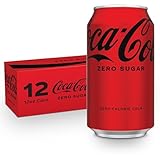
- Coca-Cola Zero Sugar sodas deliver cola taste with zero sugar and zero calories for endless refreshment
- This zero-sugar soda delivers iconic cola flavor in every sip
- Delicious and bold, Coca-Cola Zero Sugar is the refreshing drink that brightens your day
- A carbonated soda pop with a smooth cola taste, best enjoyed chilled for maximum refreshment
- 12 pack, 12 fl oz cans of Coca-Cola Zero Sugar, the refreshingly fizzy no sugar drinks to enjoy alone or paired with your favorite meals
These label rules and claims refer to U.S. FDA guidance. If you are shopping elsewhere, use the nutrition labeling rules and claim definitions that apply in your country.
Quick Recap
Best Value

- UNIQUE TASTE: Dr Pepper is the uniquely satisfying beverage whether you enjoy the original or any of the varieties like Dr Pepper Cherry, Dr Pepper & Cream Soda and Dr Pepper Zero Sugar
- ALL DAY REFRESHMENT: Enjoy a Dr Pepper at all game day occasions, or really any day! Crack a Pepper at dinner, lunch, or breakfast
- PERFECT PAIRING: Pizza, burgers or rotisserie chicken, Dr Pepper is the perfect companion for every college football occasion, whether you’re tailgating or home-gating
- ORIGINAL FLAVOR: Established in 1885, Dr Pepper has delivered satisfying refreshment for 135 years
- ALWAYS A TREAT: Rich, smooth and delicious every time, Dr Pepper packs a mouthful of flavor with every sip (you’re welcome, taste buds)
Product prices and availability are accurate as of the date/time indicated and are subject to change. Any price and availability information displayed on Amazon at the time of purchase will apply.




