Outdated Drivers Are Slowing You Down
One free scan finds every outdated or missing driver and matches the right update for your exact hardware.Free scan · exact hardware matchPC Slower Than It Used to Be?
A free scan shows the junk files, broken settings and background clutter dragging Windows down - then fixes them in one click.Free scan · Windows 10 & 11Before filling a controlled-substance prescription, ask the prescriber and pharmacist what the medicine is for, how to use it safely, what alternatives exist, how long you should take it, which interactions matter, and what to do in an emergency. Bring a complete medication and substance list, disclose relevant health history, and make a plan for storage, follow-up, naloxone when appropriate, and disposal before the first dose.
Start with the purpose and the treatment goal
The U.S. Food and Drug Administration tells patients, “Every patient should ask questions when getting a new prescription.” A controlled label does not by itself tell you whether the medicine is the best choice for your condition, how much benefit to expect, or how long treatment should continue.
As an Amazon Associate I earn from qualifying purchases.
What condition is this treating?
Ask your prescriber to name the condition and explain how the medicine is expected to help. For pain, ask how success will be measured in both pain and function: for example, walking farther, sleeping, working, or completing basic activities. A clear goal makes it easier to decide whether benefits justify continued exposure.
Do these 3 things before closing this tab:
1Repair Windows errors before they cause bigger problems2Fix the driver behind crashes, sound loss and screen glitches3Clear out junk files and repair common Windows errorsCould a non-controlled or nonopioid option work?
Ask which non-controlled, nonopioid, behavioral, physical, or other approaches could treat the same problem. CDC guidance recommends discussing nonopioid options and setting goals for pain and function. Ask whether an alternative could be used first, combined with the controlled medicine, or substituted if the expected benefit does not occur.
#1 Best Overall

- VERSATILE SECURITY: Secure a variety of essentials with Biliitim lock box. The lockable storage box is designed to securely store various items, from meds and electronics to snacks and dangerous tools. This isn't just any lockable storage box. With its adaptable size and ventilation, it could be used as a refrigerator-safe lock box, keeping food fresh and a medicine lock box away from toddlers, and a phone lock box charged with built-in cable holes, perfect for home, office, or school dorm rooms use
- IMPORTANT: Assembly Required for Stability: The lock box is shipped in parts and must be assembled before use (no tools required). The structure is not stable until properly assembled, but once installed, it becomes stable and suitable for daily storage needs. *Clear instructions are included to guide proper setup
- SPACIOUS YET COMPACT: Designed with practical storage space for everyday needs: External Size: 11.4" × 9.25" × 7.5", Internal Size: 10.4" × 8.3" × 6.7", Capacity: approx. 10 Liters (0.35 cubic feet) Large enough to hold multiple prescription bottles, pill bottles, vitamins, snacks, tablets, phones, or small electronics. With a 10L (0.35 cu ft) capacity, this lock box provides enough space for multiple items while fitting easily in refrigerators, cabinets, or desks. Please verify internal dimensions before purchase to ensure compatibility
- CLEAR VISIBILITY & CHARGING ACCESS: Transparent panels let you identify contents at a glance without unlocking the box. Four cable openings allow compatible phones, tablets, home routers, and other small electronics to remain connected to power while stored. Keeping devices visible yet secured can help reduce distractions and support focused study, work, or family time
- SAFETY ASSURED WITH PREMIUM MATERIALS: Constructed with BPA-free, food and medical-grade plastic materials, the biliitim lock box ensures your items are enclosed in a safe, non-toxic environment, with resistance to extreme temperatures. Our refrigerator lock box withstands freezer temperatures as low as -30°C, safeguarding your items in varied conditions, making it suitable for organizing compatible refrigerated meds or frozen items, such as ice cream,chocolate
For pain, clarify its expected time course. CDC describes acute pain as usually lasting less than one month, subacute pain as one to three months, and chronic pain as more than three months. The appropriate plan can differ substantially across those categories; a prescription intended for a short episode should not silently become indefinite treatment.
Clarify dose, duration, and the follow-up plan
Get exact instructions
Before leaving the office or pharmacy, ask:
- What dose should I take each time?
- How many hours should separate doses?
- What is the maximum amount in 24 hours?
- Should I take it with food, water, or at a particular time?
- What should I do if I miss a dose or accidentally take too much?
Have the pharmacist review the label and Medication Guide in plain language. If the written directions differ from what the prescriber told you, stop and resolve the discrepancy before taking the medicine.
Ask how long treatment lasts
Ask for a stop date or a specific reassessment date, not only “take as needed.” FDA opioid guidance emphasizes the lowest effective dose, the shortest duration needed, and the smallest appropriate quantity. Ask when to stop, whether the dose must be tapered, and which symptoms mean you should contact the prescriber rather than continue or stop on your own.
The Tool Desk
Outbyte PC Repair FREEClear out junk files and repair common Windows errorsFree Scan →Outbyte Driver Updater FREEScan for outdated or missing drivers - takes under a minuteDriver Scan →Do not abruptly stop a benzodiazepine after regular use without medical advice. FDA warns that patients taking benzodiazepines should discuss a plan for slowly decreasing the dose and frequency with a health professional. A taper may also be needed for other medicines, depending on the drug, dose, duration, and your health.
Know when follow-up occurs
Ask who will contact you, when the next appointment or check-in will happen, and what information you should record. Follow-up may be needed to assess benefit, sedation, breathing, blood pressure, mood, use of other medicines, and signs of tolerance, dependence, misuse, or withdrawal. If the prescription is for a short-term problem, ask what event ends treatment and what to do if symptoms persist.
Rank #2

- High-quality Materials: This locking medicine box is made of aluminum alloy + MDF, which provides you a durable box to protect your medicines and other itmes and keep it organised. Better metal feel
- Large Space: The locked medicine box is carried with removable tray, 2-layer storage box, organising your first aid kits or daily pills on the tray for your emergency needs. The regular medicine or large bottles can be stored in the bottom space, meeting your different storage needs.
- Safe with Key Lock: The lockable medicine box is carried with 2 keys, which can keep your medicine in a safe place, no unauthorized access and child-proof. Please note that the key is unique and please keep it safe.
- Easy to Carry: The medical lock box is equipped with a handle and carried with a shoulder-strap, which is suitable for home, school, office ,travel and outdoor activities. Convenient for your on-the-go situation.
- Multi-use: The lock box is not only can be used as medicine storage box to keep your medications organised, but also can be a storage box to store your personal items or other valuables.
Review your personal risks and every substance you use
Give a complete medication and substance list
Tell both the prescriber and pharmacist about every prescription, over-the-counter product, vitamin, supplement, alcohol use, cannabis or other substance, and medicine obtained from another clinician. Include products you use only occasionally. Bring the containers or an up-to-date written list with names, strengths, and schedules.
FDA specifically warns about combining benzodiazepines with alcohol and with prescription or over-the-counter medicines. Opioids can also become dangerous when combined with alcohol, benzodiazepines, sleep medicines, muscle relaxants, or other sedatives. Ask the pharmacist to identify duplicate ingredients and combinations that can slow breathing, impair alertness, raise blood pressure, or alter the controlled medicine’s concentration.
Disclose health conditions and history
Tell the clinician about pregnancy or plans for pregnancy when relevant, kidney or liver disease, sleep apnea or other breathing problems, prior overdose, falls, seizures, heart disease, and any history of depression or other mental-health conditions. Also disclose personal and family history of substance use. These details can change the medicine selected, the dose, the monitoring plan, or whether take-home rescue medication is advisable.
Ask about driving and daily activities
Ask when it is unsafe to drive, operate machinery, climb, or make safety-critical decisions. Sedation and dizziness can occur even when you follow the label, and the risk may increase after a dose change or when another sedating substance is added. Do not assume that feeling accustomed to a medicine means coordination and judgment are unaffected.
Know expected side effects and emergency warning signs
Separate common effects from danger signs
Ask the pharmacist to identify which effects can be monitored at home and which require a same-day call. Opioids may cause sedation, dizziness, constipation, nausea, confusion, respiratory depression, tolerance, dependence, overdose, and opioid use disorder. Ask how to prevent or treat constipation and what level of sleepiness is abnormal.
Rank #3
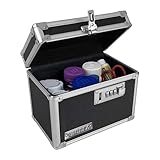
- SECURE STORAGE FOR VALUABLES & PERSONAL ITEMS: Keep cash, documents, electronics, and personal belongings protected in this locking storage box designed for everyday organization.
- IDEAL FOR SHARED & CONTROLLED ENVIRONMENTS: A reliable lock box for homes, offices, dorm rooms, or travel where added security and peace of mind matter.
- CUSTOMIZABLE COMBINATION LOCK: Easy-to-set 3-digit code transforms this into a dependable combination lock box—no keys required, reset anytime.
- COMPACT SIZE WITH PRACTICAL CAPACITY: Small lockbox design (9.88" W x 7" D x 7.75" H) fits easily on shelves or in cabinets while holding cash, documents, electronics, and other essentials.
- DURABLE METAL SAFE BOX CONSTRUCTION: Sturdy steel build with reinforced corners and secure latch provides long-lasting protection as a small safe or lockbox.
Seek emergency help for signs of a possible opioid overdose, such as extreme difficulty waking, very slow or stopped breathing, choking or gurgling sounds, blue or gray lips or fingertips, or pinpoint pupils. Call emergency services immediately, administer naloxone if available and appropriate, and follow the product instructions while waiting for help.
Free tools Windows power users keep installed
One-click scans. No signup required.
Recognize stimulant emergencies
Stimulant overdose can involve serious cardiovascular or neurologic events. FDA advises emergency care for severe symptoms. Ask specifically which symptoms matter for your medicine, including chest pain, severe shortness of breath, fainting, seizure, sudden weakness, severe agitation, confusion, or an unusually fast or irregular heartbeat.
Understand dependence, tolerance, and addiction
Physical dependence means the body may react when a medicine is reduced or stopped; tolerance means more medicine may be needed for the same effect. Neither term alone establishes addiction, but both require medical supervision. CDC states, “Anyone who takes prescription opioids can become addicted to them.” Ask what warning signs of opioid use disorder or another substance-use problem to watch for and whom to contact confidentially if concerns arise.
Ask whether naloxone should be available
If the prescription is an opioid, ask whether you or someone in your household should have naloxone, how to obtain it, how to recognize an overdose, and whether repeat dosing may be needed. Ask the pharmacist to demonstrate the product you receive and explain its expiration and storage requirements. Naloxone does not replace emergency services or ongoing treatment; it is a rescue measure while help is summoned.
Independent reader supportYour contribution helps us test, update, and keep practical guides available for everyone.Confirm what happens if the pharmacy cannot fill it
Controlled medicines may be unavailable because of a stock problem, an authorization issue, a prescription error, or a change in your treatment plan. Ask the pharmacist what to do if the exact product, strength, or quantity cannot be supplied. Contact the prescriber before changing the dose, splitting tablets, substituting a different strength, or seeking the medicine elsewhere. Ask how to protect your privacy and what identification or documentation is required under applicable law.
What’s actually slowing this PC down?
Pick the symptom - the matching free tool is one click away.
Rank #4

- Help Keep Medications Organized and Less Accessible: Designed for families, caregivers, and shared households, this medicine lock box provides a dedicated place for pills, vitamins, insulin supplies, first aid items, and other daily essentials. A practical solution for keeping medications organized and reducing casual access around the home
- Ideal for Homes with Children, Teens, and Shared Spaces: Ideal for many families to use this lock box for medication storage, personal belongings, snacks, and small valuables. Perfect for homes with children, teenagers, roommates, siblings, or caregivers who want a simple way to separate and organize important items
- Easy-to-Use Combination Lock – No Keys Required: The built-in 3-digit combination lock allows convenient everyday use without worrying about lost keys. Great for storing medications, phones, wallets, keys, cards, electronics, snacks, and other personal items that benefit from a dedicated storage space
- Compact Size with Practical 2L Capacity: Exterior size: about 9.25 x 5.04 x 3.62 in. Interior size: about 8.93 x 4.72 x 2.56 in. Fits many common pill bottles, blister packs, vitamins, first aid supplies, phones, snacks, passports, cash, and personal accessories. Suitable for cabinets, countertops, desks, dorm rooms, refrigerators, and office spaces
- Lightweight Privacy Storage for Everyday Use: This lockable storage box is designed to help organize personal items and discourage casual handling in homes, offices, dorms, and shared environments. It is not intended to replace a high-security safe or certified child-resistant packaging. Please use additional safety measures when storing valuable or sensitive items
Store the medicine so others cannot access it
Keep the medicine secured, dry, and in its original labeled container unless a health professional gives different instructions. FDA says households with children should consider a lockbox for opioid medicines. A lockable box is an added barrier, not a replacement for counseling or for keeping track of doses.
Never share or sell a controlled medicine. A dose that is appropriate for you can cause severe injury or death in another person, especially a child, an older adult, or someone taking other sedatives. Do not leave pills in an unlocked bathroom cabinet, car, purse, or bedside table where visitors or household members can reach them.
Plan disposal before treatment ends
Ask the pharmacist or read the label for the exact disposal route in your area. FDA says a drug take-back option is preferred for most unused or expired medicines. Mail-back services and authorized collection sites are alternatives when available. Flushing is appropriate only for the limited medicines on the FDA flush list; do not flush a controlled medicine merely because it is unused unless the official instructions specifically allow it.
Dispose of unwanted medicine promptly when treatment ends or the medicine expires. Follow any instruction to remove or obscure personal information on the label before discarding the container. If you are unsure whether a local collection site accepts a particular controlled medicine, ask the pharmacist rather than placing it in household trash or recycling without guidance.
Use this appointment and pharmacy checklist
- Write down the condition being treated and the functional improvement you hope to see.
- List every prescription, over-the-counter medicine, supplement, alcoholic drink pattern, and other substance.
- Record allergies, pregnancy status when relevant, kidney or liver disease, sleep apnea, prior overdose, and personal or family substance-use history.
- Ask about non-controlled and nonopioid alternatives, expected benefits, and treatment goals.
- Confirm the dose, schedule, maximum daily amount, missed-dose instructions, stop date, taper plan, and follow-up date.
- Ask which side effects are expected, which require a call, and which require 911 or emergency care.
- For an opioid, ask about naloxone, overdose recognition, and rescue instructions.
- Ask how to store the medicine, who must not access it, and what to do if the product is unavailable.
- Confirm the approved take-back, mail-back, or other disposal method before you have leftover doses.
Bring this checklist to both the prescriber and the pharmacist. Pharmacists can explain the label and Medication Guide, check interactions, clarify a quantity or strength problem, and help report side effects or medication errors. If an answer is unclear, ask for it to be written down and repeat it back in your own words before taking the first dose.
Why these questions matter
CDC’s 2025 patient FAQ records nearly 308,000 deaths from prescription-opioid overdose in the United States from 1999 through 2023. That historical total is not a current-year estimate, but it illustrates why a controlled prescription deserves a specific plan for benefit, duration, interactions, monitoring, rescue, storage, and disposal. Asking these questions before filling the prescription helps you and your health professionals identify safer options and act quickly when treatment is not working or a serious reaction occurs.
Quick Recap
Product prices and availability are accurate as of the date/time indicated and are subject to change. Any price and availability information displayed on Amazon at the time of purchase will apply.

