An MCP gateway is an intermediary between an AI application’s MCP client and one or more MCP servers. It can provide a central place to authenticate callers, authorize individual tool calls, route requests, handle credentials, apply limits or approvals, and log decisions. It improves security only for traffic that actually passes through it and for risks its policies can evaluate; it does not make an agent’s choices or the tools’ content inherently safe.
How an MCP gateway works
A typical request travels from an agent or MCP client to the gateway, onward to an MCP server and tool, and back through the gateway to the client. The gateway can check who is calling, decide whether that identity may invoke the requested tool, enforce a restriction or approval step, forward permitted requests, and record the result.
As an Amazon Associate I earn from qualifying purchases.
Some implementations also inspect responses, redact data, manage secrets, or constrain network and container access. These capabilities are implementation-specific, not requirements of MCP or universal gateway features. Docker describes a client-server boundary and its security controls; Permit documents per-call policy checks and consent; Microsoft documents routing eligible Foundry MCP tools through Azure API Management. Docker security documentation, Permit MCP Gateway documentation, and Microsoft Foundry governance guidance describe their respective implementations.
Authentication is not authorization
Authentication establishes which user, application, or agent is connecting. Authorization determines which particular tool or action that identity may use. A gateway that verifies a connection but permits every tool call has not meaningfully limited what the caller can do. Microsoft’s guidance covers authentication and gateway policies, while Permit describes policy evaluation on each tool call.
#1 Best Overall

- Watchguard T145 Firebox with 1 Year Basic Security Suite License (WGT145031) - The Firebox T145 delivers enterprise-grade protection for branch offices and retail sites. With a blend of 2.5Gb, 1Gb, and SFP/SFP+ ports, it supports high throughput, AI-driven malware protection, and DNS filtering for robust network defense.
- The Basic Security Suite activates core protections on your Firebox, including intrusion prevention, gateway antivirus, URL filtering, and spam blocking in WatchGuard Cloud. Upgrade to Total Security Suite to add AI-powered malware detection, cloud sandboxing, DNS filtering, and advanced correlation.
- The Basic Security Suite equips your WatchGuard Firebox with a robust set of foundational security tools. This bundle delivers intrusion prevention, gateway antivirus, URL filtering, and spam blocking, all managed through WatchGuard Cloud. It’s a cost-effective choice for organizations that need reliable, essential protection without unnecessary extras.
- Interfaces and deployment: 2.5Gb and 1Gb Ethernet with SFP or SFP+ fiber for clean aggregation and segmented backhaul at the edge.
- Performance and scale: UTM up to 710 Mbps with inspection on; flexible VPN topologies for hub and spoke or mesh designs.
Coverage determines whether the boundary works
Every relevant invocation path must pass through the gateway and receive the intended policy. Check whether this includes direct calls, dynamic tools, alternate execution modes, and reload paths. Docker specifically notes consistent policy coverage across direct calls, dynamic execution, mcp-exec, and code-mode tools. A route that bypasses enforcement can nullify the central policy.
What security a gateway can add
- Tool-level authorization: Allow or deny calls based on identity and tool or action attributes, rather than granting an agent unrestricted access to every connected server.
- Limits and escalation: Apply rate limits or require human approval for consequential actions, if the implementation supports them.
- Credential handling: Keep credentials out of model-visible content and supply them through a trusted server or proxy where possible.
- Inspection and data controls: Some gateways can inspect requests or responses, redact sensitive information, or constrain network and runtime access; confirm precisely which controls exist.
- Auditability: Record decisions and activity so operators can investigate what was allowed or denied, by whom, and when.
For example, Docker’s security documentation says its HTTP transports require a bearer token by default, with an explicit unauthenticated opt-out. It also says secret blocking and call logging are enabled by default; its default logger records tool names and argument-shape metadata rather than raw argument keys and values. Those are Docker-specific defaults, not general MCP gateway behavior. Check the documentation for the version you deploy: Docker MCP Gateway security model.
Rank #2
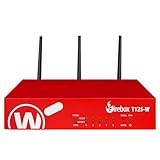
- Watchguard T125-W Firebox with 1 Year Total Security Suite License (WGT126641) - The T125-W adds Wi-Fi 7 capability to the powerful Firebox T125 platform. Designed for branch or remote offices, it delivers 510 Mbps UTM throughput, advanced security services, and full wireless coverage in a single, compact appliance.
- The Total Security Suite is WatchGuard’s most comprehensive security package, bundling every advanced service into one subscription. It delivers layered defense with AI-driven malware detection, DNS filtering, cloud sandboxing, and security correlation. Ideal for organizations that demand maximum protection and visibility across their network.
- The Total Security Suite equips your WatchGuard Firebox with the full set of advanced defenses. It adds AI powered malware detection, DNS filtering, cloud sandboxing, threat correlation, and automated response, all managed in WatchGuard Cloud. Ideal for organizations that need maximum protection, compliance ready reporting, and end to end visibility.
- Interfaces and deployment: Wi-Fi 7 plus 1x 2.5Gb and 4x 1Gb Ethernet for coverage, clean uplinks, and straightforward VLAN segmentation with Cloud visibility.
- Performance and scale: UTM up to 510 Mbps with inspection on; add sites confidently with scalable VPN.
Microsoft’s Foundry documentation describes an AI gateway feature that is in preview and routes newly created MCP tools that do not use managed OAuth. Operators are directed to configure the server endpoint as the Azure API Management gateway URL. The documented API Management policies include rate limiting, IP restrictions, header handling, routing, logs, and metrics. This is a scoped preview integration, not a universal route for every Foundry MCP tool. Microsoft’s current governance guidance describes its constraints.
Recommended Free Tools
Use identities and credentials carefully
For production, prefer a dedicated agent or workload identity with only the permissions needed for its task, where feasible. Google explains that when an MCP client acts using a person’s identity, its actions inherit that person’s permissions and are attributed to that person. A separate identity can narrow permissions and make agent activity distinguishable in logs. Google Cloud’s MCP authentication guidance discusses this delegation choice.
Rank #3
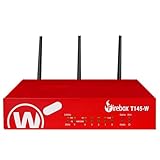
- Watchguard T145-W Firebox with 1 Year Standard Support License (WGT146001) - The Firebox T145-W combines Wi-Fi 7 with versatile wired connectivity for branch and retail environments. With 710 Mbps UTM throughput and advanced features like AI malware scanning and DNS filtering, it delivers top-tier protection in a single, compact unit.
- Standard Support covers software updates and round-the-clock emergency help. Add a Basic or Total Security Suite to activate IPS, gateway antivirus, and web filtering so threats are blocked before they reach users.
- Standard Support provides reliable technical assistance and software updates for WatchGuard Firebox appliances. Offering 24x7 help for emergencies and business-hours support for routine needs, it ensures your network stays secure and operational.
- Interfaces and deployment: Wi-Fi 7 with 2.5Gb and 1Gb Ethernet plus SFP or SFP+ to deliver coverage, fiber uplinks, and easy segmentation.
- Performance and scale: UTM up to 710 Mbps with inspection on; built for multi site rollouts with scalable VPN.
OWASP recommends short-lived, scoped tokens; validating signature, audience, and expiry; and avoiding direct passthrough of a client token to downstream APIs. It also cautions against treating a session ID alone as identity. These are security recommendations, not evidence that every MCP server implements one uniform authentication profile. OWASP guidance.
OpenAI recommends using a trusted proxy or server to provide credentials outside an agent-generated code environment when the code should not have access to them. That keeps secrets away from model-visible content and reduces the chance that generated code can expose them. OpenAI’s MCP connection documentation.
Rank #4
- Watchguard T145 Firebox with 5 Year Standard Support License (WGT145005) - The Firebox T145 delivers enterprise-grade protection for branch offices and retail sites. With a blend of 2.5Gb, 1Gb, and SFP/SFP+ ports, it supports high throughput, AI-driven malware protection, and DNS filtering for robust network defense.
- Standard Support covers software updates and round-the-clock emergency help. Add a Basic or Total Security Suite to activate IPS, gateway antivirus, and web filtering so threats are blocked before they reach users.
- Standard Support provides reliable technical assistance and software updates for WatchGuard Firebox appliances. Offering 24x7 help for emergencies and business-hours support for routine needs, it ensures your network stays secure and operational.
- Interfaces and deployment: 2.5Gb and 1Gb Ethernet with SFP or SFP+ fiber for clean aggregation and segmented backhaul at the edge.
- Performance and scale: UTM up to 710 Mbps with inspection on; flexible VPN topologies for hub and spoke or mesh designs.
What a gateway cannot guarantee
A gateway governs only requests that reach it and only the conditions its policies can evaluate. A policy may establish that an identity is allowed to call a tool without understanding whether the natural-language instruction behind that call is safe. An allowed tool can still cause harm if its permissions are too broad, and malicious instructions can arrive through user input, documents, tools, or remote services.
Google warns that agent-only operation remains vulnerable to prompt injection, unsafe tool chaining, and naive error handling. Its security page states: “Security relies entirely on the agent’s programming and is vulnerable to prompt injection, insecure tool chaining (where an agent combines individual tools in unpredictable or malicious ways), and naive error handling.” This warning is scoped to agent-only operation, not every MCP deployment. Google Cloud MCP security and safety guidance.
Best Value
Human approval is not a complete remedy either: reviewers need enough context to assess the action, and may still approve a harmful request without recognizing the risk. Combine gateway controls with least-privilege credentials, careful handling of tool output, input and output defenses, and human review for high-impact actions. Docker also identifies malicious content and intended grants as outside its gateway boundary unless they bypass a stated control. Docker’s security model.
How to evaluate a gateway
Ask vendors or operators for evidence against the actual client, servers, and deployment paths you use. This checklist compares control coverage; it is not a benchmark of any product.
- Coverage: Does all relevant client traffic traverse the gateway? Are dynamic tools and alternate execution modes governed consistently?
- Identity and delegation: Can it distinguish a human, agent, service identity, and upstream identity while preserving useful attribution?
- Authorization: Can policy distinguish read, write, destructive, or sensitive actions and evaluate each call? Is the default deny or allow?
- Consent: Can high-impact actions require human approval? Does the reviewer see meaningful context, and is the decision recorded?
- Credentials and data: Are secrets kept out of model-visible contexts? Can logs be redacted, and can request or response inspection avoid storing sensitive payloads?
- Deployment boundary: Is the gateway local or hosted? What outbound network, filesystem, container, and remote-server access does it permit?
- Observability and failure behavior: Are allowed and denied decisions, identities, reasons, and timing available? Does an outage in the policy engine fail closed or fail open?
- Compatibility and operations: Which transports, clients, server authentication types, and dynamic registration behaviors are supported? What latency and operational work does the control plane add?
Documented gateway examples
These examples illustrate different approaches; their feature descriptions are not independent endorsements. Verify support, scope, and behavior for your own configuration.
Outdated Drivers Are Slowing You Down
One free scan finds every outdated or missing driver and matches the right update for your exact hardware.Free scan · exact hardware matchPC Slower Than It Used to Be?
A free scan shows the junk files, broken settings and background clutter dragging Windows down - then fixes them in one click.Free scan · Windows 10 & 11- Docker MCP Gateway: Its security documentation is useful for checking transport authentication, secret handling, logging, trust assumptions, routing, and coverage across invocation paths. Validate details against the deployed version. Docker security documentation.
- Microsoft Foundry with Azure API Management: Microsoft’s page documents a governance path for eligible MCP tools, with the preview and managed-OAuth limitations described above. Microsoft Foundry governance guidance.
- Permit MCP Gateway: Permit describes a proxy that binds calls to a human and agent, evaluates policy per tool call, supports consent, and logs allow or deny decisions. These are vendor-described capabilities; check fit and terms for your use case. Permit documentation.
A separate Microsoft Agent Governance Toolkit repository contains an “MCP Security Gateway — Version 1.0” document dated 2025-07-28 and marked Draft. It proposes interception, response scanning, signing, session authentication, rate limits, audit, and schema-drift controls. It is a draft proposal, not an MCP standard or evidence that these controls are built into gateways generally. Draft specification.
Quick Recap
Product prices and availability are accurate as of the date/time indicated and are subject to change. Any price and availability information displayed on Amazon at the time of purchase will apply.




