What’s actually slowing this PC down?
Pick the symptom - the matching free tool is one click away.
Drift-resistant thumbsticks reduce one important cause of stick drift, but they do not make a controller drift-proof. Traditional potentiometers use rubbing electrical contacts that can wear. Hall-effect and TMR designs read movement magnetically, removing that contact-wear mechanism. The stick can still send unwanted input if its centering spring, mechanics, calibration, electronics, software, or surrounding hardware develops a fault.
What “drift-resistant” actually means
Stick drift is unwanted movement reported while you are not touching the control. A character may walk, a camera may rotate, or a menu cursor may move by itself. “Drift-resistant” describes a design that lowers the likelihood of a particular failure path; it is not a promise that every source of unintended input has been eliminated.
As an Amazon Associate I earn from qualifying purchases.
In a conventional analog stick, the sensing element is a potentiometer. As you move the stick, a wiper physically slides across a carbon surface and the controller turns the changing electrical resistance into an X or Y position. SCUF explains that repeated contact can wear the carbon surface, create carbon dust or gaps, and produce noisy readings or dropouts. That wear is a common route to drift, but it is only one route.
Free tools Windows power users keep installed
One-click scans. No signup required.
PowerA’s Hall Effect FAQ describes a different arrangement: a magnet moves with the stick while a magnetic sensor measures changes in the surrounding field and converts them into a position signal. Since the sensing parts do not rub together, the contact-wear mechanism is greatly reduced. PowerA summarizes the limitation this way: “While no technology can eliminate all possible issues, the contactless design greatly improves reliability compared to traditional analog thumbsticks.”
#1 Best Overall

- Compatible with Windows and Android.
- 1000Hz Polling Rate (for 2.4G and wired connection)
- Hall Effect joysticks and Hall triggers. Wear-resistant metal joystick rings.
- Extra R4/L4 bumpers. Custom button mapping without using software. Turbo function.
- Refined bumpers and D-pad. Light but tactile.
How the two sensing methods differ
Conventional potentiometer sticks
- A wiper makes physical contact with a resistive carbon track.
- Friction and repeated movement can wear the track and wiper.
- Wear debris or damaged sections can make the signal noisy, intermittent, or offset from center.
- A higher dead zone may hide a small offset, but it does not restore worn material.
Hall-effect sticks
- A magnet moves relative to a magnetic sensor as the stick is tilted.
- The position signal is measured without a rubbing electrical contact.
- That removes contact wear as a cause of drift, but leaves the mechanical return-to-center system and other electronics in place.
- Magnet, sensor, wiring, board, firmware, or calibration faults can still create an unwanted signal.
TMR sticks
Tunnel magnetoresistance (TMR) is another magnetic, contactless sensing approach. SCUF says TMR designs can read finer movements more accurately while retaining a feel closer to traditional sticks. The same source says Hall-effect sticks may have a different response curve and can require a short adjustment period. Those are product-maker comparisons, not independent evidence that one technology always lasts longer or performs better. Both Hall-effect and TMR remove the sensing element’s physical contact wear.
What these designs can prevent
The clearest benefit is avoiding drift caused by a worn potentiometer track or wiper. If the sensing surface never rubs, that specific wear pattern cannot occur in the same way. This is why a Hall-effect controller can be a sensible replacement for a controller that repeatedly develops wear-related drift.
Vendors also publish durability specifications. PowerA states that its Hall-effect sensors have a lifespan of five million cycles. That is a manufacturer-published cycle claim, accessed in 2026; it is not an independent measurement, does not apply automatically to every Hall-effect stick, and cannot be converted into a guaranteed number of years. Thrustmaster advertises HEART stick movement tracking “within 0.01 degree.” That is a company specification rather than a verified independent result. Thrustmaster also says H.E.A.R.T. represents 15 years of its Hall-effect expertise in flight simulation; that describes company history, not the expected life of a particular game controller.
Quick wins for a faster PC:
Clear out junk files and repair common Windows errorsFree Scan →Scan for outdated or missing drivers - takes under a minuteDriver Scan →No reliable independent head-to-head figure establishes a universal drift-rate reduction, failure percentage, or controller lifespan for Hall-effect or TMR sticks. Treat cycle counts and precision numbers as specifications for the named product, under the maker’s stated conditions, rather than as guarantees for the whole category.
Rank #2

- Versatile compatibility: supports Xbox Series X/S, Xbox One X/S consoles and PC Win10 and above (including the game platform Steam).
- Precise control: features Hall joysticks and Hall triggers for a comfortable feeling, long service life and improved game accuracy.
- Plug and Play Convenience: Wired USB connection (removable) for easy setup and instant play without the need for additional drivers.
- Customizable experience: Includes 2 custom backbuttons that allow users to eliminate false triggers and improve their gaming experience.
- Impressive gameplay: Provides a pulsating vibration trigger and an asymmetric vibration grip motor for intense tactile feedback.
What they cannot prevent
Mechanical centering problems
The stick still needs a spring or another mechanical assembly to return to neutral. A bent part, weakened spring, wear in the pivot, tolerance stack-up, or an impact can leave the shaft slightly off-center. The magnetic sensor may be functioning correctly while the mechanism sits at a nonzero position.
SCUF states the limitation directly: “Hall Effect and TMR joysticks don’t inherently fix drift or mechanical centering issues.” A controller can therefore develop drift-like behavior even though its sensor has no rubbing contact.
Debris and physical damage
Dust, grit, liquid residue, or a damaged housing can interfere with the pivot or prevent a clean return to center. A fall can misalign the stick assembly, loosen a connector, or damage the circuit board. Contactless sensing does not make the rest of the module physically indestructible.
Calibration and software faults
A controller can report an incorrect neutral value because of calibration data, firmware, an operating-system mapping, or a game’s input handling. A setting that applies an offset or an unusually small dead zone may expose an error that was previously hidden. Conversely, a software bug can look like hardware drift even when the stick assembly is sound.
Rank #3

- Tri-mode Connectivity: Wired for Xbox, 2.4G & Wired for PC, and Bluetooth for Android. The G7 Pro supports seamless connectivity across Xbox, PC, and Android. Effortlessly switch between modes using the convenient physical mode switch.
- TMR Sticks: The G7 Pro features GameSir's Mag-Res TMR sticks, combining Hall Effect durability with traditional potentiometer performance. This advanced technology delivers stable polling rates for smooth, drift-free gaming with low power consumption.
- Hall Effect Analog Triggers: The GameSir precision-tuned Hall Effect analog triggers provide unmatched smoothness and linear input for precise control. Featuring clicky Micro Switch trigger stops, gamers can easily switch based on their preferences.
- 1000Hz Polling Rate on PC: Experience ultra-responsive gaming with a 1000Hz polling rate on PC, available through both wired and 2.4G wireless connections. This ensures instantaneous input registration, reducing lag and optimizing your performance for the most competitive gameplay.
- GameSir Nexus App: The G7 Pro is compatible with the upgraded GameSir Nexus app, which brings a significant upgrade over the original. It introduces powerful new features such as gyro settings, stick curve adjustments, and button-to-mouse mapping, giving you deeper customization and more control than ever before.
Signal variation and component failure
Magnetic sensors, magnets, analog-to-digital converters, connectors, and control-board components can fail or produce unstable readings. Texas Instruments’ joystick design guidance discusses temperature drift in the small magnets used in thumbstick-sized designs. That is a design consideration—not evidence that a particular consumer controller will drift during ordinary use—but it illustrates why “magnetic” does not mean “immune to every electrical or environmental change.”
Dead zones: useful control, not a repair
A dead zone tells the game or controller to ignore a region around the reported center. If the stick rests a little off-center, increasing the dead zone can stop a character or camera from moving. The trade-off is immediate: small intentional movements are ignored too, making fine aiming or slow camera adjustments less responsive.
SCUF notes that players who lower or disable dead zones expose centering or signal imperfections that a larger dead zone would hide. Use the smallest value that stops unwanted movement while preserving the control you need. If the required dead zone keeps growing, treat that as evidence of a worsening mechanical or electronic problem rather than proof that the underlying fault is fixed.
Calibration: when it helps and when it does not
Calibration software or a controller setting can digitally recenter a stick when the reported neutral point has shifted within the hardware’s correctable range. PowerA says most of its Hall-effect sticks need little frequent calibration. SCUF describes calibration as one way to address centering tolerance and digital drift.
Rank #4

- Compatible with Windows and Android.
- 1000Hz Polling Rate (for 2.4G and wired connection)
- Hall Effect joysticks and Hall triggers. Wear-resistant metal joystick rings.
- Extra R4/L4 bumpers. Custom button mapping without using software. Turbo function.
- Refined bumpers and D-pad. Light but tactile.
Calibration cannot repair a worn spring, a bent shaft, broken solder, contamination, or a damaged sensor. Before calibrating, follow the exact support procedure for your controller and connect it in the mode the manufacturer specifies. If the stick will not remain centered after calibration, test it in another game or operating system and then pursue warranty service or model-specific repair rather than repeatedly applying larger software offsets.
How to evaluate a controller beyond the sensor label
“Hall effect” or “TMR” on a box is only one specification. Compare the complete controller and its support terms using these checks:
| What to compare | Questions to ask |
|---|---|
| Platform and model compatibility | Does the exact variant support your console, PC, operating system, wireless mode, and required features? Product families can use different stick technologies. |
| Sensor type | Is it Hall effect or TMR, and does the maker explain what part is contactless? Neither label guarantees immunity to all drift. |
| Centering and calibration | How does the stick return to neutral? Is there an official calibration utility or in-controller procedure? |
| Dead-zone controls | Can you adjust the dead zone in the controller software, console, or game, and are the limits suitable for your use? |
| Feel and response | Does the stick’s resistance, travel, texture, and response curve suit you? SCUF says Hall-effect and TMR models may feel different from one another and from traditional sticks. |
| Durability evidence | Is a cycle or precision number a vendor specification, or is there independent comparative testing? Do not treat a marketing figure as a category-wide life expectancy. |
| Warranty and returns | What happens if centering fails, and who pays for shipping or repair? A contactless sensor does not remove the value of service coverage. |
A practical troubleshooting sequence
Use this order to separate a small setting issue from a hardware fault. Menu names vary by platform, so use the controller maker’s current support instructions for the exact model.
Do these 3 things before closing this tab:
1Repair Windows errors before they cause bigger problems2Fix the driver behind crashes, sound loss and screen glitches3Clear out junk files and repair common Windows errors- Confirm the symptom. Test both axes in the console or PC input display and in a second game. Note whether the movement is constant, intermittent, or limited to one title.
- Inspect the mechanics. Power the controller off and check that the stick moves smoothly through its full range and springs back to the same center point. Do not force the shaft or introduce liquid.
- Check software settings. Review the game’s dead-zone and sensitivity settings, controller profiles, remapping layers, and operating-system calibration panel.
- Apply supported calibration. Follow the model-specific procedure once, then retest at the default dead zone. Record the result rather than continually changing offsets.
- Compare connection modes. If the controller supports wired and wireless operation, test both. A problem present in only one mode may point to firmware, interference, or connection handling rather than the stick mechanism.
- Use service or replacement options. If drift persists across games and modes, check the warranty or an authorized repair route. A generic replacement module is not automatically compatible and should not be treated as a drop-in part.
Buying or repairing after recurring drift
When replacing the controller makes sense
A platform-compatible controller with Hall-effect or TMR thumbsticks is most relevant when a conventional controller has developed recurring wear-related drift and repair is uneconomical. Verify the exact console or PC support, button layout, wired or wireless requirements, and return policy. Keep the limitation beside the purchase decision: contactless sensing lowers one wear risk but does not guarantee a drift-free controller.
Best Value
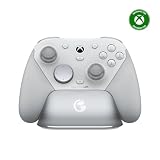
- Tri-mode Connectivity: Wired for Xbox, 2.4G & Wired for PC, and Bluetooth for Android. The G7 Pro supports seamless connectivity across Xbox, PC, and Android. Effortlessly switch between modes using the convenient physical mode switch.
- TMR Sticks: The G7 Pro features GameSir's Mag-Res TMR sticks, combining Hall Effect durability with traditional potentiometer performance. This advanced technology delivers stable polling rates for smooth, drift-free gaming with low power consumption.
- Hall Effect Analog Triggers: The GameSir precision-tuned Hall Effect analog triggers provide unmatched smoothness and linear input for precise control. Featuring clicky Micro Switch trigger stops, gamers can easily switch based on their preferences.
- 1000Hz Polling Rate on PC: Experience ultra-responsive gaming with a 1000Hz polling rate on PC, available through both wired and 2.4G wireless connections. This ensures instantaneous input registration, reducing lag and optimizing your performance for the most competitive gameplay.
- GameSir Nexus App: The G7 Pro is compatible with the upgraded GameSir Nexus app, which brings a significant upgrade over the original. It introduces powerful new features such as gyro settings, stick curve adjustments, and button-to-mouse mapping, giving you deeper customization and more control than ever before.
When a replacement module may be appropriate
Exact-model joystick modules and repair tools can make sense only when the controller model, module dimensions, electrical characteristics, connector, and required tools have been verified. The available evidence does not establish that a generic Hall-effect module fits any named controller. Opening a controller can void warranty coverage and can introduce alignment or soldering problems, so use the model’s service documentation or an authorized repair provider.
What the evidence supports—and what it does not
Manufacturer explanations consistently support a narrow conclusion: contactless magnetic sensing removes the rubbing-contact wear mechanism found in potentiometers. They do not establish a universal guarantee against drift, a fixed number of drift-free years, or a quantified advantage over every conventional design.
SCUF’s “What Are Endurance Thumbsticks?” page states: “Endurance Thumbsticks significantly reduce drift risk from wear; they do not guarantee a controller will never experience any input issues.” That wording captures the appropriate expectation. Choose the technology for reduced exposure to one known failure mode, then judge the controller on its mechanics, calibration tools, software controls, service terms, and actual compatibility.
Quick Recap
Product prices and availability are accurate as of the date/time indicated and are subject to change. Any price and availability information displayed on Amazon at the time of purchase will apply.




