Vectron 65 Plus is a build-it-yourself 6502 computer with an 8 MHz WDC 65C02, 32 KB of SRAM, 32 KB of ROM, keyboard support, BASIC, and 32 GPIO pins. Its project page dates the work to June 27, 2022; the available sources do not verify that it is an entry in Hackaday’s 2026 Retrocomputing Challenge.
What the Vectron 65 Plus is
Nick Bild’s Vectron 65 Plus is an extensible, 6502-based computer project documented on Hackaday.io. Its description says the machine supports a keyboard and can run BASIC, with 32 GPIO pins for expansion. The project page lists a WDC 65C02 processor running at 8 MHz, 32 KB SRAM, 32 KB ROM, and two 6522 VIA interface chips.
As an Amazon Associate I earn from qualifying purchases.
The project is presented as a build, not as a confirmed retail computer or complete kit. Its bill of materials identifies components and a PCB design, but does not establish that assembled machines or kits are for sale. The earlier Vectron 65 is described as a 65C02 breadboard computer with VGA, keyboard support, Tiny BASIC, and GPIO; those predecessor details should not be assumed to describe every Plus configuration.
Crashes, No Sound, or Screen Glitches?
Random freezes, missing sound and display glitches usually trace back to one bad driver. Find and replace yours safely.Free scan · under a minuteWindows Errors? Fix Them Before They Spread
Repair common Windows errors and clear accumulated junk for a smoother, more stable PC - no reinstall needed.Free scan · no reinstallWhat “Plus” adds: documented expansion projects
The project page names three related peripherals. They address different needs and should be treated as expansion projects, not as standard features integrated into every base-computer build.
#1 Best Overall
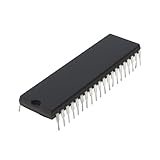
- Applicability: This product is compatible with Rockwell 6502, a classic 8-bit CPU widely used in early computers, embedded systems and industrial control equipment. Compatible with MOS 6502 instruction set, suitable for scenarios requiring low-cost, low-power processing capabilities.
- Suitable for equipment that requires long-term stable operation, such as automation control, instrumentation, etc.
- Product function: Replace damaged 6502 series CPUs and repair old computers or control equipment.
- Product material: This product is specially designed and made of metal, with a long service life and not easy to damage
- Easy to install: It can be directly replaced without adjustment, with perfect compatibility and high reliability.
| Project | Purpose | What the documentation establishes |
|---|---|---|
| Vectron VGA Plus v2 | Pixel-level VGA graphics | Named as an associated peripheral on the Vectron 65 Plus project page. |
| Vectron VGA Plus Text Mode | Simplifies text output | Named as an associated peripheral on the Vectron 65 Plus project page. |
| Vectron Sound Plus | Sound generation using an AY-3-8910 | Named as an associated peripheral on the Vectron 65 Plus project page. |
The separate Vectron VGA Plus repository documents a VGA board with 640×480 output at 60 Hz and its own oscillator, logic ICs, SRAM, passive components, VGA connector, and headers. Those are specifications for that board, not a promise that every Vectron 65 Plus build includes VGA hardware.
What is known about the 2026 Retrocomputing Challenge
Hackaday’s 2026 Retrocomputing Challenge announcement invites retrocomputer projects on Hackaday.io. It says three favorites will receive a $150 gift certificate each, courtesy of DigiKey. That announcement establishes the contest and its stated prizes, but it does not establish that Vectron 65 Plus is a 2026 entry or that the project is sponsored by DigiKey.
The Vectron 65 Plus project page labels it a Retro Computing Contest submission and dates its creation to June 27, 2022. On the available evidence, the project’s connection to the 2026 challenge is unverified. The year in the supplied headline should therefore not be read as a confirmed entry year.
Free tools Windows power users keep installed
One-click scans. No signup required.
Rank #2

- 8/16-bit 65816 based Microcomputer (3.6864 MHz) on board with Twin Tone Generators, Timers, 4x UART, IO, Parallel Interface Bus
- 50 pin XBUS Expansion Connector with Address, Data, and Microprocessor control signals
- 3x8 IO Expansion Port Connectors
- 32KB External SRAM and 128KBytes External Socketed FLASH ROM
- Powered by USB (5V) for ease of connection to PC, MAC, Android Smartphone
Which build path fits your goal?
- Start with the base computer if your interest is assembling a 6502 system, using BASIC, or experimenting with its GPIO. The documented bill of materials includes the CPU, two 6522 VIA chips, ROM, RAM, 7400-series logic, an 8 MHz oscillator, passive components, and a PS/2 connector.
- Look at VGA expansion if you want graphics output. The separate VGA board documentation gives its own component and output details; check the board documentation for the hardware and connections your build requires.
- Choose the text-mode peripheral if simplifying text output matters more than pixel-level graphics. The project page names this option, but the available description does not provide further implementation or compatibility detail.
- Consider the sound peripheral if you want audio experiments with an AY-3-8910. Its inclusion is not established as part of the base computer.
Parts, availability, and what to verify
The published bill of materials can guide a component search, but it is not proof of current stock, pricing, or a complete-kit offer. Before buying parts, confirm the exact chip variants and electrical compatibility against the project documentation, and check that the board files and assembly information suit the build you intend to make. No retailer listing or complete-kit availability is established by the project sources.
Quick Recap
Best Value

- With ATmega32U4, running at 5V/16MHz.
- Supported under IDE v1.0.1.
- 12 x Digital I/Os (5 are PWM capable).
- Rx and Tx Hardware Serial Connections.
- On-board micro-USB connector for programming.
Rank #4

- Onboard 2.4GHz Wi-Fi 6 and BLE 5.2 Module, Providing Stable Connection And Efficient Transmission.
- Reserved PoE Module Header. More Flexible for Power Supply.
- USB HUB Expansion. Expands to 2 × USB-A HOST ports and an MX1.25 USB header via USB HUB.
- Onboard M.2 slot for 4G Module. The USB signal of the MX1.25 USB port can be switched to 4G module M.2 slot via DIP switch, only compatible with the SIM7600G-H-M.2 4G module.
- Audio Interface. Onboard 3.5mm headphone/microphone audio jack, meets a variety of audio application scenarios.
Rank #3

- CH552 is an enhanced E8051 core MCU compatible with MCS51 instruction set. 79% of its instructionsare single-byte single-cycle instructions, and the average instruction speed is 8 ~ 15 times faster than thatof the standard MCS51.
- CH552 supports the maximum 24MHz system dominant frequency, with built-in 16K program memoryROM and 256-byte internal iRAM and lK-byte internal xRAM. xRAM supports DMA direct memoryaccess.
- CH552 has built-in ADC analog-digital conversion, touch key capacitance detection, 3 sets of timers andsignal capture and PWM, double UARTs, SPI, USB device controller and full-speed transceiver and otherfunctional modules.
- Core: Enhanced E8051 core compatible with MCS51 command set, 79% of its commands are single-byte single-cycle commands, and the average command speed is 8 ~ 15 times faster than that of the standard MCS51, with special XRAM data fast copy command, and double DPTR pointer.
- ROM: Non-volatile memory ROM that can be programmed for many times, with the capacity of 16KB, can all be used for program storage. Or it can be divided into a 14KB program storage area and a 2KB BootL oader/ISP program area.
Product prices and availability are accurate as of the date/time indicated and are subject to change. Any price and availability information displayed on Amazon at the time of purchase will apply.




