Running agentic AI locally on AMD hardware can lower cloud-token spending, but it is not automatically cheaper. The deciding measure is the cost of producing useful output at the quality and latency you need—including hardware, electricity, software, integration, and operations—not the price of a token or a vendor’s modeled break-even date alone.
AMD’s proposal is a mix of deployment choices: compare cloud-only, local, and hybrid workloads; run suitable recurring work locally; and make inference systems reuse and place context efficiently. AMD’s savings and performance figures are useful scenarios to test against your own workload, not guaranteed results.
| # | Preview | Product | Price | |
|---|---|---|---|---|
| 1 |

|
MX3 M.2 AI Accelerator | $169.00 | Buy on Amazon |
| 2 |

|
HPE AMD Radeon Pro WX4100 Graphics Accelerator | $129.96 | Buy on Amazon |
| 3 |

|
Yahboom Jetson Orin Nano Super 8GB RAM Development Board Kit, 67TOPS | $599.99 | Buy on Amazon |
| 4 |
|
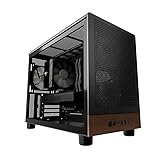
Andromeda Insights - AI Workstation Gaming PC | AMD Radeon Pro R9700 32GB | Ryzen 5 9600X (5.4 GHz... | $3,099.99 | Buy on Amazon |
As an Amazon Associate I earn from qualifying purchases.
What “tokenomics” means for agentic AI
Here, tokenomics means the economics of generating and serving model tokens at the required quality and speed. For agentic systems, the bill depends on more than tokens returned to a user. An agent may repeatedly read a growing context, call tools, resume work, and start subagents. Input volume, output volume, cache reuse, concurrency, utilization, electricity, and the price of the model all affect the cost of completing a task.
AMD’s Tokenomics Calculator compares three deployment scenarios: Cloud Only, Local (AMD), and Hybrid. It estimates multi-year total cost, average monthly cost, a modeled break-even month, and a hardware recommendation based on the inputs. It also supports multiple model prices and a weighted average for blended-cost estimates. Its cloud pricing is based on publicly available data as of July 2026; the tool says it makes no live pricing calls, so rates may have changed.
#1 Best Overall
- High-Performance AI Processing: The MX3 is designed to handle the most demanding AI computer vision workloads, delivering exceptional performance and efficiency.
- Flexible Integration: The MX3 can be easily integrated into your existing systems via its M.2 M-key form factor and support for Linux operating systems.
- Energy Efficient: The MX3 is designed to provide high performance while minimizing power consumption.
- Comprehensive Software Development Kit (SDK): The MX3 is supported by a comprehensive SDK that simplifies development and deployment.
- Hardware compatability: The MX3 is compatible with the PCI-SIG M.2 M-key 2280 Specification. It can be used with the Raspberry Pi 5 with a M-key 2280 HAT.
The calculator is a starting model, not a full ownership-cost audit. AMD says it excludes inference-quality differences, licensing, IT management, migration, taxes, financing, and provider-specific volume discounts. Network and egress costs are excluded unless entered as an API uplift. Those omissions can change the result substantially: a cheaper local model is not a saving if it cannot complete the task to the required standard, and a cloud contract discount can alter the comparison.
What AMD’s cost scenarios claim—and what they establish
In an August 25, 2026 article, AMD modeled a medium workload at about 5.7 million input tokens and 574,000 output tokens per user per day. AMD described it as representative of a knowledge worker actively using an agent harness such as Claude Code, Codex, or Hermes. These are AMD’s workload assumptions, not a universal measure of typical agent use.
For 500 AMD AI PCs split evenly between local and cloud inference, AMD’s model projected 40–60% lower three-year cost than cloud-only, depending on the cloud model. AMD also said its fully local configuration typically broke even in under 24 months in the modeled example. Treat both figures as projections from AMD’s software, hardware, pricing, and workload assumptions. They are not independently established customer savings or a promise that any 500-PC deployment will pay back on that schedule.
What’s actually slowing this PC down?
Pick the symptom - the matching free tool is one click away.
A separate AMD article from 2026 illustrates local systems with the following modeled figures. They are not retail guarantees: utilization, model, context length, caching, batching, electricity rates, hardware configuration, and real agent behavior can all change throughput and payback.
Rank #2
- Hpe AMD WX4100 Graphics module
| AMD local-system illustration | Modeled token volume | Modeled monthly electricity | Modeled break-even |
|---|---|---|---|
| Ryzen AI Halo system | About 6 million tokens per day | $16.20 per month | Around month six |
| Radeon AI PRO R9700 desktop configuration | About 18 million tokens per day | $64.80 per month | Around month three |
AMD’s same local-hardware article gives the Ryzen AI Halo scenario up to $750 per month in avoided API cost. That is a modeled estimate tied to the scenario, not a general monthly saving. The article says results vary; compare the assumptions with your own token logs, system purchase price, power rate, and cloud contract before using any of these figures for a budget.
Why agents change the serving-cost problem
Short chat prompts and long-running agents create different serving patterns. AMD’s 2026 technical article describes coding sessions that span many turns, accumulate context, pause for tool calls, and launch short-lived subagents in bursts. The context from earlier turns may be valuable again later. Recomputing it from scratch wastes work; retaining it can consume scarce memory and create transfer costs.
That makes key-value (KV) cache reuse and placement important. The KV cache holds intermediate information about previously processed context so a model can continue without repeating all of that computation. When the cache no longer fits in a GPU’s high-bandwidth memory (HBM), the system must decide where to keep it and how much time it will take to retrieve. A scheduler that ignores cache location can choose a request placement that looks available but adds costly loading time.
AMD’s described agent-serving stack, developed around work with Moonshot AI, runs Kimi K2.6 on SGLang and ROCm with MoRI for communication and memory fabric on AMD Instinct MI355X. AMD says its UMBP component coordinates multi-tier KV-cache behavior. The described cache tiers include accelerator HBM, host DRAM, and a UMBP pool; SSD appears as a roadmap extension, not as an established tier in the described setup.
Rank #3
- 【Core Parameters】★AI Perf: 34/67 TOPS ★GPU:1024-core official Ampere architecture GPU with 32 Tensor Cores ★CPU:6-core Arm Corte-A78AE v8.2 64-bit CPU 1.5MB L2 + 4MB L3 ★Memory:8GB 128-bit LPDDR5 68 GB/s ★Storage: external NVMe via M.2 Key M
- 【Empowered by Large Al Model, Enhanced Human-Computer Interaction】Jetson Orin Super leverages three AI models and incorporates an AI voice interaction module. This multimodal visual system matches the scene being described, enabling environmental awareness and AI visual gameplay. Combined with a large-scale voice module and camera, it enables speech-to-text, semantic analysis, natural conversation, and real-time video analysis, enabling advanced embodied AI applications.
- 【AI Upgrade】Jetson Orin Nano series modules are compact in size but can deliver up to 34-67 TOPS of AI performance, with power consumption ranging from 7 watts to 25 watts. Compared to the Jetson Nano B01, it offers up to 80 times the performance and sets a new standard for entry-level edge AI.
- 【Highly compatible carrier board】Yahboom's carrier board is fully compatible with orin nano module. Compared to carrier boards that use Jetson Nano on the market, the newly upgraded circuit supports 25W power mode, which enables larger and more complex neural networks and fully leverages the performance of the core module. The resources, size, and interfaces of the Yahboom carrier board are consistent with the official board, with the only difference addition of power switch button.
- 【Tutorial materials provided】The JETSON system based on Ubuntu 22.04 provides a complete desktop Linux environment with accelerated graphics, supporting CUDA 12.6, TensorRT 10.7.0, cuDNN 9.6.0, OpenCV 4.10.0, etc. The performance on AI LLM, VLM and visual Transformer is significantly improved compared with the previous generation.
The broader lesson is that buying a faster accelerator is only one possible lever. A serving system also needs to manage cache capacity and locality, prefill/decode ratios, parallelism, request routing, and service-level targets. Monitoring cache hits, load time, GPU utilization, network activity, and workload shape can reveal whether the bottleneck is compute or moving and reusing context.
AMD’s cache result is a serving test, not a universal speedup
AMD reports that a shareable L3 cache tier combined with loadback prefetch produced up to 3.2× smaller p99 time-to-first-token (TTFT) and 7.7% higher total-token throughput, with cumulative cache-hit rate essentially unchanged. AMD says its performance evaluation used an agentic-coding dataset derived from ProgramBench and its accuracy validation used Kimi Vendor Verifier. These are AMD-reported results for that evaluation setup; they do not establish the same gains for other models, hardware, schedulers, or workloads.
AMD also describes DeltaTok tokenization measurements on an AMD EPYC 9575F. Those measurements are specific to the stated tokenizer test and processor; they should not be treated as a general result for all tokenizers or systems.
Free tools Windows power users keep installed
One-click scans. No signup required.
How to decide between cloud, local, and hybrid
Use real usage and ownership costs to test the deployment options rather than choosing from a token-price comparison alone. A practical evaluation should cover:
Rank #4
- Engineered for demanding AI workloads, this is your definitive development platform. It packs an AMD Ryzen 5 9600x for parallel processing and an AMD Radeon AI Pro R9700 with 32GB VRAM for large models & complex neural nets. Built for sustained performance, it includes 32GB DDR5 RAM, a 1TB NVMe Gen4 SSD, and a digital display cooler for ultimate thermal stability.
- Industry-Leading Warranty & US Support - Backed by a 2-Year Parts Warranty, Lifetime Labor Warranty & Lifetime Technical Support. Andromeda Insights is a US-based company dedicated to high-performance hardware and long-term service.
- Elite CPU Power with Liquid Cooling – AMD Ryzen 5 9600X | 6 Cores, 12 Threads - Blazing fast speeds with up to 5.4GHz Turbo – ideal for LLM, engineering, gaming, streaming, and content creation. Future-ready architecture ensures consistent high performance. The included digital display cooler keeps it cool without throttling.
- Ultra-Fast 32GB DDR5 6000MHz RAM - Multi-task effortlessly and load programs instantly with 32GB of blazing-fast DDR5 memory for high performance.
- Transform your AI development with the AMD Radeon AI PRO R9700. Its RDNA 4 Architecture and 2nd-gen AI Accelerators deliver up to 2x better AI performance over the previous generation.¹ Equipped with 32GB of dedicated video memory, it lets you tackle larger, more complex projects. Purpose-built to accelerate local AI workloads, the R9700 delivers the speed and capacity your workflow demands to turn ambition into reality.
- Useful output: Whether a local model completes the same tasks to the required quality. The AMD calculator does not model quality differences.
- Token and context profile: Daily input and output, context growth, cache reuse, concurrency, and burst patterns. Agent traffic may not resemble short, isolated prompts.
- Service targets: Required throughput and latency, including tail latency such as p90 end-to-end response time or p99 TTFT where those matter to users.
- Full cost: Current API rates and discounts; system or accelerator purchase; electricity; software; staffing; maintenance; integration and migration; taxes; financing; and networking. Several of these costs are outside the AMD calculator.
- Operational flexibility: Whether you need frontier hosted models, local data handling, rapid scaling, local administration, or the ability to switch providers.
- Measure the workload. Record actual input and output tokens, task completion quality, concurrency, context growth, tool-call pauses, and peak periods. Separate recurring tasks from irregular bursts.
- Set a quality and latency floor. Test candidate local models against representative tasks and define acceptable completion quality and response times before comparing costs.
- Enter current costs. Use your contracted cloud rates and discounts, full local-system price, electricity rate, and realistic utilization. Add staffing, integration, maintenance, and networking costs that the calculator does not include.
- Compare all three scenarios. Evaluate cloud-only, local, and hybrid over the same time horizon and workload. Check whether a modeled break-even date changes when utilization or cloud pricing changes.
- Recheck the assumptions. Verify model and software compatibility, current ROCm support, hardware availability, and service performance for the exact configuration you plan to run.
Hybrid is one option to test, not a default answer. An organization might route frequent, predictable, or privacy-sensitive tasks to local systems while keeping hosted models for frontier capability or variable bursts. The right split depends on measured task quality, traffic, capacity, and the cost of operating both paths.
What AMD’s hardware examples do—and do not—tell you
AMD’s local examples name Ryzen AI Max processors, Radeon AI PRO graphics, and ROCm. The Radeon AI PRO R9700 is a relevant workstation-class example in AMD’s local-inference scenario, but the token-volume and payback illustrations do not establish that a particular retail system will achieve those outcomes. Model size, memory capacity, software support, full-system price, and workload fit all matter.
For server deployments, AMD’s continuously updated optimization documentation discusses MI300X and MI350X workloads and topics including PyTorch, vLLM, and AITER. That points to a broader software stack, but does not guarantee a given model’s throughput on a particular configuration; check current support and workload-specific guidance.
Windows Errors? Fix Them Before They Spread
Repair common Windows errors and clear accumulated junk for a smoother, more stable PC - no reinstall needed.Free scan · no reinstallCrashes, No Sound, or Screen Glitches?
Random freezes, missing sound and display glitches usually trace back to one bad driver. Find and replace yours safely.Free scan · under a minuteBe careful with older roadmap figures. AMD’s June 2, 2024 press release projected up to 35× AI inference performance for MI350 versus MI300. That was a dated roadmap claim, not a current product-availability statement. Likewise, AMD’s 2026 infrastructure infographic claims up to 40% more tokens per dollar for MI355X than NVIDIA B200 and projects 10× MI355X inference for MI400. These are AMD claims and projections, not independent comparative evidence.
When local inference is likely to make financial sense
Local inference is most compelling when a workload is steady enough to keep owned hardware usefully occupied, the selected local model meets quality requirements, and expected cloud spending is large relative to the full cost of buying and operating the system. A hybrid design may be more practical when demand is uneven or some tasks need hosted-model capabilities.
The fairest comparison is lifetime cost per useful completed task or useful token, alongside integration effort and flexibility. Token throughput alone does not say whether a system produces the right answer, meets latency targets, or saves money after staff time and ownership costs are counted. AMD’s calculator can help explore scenarios, but a decision-ready estimate needs your actual workload, current rates, and the costs its model leaves out.
Quick Recap
Product prices and availability are accurate as of the date/time indicated and are subject to change. Any price and availability information displayed on Amazon at the time of purchase will apply.




