Do these 3 things before closing this tab:
1Clear out junk files and repair common Windows errors2Fix the driver behind crashes, sound loss and screen glitches3Repair Windows errors before they cause bigger problemsA WD My Passport Ultra that is missing from File Explorer or Finder is not necessarily dead. First separate a connection problem from a disk-mounting problem: connect it directly with a known-good cable, then check whether Windows Disk Management or macOS Disk Utility can see the physical disk. Do not initialize, format, or erase it if the files matter. The sequence below moves from low-risk checks to recovery decisions without destroying data.
What “not detected” actually means
The same symptom can occur at several layers. A damaged or incompatible USB cable, an underpowered port, a hub, or a failed enclosure can prevent the operating system from seeing the device at all. In other cases, the computer sees the disk but cannot mount its volume because it has no drive letter, an unsupported partition table or file system, or file-system damage. Windows may show the hardware in Device Manager while File Explorer remains empty; macOS may list a device in System Information while Disk Utility shows an unmounted volume.
As an Amazon Associate I earn from qualifying purchases.
That distinction determines the safe fix. If the disk appears in a disk utility, concentrate on mounting, partition and file-system checks. If it is absent from the utility on several computers after direct-connection tests, the USB path, enclosure electronics or the disk itself is more likely at fault.
What’s actually slowing this PC down?
Pick the symptom - the matching free tool is one click away.
Protect the files before changing anything
Stop before formatting, erasing, initializing or creating a new partition. Those actions can overwrite the structures needed to recover existing files. If the drive contains irreplaceable work, photographs or business records, copy accessible files to another disk before attempting repairs. If it is unstable, make as few power cycles as possible and avoid repeatedly reconnecting it.
#1 Best Overall
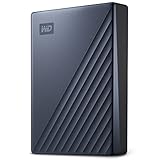
- USB-C and USB 3.1 compatible
- Innovative style with refined metal cover
- Password protection with 256-bit AES hardware encryption
- Formatted for Windows
- 3-year manufacturer's limited warranty
- Do not accept Windows’ “You need to format the disk” prompt when the data is important.
- Do not choose Initialize Disk in Disk Management simply because the disk is listed as Unknown or Not Initialized.
- Do not erase an unmounted volume in Disk Utility until you have confirmed that its contents are backed up or expendable.
- Keep the original cable and note any clicking, grinding, repeated disconnects or failure to spin up; these symptoms affect the recovery decision later.
1. Reconnect the physical link safely
- Safely eject the drive if the operating system still lists it, then shut down or restart the computer. Disconnect the My Passport Ultra.
- After the computer has restarted, plug the drive directly into a built-in USB port. Remove hubs, docking stations, extension leads and adapters while diagnosing.
- Try a different USB port, preferably one on the computer itself rather than a front-panel hub or keyboard port.
- Use the cable supplied with the drive. If it is unavailable or suspect, test a short, known-good USB 3.0 Micro-B cable that matches the drive’s connector. Western Digital notes that a cable can work with one computer but not another and recommends trying the original or a different, shorter cable.
- Listen and observe. A normal spin-up followed by a stable connection points toward a mounting or software issue. Repeated spin-up/spin-down cycles, clicking or grinding suggest a physical fault; stop experimenting if important data is present.
Some hosts do not provide enough USB power for an external disk, particularly through an unpowered hub or an adapter. If your computer has two free USB ports, a compatible Y-shaped power-booster cable can supply power from both ports. It is a conditional workaround for an underpowered host, not a cure for a failing disk or cable.
2. Check whether Windows sees the hardware
Disk Management
- Press Windows key + X and select Disk Management, or press Windows key + R, enter
diskmgmt.msc, and press Enter. - Wait for the lower pane to finish loading. Identify the My Passport by its capacity and by whether its status says Online, Offline, RAW, Unallocated, Unknown or Not Initialized.
- If a healthy partition is present but has no letter, right-click that partition, choose Change Drive Letter and Paths, select Add, and assign an unused letter. Do not change the letter of a different disk.
- If the disk is marked Offline, right-click the disk label (for example, “Disk 1”) and choose Online. If Windows reports an I/O error or the disk disappears, stop rather than forcing repeated state changes.
Device Manager
- Press Windows key + X and open Device Manager, or run
devmgmt.msc. - Expand Disk drives and Universal Serial Bus controllers. Look for the WD device, USB mass-storage entries, or a warning icon.
- Open the device’s Properties to read the status and error code. A listed disk with a controller warning indicates a driver, USB-port or power path that needs attention; a disk absent from both sections after cable and port tests is not a simple drive-letter problem.
Windows’ Disk Management procedures are also the place to inspect partitions, but do not delete or recreate one to make the drive appear. If the disk is visible there, data-preserving diagnosis comes before any destructive operation.
3. Check whether macOS sees the hardware
System Information
- Hold the Option key, open the Apple menu, choose System Information, and select USB in the Hardware section.
- Look for the My Passport or a USB mass-storage device and note whether its capacity and connection remain stable while you watch the list.
Disk Utility
- Open Applications > Utilities > Disk Utility.
- Choose View > Show All Devices so the physical disk and its volumes are both displayed.
- If the physical disk is present but the volume is gray, select the volume and click Mount. If mounting fails, record the message rather than erasing the volume.
- Use First Aid only after confirming the correct volume and ensuring that you have a backup. First Aid can report or repair file-system structures, but it cannot fix a failing USB bridge or mechanically damaged disk.
A device listed in System Information but absent in Disk Utility usually indicates a partition or file-system problem. A device missing from both after direct-port and cable tests points farther down the USB or hardware path.
Rank #2

- USB-C and USB 3.1 compatible
- Innovative style with refined metal cover
- Password protection with 256-bit AES hardware encryption
- Formatted for Windows
- 3-year manufacturer's limited warranty
4. Repair the USB and driver path
The My Passport Ultra manuals explain that USB 3.0/2.0 root-hub and host-controller drivers must be installed for correct recognition, particularly when an adapter card is involved. The later manual also says that WD software installs the proper driver for the drive and that the drive should appear in the computer’s file-management utility.
Windows steps
- In Device Manager, expand Universal Serial Bus controllers. If a controller or USB mass-storage entry has a warning icon, install the current chipset and USB-controller driver supplied by your computer or motherboard manufacturer.
- Run Windows Update, including optional driver updates when offered, then restart.
- With the drive disconnected, shut down completely. Reconnect it after startup to let Windows enumerate it again.
- If the device repeatedly appears and vanishes, test a different computer before uninstalling controller entries. Uninstalling a USB controller causes Windows to rebuild it after restart and should be used only when ordinary updates and port tests have failed.
macOS steps
Install the latest macOS updates supported by the Mac, restart, and reconnect directly. Avoid assuming that a third-party adapter supports the drive’s power and USB mode; test the Mac’s built-in port and a compatible cable first. WD Drive Utilities supports My Passport Ultra on Windows and macOS and can manage and test compatible direct-attached storage once the operating system can communicate with it.
5. Resolve partition, format and file-system cases without losing data
When a disk utility sees the physical disk, inspect what it reports before selecting any format option. WD notes that a host may fail to recognize a drive when the partition table, file system or capacity is unsupported. A volume formatted for one operating system may be readable but not writable on another, while a damaged file system can appear as RAW or as an unrecognized volume.
Rank #3

- Slim durable design to help take your important files with you
- Vast capacities up to 6TB[1] to store your photos, videos, music, important documents and more
- Back up smarter with included device management software[2] with defense against ransomware
- Help secure your important files with password protection and hardware encryption
- 3-year limited warranty
Windows interpretations
- Healthy partition, no letter: add a drive letter through Change Drive Letter and Paths.
- RAW: Windows cannot interpret the file system. Do not format if files are needed; copy data with appropriate recovery software or consult a professional service.
- Unallocated, Unknown or Not Initialized: creating a partition or initializing the disk changes metadata. Proceed only when the disk is empty or a verified backup exists.
- “You need to format the disk”: treat it as a possible file-system problem, not a command to follow. Preserve important data first.
macOS interpretations
- Physical disk present, volume unmounted: try Mount and record any error.
- Unsupported or damaged format: keep the disk intact if data matters. A reformat in Disk Utility is appropriate only for an empty or backed-up disk.
- Partition map appears missing: do not erase the device merely to recreate it; recovery should come first.
WD documents formatting and repartitioning through Windows Disk Manager and macOS Disk Utility for lost-partition cases. These procedures are destructive when they recreate structures, so they belong at the end of the decision tree, not at the beginning.
Free tools Windows power users keep installed
One-click scans. No signup required.
6. Test on another computer and classify the result
| Observation | Most likely area | Safest next action |
|---|---|---|
| Drive appears in Disk Management or Disk Utility but not File Explorer/Finder | Drive letter, mount state, partition or file system | Mount it or assign a letter; preserve data before any repair or format |
| Drive appears in Device Manager/System Information but not the disk utility | Partition metadata, file system, USB bridge or unstable power | Try the original cable and direct port; avoid initialization and erasure |
| Drive is absent from utilities on one computer but works on another | Host port, controller driver, adapter or power | Update the host drivers and use a direct, adequately powered port |
| Drive is absent from Disk Management/Disk Utility on multiple computers | Enclosure electronics, USB bridge or disk hardware | Stop software changes; consider professional recovery or replacement |
| Clicking, grinding, repeated disconnects or no spin-up | Possible physical or mechanical failure | Power it down and seek recovery advice before further testing |
A second computer is useful because it separates a host-specific fault from a drive-specific fault. Use a direct connection and a known-good cable on that computer too; testing through another hub does not provide a meaningful comparison.
When to stop troubleshooting
Stop immediately when the drive contains important data and is clicking, grinding, repeatedly disconnecting, failing to spin up, or missing from Disk Management or Disk Utility on more than one computer. Software cannot repair a failed motor, heads, USB bridge or damaged electronics. Continued power cycling can make recovery harder. Disconnect the drive and contact a professional data-recovery service before opening the enclosure or attempting repeated repairs.
Rank #4

- USB-C and USB 3.1 compatible.Specific uses: Business, personal
- Innovative style with refined metal cover
- Password protection with 256-bit AES hardware encryption
- Formatted for Mac
If the drive is consistently detected, makes no abnormal sounds and the contents are backed up, replacement may be more practical than rebuilding a damaged partition. WD support separates detection, partition/file-system and recovery-oriented cases, but it does not publish a product-specific My Passport Ultra failure rate or expected lifespan; do not use an invented percentage to judge your disk.
Independent reader supportYour contribution helps us test, update, and keep practical guides available for everyone.Optional driver shortcut
Outbyte Driver Updater is an optional shortcut for the driver part of this process: it scans more than 100 devices for outdated, corrupted or missing drivers, installs only official drivers, shows current and recommended versions, and provides driver backup, restore and scheduled scans. It runs on Windows 11, 10, 8 and 7, with a two-day free trial that requires no credit card before a subscription; it cannot repair a failed cable, USB port, enclosure or disk, so results vary.
After the drive is working
- Copy important files to a second storage device and verify that the copies open.
- Safely eject the My Passport before unplugging it.
- Keep a compatible short cable with the drive and avoid relying on an unpowered hub.
- Label the drive’s file system and partition layout so a future cross-platform connection is less confusing.
- Run health or diagnostic tests only when the drive is stable and your data has another copy.
Frequently Asked Questions
Why does WD My Passport Ultra appear in Device Manager but not File Explorer?
Windows has detected the USB device, but the volume may be unmounted, missing a drive letter, unsupported or damaged. Check Disk Management before changing partitions.
Should I format the drive when Windows says it needs to be formatted?
Not if you need the files. That message can indicate file-system damage; formatting erases the volume. Preserve the data or obtain recovery help first.
Best Value

- Slim durable design to help take your important files with you
- Vast capacities up to 6TB[1] to store your photos, videos, music, important documents and more
- Back up smarter with included device management software[2] with defense against ransomware
- Help secure your important files with password protection and hardware encryption
- 3-year limited warranty
Can a USB cable really cause detection to fail?
Yes. Cable compatibility, length, damage and connector fit affect enumeration and power. Use the supplied cable or a short, known-good compatible cable directly in the computer.
What does repeated clicking mean?
Clicking or grinding can indicate a physical fault. Stop reconnecting the drive and seek professional recovery advice before further experimentation.
Recommended Free Tools
Quick Recap
Product prices and availability are accurate as of the date/time indicated and are subject to change. Any price and availability information displayed on Amazon at the time of purchase will apply.




