The Tool Desk
Outbyte Driver Updater FREEScan for outdated or missing drivers - takes under a minuteDriver Scan →Outbyte PC Repair FREERepair Windows errors before they cause bigger problemsFix Now →AI use in animation raises three separate rights questions: whether a performer agreed to creating or using a digital replica of their voice, what contract governs the work, and whether copyrighted material may be used to train an AI system. A yes or no on one question does not answer the others. In the United States, SAG-AFTRA’s TV animation agreement materials describe specific protections for covered work, while the U.S. Copyright Office treats digital replicas, AI-generated outputs and training as distinct copyright issues.
Can AI use an actor’s voice without consent?
There is no single answer for every production or performer. Under the SAG-AFTRA TV animation agreement provisions summarized by the union, a generative-AI system prompted with a performer’s name or names requires that performer’s consent. The agreement also addresses notice and bargaining when a producer creates a synthetic voice, as well as compensation for certain uses of employment-based digital replicas.


As an Amazon Associate I earn from qualifying purchases.
Those are contract protections for work covered by the relevant agreement, not a universal rule that every use of AI in animation requires consent. Whether a particular production or performer is covered depends on the governing agreement and the circumstances of the work.
What the animation agreement says about voice performers
The agreement defines “voice actors” as human performers. Its replica-recognition rules also account for the fact that a performer may be known for a distinctive character voice rather than for sounding like their ordinary speaking voice. An employment-based replica may be identified through contracts and ordinary business documents. An independently created replica is assessed in relation to the character voice from which it was made.
#1 Best Overall

- Powerful Vector Drawing Tools optimized for animation and Photoshop’s PSD files integration to easily import, rig and animate your bitmap characters and backgrounds.
- The most powerful 2D and easy to use rigging system on the market, including Smart Bones, Vitruvian Bones, FK (forward kinematics) & IK (inverse kinematics), Advanced Constraints, Shy bones and much more.
- Create meshes to simulate 3D rotations, animate gestures, bend and manipulate your pictures in any way you want. The power of a 3D character, but with the simplicity of 2D!
- Automate your animation with Physics, Particles, Dynamics and Wind.
- Take full control of your animation with the Timeline, Graph mode and multiple interpolation modes.
The agreement describes residuals when a performance is digitally altered into a foreign language in certain circumstances, and compensation rules for the use of employment-based replicas. It also addresses consent when a performer’s name is used in a generative-AI prompt, notice and bargaining around producer-created synthetic voices, and recurring discussions with producers about tracking replica use. These provisions should be read as agreement terms, not as automatic payments or rights for all animated productions.
Check which contract applies and when
SAG-AFTRA’s TV Animation Agreements materials describe the agreement term as running through June 30, 2026. Because that date has passed, those materials alone do not establish which terms govern a production taking place now. Performers and producers should identify the agreement applicable to the work and confirm its current terms rather than assume that an earlier summary remains in force. SAG-AFTRA’s February 2025 contract bulletin characterizes the agreement as its first animation voiceover-specific contract with substantial AI protections; that is the union’s description of its own agreement.
Rank #2

- Moho Debut offers complete animation for digital artists. Perfect for first time animators, hobbyists and digital enthusiasts. Get started animating with Moho Debut's Beginner's Mode.
- Create your own art using intuitive vector-based draw, paint and fill tools; or easily import artwork from popular graphics programs and use pre-built content to get started fast.
- A complete bone rigging system allows you to easily create powerful and easy to animate 2D puppets. Point-and-click to attach bones to your characters for easy manipulation and reduce production time over traditional frame-by-frame animation. Inverse Kinematics moves your character naturally between keyframes for smooth animations.
- Content Library full of characters, props and backgrounds. Use them in your own animation or study how they are created to improve your own art!
- Export your creations to the most popular web and video formats. Upload your animation to YouTube and share with your friends.
Can a studio clone a voice actor for animation?
A studio’s ability to create or use a voice replica depends on the performer’s agreement, the applicable contract, and what the studio intends to do with the replica. The SAG-AFTRA agreement materials distinguish between employment-based and independently created replicas, and set out provisions concerning recognition, consent, notice, bargaining and compensation. They do not establish a blanket permission for studios to clone voices, or a blanket consent requirement governing every animation job.
Do these 3 things before closing this tab:
1Repair Windows errors before they cause bigger problems2Fix the driver behind crashes, sound loss and screen glitches3Clear out junk files and repair common Windows errorsFor a specific project, the useful questions are concrete: whose voice or character voice is being replicated; whether the replica is being created for the employment or independently; whether the performer’s name is used in a prompt; what uses are contemplated; and which contract governs. A performer’s consent to a replica is not the same as permission to use a copyrighted script, recording or other work to train an AI model.
Rank #3
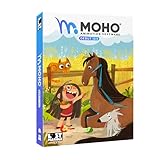
- Moho Debut offers complete animation for digital artists. Perfect for first time animators, hobbyists and digital enthusiasts. Get started animating with Moho Debut's Beginner's Mode.
- Create your own art using intuitive vector-based draw, paint and fill tools; or easily import artwork from popular graphics programs and use pre-built content to get started fast.
- A complete bone rigging system allows you to easily create powerful and easy to animate 2D puppets. Point-and-click to attach bones to your characters for easy manipulation and reduce production time over traditional frame-by-frame animation. Inverse Kinematics moves your character naturally between keyframes for smooth animations.
- Content Library full of characters, props and backgrounds. Use them in your own animation or study how they are created to improve your own art!
- Export your creations to the most popular web and video formats. Upload your animation to YouTube and share with your friends.
Can AI be trained on artists’ work without permission?
The U.S. Copyright Office’s Part 3 report addresses generative-AI training as a contested legal and practical issue, including fair-use analysis, whether consent or compensation is required, and possible licensing approaches. The Office released the report on May 9, 2025, as a pre-publication version. It should not be treated as a final, settled rule that all training is lawful or that all training requires permission.
The underlying question is about the copyrighted works used in training, not merely the identity of a voice performer. A project can raise both issues at once—for example, a system trained on copyrighted recordings and then used to generate a replica of a specific performer—but resolving one does not resolve the other. The Copyright Office’s report index separates digital replicas, output copyrightability and training into different parts: Part 1, published July 31, 2024, covers digital replicas; Part 2, published January 29, 2025, covers copyrightability of AI-generated outputs; and Part 3 covers generative-AI training.
Independent reader supportYour contribution helps us test, update, and keep practical guides available for everyone.Who owns AI-generated animation?
Copyrightability turns on human creative contribution, not simply on whether AI was involved. In its January 29, 2025 announcement about Part 2 of its report, the Copyright Office said an AI-assisted work may qualify for copyright protection when a human determines sufficient expressive elements. Human-authored material, or creative arrangement or modification, may contribute to that authorship. Merely providing prompts, by itself, does not establish human authorship under the Office’s statement.
Quick wins for a faster PC:
Scan for outdated or missing drivers - takes under a minuteDriver Scan →Clear out junk files and repair common Windows errorsFree Scan →Fix the driver behind crashes, sound loss and screen glitchesFind Drivers →This concerns whether the output can receive copyright protection and who may qualify as its human author. It does not grant permission to use a performer’s identity, settle whether source material could be used for training, or establish ownership for every AI-generated animation. The Office’s Register of Copyrights and Director, Shira Perlmutter, put the distinction this way: “Where that creativity is expressed through the use of AI systems, it continues to enjoy protection. Extending protection to material whose expressive elements are determined by a machine, however, would undermine rather than further the constitutional goals of copyright.”
Keep the three consent and copyright questions separate
When evaluating an AI-assisted animation project, identify the right, action and governing rules at issue rather than treating “AI permission” as one all-purpose question.
- Performer identity: Is the project creating, prompting, generating, translating, distributing or reusing a replica of a performer’s voice or likeness? What consent, notice, compensation or tracking terms apply to that use?
- Contract coverage: Which union agreement, if any, covers the performer and work? Does it address the specific use, and what is its current term?
- Copyrighted works: What scripts, recordings, artwork or other protected works are involved in training or production? The legal treatment of training remains contested in the Copyright Office’s pre-publication Part 3 report.
- Output authorship: What expressive elements did a human author determine through authored material, arrangement or modification? Prompting alone is not enough under the Copyright Office’s Part 2 announcement.
- Scope of permission: Does consent or a license cover the particular intended use, and are compensation, residuals, limits on future use or reporting addressed? The selected contract and Copyright Office materials do not supply one universal answer for every use or jurisdiction.
SAG-AFTRA’s July 2025 ratification of an Interactive Media Agreement with digital-replica consent and disclosure provisions illustrates related bargaining activity, but it is not an animation rule. Contract terms must be applied within their own scope; copyright rules and performer consent remain separate questions.
Quick Recap
Product prices and availability are accurate as of the date/time indicated and are subject to change. Any price and availability information displayed on Amazon at the time of purchase will apply.




