The right programming monitor is the one that gives you readable text and enough usable space at a comfortable viewing distance, with adjustments and connections that fit your setup. Compare five things together: resolution and pixel density, aspect ratio, panel and surface, ergonomics, and connectivity. No single size or resolution is best for every developer.
1. Match resolution and pixel density to screen size
Resolution is the number of pixels on the screen; pixel density describes how closely those pixels are packed. Consider both alongside physical size and your operating system’s display scaling. A higher pixel count can provide more workspace, but scaling and your preferred text size affect how much code and how large it appears on screen.
As an Amazon Associate I earn from qualifying purchases.
For a concrete manufacturer-listed example, the BenQ RD280U is a 28.2-inch display with a 3840 × 2560 resolution and 164 pixels per inch (PPI), according to BenQ’s specifications. That is one combination of size and density—not a required or universally ideal target. If possible, check a display at your intended viewing distance and try the text size and scaling you expect to use.
Recommended Free Tools
2. Choose workspace by aspect ratio and layout
Think about what you want visible at once: more lines of code vertically, editor and documentation side by side, or separate windows across multiple displays. Resolution gives the pixel dimensions, while aspect ratio describes the screen’s proportions; physical dimensions and window arrangement determine whether that workspace suits your desk and habits.
#1 Best Overall

- Nano Matte Panel: Unlock peak productivity with BenQ's exclusive anti-glare, anti-reflective Nano Matte Panel designed for programmers.
- Advanced Coding Modes for Improved Codes Differentiation: Crafted for programmers, BenQ Programming Monitor offers you full immersion in your code.
- Experience Focus with Unique Backlight: Experience MoonHalo by BenQ – a blend of immersive and comforting illumination.
- Optimal Posture, Superior Output: BenQ Programming Monitors prioritize your comfort for long-term projects.
- Keep Your Eyes Fatigue-Free: Experience unmatched eye comfort during night hours with our Night Hours Protection and Brightness Intelligence Gen2.
The RD280U’s manufacturer-listed resolution is 3840 × 2560, with a 3:2 aspect ratio. It is an example of a taller-than-widescreen layout, not evidence that 3:2 is best for programming. Sketch out your usual editor, terminal, and reference layout, then compare it with the display’s physical width and height.
3. Check panel type and screen finish
Panel and coating descriptions help establish what a monitor is made with, but they do not prove how comfortable it will be for you. BenQ lists the RD280U as an IPS display with a Nano Matte coating. Its product information also lists flicker-free, low-blue-light, and reflection-related features or certifications. These are manufacturer claims about product characteristics; they do not establish that the monitor prevents eye strain or outperforms every alternative. See BenQ’s RD280U product page for its feature descriptions.
Rank #2

- Nano Matte Panel: Unlock peak productivity with BenQ's exclusive anti-glare, anti-reflective Nano Matte Panel designed for programmers
- Advanced Coding Modes for Improved Codes Differentiation: Crafted for programmers, BenQ Programming Monitor offers you full immersion in your code.
- Experience Focus with Unique Backlight: Experience MoonHalo by BenQ – a blend of immersive and comforting illumination.
- Ergo Arm Stand- Elevating programmers' Desks with Infinite Flexibility: BenQ Ergo Arm enhances flexibility and provides the optimal screen position for a more comfortable and productive user experience.
- Keep Your Eyes Fatigue-Free: Experience unmatched eye comfort during night hours with our Night Hours Protection and Brightness Intelligence Gen2.
4. Verify stand adjustments and mounting
Check the adjustments you will actually use: height, tilt, swivel, and pivot. Also confirm VESA compatibility if you plan to use a separate arm. A monitor may support mounting even when its supplied stand does not offer every movement.
Windows Errors? Fix Them Before They Spread
Repair common Windows errors and clear accumulated junk for a smoother, more stable PC - no reinstall needed.Free scan · no reinstallCrashes, No Sound, or Screen Glitches?
Random freezes, missing sound and display glitches usually trace back to one bad driver. Find and replace yours safely.Free scan · under a minuteBenQ lists 110 mm of height adjustment, tilt, swivel, and a 100 × 100 mm VESA mount for the RD280U. The standard model does not support pivot; BenQ points to the RD280UA arm version for buyers who want that flexibility. Check the exact model suffix before purchasing. If choosing a third-party arm, verify the display’s mounting pattern and weight against the arm’s supported range.
Rank #3

- Calman Verified & Delta E < 2 Accuracy: Achieve true-to-life precision right out of the box for professional photo editing with color accurate monitoring capabilities
- 100% sRGB & 100% Rec. 709 Color Gamut: Ensure your creative projects match industry standards for vibrant digital media with comprehensive color coverage for video editing and content creation
- 27-inch WQHD IPS Display: Enjoy crystal-clear details with 2560 x 1440 resolution for graphic design and video editing workflows with wide viewing angles and consistent color reproduction
- ASUS ProArt Preset & Palette: Easily customize color, brightness, and black-levels to match your exact project needs with versatile display settings for professional applications
- Extensive Connectivity & USB Hub: Seamlessly connect your laptop, desktop, and storage devices with DisplayPort, HDMI, DVI-D, and Mini DP ports plus integrated USB hub for a clutter-free desk setup
5. Match ports, hub features, and charging to your computer
If you connect a laptop with one cable, confirm that the monitor’s USB-C connection supports video and data as well as enough power delivery for your computer. Check the laptop’s port capabilities and display-output limits too; a monitor’s listed features do not guarantee compatibility with every laptop or dock.
The RD280U specifications list USB-C DisplayPort Alt Mode, data, and 90 W power delivery, plus a USB hub and KVM. These can support a streamlined compatible setup, but verify the details against your particular computer and peripherals before relying on them.
Rank #4

- 100% sRGB Color Gamut: With 100% sRGB, our display reveals an astonishing brightness and variance in red, green, and blue color across a wide gamut, providing a more defined and naturalistic display of color in every image.
- DP & HDMI Ports: Two HDMI ports and one DisplayPort port provide up to 100Hz refresh rate, refining picture clarity in all action-packed gaming sequences and graphic design projects. Audio In and a Headphone Jack provide diverse audio options.
- Blue Light Shift: Blue Light Shift reduces blue light, allowing you to comfortably work, watch, or play applications without straining your eyes.
- Built-in Speakers: Perfectly suited to work & gaming settings, built-in speakers deliver robust & smooth audio while saving space on your desk.
- FPS-RTS Game Modes: FPS and RTS are Sceptre's custom set display settings built for an enhanced gaming experience. FPS (First Person Shooter), RTS (Real-Time Strategy).
How to compare programming monitors
Use the same checklist for each display rather than deciding from a resolution label alone. Record the actual model and its exact specifications so that stand and port differences are not overlooked.
- Screen and text: physical size, resolution, pixel density if listed, and the scaling and text size you prefer.
- Workspace: aspect ratio and whether the layout fits your editor, terminal, and reference windows.
- Panel and surface: listed panel type and coating, without treating feature labels as proof of comfort or performance.
- Positioning: included height, tilt, swivel, and pivot adjustments; VESA pattern if using an arm.
- Connections: video inputs, USB-C data and charging specifications, hub or KVM functions, and compatibility with your computer.
There is no hands-on comparison or independent ranking established for the models discussed here. Prices and availability also vary and were not established. The RD280U is useful as a specification example, not a tested winner or a recommendation for every programmer.
Quick Recap
Best Value
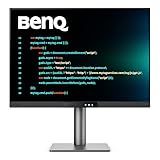
- [Nano Matte Panel] Low reflection for undisturbed clarity during long coding sessions.
- [Exclusive Coding Modes] Specially tuned for code readability and eye comfort.
- [120Hz Refresh Rate] Smooth scrolling and cursor movement for faster code navigation.
- [MoonHalo Backlight] Balanced illumination reduces eye strain during late-night or extended development work.
- [3:2 Aspect Ratio] More vertical space to view code, logs, and documentation with less scrolling.
Product prices and availability are accurate as of the date/time indicated and are subject to change. Any price and availability information displayed on Amazon at the time of purchase will apply.




