For most interface work, start with CSS transitions and your framework’s built-in transition features. Add a dedicated library only when you need something those tools do not express cleanly: gesture tracking, layout changes that animate between positions, exit animations, long sequenced timelines, or scroll-linked sequences. In practice, Motion is the usual next step when your UI is built in React, plain JavaScript, or Vue and needs gestures or layout motion. GSAP fits timeline-heavy work and specialized plugins. Lottie is a playback path for prepared animation files, not a general interaction engine.
This is a selection guide, not a benchmark ranking. None of the comparisons below rests on timing tests. They rely on each project’s official documentation, which is also where you should confirm current features before you commit.


As an Amazon Associate I earn from qualifying purchases.
Why this is a selection guide, not a ranking
No animation tool wins on every axis. A tool that is excellent for a scroll-driven product page can be unnecessary weight in a settings panel. The useful question is which job you are trying to do, and whether your framework already does it. This part covers six options that account for most UI animation decisions: CSS transitions and keyframe animations, Vue’s built-in transitions, Angular’s enter and leave animations, Motion, GSAP, and the LottieFiles web player.
Two checks before you read the detail. First, confirm the current version of any library you plan to install, because release numbers move quickly. Motion’s documentation, for example, listed version 13.5.0 when this guide was prepared. Second, verify plugin requirements and licensing terms on the project’s own site before you budget for a tool.
#1 Best Overall
Start with the platform before adding a dependency
Every extra library adds a learning curve, a dependency to maintain, and bundle weight. Many interface effects need none of that.
CSS transitions and keyframe animations
CSS is the browser-native baseline. A transition animates between two states of a property, such as a hover color or a transform change. A keyframe animation runs a defined sequence of steps. Both need no JavaScript, and Motion’s own React guide describes a CSS transition as the lightweight choice for simple, self-contained effects. CSS is strongest when the effect depends on one element’s state (hover, focus, open or closed) and does not need to respond to a live pointer position or to a value that changes continuously.
Vue’s built-in transitions
Vue documents built-in transition and animation facilities. The Transition and TransitionGroup components apply enter and leave classes when elements are inserted, removed, or shown and hidden. If your need is “fade this panel in when it mounts,” the framework feature is usually the right first check, before any external package.
The Tool Desk
Outbyte Driver Updater FREEScan for outdated or missing drivers - takes under a minuteDriver Scan →Outbyte PC Repair FREEClear out junk files and repair common Windows errorsFree Scan →Rank #2
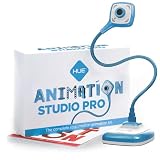
- FULL HD 1080p native video capture. Built-in LED lights and a microphone with noise reduction. The camera’s manual focus lens is perfect for animating without constantly adjusting like an autofocus lens, keeping you in perfect control at all times.
- TAKE STOP MOTION ANIMATION TO THE NEXT LEVEL with the HUE HD Pro camera. The HUE HD Pro has a wider field of view than the smaller HUE HD camera and a focal range of 1cm to infinity, enabling animators to create even more detailed movies. (Maximum capture area: A3.)
- STOP MOTION ANIMATION tools included: easy-to-use stop motion software with sound effects (Windows and macOS), a 64-page full-color book of animation projects to teach techniques such as rotoscoping and time-lapse photography, and printable activities. Register your animation software code to install the premium desktop version of Stop Motion Studio for HUE, or download the free version of Stop Motion Studio for mobile devices to keep animating on the move.
- MULTI-PURPOSE for animation hobbyists, amateur animators and educators. When not being used to create stop motion movies, the HUE HD Pro camera is perfect for video conferencing, homeschooling, online tutoring, working from home, time-lapse, making instructional videos, animating, gaming and giving live demos. The flexible camera is compatible with native Windows, Chrome OS, macOS and Linux camera apps, and can be used as a document camera in a classroom with interactive TVs and smartboards.
- RECOMMENDED BY TEACHERS for animating the curriculum. Use it for school projects to show the water cycle, animate nursery songs, recreate historical events in engaging ways, and so much more.
Angular’s enter and leave animations
Angular publishes official guidance on enter and leave animations. That guidance also names third-party options, including GSAP, for effects beyond what the framework covers. Treat Angular’s built-in approach as the default for element insertion and removal, and reach for a library only when the motion itself is more complex than the framework’s model.
Motion
Best fit: React, plain JavaScript, or Vue interfaces that need gestures, layout animation, exit animation, scroll-linked motion, or spring physics, without writing the low-level plumbing yourself.
What it covers
Motion’s React guide covers gesture handling, scroll-triggered and scroll-linked effects, layout transitions, exit animation, and SVG animation. It also describes a hybrid approach: where possible it uses the browser’s own animation APIs, and it uses JavaScript for features such as spring physics and gesture tracking. Motion describes itself as the successor to Framer Motion. Current documentation uses the package name motion and imports from motion/react.
Rank #3
Install and import
Install the package with npm install motion. Import components from motion/react, not from the older package name.
What’s actually slowing this PC down?
Pick the symptom - the matching free tool is one click away.
Claims to weigh as vendor statements
- Motion’s React documentation states that it has “over 30 million downloads per month on npm.” This is Motion’s own figure. It is not an independent measure of adoption, and the page does not give a publication date for it.
- Motion’s copy describes 120fps capability. That is a description of what the library is designed to do. It is not a measured result on any particular device, browser, or animation, and you should test on the hardware your users actually have.
Motion+
Motion+ is a separate paid offering that Motion presents with additional examples, premium APIs, and tools. It is optional; the core library described above does not depend on it. Pricing and terms change, so check them on Motion’s site before you budget for it.
GSAP
Best fit: sequenced animations built as timelines, and projects that need a specialized capability (scroll, text splitting, SVG, or UI effects) provided by a plugin.
Core model and plugins
GSAP’s documentation organizes its functionality into a core and a set of plugins. The core centers on tweens, which animate a property from one value to another, and timelines, which sequence and overlap tweens so that a multi-step effect can be controlled as one unit. Scroll, text, SVG, UI, and other specialized capabilities are provided as plugins. The practical comparison is therefore not “GSAP versus Motion” in general. It is whether the features your project needs are in the GSAP core, in a plugin you would install, or in the library you already use. GSAP’s documentation also includes dedicated React guidance.
Licensing
Confirm current licensing and terms on GSAP’s official documentation before making any purchasing or commercial-use claim. Terms for plugins and for certain use cases can differ from the core package.
Quick wins for a faster PC:
Clear out junk files and repair common Windows errorsFree Scan →Scan for outdated or missing drivers - takes under a minuteDriver Scan →LottieFiles web player
Best fit: playing a prepared animation asset on a website, such as an icon or illustration created by a designer and exported for playback.
Best Value
LottieFiles’ web player is a vendor-supplied way to play animation files in a browser. It is an asset playback path. It is not a library for coordinating state-driven UI, gestures, layout changes, or timelines in application code. If your animation is a fixed piece of artwork that someone else produced, Lottie is a sensible choice. If the animation must react to user input or application state, you still need one of the libraries above, possibly alongside a player.
Independent reader supportYour contribution helps us test, update, and keep practical guides available for everyone.Side-by-side comparison
The table compares the options on the axes that most often decide a project. Where a cell says “not stated,” the official documentation reviewed for this guide does not describe that capability, so check the current docs before assuming it is absent or present.
| Option | Best fit | Authoring model | Gestures | Layout and exit | Scroll | Extra requirements |
|---|---|---|---|---|---|---|
| CSS transitions and keyframes | Single-element state changes such as hover, focus, or open and closed | Declarative styles | Not built in; needs JavaScript | Not stated as a general layout-animation feature in MDN’s CSS animations guide | Possible with newer scroll-driven CSS features; check browser support for your audience | None |
| Vue Transition and TransitionGroup | Enter and leave effects when elements are inserted or removed | Component wrappers with classes and hooks | Not stated in Vue’s transition documentation | Built for enter and leave; general layout animation not stated | Not stated | Vue |
| Angular enter and leave animations | Insertion and removal effects inside Angular templates | Framework-managed animation hooks | Not stated in Angular’s guidance | Enter and leave covered; other layout behavior not stated | Not stated; Angular’s guidance names third-party options such as GSAP | Angular |
| Motion | React, JavaScript, or Vue interfaces that need gestures, layout, exit, scroll, or springs | Declarative props and hooks, using browser APIs where possible and JavaScript where needed | Covered in the React guide | Layout transitions and exit animation covered in the React guide | Scroll-triggered and scroll-linked effects covered | Package motion; Motion+ optional and paid |
| GSAP | Timeline-driven sequences and specialized effects | Imperative tweens and timelines | Via plugins; check which plugin you need | Not stated for the core; check plugins | Via a scroll plugin | Plugins as needed; confirm licensing |
| LottieFiles web player | Playing a prepared animation asset | Plays exported animation files | Not applicable | Not applicable | Not stated | A prepared animation file |
Worked examples
A simple CSS hover effect
This example needs no library. The transition runs only on the properties listed, and the media query turns it off for users who have asked their system to reduce motion.
.button {
  background-color: #2563eb;
  transform: scale(1);
  transition: transform 200ms ease-out, background-color 200ms ease-out;
}

.button:hover,
.button:focus-visible {
  background-color: #1d4ed8;
  transform: scale(1.04);
}

@media (prefers-reduced-motion: reduce) {
  .button {
    transition: none;
  }
}
Animating transform and background-color is a deliberate choice. Transforms are generally cheaper for the browser to animate than properties that change layout, such as width or top.
A gesture-driven card with an exit animation in Motion
This example uses features that CSS cannot provide on its own: a drag gesture tracked in JavaScript, and an exit animation that runs when the card is removed from the page.
import { AnimatePresence, motion } from "motion/react";

export function Dismissable({ visible, onDismiss }) {
  return (
    <AnimatePresence>
      {visible && (
        <motion.div
          key="card"
          drag="x"
          dragConstraints={{ left: -120, right: 120 }}
          dragElastic={0.2}
          whileHover={{ scale: 1.02 }}
          whileTap={{ scale: 0.98 }}
          exit={{ opacity: 0, x: 200 }}
          onDragEnd={(event, info) => {
            if (Math.abs(info.offset.x) > 100) onDismiss();
          }}
        />
      )}
    </AnimatePresence>
  );
}
The exit prop only runs because the element sits inside AnimatePresence. Without that wrapper, React removes the element immediately and the exit animation never plays. Check Motion’s current reduced-motion options before shipping gesture-heavy interfaces, and give users a non-drag way to complete the same action.
Quick Recap
Decision guide
- If the effect is a hover, focus, or open-and-closed change on one element, use CSS transitions. Stop here.
- If the effect is a panel or item appearing or disappearing, check Vue’s
Transitioncomponents or Angular’s enter and leave animations first. - If you are in React, plain JavaScript, or Vue and need gestures, layout animation, exit animation, or spring physics, use Motion.
- If the effect is a long sequence with overlapping steps, or depends on a scroll or text capability that a GSAP plugin covers, evaluate GSAP. Confirm plugin needs and licensing first.
- If the animation is a finished piece of artwork produced outside your code, use the LottieFiles web player to play it.
- If more than one answer applies, prefer the one with the smallest dependency footprint that meets every requirement. Using two animation libraries on the same element usually creates conflicts; pick one owner for each element’s motion.
Common mistakes
- Adding a library before checking the framework’s built-in transitions, which may already cover enter and leave effects.
- Ignoring
prefers-reduced-motion. Users who have turned on reduced motion should get the effect removed or simplified, not the full animation. - Animating layout-affecting properties such as
width,height, ortopwhen a transform or opacity change would achieve the same visual result. - Installing a plugin or premium tier for one small effect that CSS could handle.
“
Product prices and availability are accurate as of the date/time indicated and are subject to change. Any price and availability information displayed on Amazon at the time of purchase will apply.




