The Tool Desk
Outbyte Driver Updater FREEScan for outdated or missing drivers - takes under a minuteDriver Scan →Outbyte PC Repair FREERepair Windows errors before they cause bigger problemsFix Now →A LifeStraw microfilter straw strains out parasites and bacteria but does not remove viruses; water-purification tablets can disinfect against viruses and bacteria, but parasite protection depends on the tablet’s active ingredient. The right choice depends on the exact LifeStraw model, the tablet chemistry, and what might be in the water.
How LifeStraw and tablets treat water
A filter physically removes organisms as water passes through a membrane. Chemical tablets disinfect water after you add them and allow the specified contact time. These mechanisms overlap, but neither product category has one universal pathogen profile: check the model or tablet label.
As an Amazon Associate I earn from qualifying purchases.
LifeStraw microfilter straws
The LifeStraw Peak Series Personal Water Filter Straw is a microfilter with a stated 0.2-micron membrane. CDC guidance says an absolute pore size of 0.3 microns or smaller removes bacteria and parasites, but not viruses. That means this Peak straw should not be treated as virus protection. LifeStraw lists a flow rate of 2.5 L/min, a filter life of up to 4,000 L, and a weight of 2.3 oz; these are manufacturer specifications, not independent comparative test results. See LifeStraw’s Peak Series straw specifications.
LifeStraw purifier models
“LifeStraw” is a brand, not a single treatment level. The LifeStraw Family purifier uses a 0.02-micron ultrafilter. LifeStraw says it removes viruses, bacteria, and parasites and meets NSF/ANSI P231 drinking-water standards for reduction of those pathogens. The manufacturer lists a maximum flow rate of 12 L/hr and filter life up to 18,000 L. These claims and figures are LifeStraw’s; they should not be generalized to its microfilter straws. Details are on the LifeStraw Family product page.
#1 Best Overall

- Removes Bacteria & Parasites: The Microfiltration Membrane Removes 99.999999% of Waterborne Bacteria (Including E. Coli and Salmonella), and 99.999% of Waterborne Parasites (Including Giardia and Cryptosporidium) - Essential for Your Survival Kit
- Removes Microplastics: Removes the Smallest Microplastics Found in the Environment (Down to 1 Micron), and Reduces Turbidity Down to 0.2 Microns - Ideal for Hiking and Camping Essentials
- Rigorous Testing: All Claims Are Verified with Laboratories Using Standard Testing Protocols Set by the US EPA, NSF, ASTM for Water Purifiers
- Long Lifetime: The Microbiological Purification System Will Provide 4,000 Liters (1,000 Gallons) of Clean and Safe Drinking Water - a Must-Have for Your Bug Out Bag
- Make an Impact: For Every LifeStraw Product Purchased, a School Child in Need Receives Safe Drinking Water for an Entire School Year. Essential Camping Accessory Made With BPA Free Materials
Water-purification tablets
CDC says chlorine dioxide, chlorine, and iodine tablets can disinfect against viruses and bacteria, but may not kill parasites. Ingredient matters: iodine and chlorine tablets do not kill Cryptosporidium, while chlorine dioxide tablets can kill it when used correctly. For outdoor water treatment, CDC describes chlorine dioxide as somewhat effective against Cryptosporidium and recommends filtering first to remove parasites. Follow the exact tablet’s dose and wait-time instructions for the water volume and conditions; do not assume every tablet has the same coverage. See CDC’s water-disinfection guidance for travelers.
Which pathogens are covered?
CDC says most portable filters remove parasites but not viruses or bacteria. Its guidance specifies that an absolute pore size of 0.3 microns or smaller removes bacteria and parasites, but not viruses. A microfilter straw’s pore size therefore does not establish virus protection; verify whether the particular device is a filter or a purifier and what its manufacturer claims.
Rank #2

- UNIVERSAL COMPATABILITY: Compatible with all LifeStraw Home water-purifying pitchers and dispensers for convenient replacement and continued protection
- COMPREHENSIVE CONTAMINANT REDUCTION: Reduces lead, mercury, and chemicals including PFAS (forever chemicals), chlorine, herbicides, pesticides, dirt, sand, and cloudiness while retaining essential minerals like magnesium and potassium that are good for your health
- ADVANCED PURIFICATION TECHNOLOGY: The only everyday water filtration system that removes bacteria and parasites, in addition to microplastics for comprehensive water protection
- ENHANCED WATER QUALITY: Improves taste and avoids the need to buy single use plastic bottled water for a more sustainable hydration solution
- LONG-LASTING FILTER LIFE: The membrane purification cartridge lasts 264 gallons (1 year with regular use) and the activated carbon plus ion exchange component lasts up to 40 gallons (2 months with regular use)
| Treatment | Viruses | Bacteria | Parasites |
|---|---|---|---|
| LifeStraw Peak Series Personal Water Filter Straw (0.2-micron microfilter) | Not removed, according to CDC’s guidance for this filter class | Removed, according to CDC’s guidance for this filter class | Removed, according to CDC’s guidance for this filter class |
| LifeStraw Family (0.02-micron ultrafilter) | LifeStraw says it reduces viruses | LifeStraw says it reduces bacteria | LifeStraw says it reduces parasites |
| Chlorine dioxide tablets | CDC says tablets can disinfect viruses | CDC says tablets can disinfect bacteria | CDC says chlorine dioxide can kill Cryptosporidium when used correctly; effectiveness depends on proper use |
| Chlorine or iodine tablets | CDC says tablets can disinfect viruses | CDC says tablets can disinfect bacteria | CDC says these tablets do not kill Cryptosporidium; parasite effectiveness is not universal |
Filter-category statements in the table reflect CDC guidance, not independent tests of the named Peak product. The LifeStraw Family pathogen statements are manufacturer claims, not a claim of independent verification beyond the stated standard.
What’s actually slowing this PC down?
Pick the symptom - the matching free tool is one click away.
What else differs in practice?
Water clarity and preparation
Water may contain germs even when it looks clear. CDC advises filtering before chemical disinfection; filtering can remove parasites and particles before tablets address viruses and bacteria. Cloudy water may need pretreatment according to the device and tablet instructions. If chemical contaminants, toxins, or radioactive material may be present, neither method makes the water safe: find another source.
Rank #3

- Removes Bacteria & Parasites: The Microfiltration Membrane Removes 99.999999% Of Waterborne Bacteria (Including E. Coli And Salmonella), And 99.999% Of Waterborne Parasites (Including Giardia And Cryptosporidium)
- Removes Microplastics: Removes The Smallest Microplastics Found In The Environment (Down To 1 Micron), And Reduces Turbidity Down To 0.2 Microns
- Rigorous Testing: All Claims Are Verified With Laboratories Using Standard Testing Protocols Set By The Us Epa, Nsf, Astm For Water Purifiers
- Long Lifetime: The Microbiological Filter Will Provide 4,000 Liters (1,000 Gallons) Of Clean And Safe Drinking Water With Proper Use And Maintenance
- Make An Impact: For Every Lifestraw Product Purchased, A School Child In Need Receives Safe Drinking Water For An Entire School Year
Time, taste, and amount treated
A straw lets you drink through the filter, while tablets require adding the correct dose and waiting the product’s specified time before drinking. There is no single wait time or dose that applies to all tablets. Filters and tablets also differ in how they handle a trip’s water needs: a straw treats water as you drink, whereas tablets treat a defined volume. Check the device’s flow and capacity and the tablet package’s volume directions rather than assuming either option is faster or treats more water in every situation.
Portability and maintenance
A straw is a reusable piece of equipment with a finite rated filter life; tablet packs are compact consumables whose treatment depends on carrying enough doses and following the label. LifeStraw’s stated Peak and Family capacities are manufacturer figures, not a guarantee that every field condition will produce the same performance. Use the specific product’s storage, cleaning, replacement, and operating directions.
Rank #4
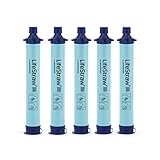
- Removes Bacteria & Parasites: The Microfiltration Membrane Removes 99.999999% Of Waterborne Bacteria (Including E. Coli And Salmonella), And 99.999% Of Waterborne Parasites (Including Giardia And Cryptosporidium)
- Removes Microplastics: Removes The Smallest Microplastics Found In The Environment (Down To 1 Micron), And Reduces Turbidity Down To 0.2 Microns
- Rigorous Testing: All Claims Are Verified With Laboratories Using Standard Testing Protocols Set By The Us Epa, Nsf, Astm For Water Purifiers
- Long Lifetime: The Microbiological Filter Will Provide 4,000 Liters (1,000 Gallons) Of Clean And Safe Drinking Water With Proper Use And Maintenance
- Make An Impact: For Every Lifestraw Product Purchased, A School Child In Need Receives Safe Drinking Water For An Entire School Year.
When to choose one method—or combine them
- Choose a microfilter straw when the main concern is bacteria and parasites and you can use a model suited to the water and conditions. Do not rely on a microfilter straw for viruses.
- Choose tablets when chemical disinfection is useful and you can wait the product’s full contact time. Select by active ingredient and pathogen coverage, not by the generic word “purification.”
- Use a filter followed by tablets when you need the filter’s parasite and particle removal together with chemical disinfection’s virus and bacteria coverage. CDC advises filtering before disinfection, and LifeStraw says users seeking virus removal can combine a microfilter with tablets.
- Prefer boiling when feasible for germ control: CDC says, “Boiling water is the best way to kill germs that could make you sick.” CDC advises boiling clear water for one minute, or three minutes above 6,500 feet. Its hiking, camping, and travel guidance describes filtering then disinfecting as the next-best option.
Important safety limits
Iodine is not suitable for everyone
CDC advises pregnant people, people with thyroid problems, and people with iodine hypersensitivity to avoid drinking iodine-disinfected water. No one should drink it for more than a few weeks at a time. Follow the tablet label and consider another treatment where these cautions apply.
Outdated Drivers Are Slowing You Down
One free scan finds every outdated or missing driver and matches the right update for your exact hardware.Free scan · exact hardware matchWindows Errors? Fix Them Before They Spread
Repair common Windows errors and clear accumulated junk for a smoother, more stable PC - no reinstall needed.Free scan · no reinstallNeither treatment fixes chemical contamination
Boiling and disinfection address germs, not harmful chemicals, toxins, or radioactive material. If those hazards are suspected, use a different water source. A clear appearance alone is not evidence that untreated water is safe.
Quick Recap
Best Value
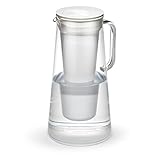
- Filtration that actually does stuff. The only water filter pitcher that removes bacteria and parasites, in addition to microplastics.
- Reduces lead, mercury, and chemicals including PFAS (“forever chemicals”), chlorine, herbicides, pesticides, dirt, sand, and cloudiness. Retains essential minerals like magnesium and potassium that are good for your health.
- Sleek and sustainable design, made from durable, BPA-free plastic. Easy to use and maintain.
- Improves taste and avoids the need to buy single use plastic bottled water.
- The membrane microfilter lasts 264 gallons (1 year). The activated carbon + ion exchange filter lasts 40 gallons (2 months).
Quick decision checklist
- Identify the exact LifeStraw model: a microfilter straw and an ultrafilter purifier do not have the same virus coverage.
- Check the tablet’s active ingredient and label for the pathogens it treats, dose, and contact time.
- Consider whether parasites such as Cryptosporidium are a concern; chlorine and iodine tablets do not kill it, while chlorine dioxide requires correct use.
- For broader protection, filter first and then disinfect, following both products’ instructions.
- Use another water source if chemical or radioactive contamination is possible.
Product prices and availability are accurate as of the date/time indicated and are subject to change. Any price and availability information displayed on Amazon at the time of purchase will apply.




