Quick wins for a faster PC:
Fix the driver behind crashes, sound loss and screen glitchesFind Drivers →Clear out junk files and repair common Windows errorsFree Scan →Some links on this page are affiliate links: if you buy through them we may earn a commission, at no extra cost to you.
Intel’s latest roadmap signals a company trying to regain control of its own narrative: leading-edge manufacturing, competitive client CPUs, stronger data-center platforms, and a more credible position in AI infrastructure. After years of delays, margin pressure, and lost ground to AMD, Nvidia, TSMC, and custom hyperscaler silicon, the stakes around 14A, Nova Lake, Diamond Rapids, and new AI accelerators are unusually high.
The roadmap is not just a product schedule; it is a test of whether Intel can synchronize process technology, architecture, packaging, and foundry execution quickly enough to matter. 14A is tied to the company’s foundry ambitions, Nova Lake must defend the PC franchise, Diamond Rapids has to restore server momentum, and the AI accelerator push must prove Intel can compete beyond traditional CPUs.
As an Amazon Associate I earn from qualifying purchases.
For investors, customers, and competitors, the central question is whether Intel is moving from recovery to renewed leadership, or simply narrowing gaps while rivals keep advancing. The answer will depend less on promises than on timing, performance, power efficiency, ecosystem support, and the ability to deliver at scale.
Intel’s Roadmap Reset: What Has Changed and Why It Matters
Intel’s latest roadmap signals a shift from broad ambition to a more staged recovery plan. The company is no longer simply promising a rapid return to process leadership; it is trying to align manufacturing milestones, product launches, foundry customer needs, and capital discipline into a single execution path. That matters because Intel’s competitiveness now depends on more than faster CPUs. It must prove that its process nodes can support high-volume products, that its packaging technologies can scale economically, and that its product teams can deliver on predictable schedules in markets where AMD, Nvidia, TSMC, and hyperscaler-designed chips have all gained leverage.
Popular on Amazon

- Get ultra-efficient with Intel Core Ultra desktop processors that improve both performance and efficiency so your PC can run cooler, quieter, and quicker.
- Core and Threads 24 cores (8 P-cores plus 16 E-cores) and 24 threads. Integrated Intel Graphics included
- Performance Hybrid Architecture Integrates two core microarchitectures, prioritizing and distributing workloads to optimize performance
- Performance Unlocked Up to 5.7 GHz unlocked. 40MB Cache
- Compatibility Compatible with Intel 800 series chipset-based motherboards
The reset is visible in how Intel is framing its next waves of technology. Intel 18A has become the near-term credibility test, while 14A is positioned as the next major foundry and product node after that. Nova Lake is expected to carry the client CPU story beyond the Lunar Lake and Panther Lake transitions, with a renewed emphasis on performance, efficiency, and platform breadth. Diamond Rapids is the server CPU milestone aimed at extending the Xeon roadmap into a more competitive era for data-center workloads. In parallel, Intel is reshaping its AI accelerator strategy after mixed traction with earlier efforts, trying to carve out a role in a market dominated by Nvidia and increasingly contested by custom silicon from cloud providers.
The change is also strategic. Intel’s older model relied heavily on vertical integration: designing chips, manufacturing them internally, and selling platforms around the CPU. The newer model is more modular. Intel is using external foundries where needed, leaning on advanced packaging, and trying to turn Intel Foundry into a business that can serve outside customers as well as internal product groups. This creates both flexibility and tension. Internal CPUs need leading-edge capacity, but external foundry customers want stable roadmaps, competitive wafer economics, and confidence that Intel will not prioritize its own products at their expense.
What the reset is trying to accomplish
- Restore manufacturing credibility: Intel needs 18A and then 14A to show that its process roadmap can compete with TSMC’s leading nodes in density, power, performance, and yield.
- Rebuild product cadence: Client and server customers want fewer delays and clearer generational progress, especially as AMD continues to execute steadily with Ryzen and EPYC.
- Defend the data-center socket: Xeon remains a major franchise, but AI servers, Arm CPUs, and hyperscaler chips are reducing the assumption that Intel owns the default compute layer.
- Find a credible AI position: Intel must show whether Gaudi, future accelerators, and CPU-integrated AI features can address real deployment needs rather than serve as roadmap placeholders.
For investors, customers, and partners, the roadmap reset changes the questions they should ask. The issue is not whether Intel can announce advanced nodes or ambitious products; it has done that before. The test is whether those nodes arrive with usable yields, whether products based on them reach market windows on time, and whether performance per watt is strong enough to shift buying decisions. In client PCs, that means competing not only with AMD but also with Apple’s efficiency benchmark and the emerging AI PC narrative. In servers, it means defending general-purpose compute while accelerators capture a larger share of spending. In foundry, it means persuading customers that Intel can become a dependable alternative to TSMC without requiring them to accept excess risk.
This is 14A, Nova Lake, Diamond Rapids, and the AI accelerator push should be read together rather than as separate announcements. They represent Intel’s attempt to reconnect process leadership, product competitiveness, and platform relevance. If the pieces line up, Intel can regain some strategic control over its future. If they slip, the company risks remaining caught between a dominant TSMC in manufacturing, AMD in x86 share gains, Nvidia in AI acceleration, and hyperscalers that increasingly prefer silicon tailored to their own infrastructure.
14A and the Foundry Ambition: Process Leadership or Catch-Up Play?
Intel 14A is the clearest test of whether Intel Foundry can move from internal recovery story to credible external manufacturing alternative. After Intel 7, Intel 4, Intel 3, and the 20A/18A transition reset expectations around execution cadence, 14A is meant to represent the next step: a more advanced node aimed at competing for high-performance, leading-edge designs later in the decade. The ambition is not simply to build better Intel CPUs; it is to convince customers that Intel can manufacture complex chips on a schedule, at competitive yield, and with a design ecosystem mature enough to rival TSMC.
The technology pitch around 14A builds on Intel’s shift to RibbonFET gate-all-around transistors and backside power delivery, with 18A acting as the first major proof point. If 18A demonstrates healthy yields and manufacturability, 14A can be framed as an acceleration path rather than another recovery milestone. If 18A stumbles, however, 14A risks being seen as a promise layered on top of an unproven foundation. That distinction matters because foundry customers make commitments years in advance and prize predictability as much as raw transistor performance.
The Tool Desk
Outbyte PC Repair FREEClear out junk files and repair common Windows errorsFree Scan →Outbyte Driver Updater FREEFix the driver behind crashes, sound loss and screen glitchesFind Drivers →What Intel needs 14A to prove
- Performance per watt: Intel must show meaningful efficiency gains for CPUs, AI accelerators, and custom silicon, not just density improvements on paper.
- Yield maturity: A leading-edge node is only competitive if customers can ship volume products economically and on time.
- EDA and IP readiness: TSMC’s advantage includes tools, libraries, packaging options, and a large partner network; Intel must narrow that ecosystem gap.
- Advanced packaging integration: 14A will be judged alongside Foveros, EMIB, and chiplet assembly capabilities, especially for AI and data-center designs.
Against TSMC, Intel’s challenge is especially steep. TSMC has maintained a reputation for dependable ramps across N5, N4, and N3-class nodes, and its future A16 roadmap also targets backside power delivery. Intel may be able to claim specific technical advantages if 14A lands well, but customers will compare the full manufacturing experience: design enablement, capacity assurance, defect density, cycle time, and packaging throughput. For companies building multi-billion-dollar AI chips or server processors, a slight process advantage is not enough if it comes with execution uncertainty.
The foundry ambition also intersects with geopolitics and supply-chain diversification. U.S. and European customers have strategic reasons to consider Intel as an alternative to Taiwan-heavy manufacturing, particularly for defense, cloud, and critical infrastructure workloads. Government incentives can help fund fabs and reduce capital pressure, but they do not automatically create customer confidence. Intel still needs anchor customers beyond its own product groups and a visible record of successful tape-outs on advanced nodes.
For AMD, Nvidia, and hyperscaler silicon teams, 14A could become either a real bargaining chip or a serious option. AMD’s chiplet model depends heavily on TSMC and advanced packaging capacity; Nvidia’s accelerator roadmap is deeply tied to leading-edge process access and CoWoS-style packaging constraints; hyperscalers designing in-house AI and networking silicon want supply diversity but dislike roadmap risk. If Intel can combine 14A with competitive packaging and credible delivery windows, it may win selective designs even before it displaces TSMC at scale.
Also popular on Amazon

- 20 cores (8 P-cores + 12 E-cores) and 20 threads. Integrated Intel Graphics included
- Performance hybrid architecture integrates two core microarchitectures, prioritizing and distributing workloads to optimize performance
- Up to 5.3 GHz. 36 MB Cache
- Compatible with Intel 800 series chipset-based motherboards
- Turbo Boost Max Technology 3.0, and PCIe 5.0 & 4.0 support. Intel Optane Memory support. No thermal solution included
The practical reading is that 14A is both a process leadership bid and a catch-up play. Technically, Intel wants to leap back into the top tier. Commercially, it is still rebuilding trust lost during years of node delays. The next few roadmap cycles will determine whether 14A becomes the node that validates Intel Foundry as a second leading-edge source, or another ambitious marker that competitors use to measure how far Intel still has to go.
Crashes, No Sound, or Screen Glitches?
Random freezes, missing sound and display glitches usually trace back to one bad driver. Find and replace yours safely.Free scan · under a minuteWindows Errors? Fix Them Before They Spread
Repair common Windows errors and clear accumulated junk for a smoother, more stable PC - no reinstall needed.Free scan · no reinstallNova Lake: Intel’s Next Big Client CPU Bet
Nova Lake is shaping up as Intel’s most consequential client CPU transition after the Core Ultra reset. While Lunar Lake focused on mobility efficiency and Panther Lake is expected to bring Intel 18A into volume client products, Nova Lake appears positioned as the broader architectural swing: a family meant to scale from thin-and-light books to higher-power desktop systems, with a new CPU core generation, stronger integrated graphics options, and a larger on-package AI footprint. For Intel, this is not just another annual refresh. It is the point where the company must prove that its hybrid CPU strategy, tile-based packaging, and internal process roadmap can produce a platform that feels clearly ahead rather than merely repaired.
The client PC market has become more complicated since Intel last enjoyed a comfortable performance narrative. AMD’s Ryzen processors remain highly competitive in desktops and premium books, especially where core efficiency and gaming performance matter. Apple has normalized long battery life and quiet operation in premium laptops. Qualcomm is trying to turn Arm-based Windows systems into a real threat, using battery life and integrated AI acceleration as its entry point. Nova Lake therefore needs to deliver across several dimensions at once: strong single-thread performance, scalable multi-core throughput, better performance per watt, credible integrated graphics, and an NPU capable of supporting Microsoft’s evolving Copilot+ PC requirements.
What Nova Lake needs to prove
- Architectural uplift: Intel needs visible gains from its next-generation performance and efficiency cores, not only higher clock speeds or larger power budgets.
- Platform efficiency: Battery life, standby behavior, and thermals must improve in mainstream Windows laptops, where Intel systems have often depended heavily on OEM tuning.
- Desktop credibility: Enthusiast and gaming desktops remain a perception battleground, and Nova Lake must compete with AMD’s cache-heavy Ryzen X3D parts as well as high-core-count chips.
- AI PC readiness: The NPU cannot be treated as a checkbox. Local inference, media effects, security features, and developer support will determine whether users see value.
Nova Lake also matters because it could show whether Intel’s disaggregated design model has matured. Meteor Lake introduced a major tiled client architecture, but the first generation carried trade-offs in latency, power behavior, and product clarity. A more refined Nova Lake platform should benefit from better tile integration, newer packaging, and clearer segmentation between mobile and desktop products. If Intel can mix internal manufacturing with external tiles where appropriate, it may gain flexibility similar to AMD’s chiplet approach while maintaining tighter platform control. If the result is too complex, costly, or uneven across SKUs, the advantage becomes harder to sell to OEMs.
For PC makers, the appeal of Nova Lake will depend on predictability as much as peak benchmarks. OEMs need stable launch windows, enough supply at competitive prices, and platform features that support thinner designs without sacrificing margins. Intel still has deep relationships with Dell, HP, Lenovo, Asus, Acer, and enterprise buyers, but those relationships are no longer immune to alternatives. AMD has earned more premium design wins, and Qualcomm is pushing vendors to diversify. Nova Lake gives Intel a chance to defend its strongest franchise by combining performance leadership with a more modern AI PC story.
What’s actually slowing this PC down?
Pick the symptom - the matching free tool is one click away.
The competitive bar is high. A successful Nova Lake launch would signal that Intel can still set the pace in client computing even as foundry execution and data-center recovery absorb management attention. A weak launch would reinforce doubts that Intel’s roadmap is too crowded, too dependent on flawless process ramps, and too vulnerable to competitors with simpler execution models. In that sense, Nova Lake is more than a PC processor generation: it is a referendum on whether Intel’s client business can remain the company’s stabilizing engine while the rest of the turnaround plays out.
Diamond Rapids: Rebuilding Momentum in Data-Center CPUs
Diamond Rapids is Intel’s next major opportunity to prove that its server CPU roadmap is no longer defined by delays, transitional platforms, and incremental recovery. Positioned as the successor generation after Granite Rapids and Sierra Forest, Diamond Rapids is expected to carry Intel’s Xeon strategy deeper into the era of chiplets, advanced packaging, higher memory bandwidth, and platform-level specialization. For cloud providers, enterprises, and OEMs, the central question is not whether Intel can ship another Xeon, but whether it can deliver a part that is compelling enough to slow AMD’s EPYC momentum and remain relevant as hyperscalers shift more workloads toward in-house silicon.
The competitive context is unforgiving. AMD has used EPYC to attack Intel across core counts, energy efficiency, memory capacity, and total cost of ownership, especially in cloud and high-performance computing deployments. Intel still has scale, long-standing enterprise relationships, mature software support, and a broad platform ecosystem, but those advantages are less decisive than they were a decade ago. Diamond Rapids therefore needs to be more than a frequency or core-count update. It must show that Intel can combine competitive performance per watt with predictable platform cadence and meaningful gains in workload-specific acceleration.
What Diamond Rapids needs to deliver
- Stronger performance per watt: Data-center buyers increasingly evaluate CPUs through power-constrained rack economics, not just peak benchmark results.
- Higher core density: Intel must close gaps with AMD in heavily threaded cloud, virtualization, database, and microservice workloads.
- Better memory and I/O balance: Support for faster memory, larger capacities, CXL expansion, and robust PCIe connectivity will matter for AI-adjacent and analytics workloads.
- Platform consistency: Customers need confidence that sockets, firmware, validation, and deployment timelines will not create hidden migration costs.
- Useful accelerators: Features such as AMX and other built-in acceleration engines must translate into measurable gains in inference, compression, encryption, and data movement.
Diamond Rapids also sits at the intersection of Intel’s product and manufacturing recovery. If it arrives on a stronger internal node and uses advanced packaging effectively, it could reinforce Intel’s claim that its process roadmap is stabilizing. If timing slips or power efficiency lags, the market may treat it as another catch-up product, particularly as AMD continues to iterate on Zen-based EPYC platforms and Arm server CPUs gain selective traction in hyperscale environments. In that sense, Diamond Rapids is not only competing with AMD; it is competing with customer skepticism.
Also popular on Amazon
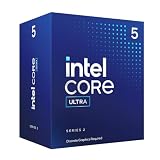
- 10 cores (6 P-cores + 4 E-cores) and 14 threads.
- Performance hybrid architecture integrates two core microarchitectures, prioritizing and distributing workloads to optimize performance
- Up to 4.9 GHz. 22 MB Cache
- Compatible with Intel 800 series chipset-based motherboards
- PCIe 5.0 & 4.0 support. Intel Optane Memory support. No thermal solution included. Discrete graphics required
The rise of AI changes the server CPU discussion but does not make it irrelevant. Training clusters may be dominated by Nvidia GPUs and custom accelerators, yet CPUs still manage orchestration, storage, networking, data preprocessing, inference pipelines, and general-purpose cloud workloads. Hyperscalers will continue buying large volumes of CPUs, but they are also more willing to design around alternatives when economics justify it. Diamond Rapids must defend Intel’s position in the general-purpose compute layer while complementing, rather than pretending to replace, dedicated AI accelerators.
If Intel executes well, Diamond Rapids could mark a credible rebuilding phase for Xeon: not a return to uncontested dominance, but a platform that restores confidence in Intel’s server cadence and narrows the efficiency gap with AMD. If execution disappoints, the consequences will extend beyond one product cycle. Data-center customers design infrastructure roadmaps years ahead, and once a cloud provider shifts more capacity to EPYC, Arm, or internal silicon, winning that share back becomes difficult. Diamond Rapids is therefore one of the clearest tests of whether Intel’s roadmap reset is translating into competitive data-center products.
AI Accelerators: Intel’s Push Beyond CPUs
Intel’s roadmap reset is not only about recovering CPU credibility; it is also about finding a viable role in an AI infrastructure market dominated by Nvidia GPUs and increasingly shaped by hyperscaler-designed accelerators. The company’s renewed AI push spans several layers: Gaudi accelerators for data-center training and inference, Xe-based GPU products for broader compute workloads, AI engines inside client processors, and networking technologies that connect compute nodes at scale. That breadth gives Intel many entry points, but it also exposes the central challenge: breadth is not enough if customers see Nvidia’s CUDA ecosystem, AMD’s Instinct roadmap, or in-house chips from Google, Amazon, Microsoft, and Meta as lower-risk choices.
Gaudi has been Intel’s clearest attempt to compete directly in AI acceleration outside the CPU. The pitch is straightforward: offer strong performance per dollar, use open software frameworks, and provide Ethernet-based scale-out rather than requiring customers to buy into a more proprietary networking stack. For cloud providers and enterprises worried about Nvidia supply constraints or high accelerator costs, that message has some appeal. The harder part is converting evaluation clusters into large, repeatable deployments. AI customers care about silicon performance, but they also care about kernel maturity, model support, debugging tools, orchestration, availability, and the depth of the developer community. In those areas, Nvidia’s advantage remains substantial.
Where Intel can still differentiate
- Cost-sensitive inference: As AI workloads shift from training frontier models to serving models at scale, price, power efficiency, and memory configuration may matter as much as peak training throughput.
- Open networking: Intel’s emphasis on Ethernet-based AI clusters could resonate with buyers seeking alternatives to tightly integrated GPU-and-networking platforms.
- CPU attachment: Intel can package AI acceleration with Xeon platforms, memory, networking, and system designs, giving server vendors a familiar procurement path.
- Edge and PC AI: Neural processing units in Core Ultra products will not replace data-center accelerators, but they can help Intel defend client relevance as Microsoft and software vendors add local AI features.
The competitive landscape is moving quickly. AMD’s Instinct MI300 family has gained attention because it offers a credible high-memory alternative for large models, especially among customers that want a second source to Nvidia. Hyperscalers are also building more of their own silicon, such as Google TPUs, Amazon Trainium and Inferentia, and Microsoft’s Maia accelerator. These chips do not need to win the general market; they only need to serve internal workloads efficiently enough to reduce dependence on external suppliers. That narrows the addressable opening for Intel unless it can prove that Gaudi-class products are compelling for both cloud-scale buyers and enterprise customers that lack the resources to design custom silicon.
Intel’s AI strategy therefore depends on execution more than branding. A strong accelerator roadmap must arrive on time, ship in volume, and be paired with software that developers trust. If Intel can align future Gaudi products with Diamond Rapids-era server platforms and use its manufacturing recovery to improve supply confidence, it has a path to becoming a meaningful alternative rather than a dominant AI vendor. If delays persist or software support lags, the company risks being squeezed between Nvidia’s full-stack platform, AMD’s improving GPU challenge, and hyperscaler silicon built for captive demand.
Independent reader supportYour contribution helps us test, update, and keep practical guides available for everyone.Execution Risks, Competitive Pressure, and Market Timing
Intel’s roadmap now looks more coherent than it did during the worst of its manufacturing delays, but the company still has to convert a sequence of technology claims into high-volume products customers can buy on schedule. The central risk is not any single node, CPU family, or accelerator. It is the overlap between all of them: 14A must mature, Nova Lake must land in a competitive client window, Diamond Rapids must prove server credibility, and the AI accelerator strategy must show that Intel can win sockets beyond traditional Xeon attach.
The timing problem is especially unforgiving because Intel is not competing against static rivals. TSMC continues to set the benchmark for external foundry execution, giving Apple, AMD, Nvidia, and many hyperscale chip teams access to advanced manufacturing without owning fabs. AMD has built a steady cadence around Zen-based CPUs and chiplet packaging, while Nvidia’s accelerator roadmap is now tied to entire systems, networking, software, and rack-scale deployment. Hyperscalers such as Amazon, Google, Microsoft, and Meta are also designing more of their own silicon, reducing the amount of general-purpose compute they need to source from merchant vendors.
Recommended Free Tools
Where Intel has the least margin for error
- Process ramp: 14A has to demonstrate yield, performance, and power advantages at commercial scale, not only in roadmap slides or early test vehicles.
- Product alignment: Client and server launches need to match market demand, OEM design cycles, and data-center qualification windows.
- Packaging and supply: Advanced packaging capacity must support tile-based CPUs and accelerators without becoming a bottleneck.
- Software readiness: AI accelerators need mature compilers, libraries, frameworks, and deployment tools before customers will commit large clusters.
- Foundry trust: External customers will need evidence that Intel can protect schedules, IP boundaries, and long-term capacity commitments.
Competitive pressure is also different across markets. In PCs, Nova Lake can regain attention if it delivers clear gains in battery life, integrated graphics, and AI PC performance while preserving strong single-thread responsiveness. That is a difficult but familiar fight for Intel, where OEM relationships and platform integration still matter. In servers, Diamond Rapids faces a tougher buying environment because cloud customers evaluate total cost of ownership, memory bandwidth, core density, power efficiency, and platform longevity. A strong Xeon generation can slow AMD’s momentum, but it must be compelling enough to justify validation work and fleet-level transition costs.
Also popular on Amazon

- 10 cores (6 P-cores + 4 E-cores) and 14 threads. Integrated Intel Graphics included
- Performance hybrid architecture integrates two core microarchitectures, prioritizing and distributing workloads to optimize performance
- Up to 4.9 GHz. 22 MB Cache
- Compatible with Intel 800 series chipset-based motherboards
- PCIe 5.0 & 4.0 support. Intel Optane Memory support. No thermal solution included.
The AI accelerator push carries the highest upside and the highest uncertainty. Intel does not need to displace Nvidia across the entire training market to benefit; even a credible position in inference, enterprise AI, or cost-optimized cloud deployments could create meaningful demand. However, Nvidia’s advantage is not just silicon performance. CUDA, networking, reference architectures, and developer familiarity form a deep moat. Hyperscaler silicon adds another constraint: large cloud buyers may use Intel accelerators selectively while reserving strategic workloads for in-house chips or Nvidia systems.
Market timing may ultimately decide whether Intel’s reset is viewed as a turnaround or another transition cycle. If 14A arrives as TSMC’s next nodes are already widely deployed, Intel Foundry may still look like a second-source option rather than a leader. If Nova Lake and Diamond Rapids slip, AMD and Arm-based alternatives gain more time to lock in designs. If AI software lags, competitive hardware will not be enough. Intel’s opportunity is real, but the roadmap has to arrive as an integrated platform story: process, products, packaging, and software all delivered close enough together to change customer behavior.
Frequently Asked Questions
What is Intel 14A, and how is it different from Intel 18A?
Intel 14A is the process node planned after Intel 18A and is intended to push Intel closer to leading-edge foundry competition with TSMC. It is expected to build on technologies such as backside power delivery and RibbonFET-style transistor architecture while adding further density, performance, and efficiency improvements. The bigger question is not just whether 14A looks strong on paper, but whether Intel can deliver it on schedule with competitive yields and external customer adoption.
Free tools Windows power users keep installed
One-click scans. No signup required.
Does Nova Lake have a realistic chance to close the gap with AMD and Apple in client CPUs?
Nova Lake is positioned as a major client CPU architecture after Arrow Lake and Lunar Lake, so expectations are high for both performance and efficiency gains. To be competitive, Intel needs stronger multi-core scaling, better power behavior in laptops, improved integrated graphics, and a platform that feels compelling to OEMs. If Intel pairs Nova Lake with a mature process and avoids launch delays, it could be one of its most client CPU resets in years.
How important is Diamond Rapids for Intel’s data-center recovery?
Diamond Rapids matters because Intel needs to regain credibility in servers after years of pressure from AMD EPYC and growing in-house hyperscaler chips. The platform is expected to target higher core counts, better memory bandwidth, stronger accelerator support, and improved performance per watt. Success will depend on whether Intel can ship it close to customer demand cycles and deliver total cost of ownership benefits that justify switching or expanding deployments.
Can Intel realistically compete with Nvidia in AI accelerators?
Intel can compete in parts of the AI market, but challenging Nvidia at the high end is extremely difficult because Nvidia has a mature hardware, networking, and CUDA software ecosystem. Intel’s Gaudi accelerators may appeal to customers seeking lower-cost training or inference alternatives, especially if availability and price are attractive. The real opportunity is likely targeted wins with hyperscalers and enterprises rather than a quick, broad displacement of Nvidia.
What are the biggest risks in Intel’s current roadmap?
The biggest risks are manufacturing delays, weak yields, insufficient foundry customer wins, and product launches that arrive after competitors have already moved forward. Intel also has to fight on several fronts at once: TSMC in manufacturing, AMD in CPUs, Nvidia in AI, and hyperscalers building custom silicon. Even if the roadmap is technically promising, Intel’s competitiveness will depend on consistent execution across mulle product generations.
Bottom Line
Intel’s roadmap shows a company trying to prove it can execute on mulle fronts at once: regain process credibility with 14A, refresh client momentum with Nova Lake, defend the data-center CPU franchise with Diamond Rapids, and re-enter the AI accelerator race with a more disciplined strategy. The opportunity is real, but so is the pressure from TSMC’s manufacturing lead, AMD’s server execution, Nvidia’s AI ecosystem, and hyperscalers’ growing appetite for custom silicon.
The next step is to watch delivery, not just disclosures: 14A customer traction, Nova Lake’s performance-per-watt, Diamond Rapids platform adoption, and whether Intel’s AI products can win meaningful software and deployment support. If Intel hits those milestones on time, its competitiveness improves; if it slips, rivals will keep widening the gap.
Quick Recap
Product prices and availability are accurate as of the date/time indicated and are subject to change. Any price and availability information displayed on Amazon at the time of purchase will apply.

